

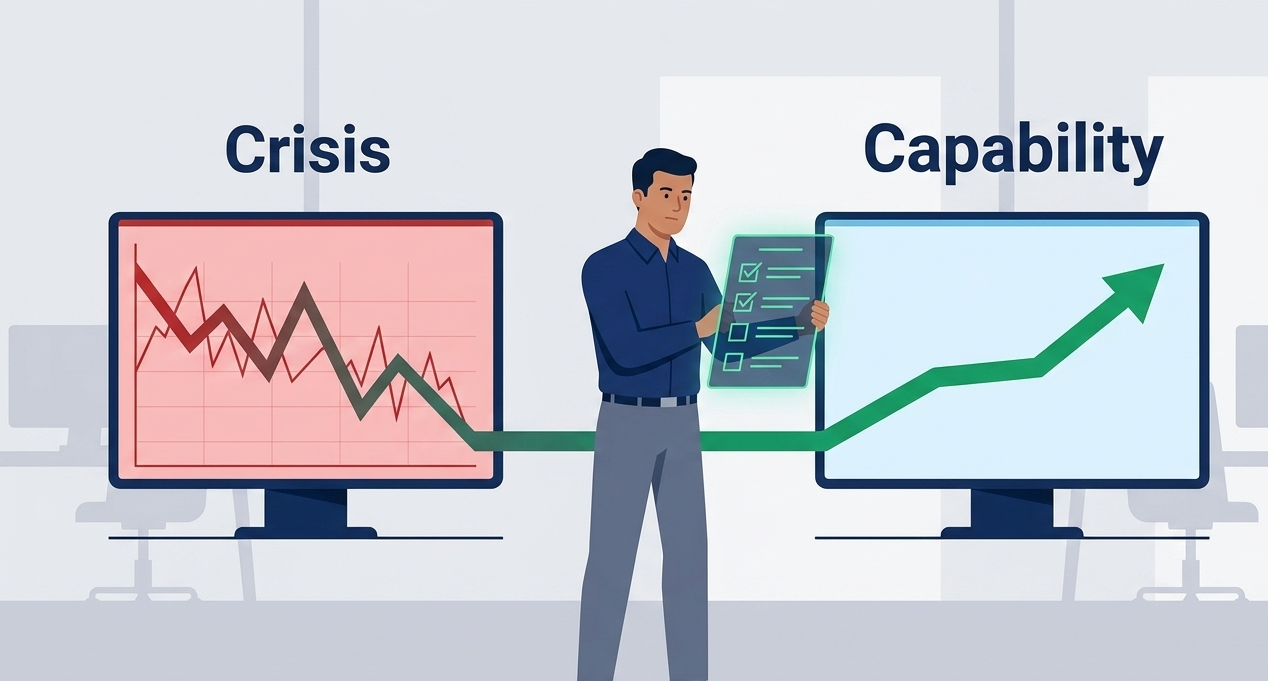
A post incident escalation review helps us understand how decisions were made under pressure and whether escalation truly worked when it mattered most. It goes beyond technical fixes and focuses on communication, timing, and accountability.
From our experience, this stage often reveals the biggest gaps in incident response. When done right, it turns mistakes into structured improvements. Keep reading to learn how escalation reviews strengthen resilience and prevent repeat failures.
Escalation Review Key Insights
Understanding escalation reviews requires clarity on what actually drives improvement during and after incidents.
- Escalation effectiveness depends more on clarity of roles than tools
- Delays often come from uncertainty, not lack of alerts
- Structured reviews turn incidents into long-term operational gains
What Is a Post-Incident Escalation Review?
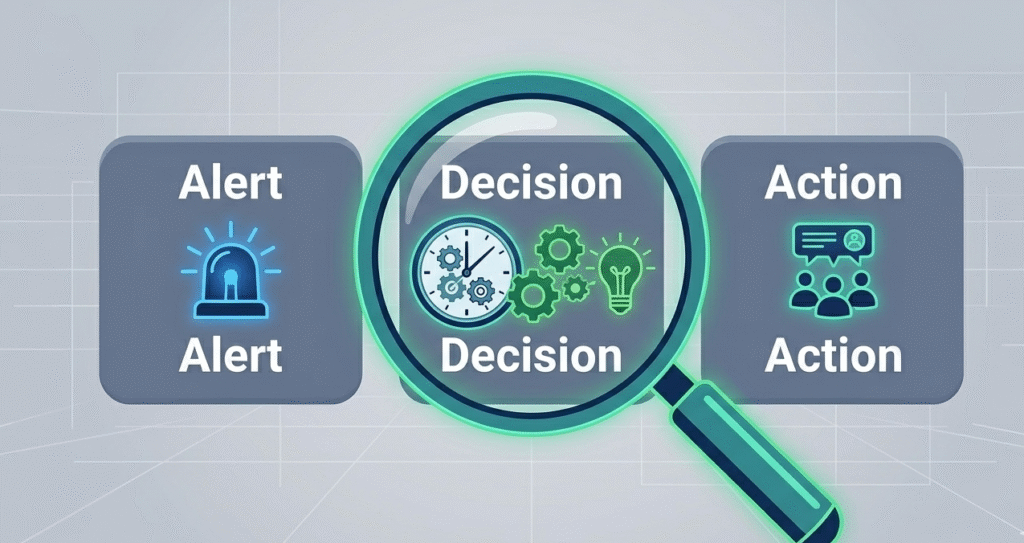
A post-incident escalation review evaluates how an incident was escalated, managed, and resolved. It focuses on decision-making, not just outcomes.
“Escalating is never a problem when needed.” – WikiTech
From our experience, many teams assume escalation worked because the issue was fixed. However, the real question is whether it was handled efficiently and at the right time. This review examines incident escalation procedures, response timing, and coordination between teams.
It also identifies whether escalation levels matched the actual risk. When done properly, it provides a clear picture of how well systems and people worked together under pressure, not just whether the incident was resolved.
Why Escalation Reviews Are Critical
Escalation reviews uncover hidden weaknesses that are often missed during the incident itself. In our work, we have seen incidents resolved quickly but still expose serious process flaws. For example, delayed escalation due to unclear authority can create unnecessary risk.
These reviews matter because they:
- Help refine incident severity escalation levels to improve response speed and accuracy.
- Strengthen communication between teams
- Reduce confusion during high-pressure situations
Organizations that skip this step often repeat the same mistakes. A structured review ensures lessons are captured and applied, turning short-term fixes into long-term improvements.
Core Components of an Effective Review
Credits: Target State
A strong escalation review follows a structured approach to uncover what truly happened.
| Component | Purpose |
| Timeline Reconstruction | Tracks events and decisions step by step |
| Decision Analysis | Evaluates why escalation occurred and if it was appropriate |
| Communication Review | Assesses clarity and speed of information sharing |
| Tool Evaluation | Reviews whether systems supported or delayed escalation |
| Action Plan | Defines improvements with ownership and deadlines |
From our experience, skipping any of these elements leads to incomplete insights. Each component ensures the review is actionable, not just descriptive.
Common Escalation Failures
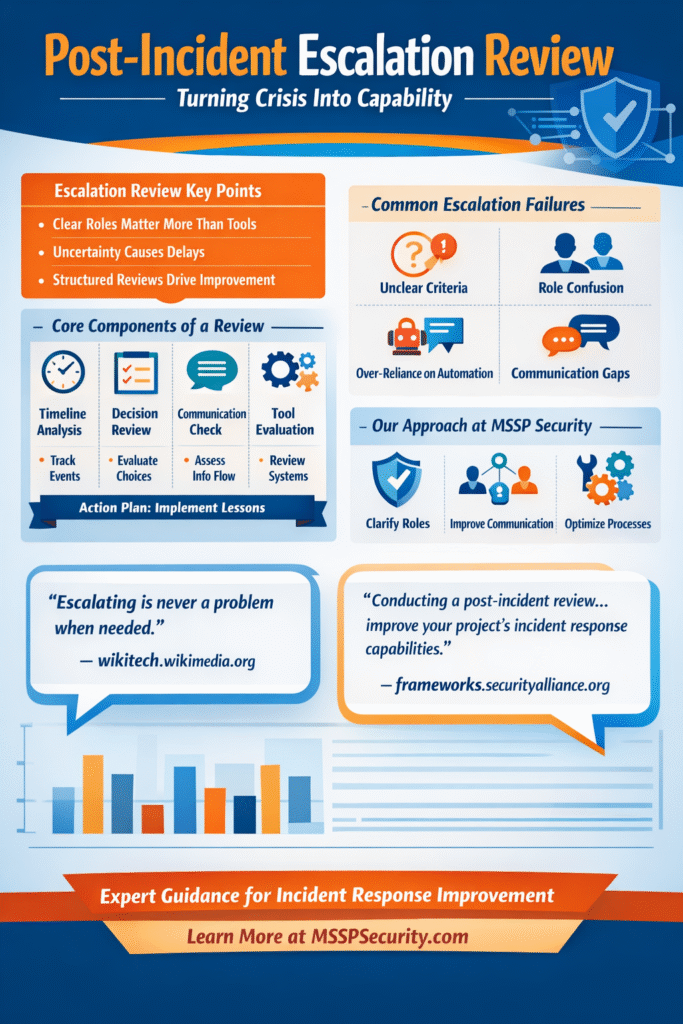
Detailed infographic about post incident escalation review featuring key points, core components, and failures.
Escalation issues tend to follow predictable patterns across organizations.
“Conducting a post-incident review… improve your project’s incident response capabilities.” – Security Alliance
We often observe that failures are not caused by technology, but by process gaps. The most common problems include:
- Unclear escalation thresholds
- Confusion over who makes decisions
- Overdependence on automated alerts
- Poor communication across teams
These issues create delays and misaligned responses. In several cases we handled, escalation happened either too late or too early, both of which can increase risk. Identifying these patterns during reviews helps prevent them from happening again.
Our Approach at MSSP Security
At MSSP Security, we treat escalation reviews as a continuous improvement process, not a one-time task. We work closely with teams to analyze real incidents and identify practical changes. Our approach focuses on clarity, accountability, and measurable outcomes.
From our firsthand experience, the most effective reviews are honest and structured. We help organizations:
- Clarify escalation roles and authority
- Improve communication workflows
- Align escalation with actual risk levels
We do not just document findings. We ensure insights are implemented into real operational improvements that teams can rely on during future incidents.
Building a Strong Escalation Framework
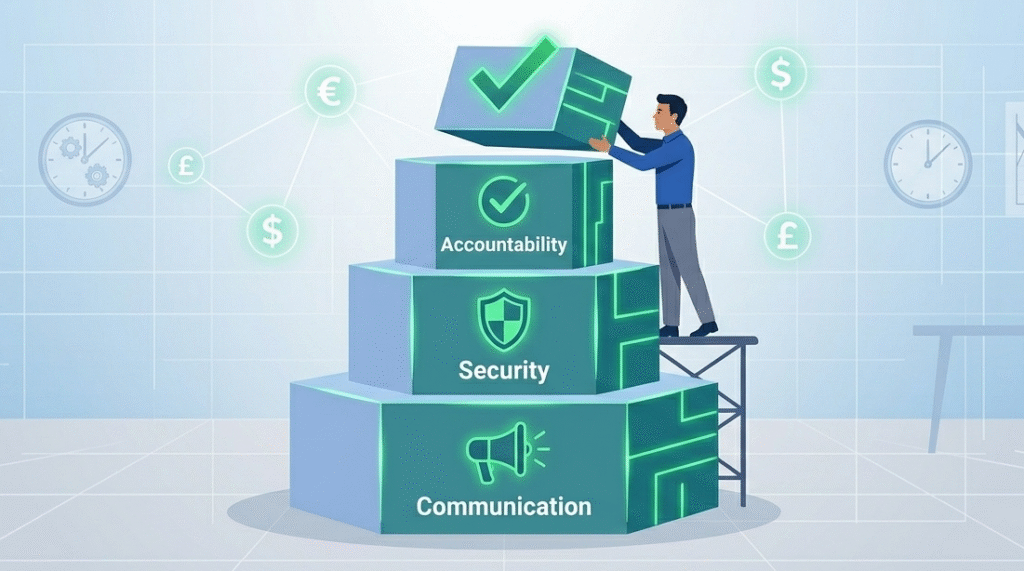
A review is only valuable if it leads to a stronger system. We recommend focusing on three key areas. First, define clear severity levels with specific actions tied to each level. Second, assign escalation ownership to eliminate delays. Third, focus on managing incident response team communication with predefined workflows.
From our experience, organizations that regularly test their escalation process perform significantly better during real incidents. Simulations and drills help teams act faster and more confidently. A strong framework ensures that escalation is not reactive, but controlled and predictable.
FAQ
What is the main goal of a post-incident escalation review?
The main goal is to evaluate how escalation decisions were made during an incident and whether they were effective. It helps identify delays, miscommunication, or unclear roles.
From our experience, the review is less about blame and more about improving response processes so future incidents are handled faster, more accurately, and with better coordination across teams.
How soon should an escalation review be conducted after an incident?
An escalation review should be conducted as soon as possible while details are still fresh. Ideally, this happens within 24 to 72 hours after resolution. In our work, earlier reviews lead to more accurate insights because participants clearly remember decisions, timelines, and communication gaps that might otherwise be forgotten or misinterpreted.
Who should be involved in the escalation review process?
All key stakeholders involved in the incident should participate. This includes security teams, IT operations, and decision-makers responsible for escalation. From our experience, involving multiple perspectives ensures a more complete understanding of what happened and prevents biased conclusions that can occur when reviews are handled by a single team.
What are common mistakes in escalation reviews?
Common mistakes include focusing only on technical issues, ignoring communication gaps, and failing to define actionable improvements. We have also seen reviews become too superficial, missing deeper process issues.
Another frequent problem is not assigning ownership for improvements, which results in the same escalation failures repeating in future incidents.
Post-Incident Escalation Review Final Thought
A post-incident escalation review is essential for improving how organizations respond under pressure. It reveals gaps in decision-making, communication, and process clarity that are often overlooked. From our experience, consistent reviews lead to faster response times and stronger coordination.
With the right structure and support from MSSP Security, organizations can turn every incident into a learning opportunity and build a more resilient, reliable escalation framework over time.
References
- https://wikitech.wikimedia.org
- https://frameworks.securityalliance.org