

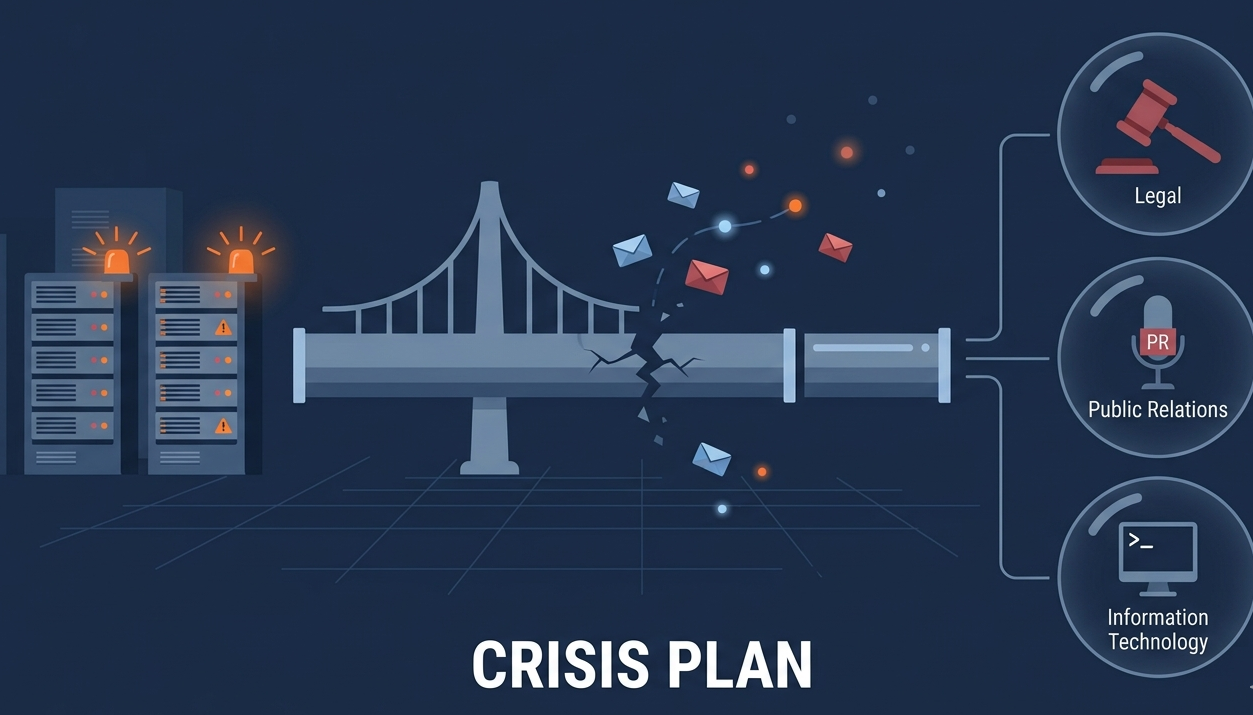
Effective communication during security crisis situations can determine whether an organization maintains stakeholder trust or faces lasting reputational damage. Confusion takes over, rumors fly, and you end up fighting two battles: the actual breach and the storm of misinformation that follows. The fix is a solid communication protocol.
At MSSP Security it’s the most important tool you have in the first hour, more urgent than any technical patch. This is the structured voice that tells your team what to do and your customers what they need to know, before fear tells them something else. Keep reading to turn your biggest weak spot into your strongest defense.
What You Need to Remember
Before diving in, take a look at these key insights that matter most.
- Fast beats perfect. A quick, honest acknowledgment builds more trust than waiting for every detail.
- Your team hears everything. Clear internal messages stop operational freeze and prevent accidental leaks.
- One story, one voice. A single spokesperson and channel stops conflicting tales from destroying your credibility.
Why Does Communication During Security Crisis Matter More Than Technical Response?
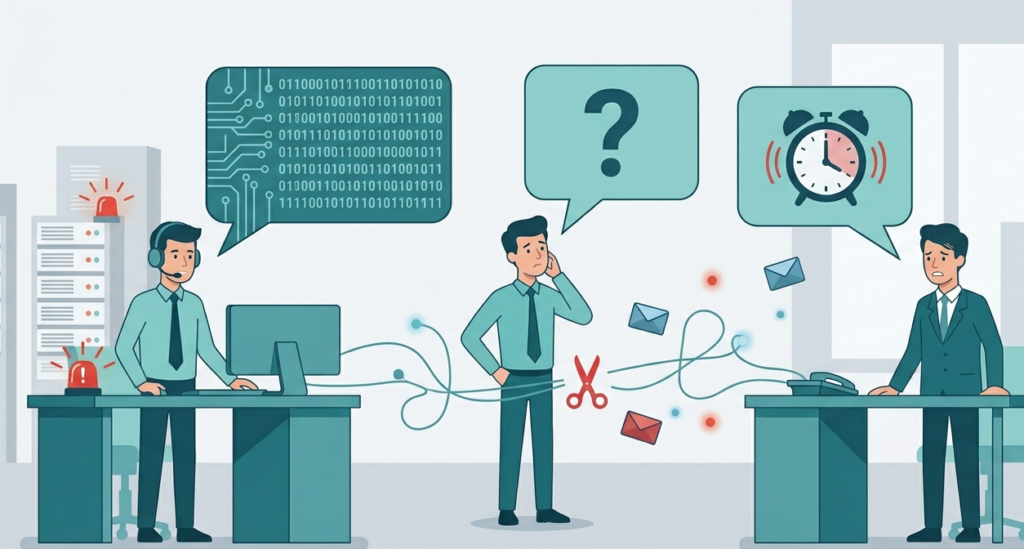
When a cybersecurity incident happens, technical response is only part of the solution. Poor communication can quickly create confusion, panic, and misinformation among employees, customers, and stakeholders. That’s why a clear crisis communication plan is essential.
Key Points to Remember:
- Respond quickly. Acknowledge the incident even if all details are not yet available.
- Communicate internally first. Employees need accurate information to avoid mistakes and rumors.
- Use one official voice. Designate a spokesperson and a primary communication channel.
- Be transparent. Share what is known, what is being investigated, and what actions are being taken.
- Provide regular updates. Consistent communication helps maintain trust during recovery.
The first hour after a security breach is critical. Organizations that stay silent often lose control of the narrative, allowing speculation to spread. A simple statement confirming that an investigation is underway demonstrates responsibility and leadership.
Preparation is equally important. Companies should create message templates, identify approval processes, train spokespersons, and focus on establishing communication channels before a crisis occurs. These steps reduce delays and ensure consistent messaging.
What a Good Crisis Message Actually Says
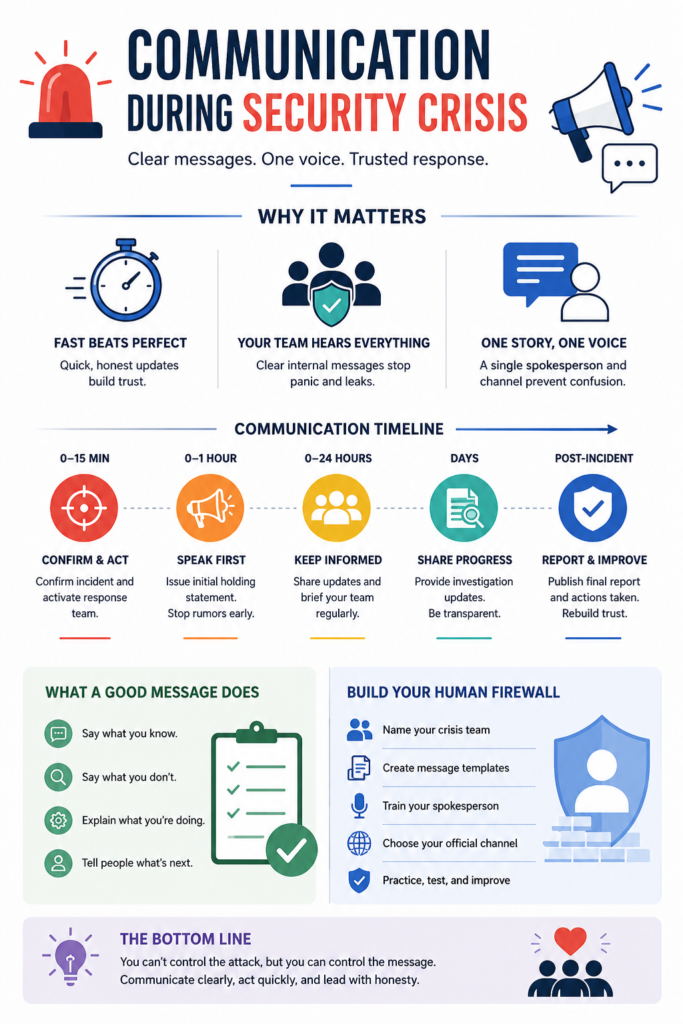
The words matter, but the music matters more. Technical jargon scares people. Legal language pushes them away. Your tone needs to be firm but human. You’re not just fixing a server, you’re addressing a person’s worry. Say what you know. Say what you don’t. Explain what you’re doing. Tell people what their next step is.
“Timeliness is critical, as early disclosure fosters trust, whereas delays amplify risks.” – ECWS
“We are working with forensic specialists to understand what happened.” We have isolated the affected servers.” “We will contact anyone directly impacted with clear instructions.”
This structured alignment clarifies your incident notification communication process using real-life SPO semantics: the subject (we) takes a clear action (working, isolated, will contact) on a specific thing (specialists, servers, people).
This clarity is what both Google and a scared customer recognize as authority. Taking responsibility is the action that builds trust. Using passive voice, “data was accessed”, feels slippery.
Active voice, “an unauthorized person accessed some data”, is harder to write but easier to believe. It’s a small grammar choice with a huge psychological payoff. It says you are not looking away.
How Should Companies Communicate During Different Stages of a Security Incident?
“Incident response is not solely about containment and recovery; it is also about ensuring a timely, accurate flow of information to mitigate damage, uphold trust, and fulfill regulatory obligations.” – Journal of Risk Analysis and Crisis Response
| Timeframe | Recommended Action | Goal |
| First 15 Minutes | Confirm incident and activate response team | Establish control |
| First Hour | Issue initial holding statement | Prevent rumors |
| First 24 Hours | Provide regular updates and employee briefings | Maintain trust |
| Following Days | Share investigation progress | Demonstrate transparency |
| Post-Incident | Publish final report and improvements | Rebuild confidence |
Why Does MSSP Security Handle Crisis Communication More Effectively?
Credits: Kaspersky
This is where the structure of a partner like an MSSP changes things. For an internal team, a crisis is a shocking, all-consuming event. It pulls engineers from their daily work into a high-stress panic room. Their communication is often reactive, born from the chaos. For a team like ours at MSSP Security, crisis communication is a drilled procedure.
We’ve been in that bright room for clients before. The templates, the channels, the spokesperson, they’re not documents in a folder, they’re reflexes. We act as the communication arm of your response.
Your tech team can focus on stopping the breach. We focus on managing the story. It’s a split focus most companies can’t achieve alone until after they’ve already lost the narrative.
The coordination is precise. Our technical team hunts for clues, feeding clean facts to our communication lead. That lead turns network logs into public updates, making sure the story is the same on the status page as it is in the command center.
This loop spins in minutes. It stops the classic disaster where the press release says one thing and the IT director says another. We make sure there’s only one version of the truth, because we’re standing in both rooms. We’ve seen the bill for getting that wrong, and it’s always paid in lost trust.
How Can Organizations Prepare a Crisis Communication Plan Before an Attack Happens?
Preparation is essential for successful crisis communication.
Organizations should:
- Create incident-response communication templates.
- Designate a trained spokesperson.
- Define approval workflows and standardized client communication protocols.
- Establish official communication channels.
- Conduct regular crisis simulations and drills.
- Maintain updated contact lists for stakeholders.
Practicing these procedures before an incident occurs reduces confusion and enables faster, more confident responses.
What Happens After System Are Restored
The crisis isn’t over when the systems are green again. The talking enters a new phase. Now you need rhythm. Regular updates are crucial, even if the update is “we’re still investigating.” This steady drumbeat rebuilds confidence. It shows you’re still on the job. Then comes the final report. This document should avoid pointing fingers.
It should explain the cause, the effect, and, most of all, what you’ve changed. What will you do differently? What new walls have you built? This turns a failure into a proof of strength.
It’s your final, critical chance to show that the attack, while painful, left you smarter, more open, and harder to hurt next time. It’s the message that decides how the breach will be remembered.
How Can Communication Turn a Security Crisis intro Credibility
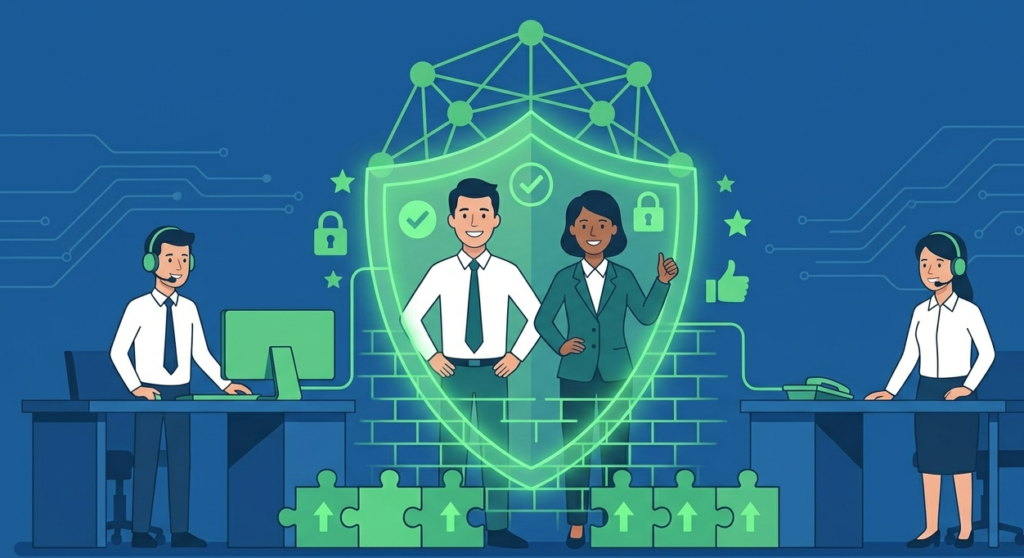
You can’t stop every attack. But you can stop a total communication meltdown. Start building that skill now. Today. Before the next alert. Name your crisis team. Write those first draft messages. Run a practice drill where someone has to answer a tough question from a “reporter.”
The goal isn’t to be perfect under fire. The goal is to be prepared enough that you’re not staring at a blank screen while the world watches. You build your technical defenses layer by layer. Your communication defense needs the same careful work. It is the human firewall. And in a crisis, it’s the one that everyone on the outside sees.
FAQ
What’s the worst thing to do when a breach happens?
The worst thing is to say nothing. Waiting for a complete picture lets fear and rumors write the story for you. A prompt, transparent acknowledgment is always better than silence.
How do we keep our own employees from panicking?
Tell them first. Before a public statement goes out, send a clear internal alert. Give them basic facts and tell them what to do (or not do). Informed employees are calm employees.
Should we use different social media for different messages?
Pick one primary channel for official updates, a dedicated status page is best. Use other social media to direct people to that single source of truth. Multiple channels lead to multiple, conflicting stories.
What belongs in a “post-mortem” report?
A strong report needs three things: what happened (cause and scope), what you did about it (containment), and what you’re changing so it never happens again (corrective actions). It turns a bad event into a blueprint for improvement.
Turning Crisis Into Credibility
A security breach tests your character as much as your technology. While technical recovery demonstrates expertise, clear and honest communication demonstrates leadership. Organizations that communicate effectively during a crisis protect trust, strengthen stakeholder relationships, and show accountability when it matters most.
If you’re looking to improve your incident response strategy and crisis communication readiness, explore MSSP Security Consulting Services.
References
- https://papers.academic-conferences.org/index.php/eccws/article/view/3730#:~:text=To%20help%20manage%20cyber%20incidents,also%20required%20from%20effective%20communication.
- https://www.ibm.com/reports/data-breach