


Testing incident escalation procedures helps ensure that response plans actually work when incidents occur. Many organizations assume their processes are effective until real pressure exposes gaps in timing, communication, and responsibility. From our experience, testing reveals how teams truly react, not how they are expected to.
It transforms uncertainty into structured readiness and builds confidence across teams. Without testing, escalation remains theoretical. Keep reading to learn how to validate and strengthen your escalation process effectively.
Escalation Testing Key Insights
Testing escalation procedures reveals how teams actually behave during incidents, not how they are expected to behave.
- Clear roles matter more than complex tools
- Realistic testing exposes hidden delays
- Continuous testing builds faster, more confident responses
What Is Testing Incident Escalation Procedures?
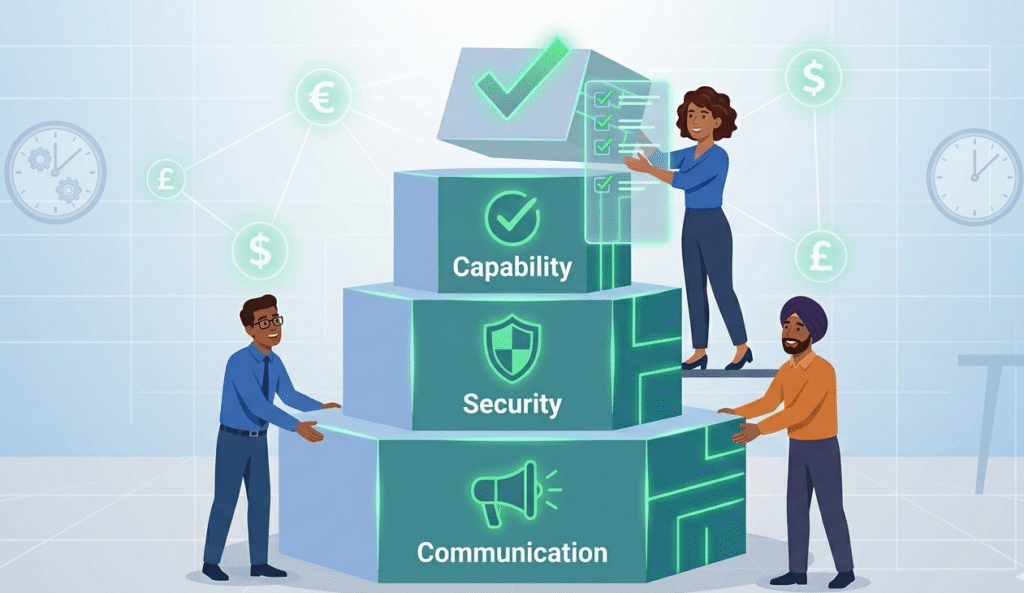
Testing incident escalation procedures involves simulating incidents to evaluate how escalation workflows perform in practice. It is not just about checking if alerts trigger but whether people respond correctly.
“An incident response plan is a set of instructions designed to help organizations detect, respond to, and recover from network security incidents.” – Wikipedia
Organizations often assume their escalation paths are clear, yet many find that their incident escalation procedures lack the necessary detail to handle high-pressure scenarios without confusion around responsibility and timing.
We have worked with teams that had well-documented processes but struggled during simulations. Testing reveals whether escalation thresholds are practical and whether teams understand when and how to act. It bridges the gap between theory and execution.
Why Escalation Testing Matters
Without testing, escalation procedures remain assumptions rather than proven systems.
In several cases we handled, incidents were resolved, but testing later showed that escalation decisions were delayed due to unclear authority. These delays could have caused serious impact in real scenarios.
“Post-incident analysis and testing are essential activities to improve the effectiveness of incident response and organizational learning.” – ResearchGate
Testing matters because it:
- Validates escalation timing and thresholds
- Strengthens coordination across teams
- Improves response accuracy under pressure
Organizations that test regularly are not just prepared, they are confident. That confidence translates into faster, more effective incident handling.
Key Components to Evaluate
Credits: Mike Chapple
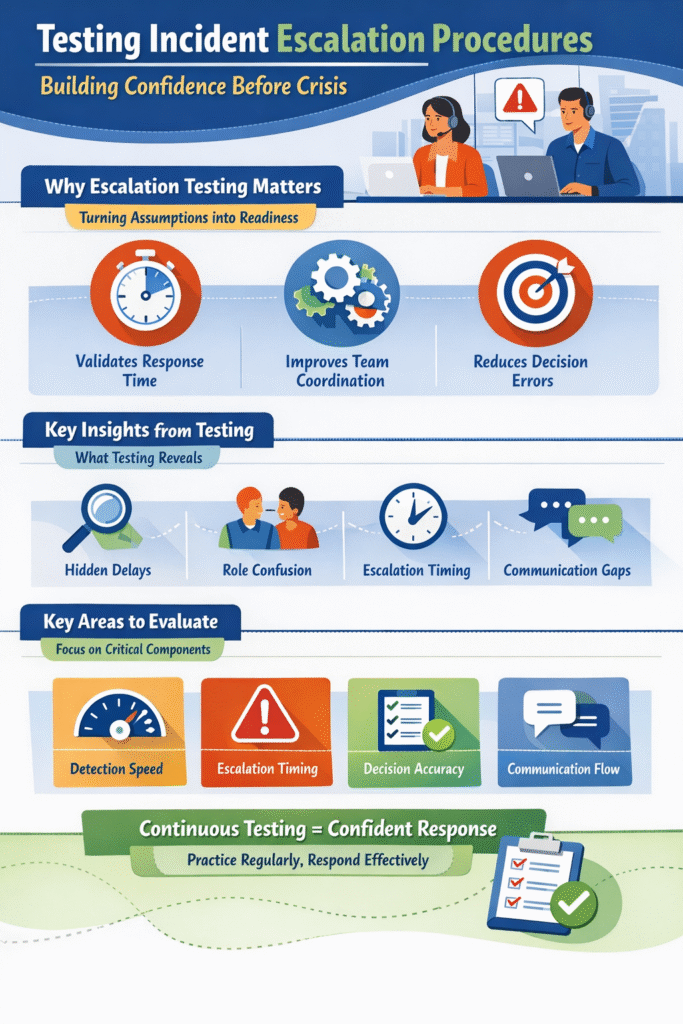
Effective testing focuses on measurable aspects of escalation performance to ensure meaningful improvement.
| Component | What It Reveals |
| Detection Speed | How quickly threats are identified |
| Escalation Timing | Whether escalation happens too early or too late |
| Decision Accuracy | If severity matches actual risk |
| Communication Flow | How clearly and quickly teams share information |
| Role Clarity | Whether responsibilities are fully understood |
From our experience, communication flow and role clarity consistently have the biggest impact on escalation success.
Common Issues Found During Testing
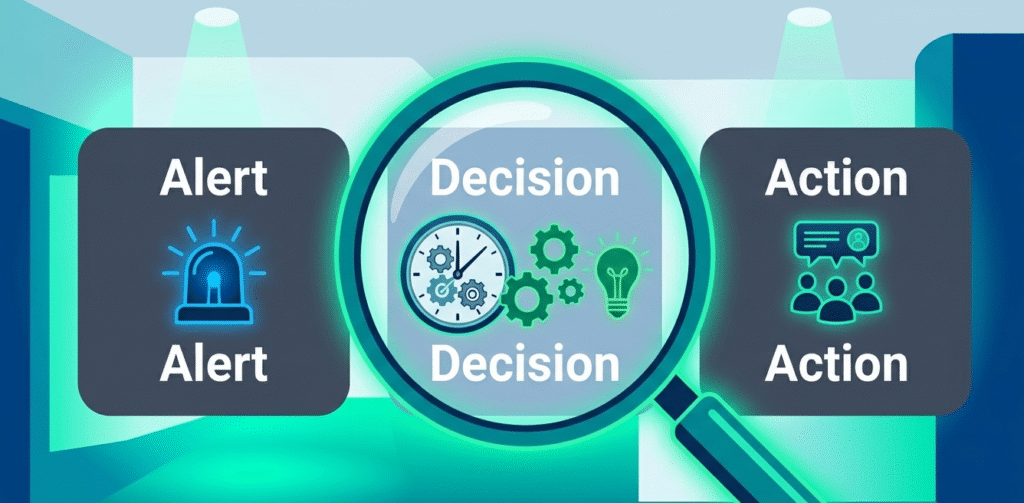
Testing often exposes issues that are not visible in daily operations, such as bottlenecks in managing response team communication that cause critical delays when multiple people assume someone else is responsible for making decisions.
Another common issue is over-reliance on automation. While tools are important, they cannot replace human judgment.
Organizations that do not test regularly tend to repeat these mistakes. Identifying them early allows teams to fix weaknesses before they affect real incidents, where the stakes are much higher.
Our Approach at MSSP Security
At MSSP Security, we approach escalation testing as a continuous improvement process. We do not just simulate incidents; we design scenarios that reflect real-world risks and pressures.
From our firsthand experience, the most valuable tests are those that challenge assumptions and force teams to think critically. We work alongside organizations to:
- Run realistic escalation simulations
- Identify gaps in communication and decision-making
- Refine escalation workflows and responsibilities
We position ourselves as a partner in strengthening capability, ensuring that every test leads to practical, measurable improvements.
Best Practices for Effective Escalation Testing
Strong escalation testing requires structure and consistency.
We recommend defining clear objectives before each test. This ensures results are actionable and not just observational. Involving all relevant stakeholders is also critical, as escalation is a cross-functional process.
From what we have observed, organizations that treat every simulation as a post incident escalation review to document results and implement changes see the most progress.
Testing should not be a one-time activity but an ongoing cycle. Regular simulations help teams build familiarity, reduce hesitation, and improve response speed when real incidents occur.
FAQ
What is testing incident escalation procedures?
Testing incident escalation procedures means simulating incidents to evaluate how well escalation processes work in real situations. It checks whether teams can identify, prioritize, and escalate issues correctly.
From our experience, this testing reveals gaps in communication and decision-making that are not visible in documentation, helping organizations improve their readiness and response effectiveness.
How often should escalation procedures be tested?
Escalation procedures should be tested regularly, ideally quarterly or after major system or process changes. We have seen that organizations that test consistently are more prepared during real incidents. Frequent testing helps teams stay familiar with their roles and ensures that escalation workflows remain aligned with current risks and operational structures.
What are the benefits of testing escalation processes?
Testing improves response speed, decision accuracy, and team coordination. It also helps identify weaknesses in escalation timing and communication.
From our experience, organizations that test their processes regularly reduce confusion during incidents and respond more effectively, minimizing potential damage and improving overall security performance.
Who should be involved in escalation testing?
Escalation testing should involve all relevant stakeholders, including security teams, IT operations, and decision-makers. Since escalation is a cross-functional process, participation from multiple roles ensures a complete evaluation. We have found that involving different perspectives leads to better insights and more practical improvements.
Testing Incident Escalation Procedures Conclusion
Testing incident escalation procedures ensures organizations are ready for real incidents, not just theory. It reveals gaps in communication, decision-making, and escalation timing that can delay response. From our experience, consistent testing builds faster, more confident teams.
With MSSP Security, we help design realistic simulations, streamline operations, and improve visibility. Backed by 15+ years and 48K+ projects, explore our MSSP consulting solutions to strengthen your escalation framework and align your tools with business goals.
References
- http://en.wikipedia.org/wiki/Incident_response
- http://www.researchgate.net/publication/Incident_Response_and_Management_Study