

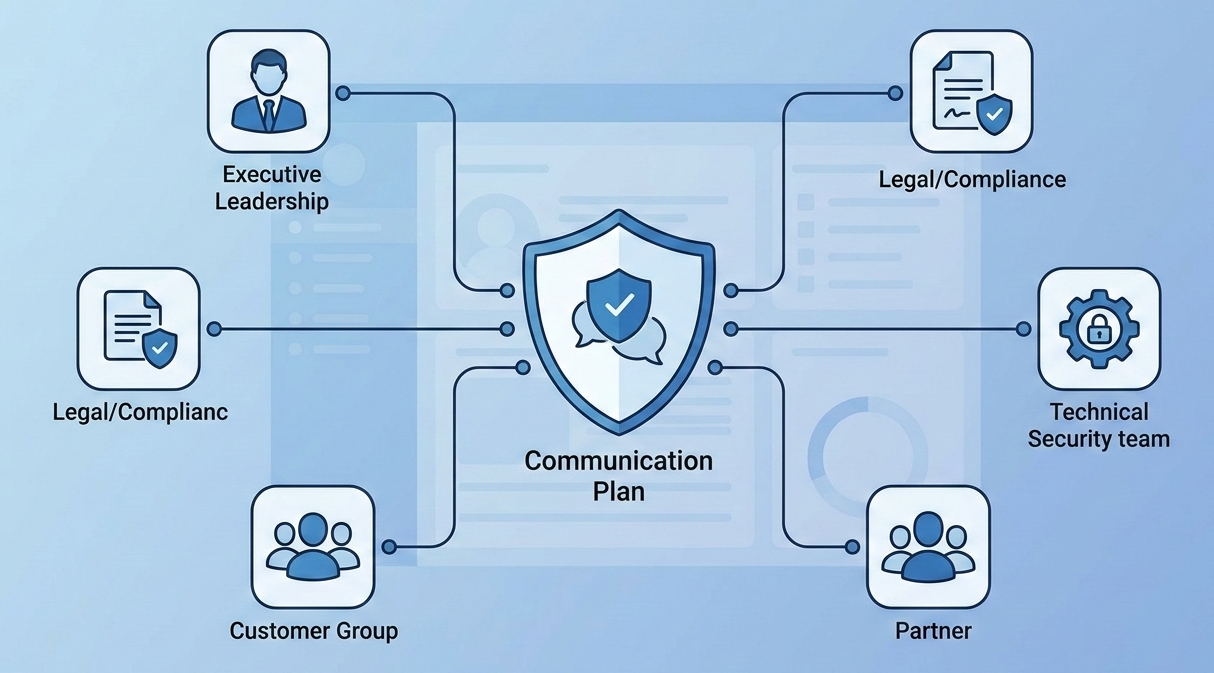
A security incident communication plan is your structured blueprint for delivering clear, timely, and accurate information during a cybersecurity crisis. It’s the difference between coordinated action and chaotic confusion.
A solid plan can mean the difference between preserving stakeholder trust and facing lasting reputational harm. We’ll walk you through building a plan that actually works under pressure, focusing on the practical steps that matter. Keep reading to see how you can transform your incident response from reactive panic into a managed, confident process.
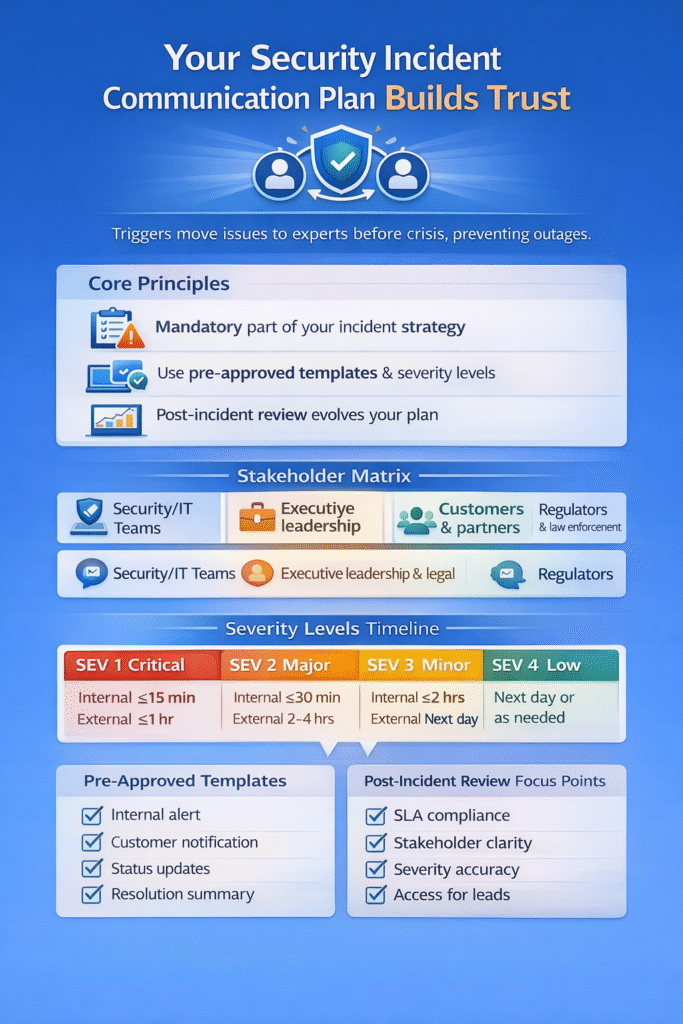
Core Communication Principles
- A communication plan is a mandatory component of your incident response strategy, not an optional extra.
- Pre-approved templates and defined severity levels are non-negotiable for speed and consistency.
- The post-incident review is where your plan evolves and your team’s cyber resilience grows.
Who are the essential stakeholders in your communication matrix?
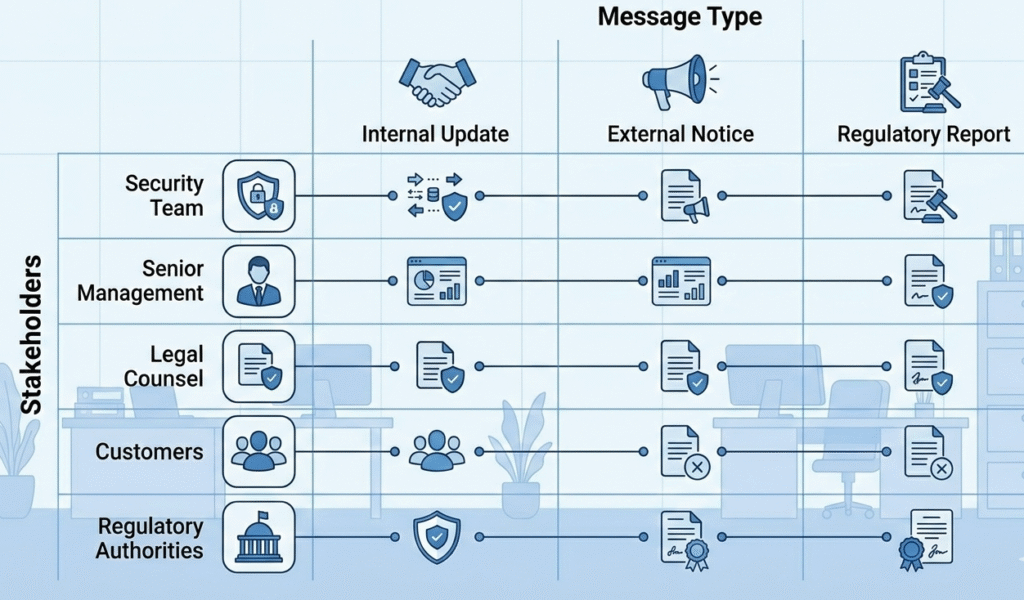
Here’s our take on the stakeholder question, based on helping MSSPs build their response plans. If you don’t know exactly who needs to be told what when an alert fires, your communication will fail. Guessing isn’t an option. You need a defined matrix.
Internally, that list always includes your security analysts, the legal counsel assessing regulatory fallout, and the senior leaders deciding on business impact. Externally, it’s your customers, partners, and sometimes law enforcement. Each group gets a different message, sent through a specific channel, on a strict timeline.
For an MSSP, this mapping is everything. We’ve seen firsthand how a refined mssp incident escalation process keeps stakeholders aligned. Your core groups are:
- Internal technical teams (Security, IT)
- Executive leadership & legal/compliance
- Affected customers & partners
- Regulators or law enforcement, if needed
We act as a critical node in that matrix, syncing our technical work with your external comms. It’s a coordinated operation. Everyone must know their role before the incident begins.
How do severity levels dictate your response timeline?
Credits: Skillweed
Not all security events are created equal. A minor software glitch and a full-scale ransomware data breach demand radically different responses, which is why identifying specific incident escalation triggers is vital. That’s where a clear incident classification system comes in.
“Cyber security incident communication plans should be reviewed quarterly and updated immediately following any security incident, regulatory changes, or organizational restructuring.” – SlideTeam
Think of it as the playbook that tells you when to sound the alarm. A SEV 1 (Critical) incident, like active exploitation causing a major data breach, triggers immediate action. Internal notifications might need to happen within 15 minutes.
An initial customer acknowledgment could be required in under an hour. Without these defined levels, you waste precious time debating how bad things really are while the situation escalates.
| Severity Level | Business Impact Example | Initial Internal Notification | External Customer Update |
| SEV 1 (Critical) | Widespread data breach, total service outage | Within 15 minutes | Within 1 hour |
| SEV 2 (Major) | Significant operational disruption, core features down | Within 30 minutes | Within 2-4 hours |
| SEV 3 (Minor) | Limited impact, workaround available | Within 2 hours | Next business day |
| SEV 4 (Low) | Cosmetic issue, no data loss | Next business day | As needed |
Which communication channels ensure message redundancy?
Putting all your trust in one channel during an incident is risky. We’ve audited MSSPs where corporate email was the first thing to go. That single failure stalled internal coordination for hours. A security incident communication plan must assume systems will break.
“A single point of contact within the organization is the most important element to include when incorporating media communication procedures into the security incident communication plan because it helps to ensure a consistent and accurate message to the public and avoid confusion or misinformation.” – P2PExams
In practice, strong teams layer channels:
- Internal: bridge lines, secure chat (Slack/Teams), hardened intranet
- External: status page, direct email, support portal notices
- Redundancy: SMS alerts, phone trees, out-of-band messaging apps
During one product audit, the only working channel was a mobile app the team used informally. That workaround became a formal control in the next revision. Redundancy isn’t overengineering. It’s operational discipline. When we assess tools for MSSPs, we always test how communication holds up when one platform fails.
Why are pre-approved templates critical for crisis management?
When an incident breaks, nobody writes their best copy under pressure. We’ve seen comms leads stare at blank screens while Legal waits for a draft. Pre-approved templates paired with established incident escalation procedures remove that bottleneck and keep the response moving.
Effective teams maintain templates for:
- Initial internal declaration
- First customer-facing notification
- “No new update” status messages
- Final resolution summary
These drafts are reviewed in calm periods by leadership and compliance. That review cycle matters. It prevents misstatements and cuts escalation delays.
In our consulting work with MSSPs, we treat templates like controlled assets. Writing them early forces clarity around tone, scope, and severity. When the real event hits, the team fills in variables instead of improvising language. That alone can cut first-notice time dramatically.
How does the Post-Incident Review (PIR) improve future plans?
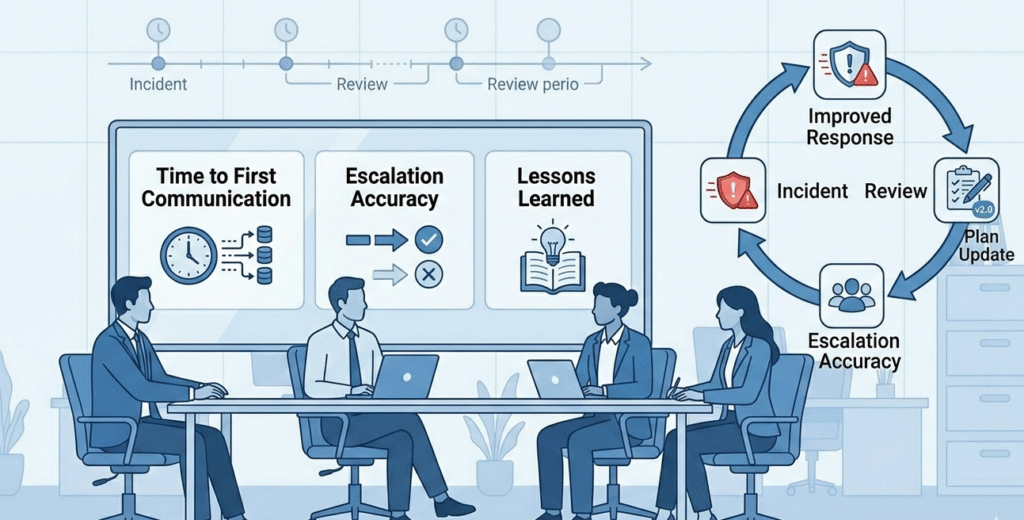
Containment isn’t the finish line. We’ve watched teams restore services and then rush back to business as usual. That’s where growth stalls.
A proper PIR asks harder questions:
- Did updates meet the stated SLA?
- Were stakeholders confused at any point?
- Did the comms lead have system access when needed?
- Was severity classified correctly?
The most resilient MSSPs treat this as process refinement, not blame assignment.
In our audits, we look at metrics like Time to First Communication and escalation accuracy. The lessons rarely stay theoretical. Maybe a severity threshold needs tightening. Maybe Legal needs a backup approver.
Each iteration strengthens the security incident communication plan. Over time, it becomes operational muscle memory rather than a document on a shelf.
FAQ
What should an incident response communication plan include?
An effective incident response communication plan defines who speaks, who approves messages, and which communication channels are used during security incidents. It should align with your broader incident response plan and support both internal updates and external messaging.
Include communication templates, escalation paths, incident classification levels, and clear roles for the incident response team, senior management, and support team to avoid confusion during a cybersecurity incident.
How does communication differ during a data breach versus minor security events?
A data breach or ransomware data breaches demand urgent crisis communication and possibly coordination with law enforcement. Minor security events or unplanned outages may only require internal updates and public status updates.
The difference comes down to incident classification and impact. Your incident response process should define response timelines, stakeholder management steps, and regulatory risk considerations to prevent reputational harm or financial fallout.
When should we involve law enforcement in a cybersecurity breach?
Law enforcement involvement depends on the scale of the cybersecurity breach, active exploitation, or threats like distributed denial-of-service attack or malicious code. Your incident response strategy should outline criteria for escalation.
Typically, major operational disruption, advanced persistent threats, or confirmed ransomware data breaches justify contact. Clear guidance inside your cyber crisis communications plan ensures communication decisions are made quickly and consistently.
What communication channels work best during a cyber crisis?
Strong cyber crisis communications plan rely on layered communication channels. Internal teams may use secure chat, bridge calls, and structured internal updates. External audiences often rely on a status page, direct email, or public status updates.
Redundancy matters during distributed denial of service incidents or system outages. Your communication plan should ensure critical messages reach customer support teams and stakeholders without delay.
Turning Your Plan Into Practice
Turning a communication plan into practice means treating it as a living document. It’s not about a perfect first draft, but a reliable rhythm for a crisis. Start by mapping stakeholders and drafting one template, the first internal alert. Define clear severity levels.
Then, practice. Run a tabletop exercise for a scenario like ransomware. The awkward gaps you find are exactly what the plan must fix. That’s how a framework becomes a trusted routine. Ready to build a resilient tech stack that supports your response plans? Let’s start with a consultation.
References
- https://www.slideteam.net/cyber-security-incident-communication-plan-stages-checklist.html
- https://www.p2pexams.com/free-questions/isaca-certified-information-security-manager-dumps-by-bass-22-07-2024-9qa-dumpshq.pdf