


The better firewall depends on your security goals, daily operations, and how it’s managed. Palo Alto Networks and Fortinet are both trusted NGFW platforms, but the right fit isn’t about picking the bigger name. It’s about choosing what matches your environment and long-term needs.
At MSSP Security, we’ve seen that strong planning, proper deployment, and ongoing management matter as much as the firewall itself. A platform can only do so much without the right team behind it. That part gets overlooked more often than it should. Keep reading to see which option fits your business and why the right approach matters.
Palo Alto vs Fortinet Managed Firewall: Quick Take
Choosing between Palo Alto vs Fortinet managed firewall is not only about features. Long term success also depends on how the platform is managed, supported, and optimized.
- Palo Alto: Strong threat prevention and policy control.
- Fortinet: Fast performance with integrated networking.
- MSSP Security: Expert management often matters more than the platform itself.
Palo Alto Vs Fortinet Managed Firewall, What’s The Biggest Difference?
The biggest difference is how each platform was built.
Palo Alto Networks puts security first. The platform looks closely at applications, users, and network traffic before deciding what should happen. Technologies like App ID, User ID, and WildFire give security teams more context, which can make investigations faster and policies more precise.
Fortinet takes a different path. It combines security with speed. Its custom ASIC processors are built to inspect traffic efficiently, while the Security Fabric connects different Fortinet products so they can work together.
Neither approach is wrong.
That surprised some customers at first. They expected one clear winner. There usually isn’t one.
The better choice depends on what the business needs today and where it expects to grow over the next few years.
“Zero trust is the term for an evolving set of cybersecurity paradigms that move defenses from static, network-based perimeters to focus on users, assets, and resources.” – NIST
Which Organizations Should Choose Palo Alto Or Fortinet?

There is no single firewall that works best for every organization. Evaluating different firewall technology options alongside your security priorities, available resources, compliance requirements, and future growth plans makes it easier to choose the right platform.
When Does Palo Alto Make More Sense?
Palo Alto Networks is often chosen by organizations that deal with sensitive information or strict compliance rules. Financial institutions, healthcare providers, government agencies, and large enterprises are common examples.
Its security platform includes WildFire, App ID, User ID, GlobalProtect, and threat intelligence from Unit 42. These next generation firewall features help security teams understand what is happening across the network instead of only looking at ports and protocols.
We’ve sat through many product reviews where customers wanted better visibility more than anything else. They weren’t asking for another dashboard. They wanted answers when something looked suspicious. Palo Alto usually performs well in those situations because administrators can build detailed policies around users and applications.
Of course, that extra capability often comes with a higher price. Some organizations need it. Others don’t.
When Is Fortinet The Better Investment?
Fortinet is a popular choice for small and medium sized businesses, manufacturers, schools, retailers, and companies with many branch offices.
The platform combines FortiGuard Labs, Security Fabric, and hardware acceleration to deliver strong security while keeping performance high. Many IT teams also find the licensing easier to understand, which can reduce confusion during upgrades or renewals.
Teams with limited security staff often become comfortable with Fortinet fairly quickly. That doesn’t mean it is simple. Every firewall takes planning and regular maintenance. Choosing the right firewall management service can also reduce the operational burden after deployment. Daily management can feel less demanding once everything is set up properly.
How Different Are Their Security Capabilities?
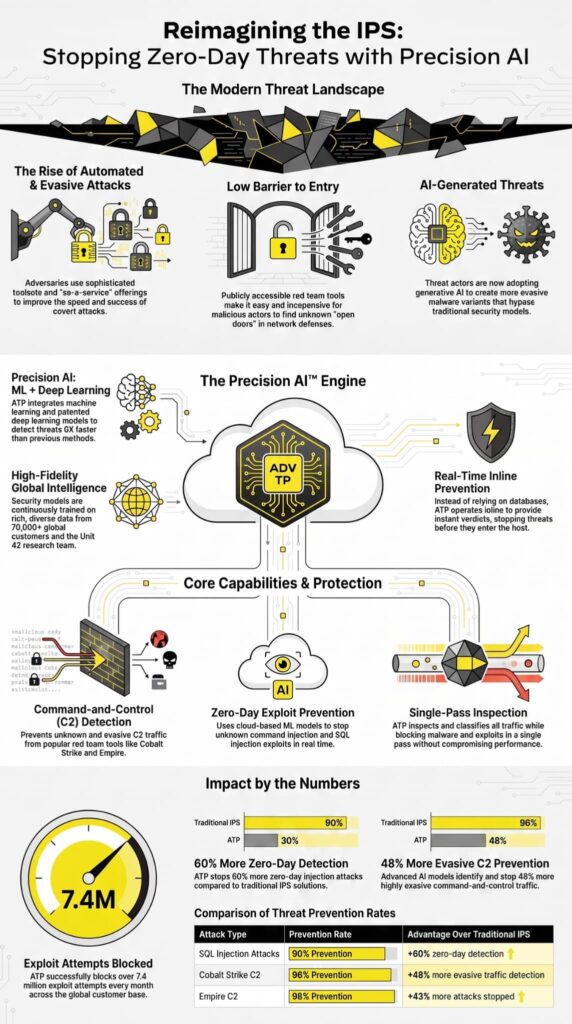
Both platforms provide strong protection, but they take different approaches to detecting and stopping threats. Looking beyond feature lists can help you understand how each platform handles daily security operations and supports long term risk management.
Palo Alto’s Approach To Advanced Threat Prevention
Palo Alto focuses on finding threats before they spread.
Its security services combine Inline Machine Learning, WildFire, App ID, and TLS inspection to identify suspicious files, risky applications, and unusual activity. Instead of relying only on known malware signatures, the platform also uses behavior and other signals to improve detection.
One feature we keep coming back to is Panorama. It allows administrators to manage multiple firewalls from one place, which becomes more useful as organizations grow. We’ve watched customers cut down hours of manual work after cleaning up old policies and managing them centrally.
Sometimes the biggest improvement isn’t a new security feature. It’s better visibility.
How Fortinet Detects And Responds To Threats

Fortinet brings several security tools together into one connected platform.
Threat intelligence from FortiGuard Labs, intrusion prevention, antivirus, web filtering, and automated responses all work together through the Security Fabric. Administrators can also use FortiManager and FortiAnalyzer to handle reporting, logging, and policy management.
Fortinet often fit those requirements well. Security teams still need to review policies, monitor alerts, and keep software updated. That part never goes away. But the overall experience can feel easier for lean IT teams.
Which Firewall Performs Better Under Real Traffic?
Source: Paperclick
Performance numbers don’t tell the whole story.
A firewall behaves differently once features like TLS inspection, intrusion prevention, application control, and malware scanning are turned on.
“Zero trust focuses on protecting resources (assets, services, workflows, network accounts, etc.), not network segments.” – NIST
Looking only at the highest throughput number can be misleading.
Here’s a quick comparison.
| Category | Palo Alto Networks | Fortinet |
| Main Strength | Deep inspection | Fast throughput |
| Hardware | SP3 architecture | ASIC processors |
| Threat Intelligence | Unit 42, WildFire | FortiGuard Labs |
| Central Management | Panorama | FortiManager |
| Typical Fit | Large enterprises | Growing businesses, enterprises |
Palo Alto uses its Single Pass Parallel Processing, or SP3, architecture to inspect traffic efficiently while multiple security features are enabled. Fortinet relies on dedicated ASIC processors that help move traffic quickly, even in busy environments.
FAQs
Does managed firewall pricing include all long term costs?
Not always. The initial quote may not include every expense. When comparing palo alto networks managed firewall pricing and fortinet managed service pricing, ask whether licensing, monitoring, support, onboarding, hardware, software updates, and reporting are included. A complete managed firewall cost comparison helps you understand the total cost over time and avoid unexpected expenses after deployment.
How long does managed firewall onboarding usually take?
The onboarding timeline depends on your network size, existing infrastructure, and security requirements. A typical managed firewall onboarding process includes network assessment, policy review, deployment, testing, user validation, and ongoing monitoring. If you are replacing an existing platform, ask how the provider handles managed firewall migration to reduce downtime and maintain business continuity.
What reporting features should I expect from a managed firewall provider?
A managed firewall provider should deliver reports that are easy to understand and useful for decision making. Effective managed firewall reporting dashboards should summarize security events, policy changes, blocked threats, and overall network health. If your organization must meet regulatory requirements, ask how the managed firewall compliance features support audits and compliance reporting.
Can a managed firewall integrate with my existing security tools?
Most managed firewall services support integration with common security platforms, but the available options vary by provider. Ask whether the service includes managed firewall integration with SIEM for centralized visibility and whether it supports managed firewall orchestration to automate security workflows. Strong integration helps reduce manual work and improves incident response across your environment.
How do I choose a managed firewall that will support future growth?
Choose a service that can expand with your business instead of meeting only your current needs. Ask about the provider’s managed firewall roadmap, future platform updates, and options for managed firewall scaling. A scalable service allows your security environment to grow with new users, locations, cloud resources, and changing business requirements without major disruptions.
Choosing the Right Palo Alto vs Fortinet Managed Firewall
Picking the right managed firewall can feel overwhelming because the wrong choice may leave security gaps or increase costs over time. It comes down to what your business needs today, and how you expect those needs to change. That’s what matters most.
If you’re comparing your options, MSSP Security can help you make a confident decision with vendor neutral consulting, technology assessments, PoC support, stack optimization, and deployment guidance. Backed by more than 15 years of experience and over 48,000 completed projects, we help you build a firewall strategy that fits your security needs and long term business goals.
References
- https://csrc.nist.gov/pubs/sp/800/207/final
- https://www.nist.gov/news-events/news/2020/08/zero-trust-architecture-nist-publishes-sp-800-207