

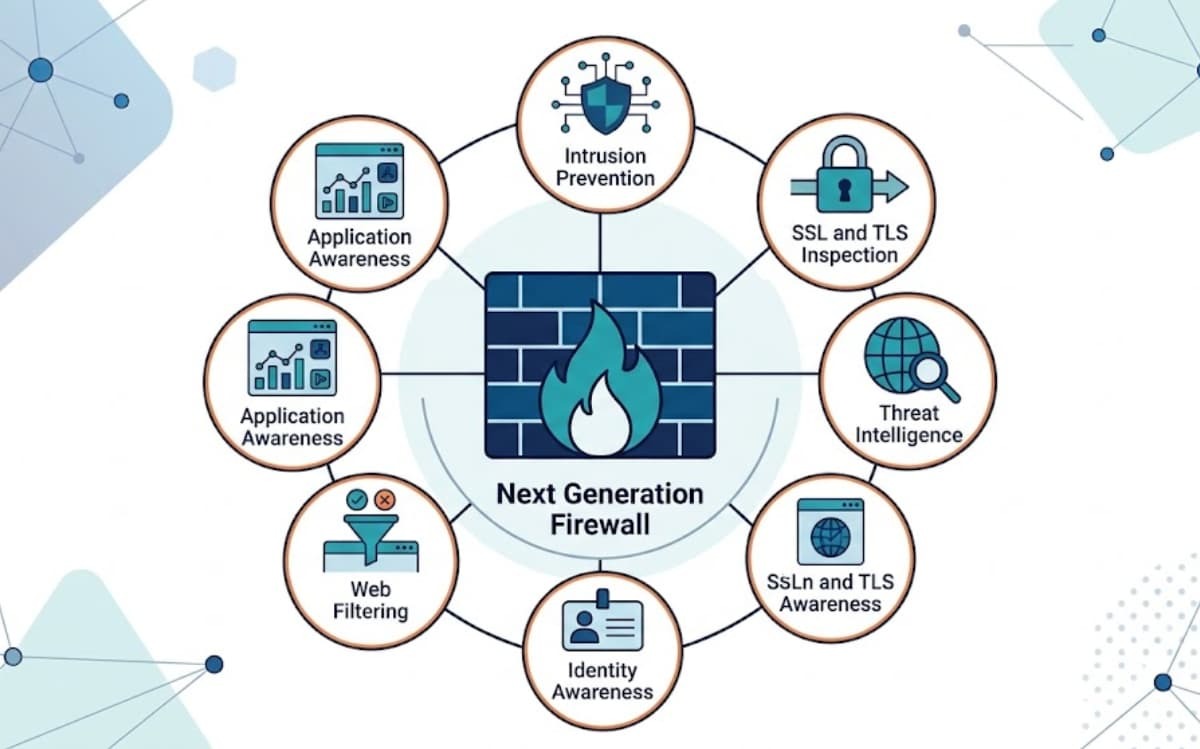
Modern next-generation firewalls inspect applications, user activity, and encrypted traffic instead of relying only on IP addresses and ports. That gives security teams better visibility into what’s happening across the network. And with most web traffic now encrypted, that extra visibility matters because hidden threats are harder to spot.
At MSSP Security, we believe the right firewall should block attacks without creating extra work or slowing daily operations. Keep deployment straightforward. Make policy management clear, and avoid tools that add unnecessary complexity.
A firewall that’s easy to manage is more likely to stay effective over time. Keep reading to see what features matter most before choosing an NGFW.
NGFW Comparison: Quick Decision Guide
A successful next generation firewall feature comparison looks beyond specifications and focuses on how well each capability supports your security, performance, and long term operational needs.
- Prioritize application awareness, deep packet inspection, and intrusion prevention instead of choosing the longest feature list.
- Compare performance with security services enabled, not firewall throughput alone.
- Evaluate how well the platform integrates with existing security operations, automation tools, and cloud environments.
What Makes A Next Generation Firewall Different From A Traditional Firewall?
A traditional firewall checks traffic using IP addresses, ports, and protocols. That is still useful. It can control which connections are allowed to enter or leave the network. But it does not explain what users are doing after those connections are established.
An NGFW looks much deeper. It inspects traffic across OSI Layers 3 through 7, making it possible to identify applications, users, and suspicious activity instead of only network addresses. That gives security teams more context before they decide whether traffic should be allowed.
“Application-aware firewalls are able to identify the applications that generated the network traffic, regardless of the port that is used.” – NIST
Traditional Firewall Vs. NGFW
| Capability | Traditional Firewall | Next Generation Firewall |
| Traffic inspection | Layers 3 and 4 | Layers 3 through 7 |
| Application visibility | Port based | Application aware |
| Threat protection | Stateful inspection | IPS and deep packet inspection |
| Encrypted traffic | Limited visibility | SSL and TLS inspection |
| Policy control | IP based | User, device, and application based |
| Malware protection | External tools | Built in security features |
The extra visibility makes a real difference. Security teams can see what is happening instead of making decisions with only part of the picture.
Which NGFW Features Should You Compare First?
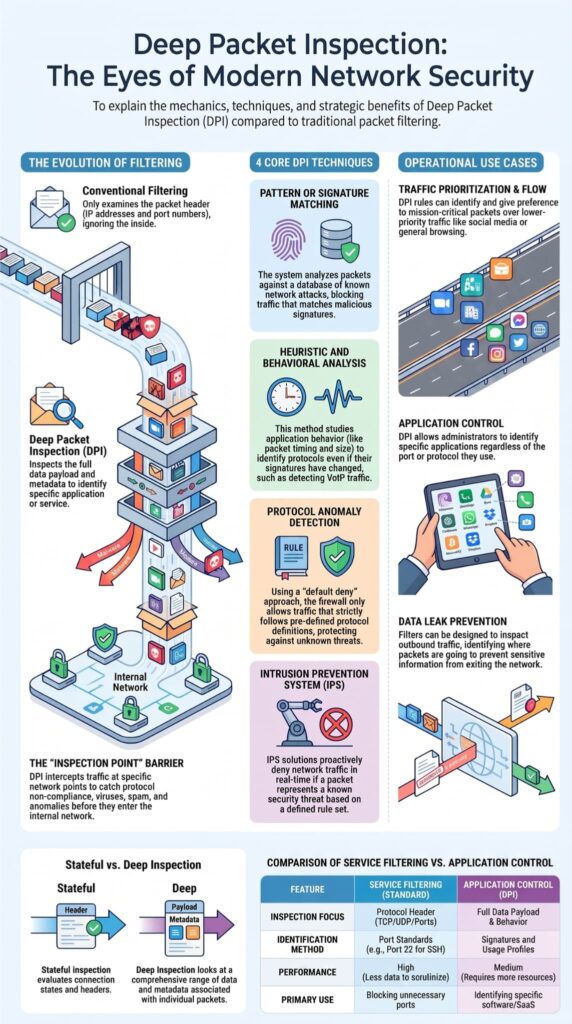
Not every feature deserves the same attention. We usually tell clients to ignore the marketing slides for a moment and think about daily operations. That changes the conversation, especially when comparing different managed firewall approaches instead of focusing only on feature checklists.
Application control is one of the first things to compare. Many business applications use the same ports, so blocking traffic by port number alone no longer works very well. A good NGFW identifies the application itself and lets administrators decide what users are allowed to do inside it.
Deep packet inspection is another feature that matters. Rather than looking only at packet headers, the firewall examines the traffic itself. That makes it easier to spot malware, suspicious files, and activity that would otherwise blend into normal network traffic.
Then there is the intrusion prevention system, or IPS. It checks traffic against known attack patterns and looks for behavior that should not be there. Fast detection matters. So does accuracy. Nobody wants to spend the day chasing alerts that turn out to be harmless.
Policy management deserves attention too. Honestly, it is one of the first things we look at during product evaluations. Some organizations have hundreds of firewall rules. Others have thousands. Rules pile up over the years, and very few people remove the old ones. The result is predictable. Policies become harder to understand, harder to maintain, and easier to get wrong.
A platform with clear policy management saves time long after deployment. That is easy to overlook during a product demo. Later, it becomes one of the features people appreciate the most.
Why Is SSL And TLS Inspection Now Essential?
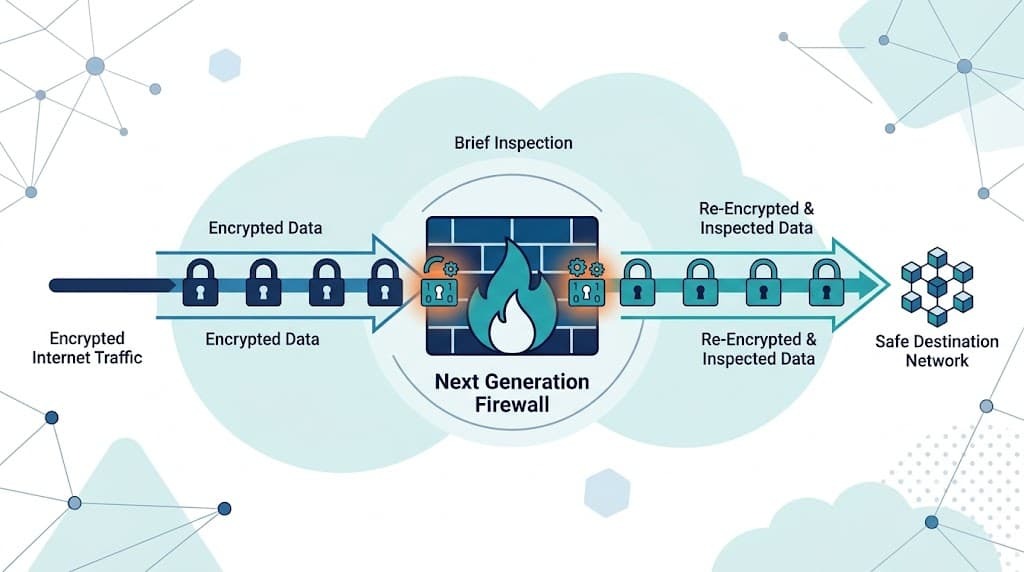
Today, most internet traffic is encrypted. That protects sensitive information, which is good. But it also makes life harder for security teams because attackers use the same encryption to hide malicious activity.
Without SSL and TLS inspection, malware downloads, phishing attempts, and command traffic can move through encrypted sessions without being inspected. The firewall cannot stop what it cannot see.
Organizations that use firewall management services are often better equipped to keep inspection policies updated and ensure encrypted traffic is monitored consistently as security requirements evolve.
How Does Identity Awareness Support Zero Trust?
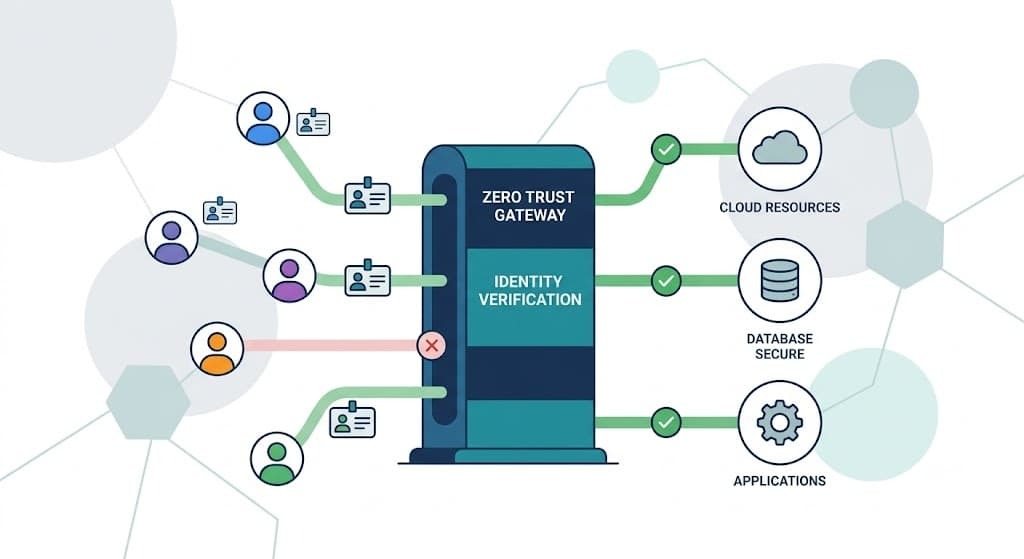
People no longer work from one office, on one network, using one company laptop. Work happens from home, in branch offices, on personal devices, and across cloud services. Security has changed because of that.
Identity awareness helps an NGFW make better decisions. Instead of trusting an IP address, it looks at who the user is, which device they are using, and whether they should have access in the first place. That gives security teams much more control without creating separate rules for every network.
We often recommend looking at identity features early in an evaluation. Some platforms make this process easy. Others need extra products or complicated setup. That difference becomes obvious after deployment.
Many organizations connect their firewall with services such as Microsoft Entra ID, Active Directory, and single sign on platforms. Once those systems work together, policies become much easier to manage.
Identity based access is also supported by academic research on Zero Trust. As organizations expand across cloud environments and remote work, verifying every access request becomes increasingly important.
“The zero trust model follows the idea that no network, whether internal or external, is trustworthy.” – Buck et al., Computers & Security (2021)
Which Threat Prevention Features Matter Most?
There is no single feature that stops every attack. We wish it were that easy. Modern threats come from many directions, so a firewall needs multiple layers of protection working together.
Signature based detection is still important because it quickly identifies known malware and common attack techniques. It is fast, reliable, and continues to block a large number of threats every day.
But attackers keep changing their methods. That is where behavior analysis becomes valuable. Rather than matching a known signature, it looks for activity that seems unusual. A file might behave differently than expected. A device may suddenly contact an unfamiliar server. Those small signs can point to an attack that has never been seen before.
Sandboxing adds another layer. Unknown files are opened inside a safe environment where the firewall can watch what happens before allowing them onto the production network. We have seen this catch suspicious files that looked harmless during an initial scan.
Threat intelligence also plays an important role. Good NGFW platforms receive regular updates that include newly discovered malicious domains, IP addresses, and malware indicators. The effectiveness of these capabilities also depends on choosing the right firewall technology platform for your security requirements.
FAQs
What firewall capabilities matter most for growing businesses?
When evaluating a next-generation firewall, focus on the firewall capabilities that support your business needs rather than choosing the solution with the most features. Important capabilities include application awareness, application control, deep packet inspection, threat prevention, URL filtering, SSL inspection, and traffic visibility. These features work together to strengthen security, improve network visibility, and simplify day to day firewall management.
Is deep packet inspection enough to stop modern cyber threats?
No. Deep packet inspection alone cannot stop every modern cyber threat. It is most effective when combined with an intrusion prevention system, an IPS engine, behavior analysis, signature-based detection, sandboxing, and advanced threat protection. Together, these capabilities improve malware protection, strengthen zero-day defense, and increase the chances of detecting sophisticated attacks before they cause damage.
How does centralized management improve firewall operations?
Centralized management allows security teams to manage firewall policies, monitor activity, and apply updates from a single location. It also improves dashboard visibility, logging and reporting, security policy enforcement, rulebase optimization, and compliance reporting. This approach reduces administrative effort, minimizes configuration errors, and improves operational efficiency across multiple sites and firewall deployments.
Why is encrypted traffic inspection becoming more important?
A growing percentage of network traffic is encrypted, making encrypted traffic inspection an important security capability. TLS inspection and SSL inspection help identify hidden threats within encrypted sessions while maintaining network visibility. When combined with threat intelligence, reputation filtering, DNS security, and application-layer control, encrypted traffic inspection provides stronger network protection against increasingly sophisticated cyber threats.
How can an NGFW comparison support long-term security planning?
An NGFW comparison should evaluate more than current security requirements. Organizations should compare deployment flexibility, scalability, high availability, cloud security, hybrid cloud support, API integration, and SIEM integration to ensure the firewall can support future business growth. A comprehensive evaluation helps improve the organization’s security posture while meeting operational and compliance requirements over time.
Choose A Firewall That Works In The Real World
A firewall that looks good on paper can still cause problems once it’s running in your environment. Real performance comes from handling everyday traffic with full security features turned on, while giving your team clear visibility into what’s happening. That’s what matters.
If you’re comparing options, MSSP Security can help you make the right choice with practical guidance based on your business needs, not vendor claims. From assessments to implementation support, our team helps you find a solution that fits today and continues to perform as your environment grows. Join our experts for a consultation to plan your next firewall investment with confidence.
References
- https://csrc.nist.gov/pubs/sp/800/41/r1/final
- https://www.sciencedirect.com/science/article/abs/pii/S0167404821002601