

MSSP Vendor Research California should focus on service fit, response speed, compliance needs, and real results. Rankings can help, but they shouldn’t decide the shortlist. California businesses face ransomware, cloud security risks, regulatory demands, and security staff shortages.
So, compare what each provider handles day to day. Check monitoring coverage, incident response, reporting, and support. Ask for examples of similar clients, too. That can expose gaps early.
A good MSSP should match your risks, budget, and internal team. Keep reading for a practical way to compare providers.
MSSP Vendor Research California: Quick Evaluation Wins
- MSSP Security and other providers should be compared against the same service, compliance, and response requirements.
- A strong evaluation combines 24/7 security monitoring, independent research, customer evidence, and measurable SLAs.
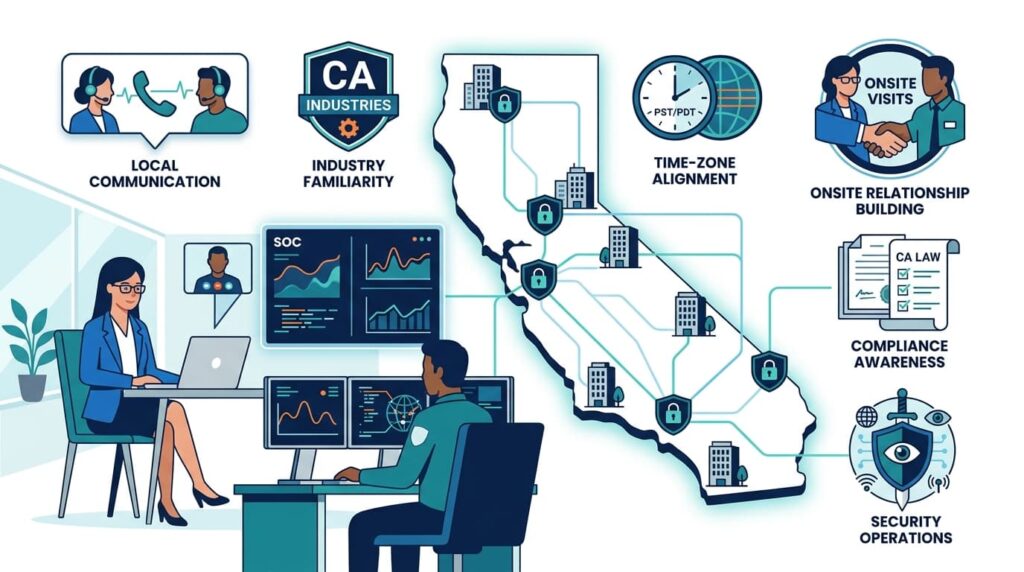
- California location can help with relationships and industry familiarity, but proven security operations matter more than geography.
What Should Businesses Know when Researching Top MSSP Providers in California?
MSSP selection should start with real security gaps, business risks, and compliance needs before researching top MSSP providers.
In our consulting work, we’ve seen buying decisions go wrong when requirements aren’t clear. A provider may have a strong SOC, but that doesn’t mean it fits the client’s setup or budget.
Gartner recommends setting clear objectives for MSSP engagements. Industry research emphasizes that managed security services must deliver clear operational value.
According to Gartner Market Guide for Outsourced Managed Security Services
“Today’s cybersecurity landscape is relentless, marked by advanced, persistent threats, complex hybrid multicloud environments, and stringent global regulations. Outsourced Managed Security Services allow the optimization of internal resources and accelerate security maturity and focus on strategic business objectives.” – Gartner Market Guide for Outsourced Managed Security Services
We agree. Services can range from firewall management and MDR to SIEM management, incident response, and vCISO support.
Before reviewing products, we document:
- Required security services
- Compliance requirements
- Security SLAs
- Technology needs
Establish an unyielding operational baseline before inviting vendors to demo. Presenting every candidate with identical architectural parameters prevents sales teams from steering the audit toward their preferred feature set.
How Should Businesses Compare MSSP Vendor Services in California?
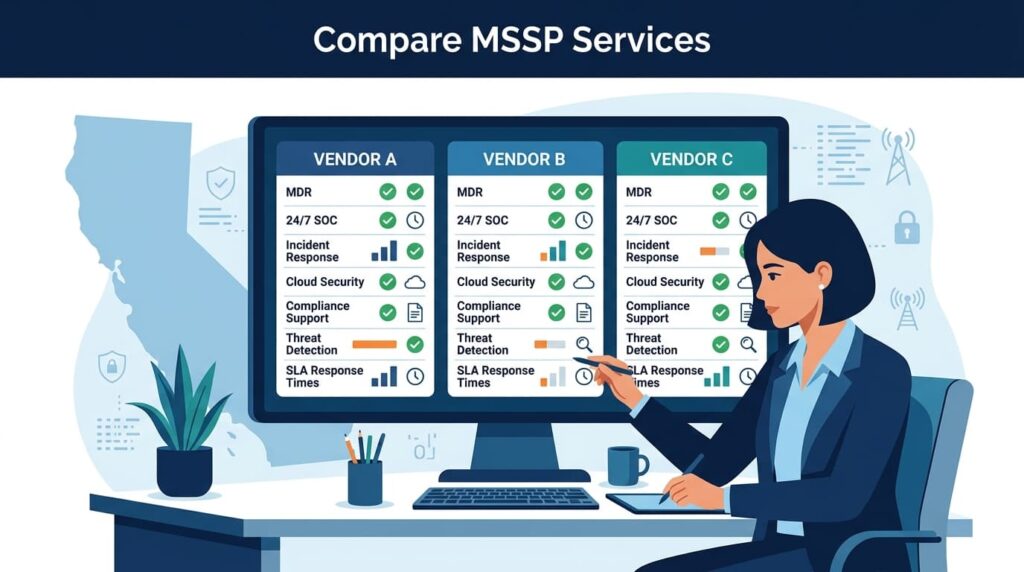
Businesses should focus on comparing MSSP vendor services by coverage, technology fit, response speed, compliance support, and actual service delivery.
We’ve seen vendors list many tools and services, yet the day-to-day support tells a different story. 24/7 security monitoring means little if nobody can explain the escalation process.
Our reviews also separate the product from the people running it. An XDR platform may improve detection, but buyers still need to know how analysts investigate alerts and handle incidents.
| Capability | What to compare |
| SOC | Coverage, analysts, escalation |
| MDR | Detection, response, remediation |
| SIEM | Integrations, tuning, log coverage |
| Cloud Security | Workloads, CSPM, identity |
| Compliance | HIPAA, SOC 2, PCI DSS |
| Incident Response | MTTD, MTTR, containment |
Ask vendors to walk through a ransomware alert. We use these tests to spot gaps before a product gets approved.
What Does a Gartner Magic Quadrant MSSP Review Actually Evaluate?
Credits: ActZero
Analyst charts measure software engineering, not the human beings answering your 2:00 AM emergency call. Gartner’s MDR evaluations rate platform capabilities, but in my experience, even a ‘Leader’ platform fails when backed by a Tier-1 analyst team with high turnover.
Use a Gartner Magic Quadrant MSSP review to evaluate software architecture, then assess operational teams through live technical walkthroughs. A SIEM Magic Quadrant, for example, can help assess SIEM platforms, but it won’t tell you which MSSP handles alerts or incidents better.
We use different sources for different checks:
- MSSP research for service models
- SIEM and XDR research for technology
- Customer feedback for service quality
- Demos for real-world testing
We’ve seen strong platforms paired with slow escalation or poor communication. So, analyst research should help build the shortlist, but our product audits and service checks should make the final call.
What Should Buyers Examine in a Forrester Wave Security Analytics Review?
A Forrester Wave security analytics review helps assess underlying platform tools, but does not measure the external team’s operational capabilities.
Forrester scores vendors using set criteria for their current products and strategy. However, relying solely on technology scores can obscure real operational challenges.
According to The Forrester Wave™: Security Analytics Platforms Analyst Report
“Traditional cyber security isn’t cutting it in this age of accelerated digital transformation. 60% of companies are using 25+ unique security products just to keep up. Businesses need an all-in-one security solution that allows them to gain comprehensive insights to quickly detect, investigate, and respond to threats.” – The Forrester Wave™: Security Analytics Platforms Analyst Report
Forrester scores vendors using set criteria for their current products and strategy. One recent review covered 10 vendors, but a high score doesn’t prove an MSSP can run the tool properly.
We’ve seen this gap during product reviews. So, our checks look at:
- Data from endpoints, networks, cloud, and identity
- Detection quality and false alerts
- Investigation and response workflows
- Threat hunting and intelligence
- Automation and analyst response
An XDR platform can pull signals into one view, but trained analysts still need to know what those alerts mean.
At MSSP Security, we ask what happens after an alert fires. Who investigates it? How fast does the customer get an answer? What can the provider contain? Keep reading for more.
How can Buyers Benefit from Finding Local MSSP Providers in California?
finding local MSSP providers can help with regional access and industry knowledge, but being close to California shouldn’t outweigh proven security skills.
A San Francisco MSSP, Bay Area managed security firm, or Southern California MSSP may know the local market. We’ve found that can help with onboarding, meetings, assessments, and incident calls. But local presence alone doesn’t prove much.
Each sector has different needs, too. California healthcare organizations must ensure providers meet HIPAA and HITECH standards, while local tech firms often require multi-cloud CSPM and IAM integrations.
We usually check:
- California office and contacts
- SOC location
- Local or remote support
- Relevant industry experience
- Escalation and response times
Our view is simple: local access helps, but it can’t replace 24/7 security monitoring or solid incident response. Keep reading to see what else we check.
How Should Businesses Approach Evaluating MSSP Vendor Reputation and Reviews?
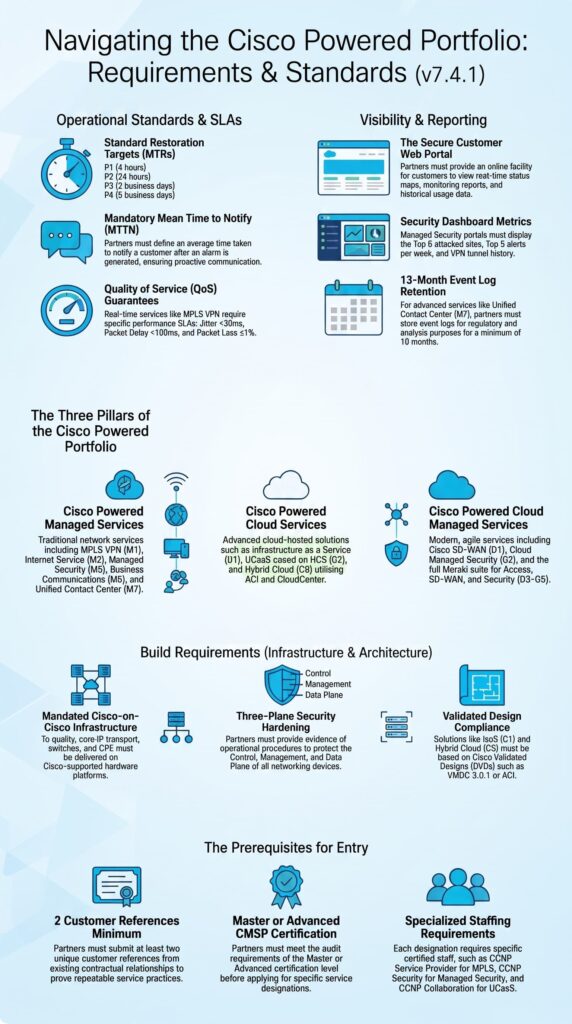
Evaluating MSSP vendor reputation and reviews should support technical due diligence, not replace it. We look at customer feedback, analyst research, references, certifications, and proof of service results.
A polished site can promise strong threat detection and response, but real customers often reveal how the provider acts during an urgent incident. We’ve found repeated feedback matters more than one glowing review.
Independent user feedback platforms like Gartner Peer Insights Outsourced Managed Security Services Reviews can offer authentic customer sentiment, though technical testing should remain primary. We also check:
- Gartner Peer Insights
- Gartner and Forrester
- Independent client reviews
- Case studies with results
- Direct customer references
- Certifications and audit records
At MSSP Security, we give more weight to evidence we can test. Ask how an MSSP handled a real incident. Check the SLA. Review the technical walkthrough. Those details tell us far more than a ranking. Keep reading for the next checks.
Which Specialized MSSP Provider Industry Requirements Should Influence Selection?
Specialized MSSP providers by industry matter when an MSSP must handle strict rules, sensitive data, or specialized systems.
We’ve seen healthcare, manufacturing, and tech firms need very different support. A provider should show real sector experience, not list every industry on its site.
| Industry | Key checks |
| Healthcare | HIPAA, HITECH, PHI |
| Financial | PCI DSS, SOX, controls |
| Government | CMMC, FedRAMP, ITAR |
| Manufacturing | OT security, segmentation |
| Technology | Cloud, IAM, applications |
| Retail | PCI DSS, endpoints |
Our audits look at how that experience affects compliance management, incident response, and the SOC. Ask for examples, audit evidence, and response records. Local knowledge helps, but it can’t cover weak security operations.
How Should an MSSP Vendor Capabilities Matrix Rank Providers?
A structured MSSP vendor capabilities matrix can help standardize weighted scoring and reduce marketing bias during vendor selection.
By evaluating vendors across 24/7 monitoring, MDR depth, and compliance verification using strict 0-to-3 evidentiary scoring, our clients eliminate marketing bias and identify actual operational fit before signing.
Without it, one MSSP may get praised for strong support while another gets judged on price.
| Category | Weight |
| Service and security SLAs | 30% |
| Security and compliance | 30% |
| Business and operational fit | 25% |
| Contract and pricing | 15% |
Score each provider from 0 to 3, then apply the same weights across the shortlist.
Our matrix checks 24/7 monitoring, MDR, SIEM, cloud security, vulnerability management, compliance support, incident response, and reporting.
At MSSP Security, we also check the evidence behind each score. If a vendor can’t prove a claim, we don’t give it full credit. That keeps our product audits grounded in facts.
What Process Works Best for Shortlisting Potential MSSP Partners?
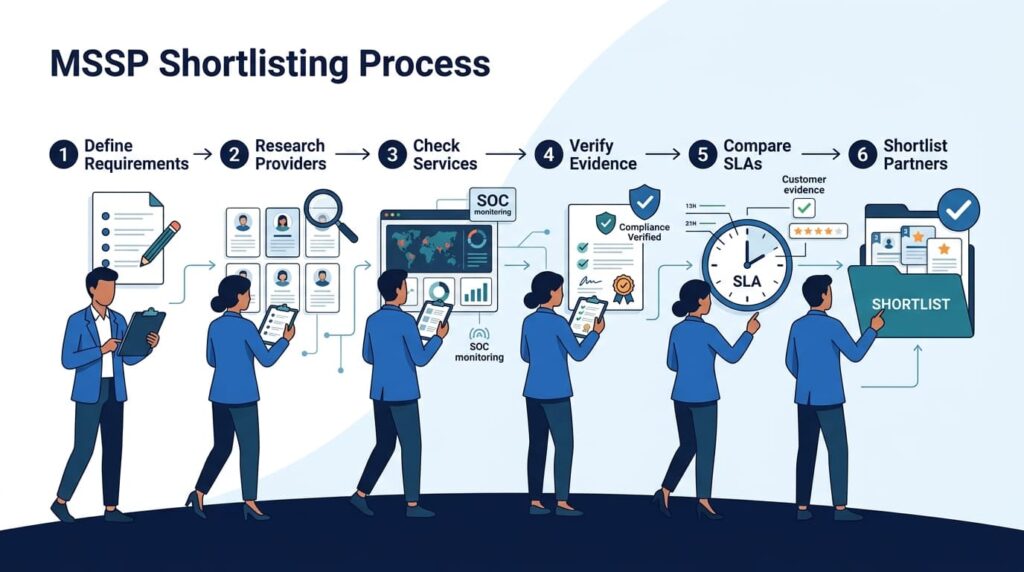
When shortlisting potential MSSP partners, limit your final evaluation to no more than three to five MSSPs. In our audit engagements, evaluating more than five vendors simultaneously creates analysis paralysis and dilutes technical scrutiny during live incident simulations.
- Define security and compliance gaps.
- List required services.
- Research suitable providers.
- Check industry and technology fit.
- Verify SOC and response coverage.
- Review certifications and compliance skills.
- Select 3–5 MSSPs.
- Request proposals and demos.
- Score each provider.
- Check customer references.
Keep the requirements the same for every vendor. We’ve seen two proposals use similar terms while offering very different service levels.
Ask what happens during a high-severity incident. Review the escalation path and customer duties. A structured evaluation and selection process also helps ensure the chosen provider can meet those requirements from the start.
How can Independent MSSP Vendor Analysis in California Improve Final Decisions?
Independent MSSP vendor analysis makes selection stronger by checking analyst research, customer feedback, provider records, certifications, and hands-on testing.
No source answers everything. Gartner can give market context, while Forrester may assess specific security tools or services. Customer references show what delivery looks like in practice.
| Evidence source | What it checks |
| Gartner | Market and technology research |
| Forrester | Security and MDR criteria |
| Gartner Peer Insights | Customer experience |
| Client references | Service delivery |
| Certifications | Compliance controls |
| SLA documents | Response commitments |
We’ve learned that claims need stronger proof as reviews move forward. A vendor may say it supports zero trust architecture, but a demo or client reference tells us far more.
At MSSP Security, we use that approach when auditing products. Marketing is the first check, not the last. Keep reading for more.
What Should the Final MSSP Vendor Research California Checklist Include?
The final review should confirm technical fit, service quality, compliance support, reputation, and contract terms before an MSSP gets approved.
At this point, we’re no longer asking who looks good on paper. We’re checking who can support the customer’s actual environment.
- 24/7 monitoring is documented
- MDR and response duties are clear
- SIEM and XDR fit is tested
- Local support is verified
- Industry experience has proof
- Compliance needs are mapped
- Analyst research is reviewed
- Customer references are checked
- SLAs and escalation terms are clear
- Pricing and extra fees are compared
- Transition and exit terms are reviewed
We’ve found that needs vary by client. A smaller firm may value quick support and clear pricing, while an enterprise may need multi-cloud coverage and deeper identity controls.
At MSSP Security, our final audits reflect those differences. There’s no single MSSP that fits everyone. Keep reading for the final selection steps.
How can MSSP Security Support MSSP Vendor Research California?
MSSP Security helps organizations review requirements, compare products, and spot security gaps before they commit to a long-term provider.
We’ve found that the better reviews begin with the client’s environment, not a vendor list. Our team looks at endpoint security, cloud workloads, IAM, vulnerability management, and incident response to see where products can fill real gaps.
From there, we can:
- Build a vendor comparison matrix
- Match products to business needs
- Review analyst and customer evidence
- Check compliance requirements
- Score vendors against set criteria
- Review SLAs and escalation terms
- Test finalists through demos and references
Some clients need MDR. Others may need SIEM management, SOC support, or vCISO services. We don’t push a larger package without a reason. The product should fit the risk. Keep reading to see how we approach the final review.
FAQs
How can a California business compare MSSP security SLAs before signing a contract?
Require vendors to define their SLAs using explicit Mean Time to Detect (MTTD) and Mean Time to Respond (MTTR) metrics. Your contract must specify who handles containment steps during an active ransomware attack and list exact response deadlines for critical alerts.
What security metrics should businesses request from an MSSP during monthly reviews?
Businesses should request MTTD, MTTR, incident volumes, false positive reduction, vulnerability management status, and unresolved risks. A security metrics dashboard can show performance trends, while executive security reporting should explain major risks and recommended actions in clear business terms.
When should a business add vCISO services to its MSSP engagement?
A business should consider vCISO services when it needs security leadership without hiring a full-time executive. A virtual chief information security officer can support risk management, security strategy, compliance management, policy development, and security posture management.
How should companies evaluate MSSP capabilities for cloud workloads and remote employees?
Companies should confirm that an MSSP can protect cloud workloads, endpoints, identities, and remote access. Ask about cloud security services, CSPM, endpoint security, IAM, and PAM. The provider should also explain how these controls support zero trust architecture.
What should healthcare and government contractors ask about MSSP compliance support?
Healthcare and government contractors should ask which compliance requirements the MSSP supports and what evidence it provides. Relevant areas may include HIPAA compliance, CMMC compliance, FedRAMP authorized environments, SOC 2 Type II, and ISO 27001 certification. Also confirm audit support and compliance reporting.
What Should Buyers Remember After MSSP Vendor Research California?
Choosing an MSSP can get confusing when every provider claims strong security, fast response, and deep expertise. The right choice is the one that fits your security goals and can back up its claims. That’s why consistent vendor checks, references, certifications, and SLA reviews matter.
For MSSP Vendor Research California, MSSP Security can help simplify the process with vendor-neutral consulting, product selection, and stack guidance. With 15+ years of experience and 48K+ projects completed, the team helps you compare options, validate needs, and make a decision that fits your organization.
References
- https://www.gartner.com/en/documents/7306730
- https://atiserve.com/the-forrester-wave-security-analytics-platforms/
Related Articles
- https://msspsecurity.com/evaluation-selection-and-onboarding-consulting/
- https://msspsecurity.com/researching-top-mssp-providers-california/
- https://msspsecurity.com/comparing-mssp-vendors-services-california/
- https://msspsecurity.com/gartner-magic-quadrant-mssp-review/
- https://msspsecurity.com/forrester-wave-security-analytics-review/
- https://msspsecurity.com/finding-local-mssp-providers-california/
- https://msspsecurity.com/evaluating-mssp-vendor-reputation-reviews/
- https://msspsecurity.com/specialized-mssp-providers-industry/
- https://msspsecurity.com/mssp-vendor-capabilities-matrix/
- https://msspsecurity.com/shortlisting-potential-mssp-partners/
- https://msspsecurity.com/independent-mssp-vendor-analysis-california/