

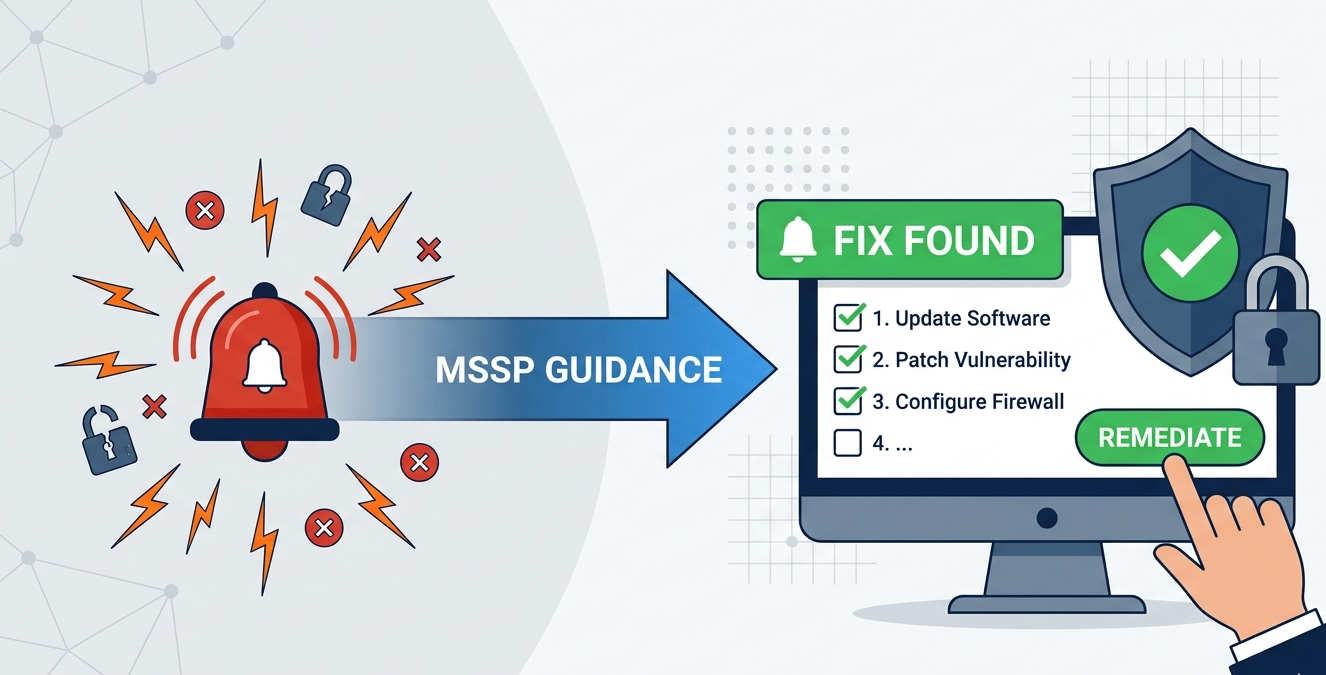
Understanding how MSSPs provide remediation guidance is critical in today’s fast-moving threat landscape. Many organizations can detect vulnerabilities but struggle to respond effectively.
MSSPs bridge this gap by transforming alerts into clear, actionable steps. Through expert analysis, prioritization, and continuous validation, they ensure every vulnerability is addressed properly. This structured approach reduces risk and improves response time. If you want to see how MSSPs turn detection into real protection, keep reading.
Key Insights Behind How MSSPs Provide Remediation Guidance
MSSPs turn complex security data into practical actions that organizations can follow with confidence.
- Actionable clarity: Step-by-step remediation tailored to each threat
- Smart prioritization: Focus on high-risk vulnerabilities first
- Ongoing validation: Ensure fixes are complete and effective
Understanding the Role of MSSPs in Remediation
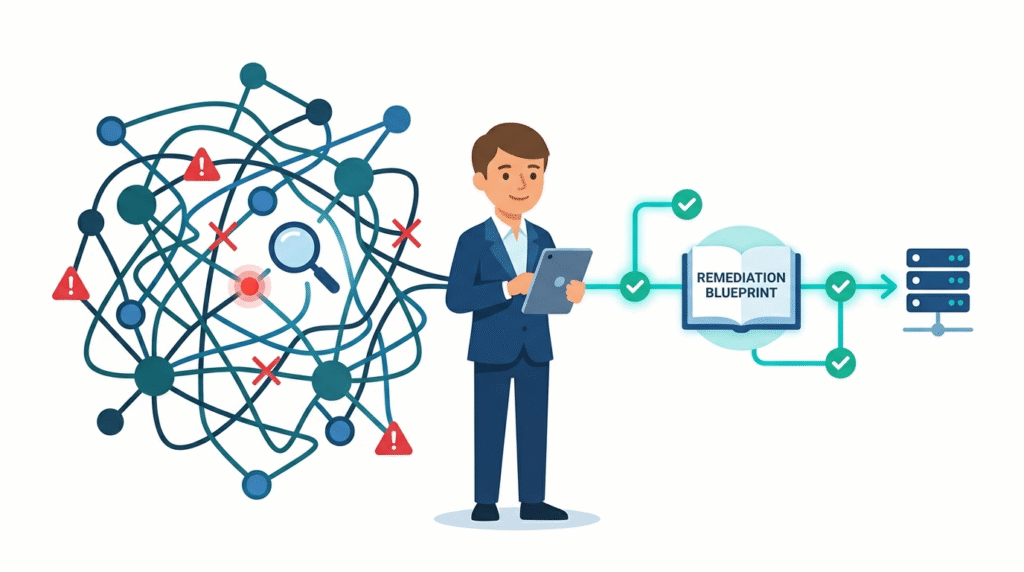
MSSPs act as strategic partners, not just service providers. When remediation guidance is explained thoroughly, it allows organizations to interpret security alerts and translate them into real-world fixes.
Their role includes:
- Analyzing alerts and threats
- Identifying root causes
- Delivering actionable recommendations
- Supporting implementation
This guidance reduces confusion and helps organizations act quickly and accurately.
Analyzing Threats Before Providing Guidance
MSSPs begin with deep threat analysis to ensure every recommendation is relevant and precise.
Key steps include:
- Threat classification
- Risk and impact analysis
- Root cause identification
- Environment assessment
Without this step, remediation efforts can be inefficient or misdirected.
Delivering Actionable Remediation Instructions
Credits: usecure
MSSPs convert technical findings into clear, executable steps. By providing various types of remediation recommendations, they help internal teams apply patches, adjust configurations, and strengthen defenses accurately.
Typical instructions include:
- Applying patches
- Adjusting configurations
- Strengthening access controls
- Improving network defenses
“Response actions must be consistent and follow a defined routine.” – Link Springer
Clear instructions reduce delays and ensure accurate implementation.
Using Risk-Based Prioritization
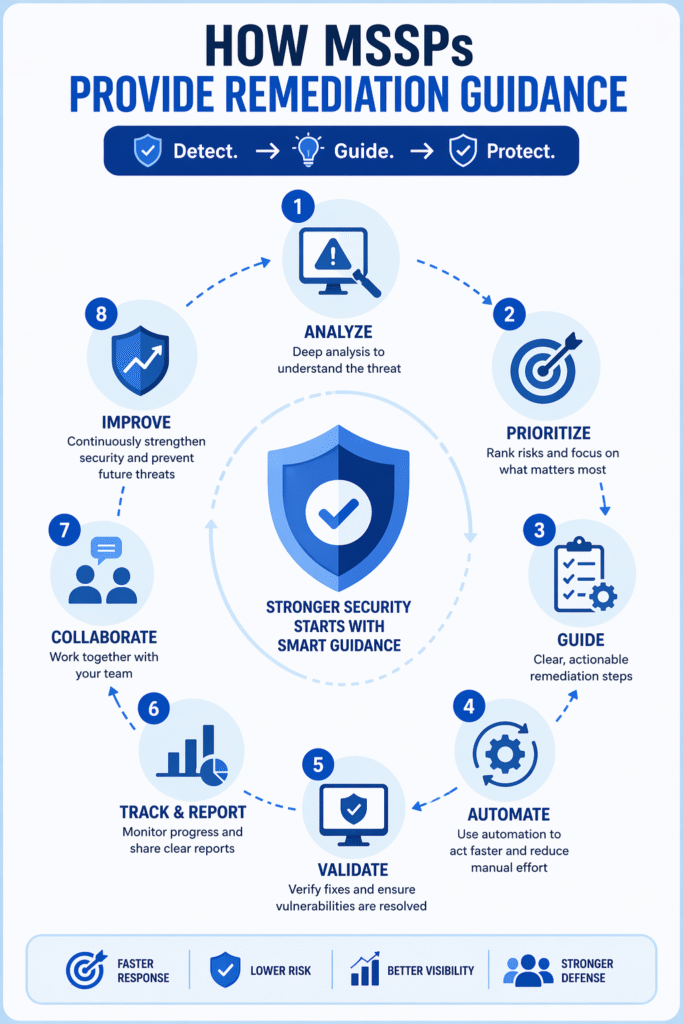
MSSPs evaluate severity and exploitability to ensure resources are used effectively. Prioritizing remediation steps based on business impact ensures that critical threats are addressed before lower-risk issues.
They evaluate:
- Severity and exploitability
- Business impact
- Exposure level
- Threat intelligence
“Incident response is an organized, strategic approach to minimize damage.” – TechTarget
This ensures critical threats are addressed before lower-risk issues.
Collaborating with Client Teams
Successful remediation depends on strong collaboration between MSSPs and client teams.
Key collaboration elements:
- Defined roles and responsibilities
- Continuous communication
- Alignment with IT processes
- Regular progress updates
This partnership ensures smooth and efficient remediation execution.
Leveraging Automation for Faster Remediation
Automation helps MSSPs accelerate response times and reduce manual workload.
Common automated actions:
- Patching systems
- Blocking malicious traffic
- Isolating compromised assets
- Triggering response workflows
Automation improves speed while maintaining consistency.
Validating and Verifying Fixes
After remediation, MSSPs verify that vulnerabilities are fully resolved.
Validation methods:
- Vulnerability rescans
- Security testing
- Configuration reviews
- Endpoint checks
This step prevents false confidence and ensures real security improvement.
Tracking and Reporting Remediation Progress
MSSPs provide clear visibility into remediation efforts.
| Aspect | Description | Benefit |
| Progress Tracking | Monitors remediation status | Improves transparency |
| SLA Monitoring | Ensures deadlines are met | Maintains accountability |
| Risk Reduction Metrics | Measures improvement | Demonstrates effectiveness |
Tracking ensures accountability and continuous improvement.
Ensuring Continuous Improvement

MSSPs go beyond fixing issues, they strengthen long-term security.
Continuous improvements include:
- Updating policies
- Enhancing configurations
- Training employees
- Refining response strategies
This proactive approach helps organizations stay resilient against future threats.
FAQ
What is the main benefit of MSSP remediation guidance?
It transforms complex security alerts into clear, actionable steps, helping organizations resolve vulnerabilities faster and with greater accuracy.
How do MSSPs prioritize vulnerabilities?
They use a risk-based approach, considering severity, exploitability, and business impact to focus on the most critical threats first.
Is automation enough for remediation?
Automation speeds up repetitive tasks, but expert analysis is still required for complex threats and strategic decisions.
How do MSSPs ensure remediation is effective?
Through validation processes like rescanning, monitoring, and measuring key performance metrics such as remediation time and risk reduction.
Turning Guidance into Results: How MSSPs Drive Effective Remediation
Understanding how MSSPs provide remediation guidance allows organizations to respond to threats with confidence. By combining expert analysis and structured workflows, MSSPs ensure vulnerabilities are resolved properly.
If you want to improve your security response, MSSP Security can help. We offer expert consulting to streamline operations, reduce tool sprawl, and boost service quality. With 15 years of experience and 48K+ projects, we help you build a tech stack that aligns with your business goals.
References
- https://link.springer.com/article/10.1007/s10207-025-01144-7
- https://www.techtarget.com/searchsecurity/Ultimate-guide-to-incident-response-and-management