


Understanding coordinating remediation efforts client is essential for organizations working with MSSPs or external security teams. Detecting vulnerabilities is only part of the process, effective remediation depends on how well teams collaborate to fix them.
Without clear coordination, remediation can be delayed, miscommunicated, or incorrectly implemented. MSSPs and clients must work together through structured communication, defined roles, and shared goals. This article explores how coordinated efforts lead to faster, more accurate security outcomes. Keep reading.
Key Insights on Coordinating Remediation Efforts Clients
Strong coordination ensures remediation is executed efficiently and without confusion.
- Clear communication: Ensures everyone understands required actions
- Defined responsibilities: Prevents overlap and delays
- Aligned workflows: Improves speed and accuracy of remediation
Why Coordination Matters in Remediation
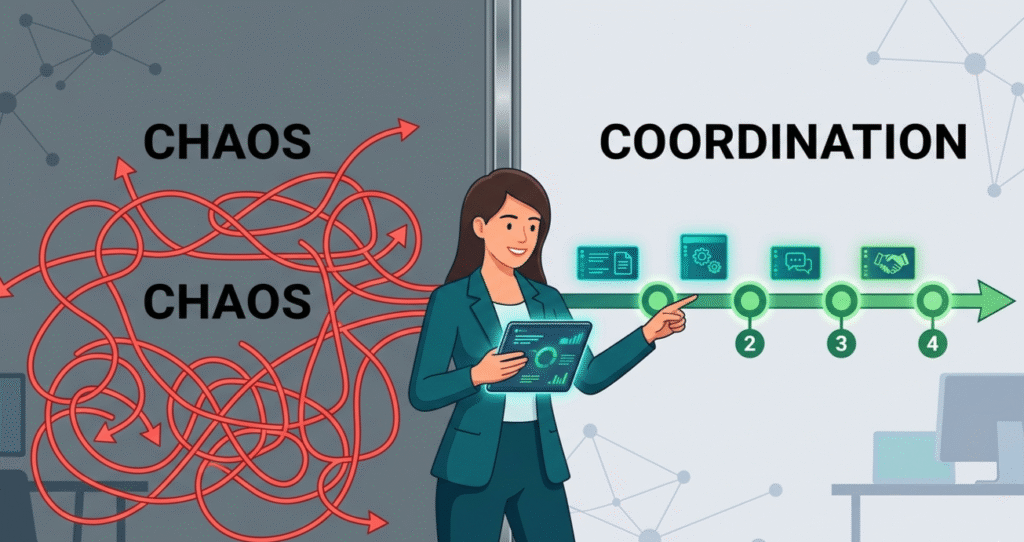
Remediation often involves multiple teams, including security analysts, IT staff, and business stakeholders. When remediation guidance is explained clearly to all parties, it prevents efforts from becoming fragmented or stalled.
Key challenges:
- Miscommunication between teams
- Delayed response times
- Inconsistent implementation
Effective coordination ensures that all parties work toward the same objective, resolving vulnerabilities quickly and correctly.
Defining Roles and Responsibilities
Clear role definition is critical for successful coordination. Understanding how MSSPs provide remediation guidance and monitoring ensures that internal IT teams can implement fixes without overlapping responsibilities.
Typical roles include:
- MSSPs: Provide guidance and monitoring
- IT teams: Implement fixes
- Management: Approve changes and resources
“Coordination is required to ensure that incident response activities are carried out efficiently.” – Wikipedia
When responsibilities are clear, remediation becomes faster and more organized.
Establishing Clear Communication Channels
Communication is the foundation of effective coordination.
“Effective communication and coordination are critical components of successful incident response and recovery.” – ScienceDirect
Best practices:
- Use centralized communication tools
- Provide regular updates
- Share clear remediation instructions
- Define escalation paths
Clear communication reduces confusion and ensures that actions are executed correctly.
Aligning Remediation with Business Operations
Remediation must be aligned with business needs to avoid disruption.
Key considerations:
- System availability requirements
- Business-critical processes
- Maintenance windows
Balancing security and operations ensures that remediation does not negatively impact productivity.
Using Structured Workflows and Processes
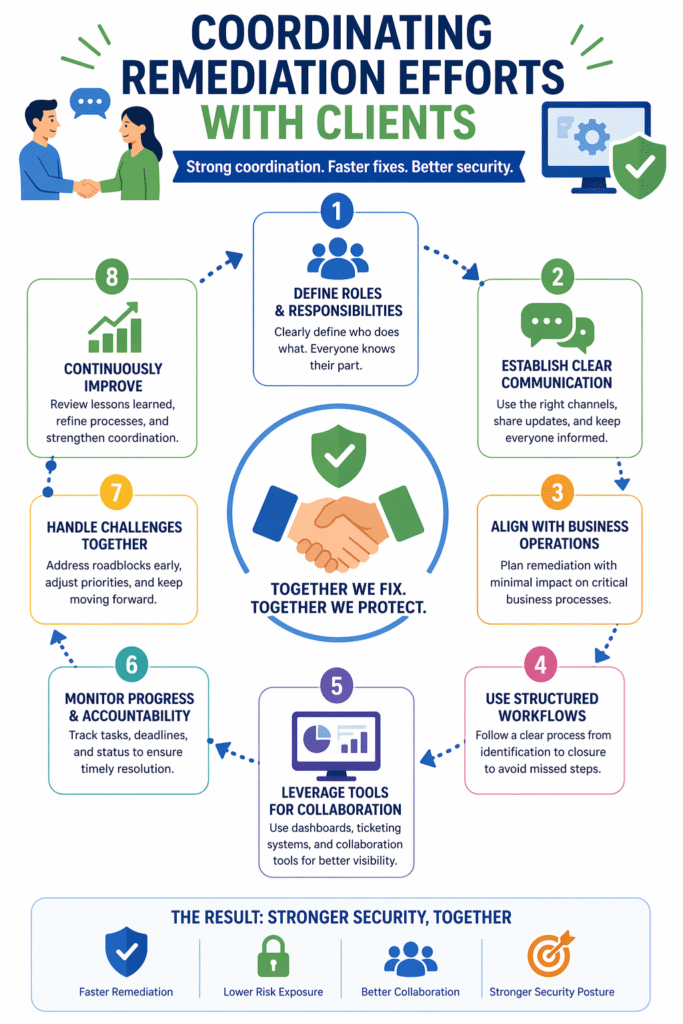
Structured workflows help standardize remediation efforts across teams.
Common elements:
- Ticketing systems
- Approval processes
- Step-by-step remediation plans
These workflows improve consistency and reduce the risk of missed actions.
Leveraging Tools for Collaboration
Technology plays a key role in coordinating remediation.
Common tools include:
- Security dashboards
- Ticketing platforms
- Communication systems
These tools provide visibility and help teams stay aligned throughout the remediation process.
Monitoring Progress and Accountability
Tracking progress ensures accountability and transparency throughout the fix cycle. By prioritizing remediation steps during the monitoring phase, organizations ensure that the most critical tasks stay on track and meet established deadlines.
| Aspect | Description | Benefit |
| Task Tracking | Monitors assigned remediation tasks | Ensures completion |
| SLA Monitoring | Tracks deadlines | Improves response time |
| Status Reporting | Provides updates | Enhances transparency |
Monitoring ensures that remediation efforts stay on track.
Handling Challenges in Coordination

Even with planning, coordination challenges can arise.
Common issues:
- Communication gaps
- Resource limitations
- Conflicting priorities
Addressing these challenges requires flexibility, clear leadership, and continuous improvement.
Continuous Improvement in Coordination
Organizations should refine their coordination processes over time.
Improvement strategies:
- Reviewing past incidents
- Updating workflows
- Enhancing communication practices
“Effective incident response improves through continuous learning and coordination.” – https://www.sciencedirect.com/science/article/pii/S0167404822000961
Continuous improvement strengthens future remediation efforts.
FAQ
What does coordinating remediation efforts mean?
It refers to the process of aligning different teams, such as MSSPs, IT staff, and management, to work together in resolving vulnerabilities efficiently and accurately.
Why is coordination important in remediation?
Because remediation involves multiple stakeholders, and without coordination, efforts can become disorganized, leading to delays, errors, or incomplete fixes.
Who is responsible for remediation execution?
Typically, MSSPs provide guidance and oversight, while internal IT teams implement the fixes. However, responsibilities may vary depending on the organization and service agreement.
How can organizations improve coordination?
By establishing clear communication channels, defining roles, using collaboration tools, and continuously reviewing and improving their processes.
Stronger Together: Coordinating Remediation Efforts for Better Security Outcomes
Coordinating remediation efforts with clients ensures that vulnerabilities are resolved quickly, accurately, and with minimal disruption. Through clear communication, defined roles, and structured workflows, organizations can significantly improve their response capabilities.
If you want to enhance your remediation coordination and reduce security risks, MSSP Security can help streamline collaboration and strengthen your overall cybersecurity strategy.
References
- https://en.wikipedia.org/wiki/Computer_security_incident_management
- https://www.sciencedirect.com/science/article/abs/pii/S0167404816300748?via%3Dihub