

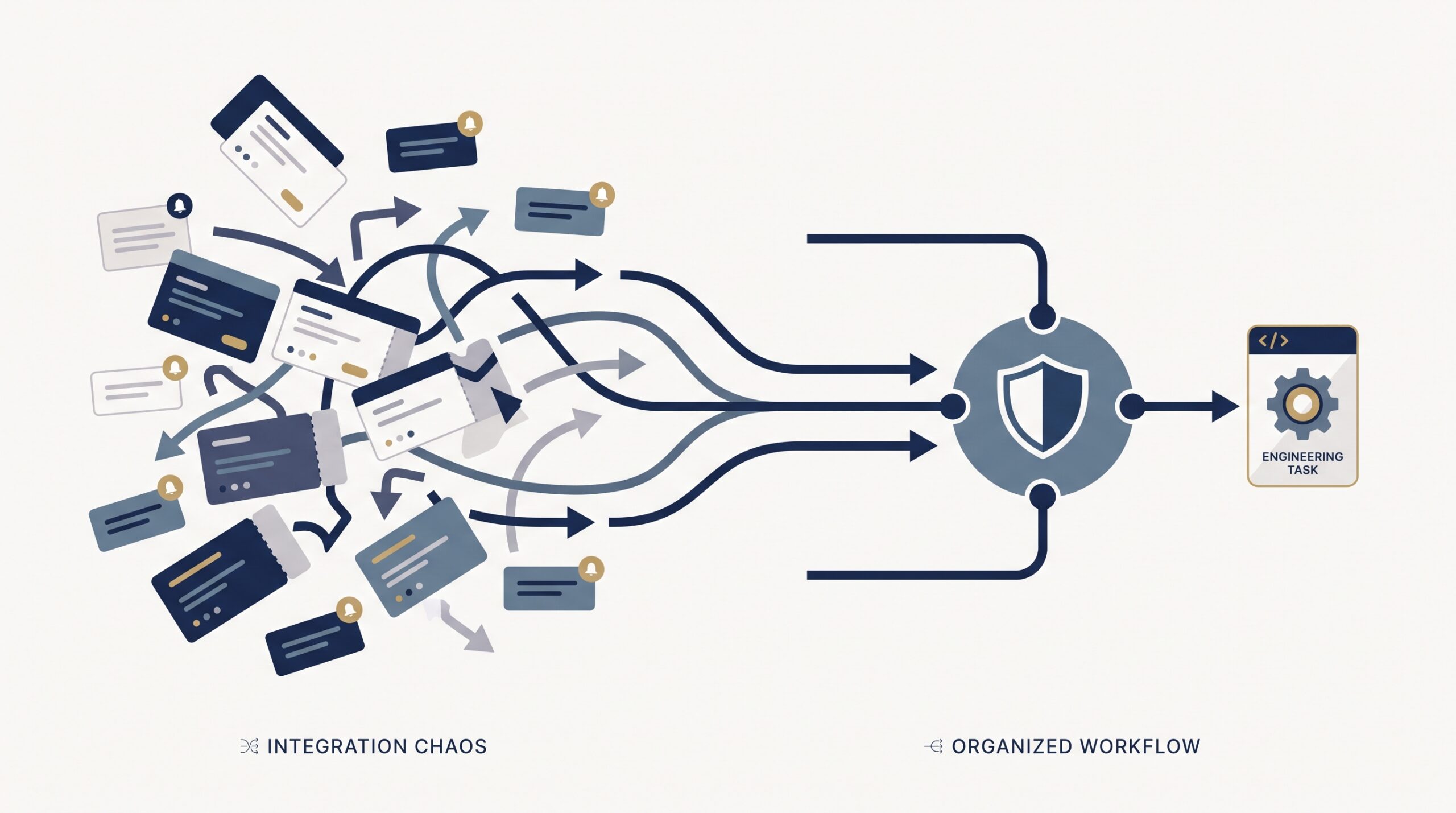
ServiceNow and Jira can give an MSSP a clear path from security monitoring to incident handling and engineering remediation. The key is to connect the systems without losing control of tenant data, ticket ownership, or update rules.
ServiceNow can act as the operational hub, while Jira handles engineering work that needs deeper investigation or remediation. APIs then move only the fields each system needs, with defined rules for what can be created, updated, or closed.
At MSSP Security, the focus is on clean field mapping, tenant isolation, and controlled two-way updates. Keep reading to see how this setup works in practice.
MSSP Integration Quick Wins
These are the core points to keep in mind when connecting MSSP security operations across ServiceNow and Jira.
- ServiceNow can serve as the MSSP operational hub.
- Bidirectional syncing should be selective and tenant-aware.
- Secure APIs, field mapping, and loop prevention are essential.
Why Integrate an MSSP With ServiceNow and Jira?
An MSSP often has several teams working on the same security incident. The SOC may find the issue first. The client’s IT team may handle the affected device. Engineering may need to fix the software behind the problem.
Without a good connection between systems, people have to pass information around themselves.
That can get messy.
ServiceNow can hold the main security incident and client workflow. Jira can hold the engineering task. The two systems can then share the fields that matter, instead of copying the entire ticket back and forth.
This approach also makes MSSP ticketing systems easier to manage when different teams need access to the same incident without sharing every detail.
We see this often when reviewing products for MSSPs. A tool may offer dozens of integration options, but that doesn’t mean an MSSP needs to use all of them. The useful question is more basic. What information needs to move, who owns it, and when should it move?
A good setup can help with:
- Faster incident routing
- Fewer manual updates
- Clearer task ownership
- Better remediation tracking
- Easier incident reviews
NIST published SP 800 61 Revision 3 in April 2025. The guidance places incident response within a wider risk management process. Keeping related security work connected can make that process easier to track.
How Does the MSSP ServiceNow and Jira Architecture Work?
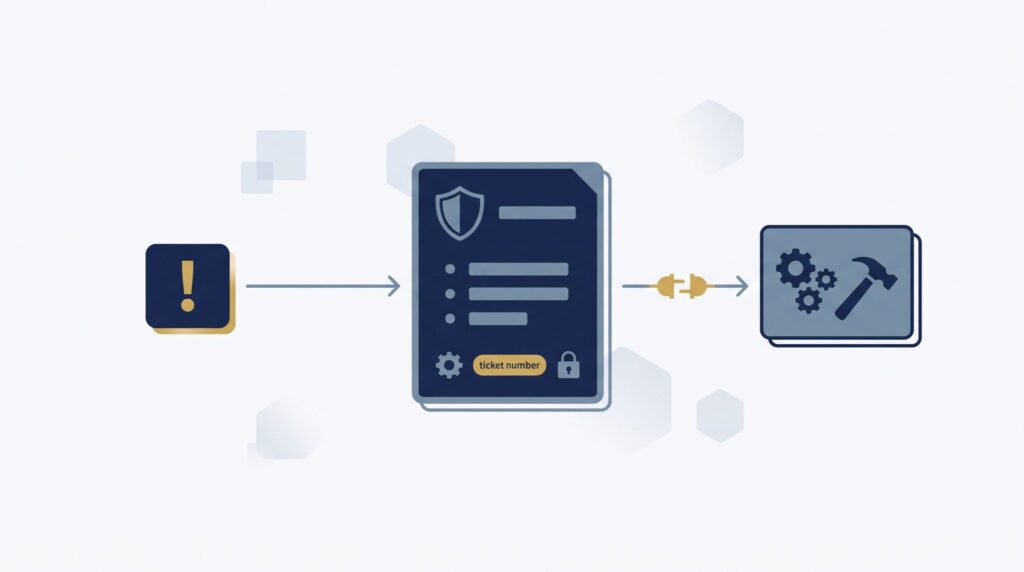
A common design puts ServiceNow in the middle. Jira projects then connect to it through APIs, webhooks, or an integration platform.
The flow can be as simple as:
Security alert → ServiceNow incident → Client routing → Jira issue → Engineering work → Jira update → ServiceNow update
The actual setup will depend on the MSSP. Some teams may bring alerts into ServiceNow from their SIEM. Others may use a SOAR platform to add context before creating the incident.
“Incident response is a critical part of cybersecurity risk management and should be integrated across organizational operations.” – NIST
Why Does Multi Tenancy Matter?
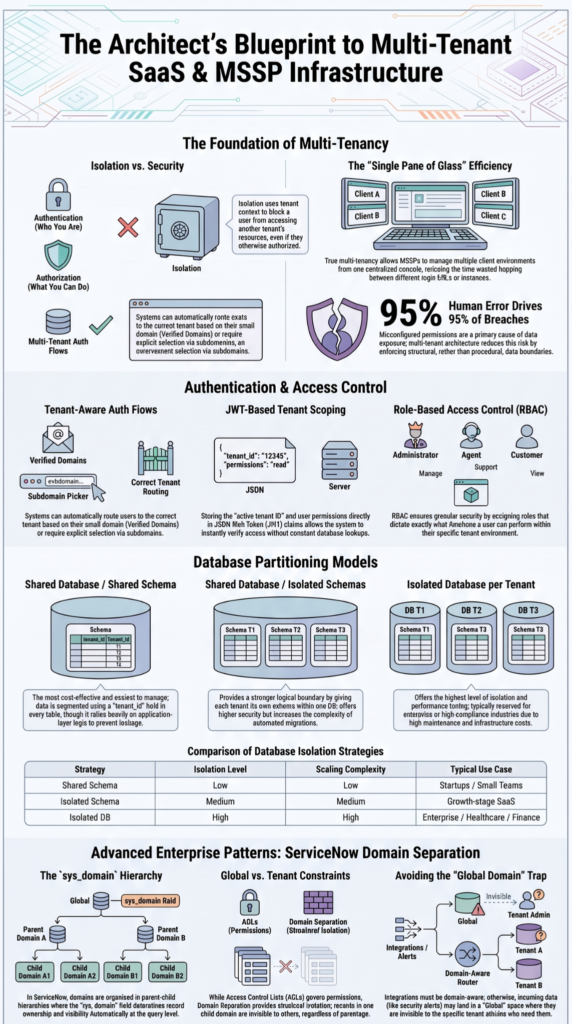
An MSSP can manage many clients from the same operational environment. That makes tenant separation a core part of the design.
A Client A ticket should never end up in Client B’s Jira project. The same rule applies to comments, attachments, credentials, and automated updates.
Controls can include:
- Client identifiers
- Role based access
- Tenant specific credentials
- Jira project permissions
- Routing rules
- Field sharing rules
ServiceNow domain separation may also help where stronger separation is needed.
The exact controls depend on the MSSP’s setup. We check those details when reviewing a product because an integration can look secure on paper while still having gaps in its actual workflow.
Should ServiceNow and Jira Sync in Both Directions?
It can make sense.
A ServiceNow incident may create a Jira issue for engineering. Later, the engineer updates Jira after fixing the problem. That approved update can then return to ServiceNow.
But the two systems should not fight over the same fields.
For example, ServiceNow might own the client facing status and security severity. Jira might own the engineering status and technical fix details.
“Effective information sharing saves time and effort in incident response and post-mortem analysis.” –ENISA
Each field needs a clear owner.
Otherwise, one update can overwrite another. In some cases, that can also create a loop where the same change keeps moving between the systems.
Which Ticket Updates Should Synchronize?
Only the fields that support the workflow should move between systems.
| ServiceNow owns | Jira owns |
| Security severity | Engineering status |
| Client status | Technical remediation |
| SLA details | Development details |
| Client communication | Engineering comments |
The exact list will vary by client and workflow. We normally review it before implementation and test it with real incident examples.
Internal notes should usually stay inside the MSSP environment. They may contain early theories, sensitive investigation details, or information that the client does not need.
That boundary is worth checking early.
A clean integration isn’t about moving more data. It’s about moving the right data to the right place.
How Should ServiceNow and Jira Map Incident Statuses?
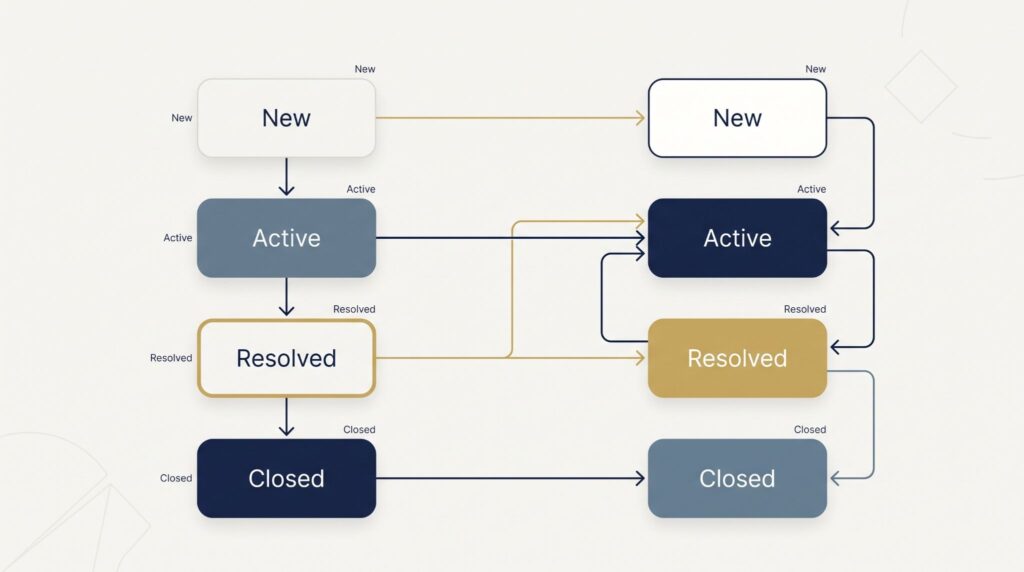
ServiceNow and Jira use different workflow structures. So, an MSSP should not assume that one status can be copied directly into the other system.
ServiceNow may use states such as New, In Progress, Resolved, and Closed. Jira projects can use different names and transition rules. One project may allow an issue to move straight to resolution. Another may require an approval step first.
We learned to treat the meaning of the status as the important part, not the label itself.
For example, when a ServiceNow incident moves to Resolved, the integration should check what Jira needs before marking its issue as resolved. It may need a specific transition, a resolution value, or confirmation from the engineering team.
That extra check helps avoid false closures.
What Should the Status Mapping Look Like?
A small mapping table can keep the rules clear.
| ServiceNow | Meaning | Jira action |
| New | New incident | Create issue |
| In Progress | Investigation active | Start work |
| Resolved | Fix completed | Resolve issue |
| Closed | Incident confirmed closed | Close issue |
The actual Jira transition will depend on the client’s project.
This is one area we pay close attention to during product audits. An integration can support Jira and ServiceNow in general, yet still fail to support the workflow an MSSP actually uses.
So test the real workflow.
Don’t rely only on the product page or a basic demo.
How Should MSSPs Handle Integration Errors?
No integration runs perfectly all the time. APIs can time out. Credentials can expire. A Jira project can change its workflow. Even a small field change can stop an update from reaching the other system. A reliable API integration should account for these failures instead of assuming every ticket update will succeed.
The important part is knowing what happens next.
A failed update should create a clear error record. The MSSP team should be able to see which ticket failed, why it failed, and whether the system will try again.
How Should MSSPs Choose an Integration Product?
Source: Justin Meadows
The integration product should match the MSSP’s workflow, not the other way around.
Start by listing the systems involved. Then document the ticket fields, workflow states, clients, permissions, and expected sync direction. The same review should cover how ticket creation is triggered, which alerts can create incidents automatically, and what information should be included.
From there, compare products against those requirements.
A few questions can help:
- Does it support the required APIs?
- Can it separate client tenants?
- Can it map custom fields?
- Does it support two way updates?
- Can it prevent sync loops?
- How are errors reported?
- Can administrators audit changes?
- Can credentials be separated by client?
We use this kind of checklist when helping MSSPs select new products. It gives the team something concrete to test instead of relying on a polished demonstration.
And sometimes the answer is that a smaller setup is enough. Not every MSSP needs a large integration layer with dozens of automated rules.
FAQs
How do you handle failed ticket synchronization between security and IT teams?
Failed ticket synchronization can leave security incidents open in one system while the corresponding IT task is already closed. Teams should monitor API errors, webhook failures, authentication issues, and rejected field values. A retry process should preserve the original incident ID and prevent duplicate tickets. This gives security analysts a reliable record when investigating synchronization failures.
How should an MSSP integration handle different client priorities and severity levels?
An MSSP integration should map each client’s alert severity to a consistent incident priority before creating or updating tickets. For example, a critical security alert may require immediate escalation, while a low-risk event can follow a standard queue. Clear severity mapping prevents inconsistent incident management and helps security operations teams apply the correct response workflow across multiple clients.
What happens when the same security incident is updated in both systems?
When both systems update the same incident, the integration needs clear ownership rules for each field. Status, assignment, priority, comments, and resolution data should not automatically overwrite one another without defined conditions. A bi-directional sync can use timestamps, source identifiers, and update rules to prevent conflicts, duplicate changes, and synchronization loops during incident response.
How can an MSSP integration protect client data across multiple tenants?
Client data should remain isolated throughout every stage of the integration, including ticket creation, synchronization, reporting, and API requests. Multi-tenancy support can use tenant identifiers, domain separation, access controls, and client-specific field mapping. These controls reduce the risk of exposing one client’s security incidents or remediation details to another client during shared security operations.
How do you measure whether ticket automation is actually improving security operations?
Teams can measure ticket automation by comparing metrics before and after implementation. Useful measures include MTTR, mean time to respond, alert-to-ticket time, duplicate ticket rates, failed synchronization attempts, and analyst handling time. Reviewing these metrics regularly shows whether workflow automation is reducing manual work and improving incident response instead of simply moving tasks between systems.
A Good ServiceNow and Jira Integration Keeps Workflows Clear
A good ServiceNow and Jira integration doesn’t force both platforms to work the same way. ServiceNow can manage security incidents and client workflows, while Jira handles engineering remediation. The integration simply connects the right steps. For an MSSP, clear tenant separation, controlled data sharing, reliable status mapping, and proper error handling matter most.
Before implementation, review how the products handle permissions, field mapping, workflows, and logging. It’s easier to fix gaps before they reach production. MSSP Security can help assess and audit the products behind your MSSP workflow, giving you a clearer view of what needs attention before changes are made.
References
- https://www.nist.gov/news-events/news/2025/04/nist-revises-sp-800-61-incident-response-recommendations-and-considerations
- https://www.enisa.europa.eu/news/enisa-news/enisa-calls-for-better-data-sharing-and-interoperability-among-certs-to-mitigate-cyberattacks