

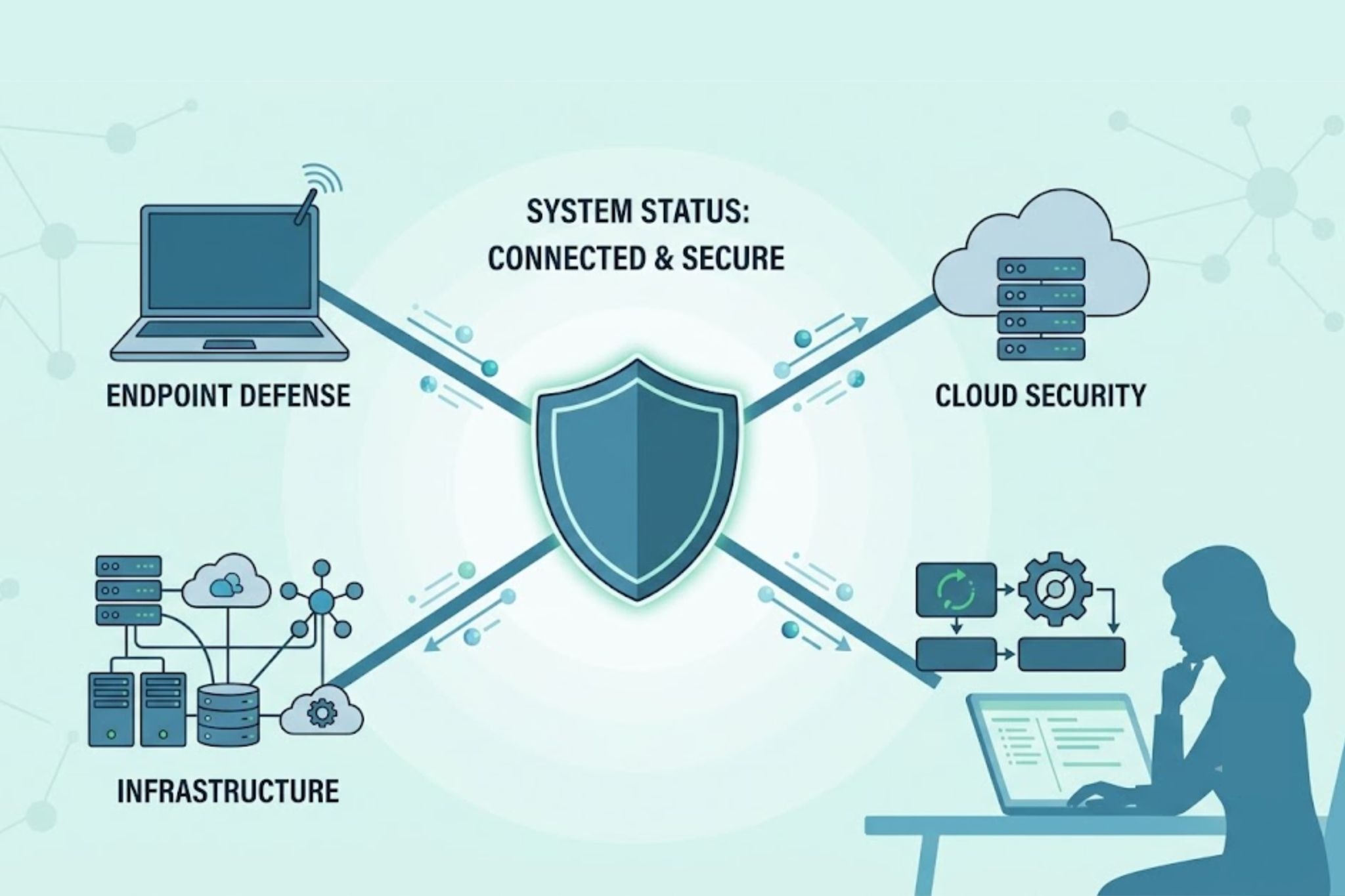
Integrating EDR, XDR, SIEM, and SOAR helps security teams connect threat data, investigations, and response actions in one workflow. The goal is not to add more tools, but to make existing security systems work together.
At MSSP Security, we have seen organizations spend less time sorting through separate alerts when endpoint data, threat intelligence, and automation are connected properly. Each technology has a different purpose, and the best results come from using them together.
This guide explains how these security layers fit together and what to consider before building your strategy. Keep reading to learn more.
Integration Wins: Faster Detection and Response
Integrating security tools helps organizations create a smoother threat detection process with better visibility, automation, and coordinated response.
- Integration connects endpoint, cloud, network, identity, and email security signals into a unified detection workflow.
- Automated response reduces manual investigation time while improving incident prioritization and containment.
- A connected security stack strengthens visibility, compliance reporting, and long-term cyber defense.
Why Are EDR, XDR, SIEM, and SOAR Integration Becoming Essential?
Security teams have more tools than ever before. That sounds like a good thing. Sometimes it is. But there is another side to it.
More tools can also mean more alerts, more dashboards, and more information to sort through.
A real attack does not usually stay in one place. It may begin with a phishing email, move to a stolen account, reach an employee laptop, and then spread into cloud systems. If each security tool works alone, analysts have to manually connect every piece of the attack.
We see this often when helping MSSPs review and audit new security products. A platform may look impressive during a vendor demo, but the real test comes later. Does it connect with existing tools? Does it reduce analyst workload? Can the team understand an incident faster?
Those questions matter more than a long feature list.
An integrated security stack helps bring together:
- Endpoint activity from EDR
- Security signals from XDR
- Log data from SIEM
- Automated actions from SOAR
The purpose is not to collect more information. It is to make the right information easier to use.
“The NIST Cybersecurity Framework provides a common language for understanding, managing, and expressing cybersecurity risk both internally and externally. It can be used to help identify and prioritize actions for reducing cybersecurity risk.” – National Institute of Standards and Technology (NIST)
Where Does SIEM Fit Into An Integrated Security Architecture?
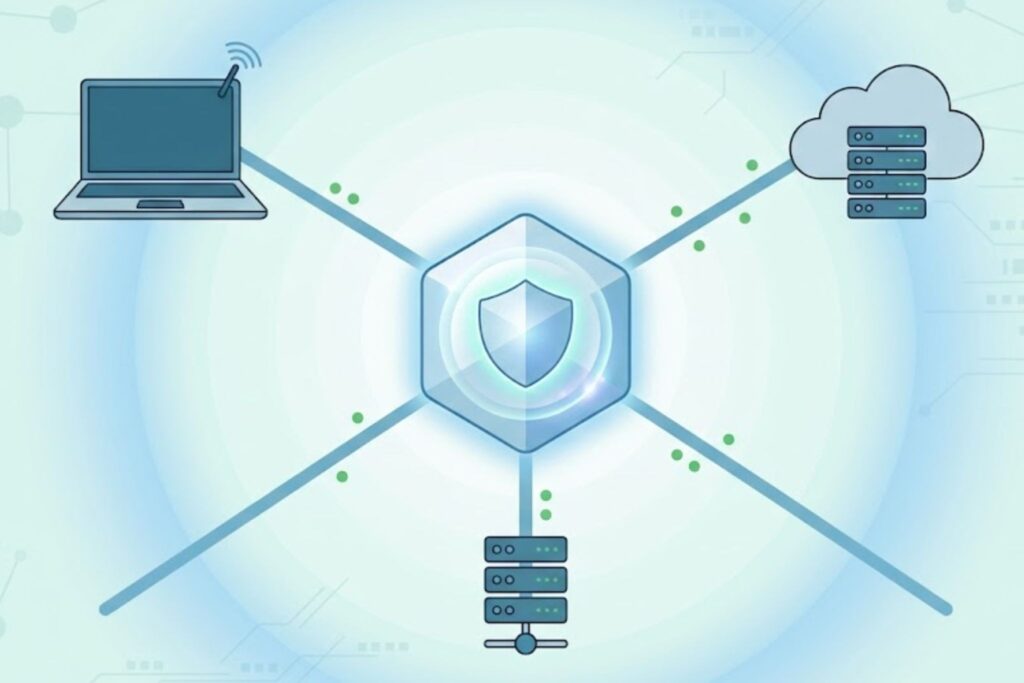
Security Information and Event Management (SIEM) provides a central place to collect and review security data.
SIEM platforms help with:
- Log collection
- Event analysis
- Compliance reports
- Audit records
- Historical reviews
EDR focuses on endpoints. SIEM looks across the wider environment.
It can collect information from firewalls, applications, identity systems, cloud platforms, and network devices. This helps security teams look back at events and understand what happened over time.
One mistake we see during assessments is expecting SIEM to solve everything by itself. It is not a magic box. Before building a connected security stack, organizations should also consider an EDR XDR tools review to understand how different detection technologies fit together and support broader security operations.
SIEM works best when it receives useful information from other security tools and helps analysts connect the bigger picture.
A common setup uses different tools for different jobs.
| Security Layer | Main Function | Example Use |
| EDR | Monitor endpoints | Find device threats |
| XDR | Connect security signals | Link attack activity |
| SIEM | Analyze security data | Support investigations |
| SOAR | Automate actions | Speed up response |
How Does SOAR Turn Security Insights Into Action?
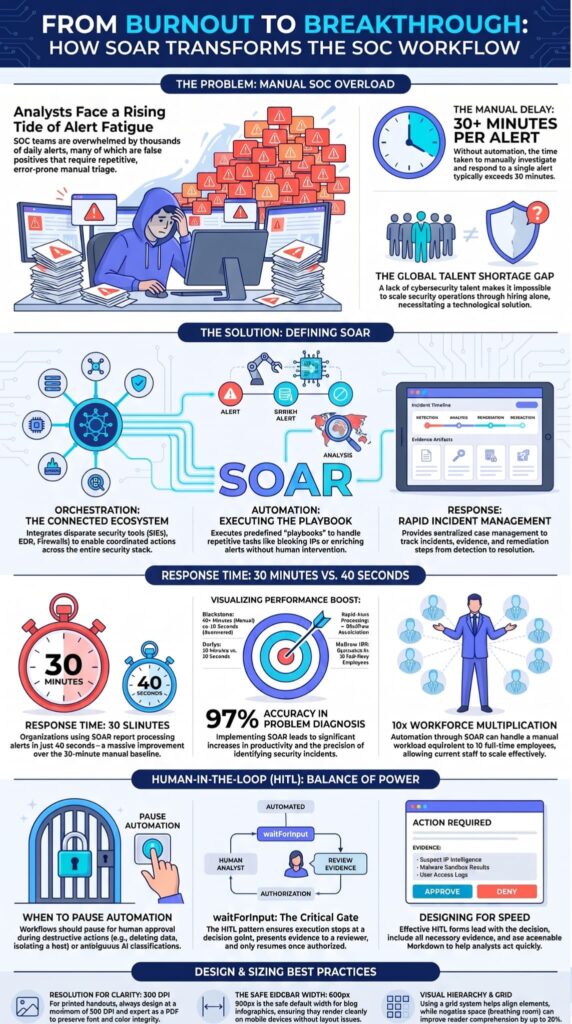
Security Orchestration, Automation, and Response (SOAR) helps teams handle repeated security tasks faster.
During an incident, analysts often follow the same steps. They check information, create tickets, block threats, and notify the right people. SOAR can automate parts of that process.
Common actions include:
- Blocking malicious addresses
- Creating incident tickets
- Gathering threat details
- Disabling risky accounts
- Isolating devices
Not every action should happen without review. Blocking a known malicious domain may be safe to automate. Disabling a user account that affects business operations may need approval first.
In our experience, the best SOAR deployments start small. Teams automate simple tasks first, learn from the results, then expand. That approach usually works better than trying to automate everything on day one.
The goal is not to remove people from security operations. It is to give analysts more time for the work that needs human judgment. This approach aligns with the managed XDR benefits many organizations look for, especially when they need continuous monitoring, faster investigations, and stronger coordination between detection and response processes.
How Do EDR, XDR, SIEM, and SOAR Work Together During An Attack?
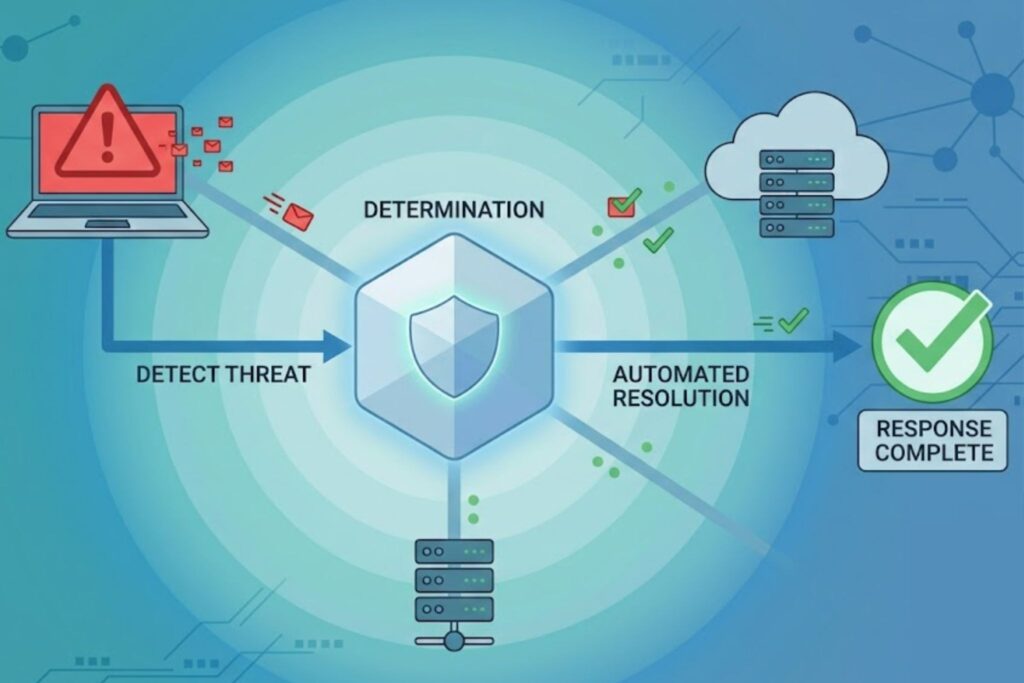
Each security tool has a role, but the real value comes from how they work together during an actual incident.
EDR may detect unusual file encryption activity on an employee device. XDR can connect that behavior with other warning signs, such as suspicious login activity or unusual network communication. SIEM can provide older events that show whether similar activity happened before. SOAR can then help trigger approved response actions.
Instead of four separate investigations, security teams get one connected view.
“The playbook provides a standard set of procedures to identify, coordinate, remediate, recover, and track successful mitigations from incidents and vulnerabilities affecting systems, data, and networks.” – Cybersecurity and Infrastructure Security Agency (CISA)
That matters because attackers move quickly. The longer a threat stays unnoticed, the more damage it can cause.
We have seen organizations struggle with this during security reviews. They had the right products, but the tools were not sharing information properly. Analysts were spending too much time collecting data instead of investigating the threat itself.
A connected workflow usually looks like this:
- EDR collects activity from endpoints.
- XDR connects signals from different security sources.
- SIEM stores and analyzes broader security data.
- SOAR automates approved response steps.
What Challenges Should Organizations Consider Before Integration?
Source: Pro Tech Show
A poorly planned integration can create new problems. More data does not automatically mean better security. In some cases, too much information can make investigations harder.
Organizations should think about:
- Data storage costs
- Log retention needs
- API limitations
- Ownership of workflows
One common mistake is sending every possible event into every platform. That can increase costs and create unnecessary noise. Before expanding a security stack, organizations should focus on evaluating endpoint security tools to understand detection capabilities, integration requirements, and whether each solution supports their operational goals.
We have reviewed environments where teams collected millions of events but had no clear process for using them. That creates a lot of activity, but not much improvement.
SOAR workflows also need regular review. A response playbook that works today may need changes later as systems, threats, and business needs change.
Nothing stays the same for long in cybersecurity.
FAQs
How does EDR and XDR integration improve security visibility?
Integrating endpoint detection and response with extended detection and response helps teams connect endpoint telemetry, cloud activity, network data, and identity signals. This creates cross-platform visibility through a unified security stack, making it easier to investigate threats, improve threat correlation, and support faster incident response without relying on disconnected security workflows.
Why should businesses connect SIEM and SOAR platforms?
Connecting security information and event management with security orchestration automation and response helps teams manage large volumes of security data more efficiently. SIEM integration improves log aggregation and security analytics, while SOAR integration supports security workflow automation, response playbooks, automated containment, and incident response automation to reduce manual investigation and response tasks.
How can integrated security tools reduce false alerts?
Integrated security platforms can reduce unnecessary alerts by combining multi-source telemetry, threat intelligence, and security event correlation. With improved alert triage, behavioral detection, and data enrichment, analysts can focus on high-priority incidents instead of spending time reviewing repeated notifications. This improves analyst efficiency and supports faster investigation workflows.
What security processes improve after connecting EDR, XDR, SIEM, and SOAR?
Connecting these technologies can improve security operations by creating more efficient investigation and response processes. Teams can use centralized dashboards, automated remediation, endpoint isolation, threat hunting, and response orchestration to handle incidents more consistently. These improvements strengthen cyber threat detection, breach detection, and security incident management across complex environments.
How does security integration support long-term cyber defense?
A connected security approach helps organizations maintain stronger protection through continuous monitoring, vulnerability management, and security posture management. By combining threat detection, endpoint forensics, compliance reporting, and audit trails, teams gain clearer insight into potential risks. This supports proactive defense, stronger security governance, and long-term risk reduction across hybrid environments.
Build a Security Strategy That Works Across Your Environment
Security teams often struggle when tools create more noise than clarity. You need a security approach that helps you understand alerts and respond without adding extra complexity. That’s the real challenge.
MSSP Security can help simplify your evaluation with vendor neutral guidance and testing support. With more than 15 years of experience and over 48,000 completed projects, the team helps organizations build a security strategy that fits their operations and goals.
References
- https://www.nist.gov/publications/nist-cybersecurity-framework-csf-20
- https://www.cisa.gov/topics/cybersecurity-best-practices/executive-order-improving-nations-cybersecurity