

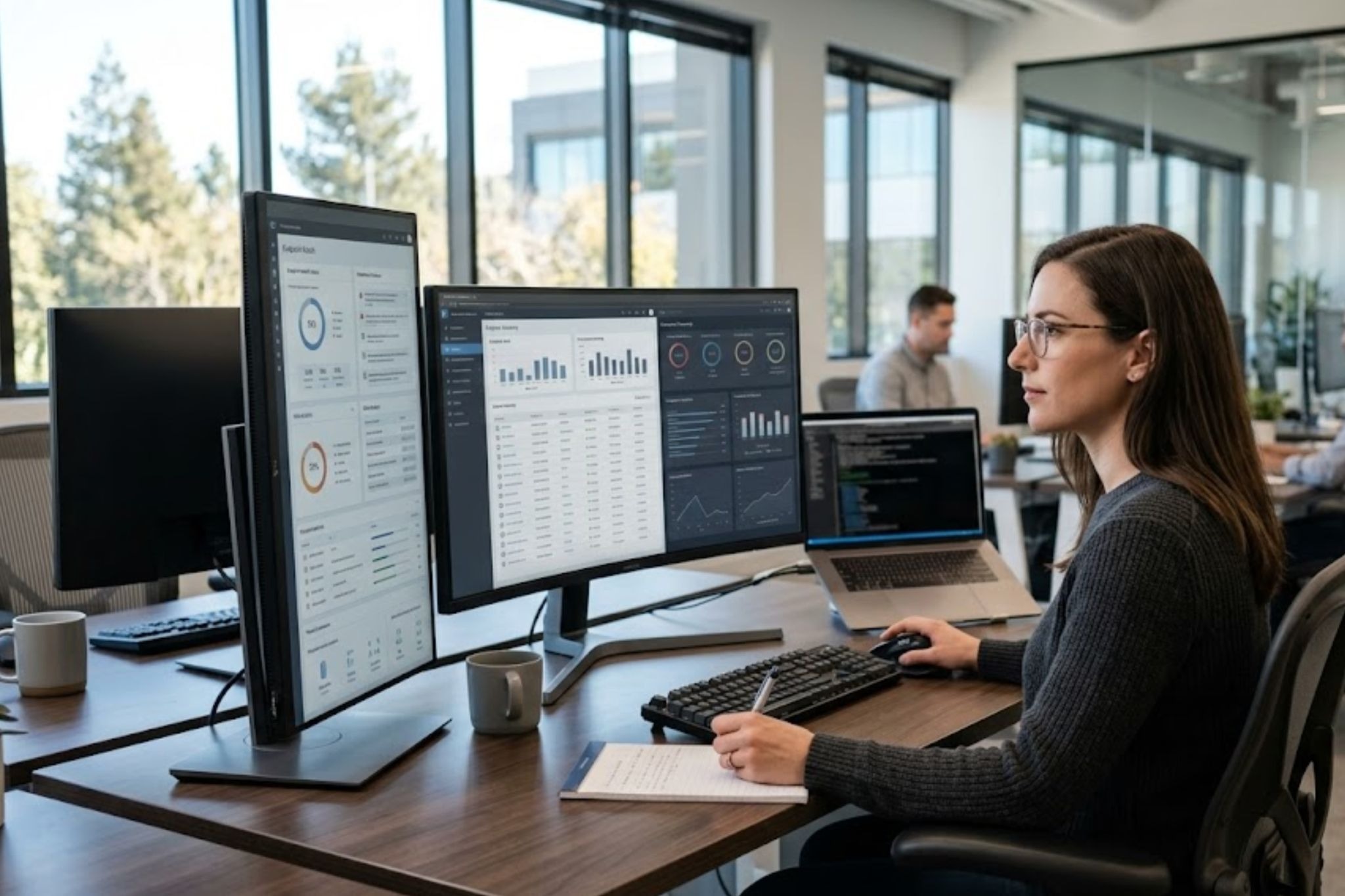
Choose an endpoint security platform that delivers strong protection and supports California compliance from day one. It should stop threats, produce audit-ready evidence, and speed up incident response without adding extra work. But don’t rely on feature lists alone. Test products in real environments to see how they perform under everyday conditions.
We’ve found at MSSP Security that hands-on evaluation often reveals gaps that marketing materials don’t. That step is easy to overlook, and it’s usually where better decisions happen. Keep reading to see which features matter most before making your next investment.
Before You Choose: What Really Matters
Evaluating endpoint security tools in California is not about finding the longest feature list. The right choice balances protection, compliance, usability, and long term operational value.
- Evaluate endpoint protection, EDR, and automated response together, not as separate features.
- Prioritize compliance and auditability alongside malware prevention to meet California requirements.
- Run a proof of concept to verify detection accuracy, response speed, and overall performance.
Why Is Evaluating Endpoint Security Tools In California Different?
Buying endpoint security is about more than comparing features. California organizations must balance threat protection, privacy requirements, audit readiness, and day to day operations.
Regulations such as the California Consumer Privacy Act (CCPA), guidance from the California Privacy Protection Agency (CPPA), and the NIST Cybersecurity Framework 2.0 all emphasize visibility, logging, and continuous risk management. Organizations need evidence that security controls are working, not just proof that malware was blocked.
“The Cybersecurity Framework (CSF) 2.0 provides guidance to industry, government agencies, and other organizations to manage cybersecurity risks.” – National Institute of Standards and Technology (NIST)
Modern IT environments also include remote users, cloud services, contractors, and mobile devices. Every endpoint expands the attack surface, making complete asset visibility and endpoint monitoring essential for detecting threats before they become larger incidents.
Which Endpoint Security Capabilities Matter Most?
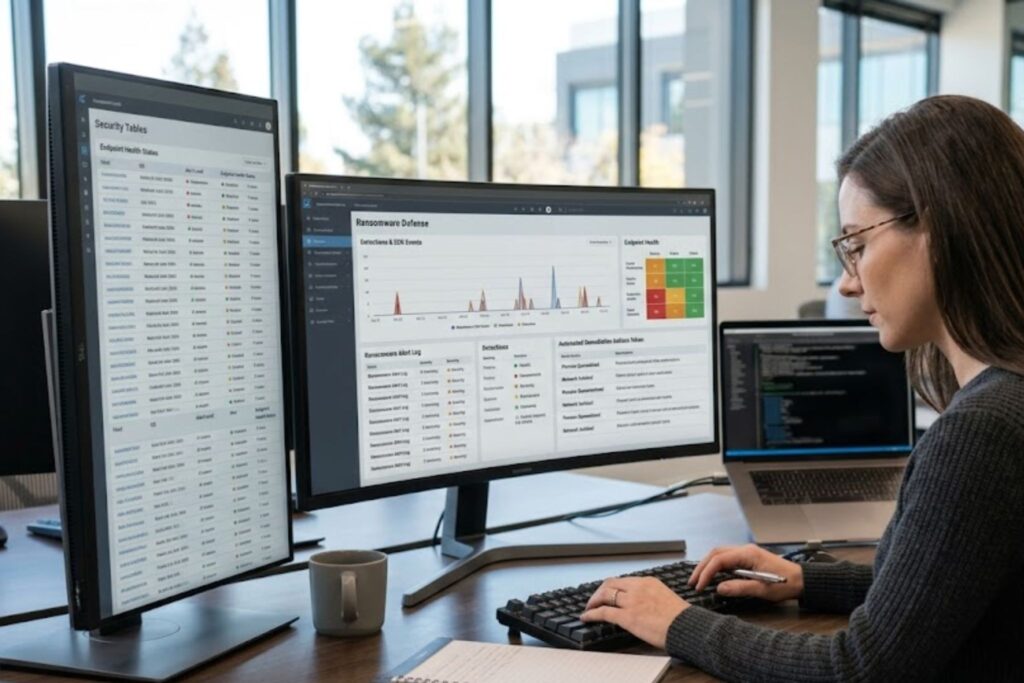
Instead of asking whether a platform includes every possible feature, focus on whether the features work well together.
| Capability | Why It Matters |
| Next-Generation Antivirus | Stops known threats and common exploits |
| Endpoint Protection Platform (EPP) | Prevents everyday endpoint attacks |
| Endpoint Detection and Response (EDR) | Detects suspicious behavior and supports investigations |
| Managed Detection and Response (MDR) | Adds expert monitoring and response |
| Automated Remediation | Isolates and contains threats faster |
EDR gives analysts the context they need to investigate incidents faster and understand how attacks spread across devices. Organizations comparing multiple platforms often benefit from an EDR comparison before committing to a long term deployment.
Good EDR helps analysts understand what happened, where an attack started, and what systems may also be affected. That context can reduce investigation time and help security teams respond with more confidence.
Effective ransomware protection should isolate compromised devices quickly while preserving evidence for investigation and recovery. Look beyond detection rates. A strong platform should isolate infected devices quickly, preserve investigation data, and support recovery without forcing administrators through complicated manual steps.
Security operations also become easier when endpoint tools provide centralized visibility. Real-time monitoring, forensic data, and threat hunting capabilities allow analysts to follow suspicious activity across multiple devices without switching between different consoles.
What Should You Check Before Buying Endpoint Security Software?
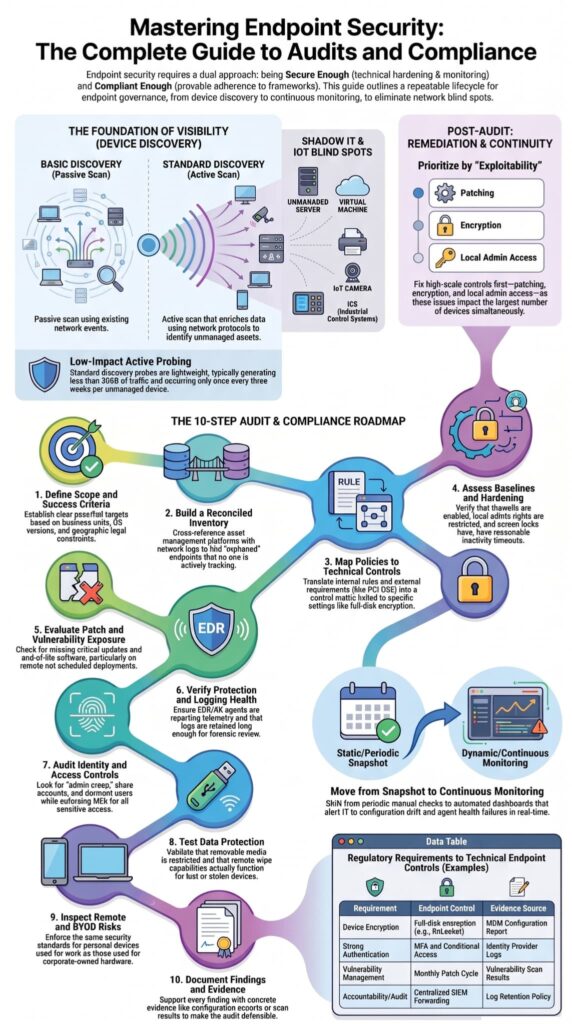
Start by confirming that the platform can discover every managed and unmanaged endpoint. Missing devices create security blind spots that attackers often exploit.
Next, run a proof of concept using realistic scenarios. Test whether analysts can isolate compromised devices, investigate incidents, review audit logs, prioritize alerts, and automate response actions.
“Continuous monitoring is the process used to maintain ongoing awareness of information security, vulnerabilities, and threats.” – National Institute of Standards and Technology (NIST)
Detection accuracy is important, but usability matters too. A platform that produces excessive false positives or slows investigations can reduce operational efficiency even if detection rates are high.
How Do You Evaluate Endpoint Security For California Compliance?
Compliance should be considered from the beginning. An endpoint platform should provide clear reporting, audit logs, and records of security actions. Features such as DLP, encryption, IAM integration, and access controls also help organizations protect sensitive data while supporting California compliance.
Data protection deserves a close look too. Features like Data Loss Prevention (DLP), strong access controls, encryption, and integration with Identity and Access Management (IAM) all help reduce risk. They also support California organizations that handle personal information every day.
It is also worth checking how the platform handles different devices. Windows, macOS, servers, and mobile devices should all be managed in a consistent way. If every operating system works differently, security teams spend more time learning the tool instead of protecting the business.
Which Vendor Questions Reveal Long Term Risk?
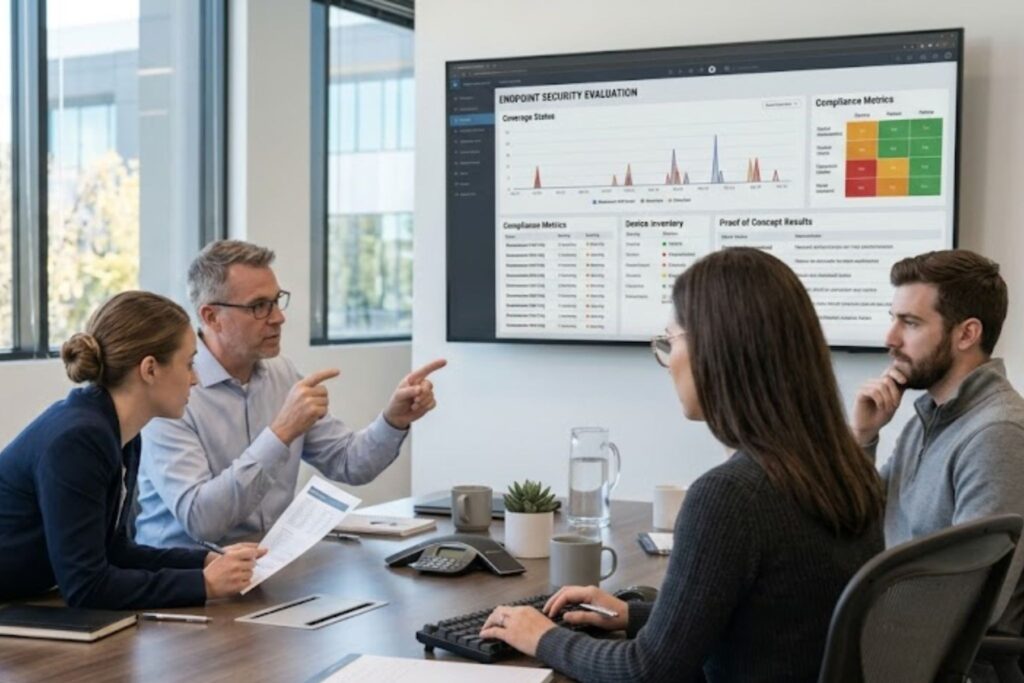
Endpoint security vendors should be transparent about their own security practices. Request documentation such as SOC 2 Type II reports, Software Bill of Materials (SBOM), penetration testing summaries, vulnerability disclosure policies, and software update history.
Organizations should also understand where endpoint telemetry is stored, who can access it, and how long it is retained. These details are especially important for organizations with California privacy obligations.
Finally, evaluate the quality and responsiveness of technical support before making a long term commitment.
Which Endpoint Security Tool Fits Your Organization?
Every organization works differently. So the right endpoint security platform will look different too.
Smaller businesses often want a product that is easy to manage. Cloud based management, automatic updates, and simple reporting can save a lot of time. If there is no dedicated security team, managed detection and response services may also be a good fit.
Larger organizations usually have different needs. They often connect endpoint security with SIEM platforms, cloud services, automation tools, and existing security operations. Those connections become more important as the environment grows.
Two products can look very similar on paper. Then the proof of concept starts, and the differences become clear. One product may produce cleaner alerts. Another may fit existing workflows better. Sometimes the simpler option ends up being the better choice.
More features do not always lead to better results. Evaluating core EDR features alongside usability and operational fit often leads to better long term outcomes. Teams usually benefit more from software that is reliable, easy to understand, and fits into their daily routine.
How Can MSSP Security Help Evaluate Endpoint Security Tools?
Source:infotex inc
We help managed security service providers evaluate endpoint security tools based on business goals, operational requirements, and compliance needs.
Our assessments include product comparisons, proof of concept planning, vendor evaluations, and helping organizations compare EDR and XDR tools based on operational requirements and business goals.
With experience reviewing products from multiple vendors, we help organizations identify solutions that fit existing workflows, simplify management, and support long term security objectives.
FAQs
What should I compare besides endpoint security software features?
When evaluating endpoint security software, compare more than the feature list. Review how the solution supports endpoint protection, device security, security compliance, and risk management. Confirm that it provides real-time monitoring, policy enforcement, and strong security visibility across all managed devices. You should also evaluate whether it improves daily security operations without adding unnecessary complexity for your IT team.
How important is endpoint detection and response for California businesses?
Endpoint detection and response plays an important role in identifying suspicious activity before it becomes a serious security incident. Effective EDR solutions include threat detection, incident response, threat hunting, behavioral analytics, and forensic analysis. These capabilities help organizations strengthen California cybersecurity efforts while supporting better enterprise security, faster investigations, and more informed security decisions.
Can endpoint protection secure remote and hybrid work environments?
Yes. Effective endpoint protection should secure devices used by employees working from different locations. A complete solution supports remote work security, hybrid workforce security, remote device security, mobile device security, Windows security, and macOS security. It should also include secure access, identity protection, and access control to reduce unauthorized access and protect company data.
Which security features provide the best defense against ransomware and advanced attacks?
Strong protection combines several technologies instead of relying on one feature. Look for ransomware protection, advanced threat protection, malware prevention, zero-day protection, exploit prevention, and phishing defense. Effective platforms also include attack surface reduction, automated remediation, malware analysis, and compromise detection to improve overall cyber defense against evolving threats.
How can I tell if an endpoint security platform will support future business growth?
A scalable security platform should simplify endpoint management while supporting cloud security, cloud-delivered security, device inventory, patch management, and security automation. It should also provide endpoint monitoring, security auditing, vulnerability management, security governance, and security hardening. These capabilities help organizations maintain consistent protection as users, devices, and business requirements continue to grow.
Choose an Endpoint Security Platform That Works When It Counts
Endpoint security affects your team every day, not just during a cyberattack. A platform that looks strong on paper can still create extra work or miss real threats. That’s why testing in your own environment matters. A proof of concept gives you a clear picture before you commit.
If you want expert support, MSSP Security can help with vendor neutral assessments, compliance guidance, vendor shortlisting, proof of concept support, and technology planning. With more than 15 years of experience and over 48,000 completed projects, the team helps you choose a solution that fits your security goals and keeps your business protected as your needs change.
References
- https://www.nist.gov/publications/nist-cybersecurity-framework-csf-20
- https://www.nist.gov/publications/what-continuous-monitoring-really-means