

Cybersecurity teams depend on skilled analysts to monitor threats, investigate incidents, and protect business systems from attacks. The skills needed security analyst professionals develop combine technical knowledge, communication, and problem-solving.
These abilities help security teams respond faster and improve operational visibility across complex environments. Whether working in an internal SOC or MSSP environment, analysts need both practical experience and continuous learning to stay effective against evolving threats. Keep reading.
Key Skills Every Security Analyst Should Build
Security analysts work in fast-moving environments where attention to detail and technical awareness matter every day. Strong cybersecurity performance depends on both hard and soft skills working together.
- Technical knowledge helps analysts detect and investigate threats faster.
- Communication skills improve collaboration during incident response.
- Continuous learning supports long-term cybersecurity career growth.
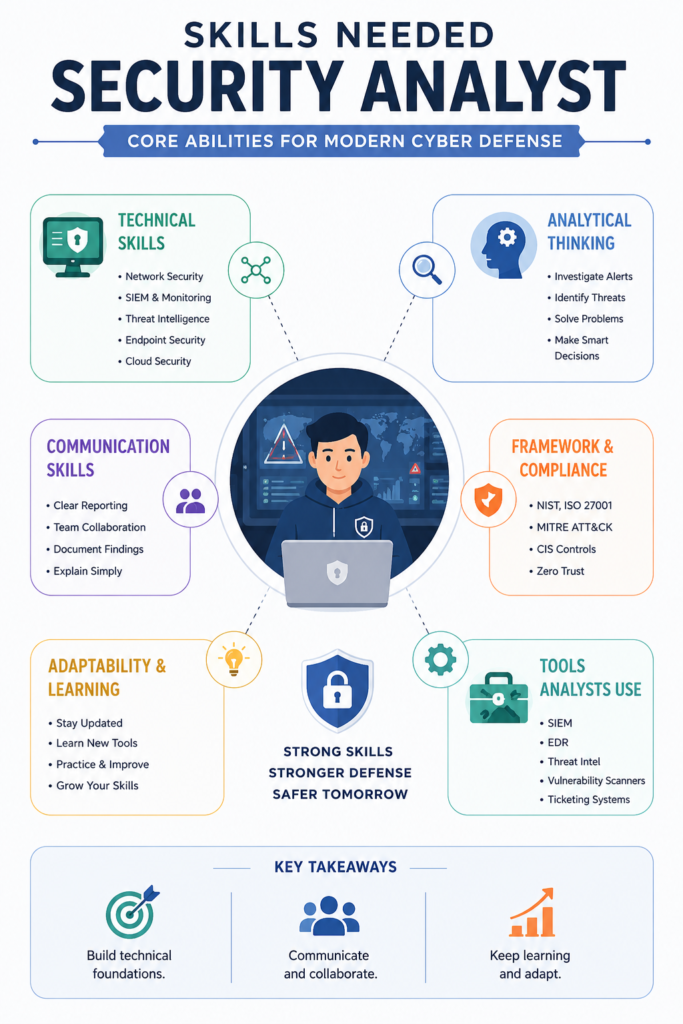
Technical Skills Needed Security Analyst Teams Expect

Security analysts must understand how networks, systems, and security tools work together. Technical ability helps analysts identify suspicious behavior before damage spreads.
| Technical Skill | Why It Matters |
| Network Security | Detects malicious traffic and abnormal activity |
| SIEM Platforms | Helps monitor and investigate security events |
| Threat Intelligence | Supports faster threat identification |
| Endpoint Security | Protects devices from malware and attacks |
| Cloud Security | Secures cloud-based infrastructure and services |
Important technical capabilities include:
- Log analysis and event correlation
- Firewall and IDS/IPS monitoring
- Malware detection basics
- Vulnerability assessment knowledge
- Understanding of operating systems
Analytical Thinking and Problem-Solving Abilities
One of the most valuable skills needed security analyst professionals develop is analytical thinking. Analysts must evaluate alerts quickly, separating real threats from false positives while understanding the various security analyst roles and their specific investigative requirements.
“The cognitive demands placed on security analysts require a transition from simple alert-monitoring to complex pattern recognition, where the ability to synthesize disparate data points into a coherent threat narrative is the primary differentiator of a mature security operation.” – Journal of Cybersecurity Technology
Strong problem-solving skills help analysts:
- Investigate incidents efficiently
- Identify attack patterns
- Prioritize high-risk threats
- Reduce response time
- Improve operational decision-making
Security operations often involve large volumes of alerts. Analysts who can organize information clearly and respond logically help reduce operational fatigue and improve incident handling consistency.
Communication Skills in Security Operations
Credits: Struggle Security
Technical knowledge alone is not enough. Security analysts regularly communicate with leadership, IT teams, vendors, and clients.
Effective communication supports:
- Clear incident reporting
- Faster escalation processes
- Better collaboration during investigations
- Improved documentation quality
Written documentation is especially important for soc analyst daily activities, as analysts must explain technical findings in language non-technical stakeholders can understand.
Knowledge of Security Frameworks and Compliance
Modern organizations rely on structured security practices. Analysts benefit from understanding common cybersecurity frameworks and compliance standards.
Common frameworks include:
- NIST Cybersecurity Framework
- ISO 27001
- MITRE ATT&CK
- CIS Controls
- Zero Trust principles
Understanding these frameworks helps those in different roles within security operations center align daily operations with business security goals.
Adaptability and Continuous Learning
Cyber threats constantly evolve, which means analysts must continue learning throughout their careers. Adaptability is one of the most important long-term skills needed security analyst professionals maintain.
“As the cyber threat landscape expands, the role of a security analyst necessitates an interdisciplinary approach, blending technical proficiency with an understanding of human factors and organizational risk management.” – Wikipedia
Continuous learning may involve:
- Earning cybersecurity certifications
- Practicing threat-hunting exercises
- Learning new security tools
- Studying emerging attack techniques
- Participating in security labs and simulations
Analysts who stay current with changing threats provide stronger protection and support better security outcomes for organizations.
Security Tools Analysts Commonly Use
Security analysts rely on multiple technologies to monitor and investigate threats across environments.
Frequently used tools include:
- SIEM platforms
- EDR solutions
- Threat intelligence platforms
- Vulnerability scanners
- Ticketing and case management systems
Understanding how these tools integrate helps analysts improve visibility and streamline response workflows inside modern security operations centers.
Building a Strong Security Analyst Career
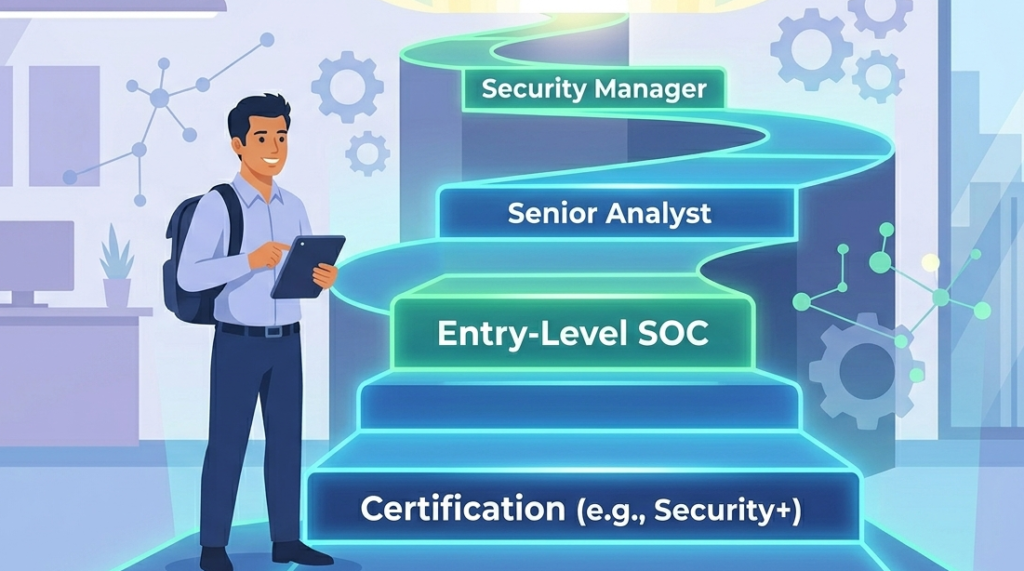
A successful cybersecurity career combines technical expertise with operational discipline. Many analysts begin with foundational IT experience before specializing in threat detection and incident response.
Career growth often includes:
- SOC Analyst Tier progression
- Threat hunting roles
- Incident response specialization
- Security engineering paths
- MSSP operational leadership
Hands-on experience remains one of the most effective ways to strengthen analyst capabilities over time.
FAQ
What are the most important skills needed security analyst professionals should learn first?
Network security, SIEM monitoring, incident response, and log analysis are among the most important foundational skills for new security analysts.
Do security analysts need programming skills?
Basic scripting knowledge can help automate repetitive tasks and improve investigation workflows, although advanced programming is not always required.
Are certifications important for security analysts?
Certifications help validate technical knowledge and improve career opportunities, especially for SOC and MSSP environments.
What soft skills help security analysts succeed?
Communication, teamwork, attention to detail, and critical thinking are essential soft skills for handling incidents effectively.
Strengthening Security Operations for Long-Term Success
The skills needed security analyst professionals develop directly affect how organizations detect, investigate, and respond to cyber threats. Strong technical knowledge combined with communication and operational discipline creates more resilient security teams. At MSSP Security, we help MSSPs streamline operations, optimize security stacks, improve visibility, and strengthen service quality through expert consulting, vendor-neutral guidance, and actionable cybersecurity recommendations built on 15+ years of operational experience.
References
- https://www.tandfonline.com/toc/tcyb20/current
- https://en.wikipedia.org/wiki/Computer_security