

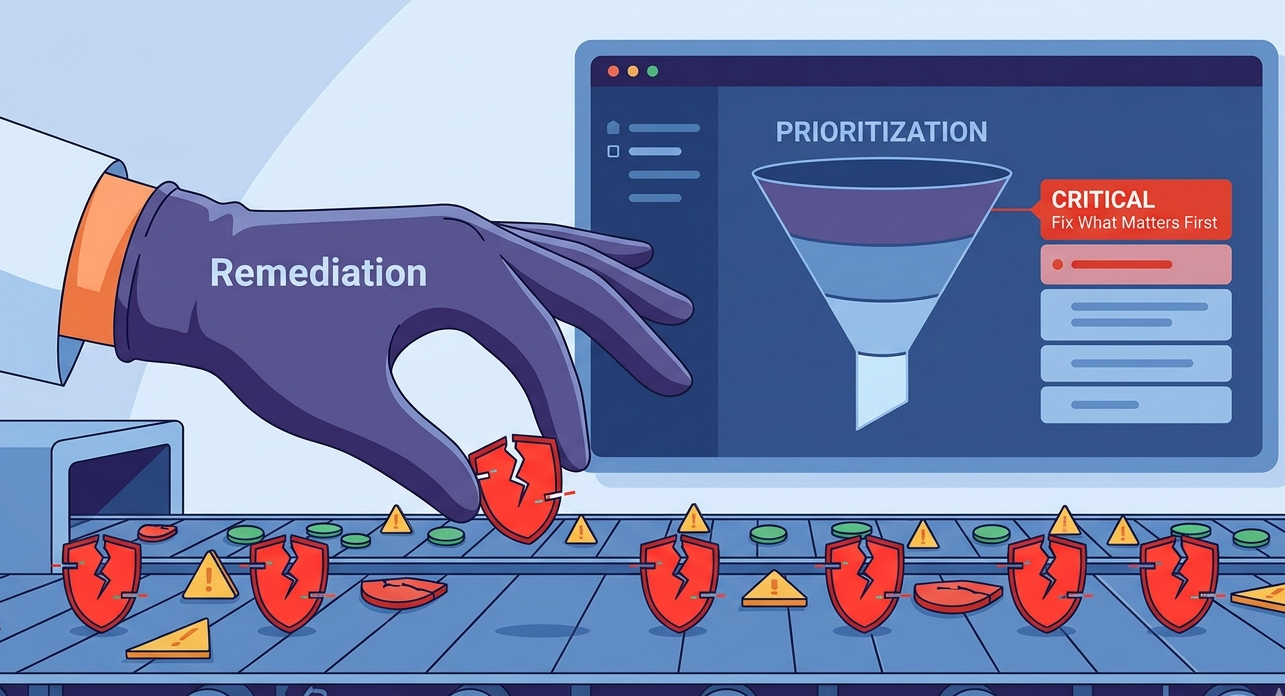
Understanding prioritizing vulnerability remediation steps is essential for organizations facing an increasing number of security threats. Not all vulnerabilities pose the same level of risk, yet many teams struggle to decide which issues to fix first.
Without proper prioritization, critical vulnerabilities may remain exposed while less important ones consume valuable time and resources. By applying a structured, risk-based approach, organizations can focus on what truly matters. This article explains how to prioritize remediation effectively and improve overall security outcomes. Keep reading.
Key Insights on Prioritizing Vulnerability Remediation Steps
Prioritization ensures organizations address the most critical risks first instead of treating all vulnerabilities equally.
- Risk-driven focus: Fix vulnerabilities based on impact and exploitability
- Efficient resource use: Avoid wasting time on low-priority issues
- Faster response: Reduce exposure to high-risk threats quickly
Why Prioritization Matters in Vulnerability Management
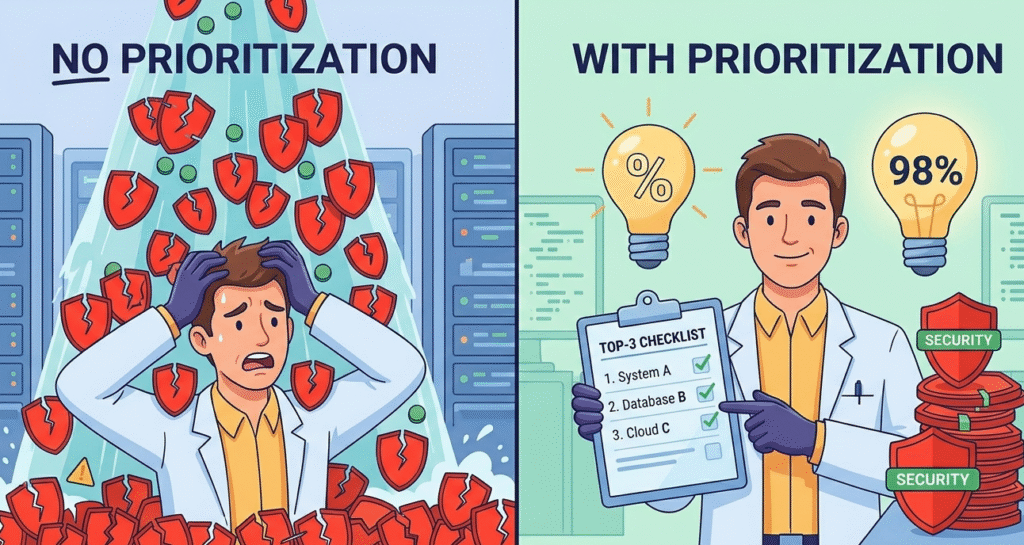
Organizations often face hundreds or even thousands of vulnerabilities. Without prioritization, remediation becomes inefficient and overwhelming.
Key challenges:
- Limited resources
- Large vulnerability volumes
- Time constraints
Prioritization helps teams focus on the most dangerous threats, reducing the likelihood of breaches and improving overall efficiency. Understanding how mssp remediation guidance explained fits into this workflow allows teams to better interpret technical findings.
Key Factors for Prioritizing Vulnerabilities
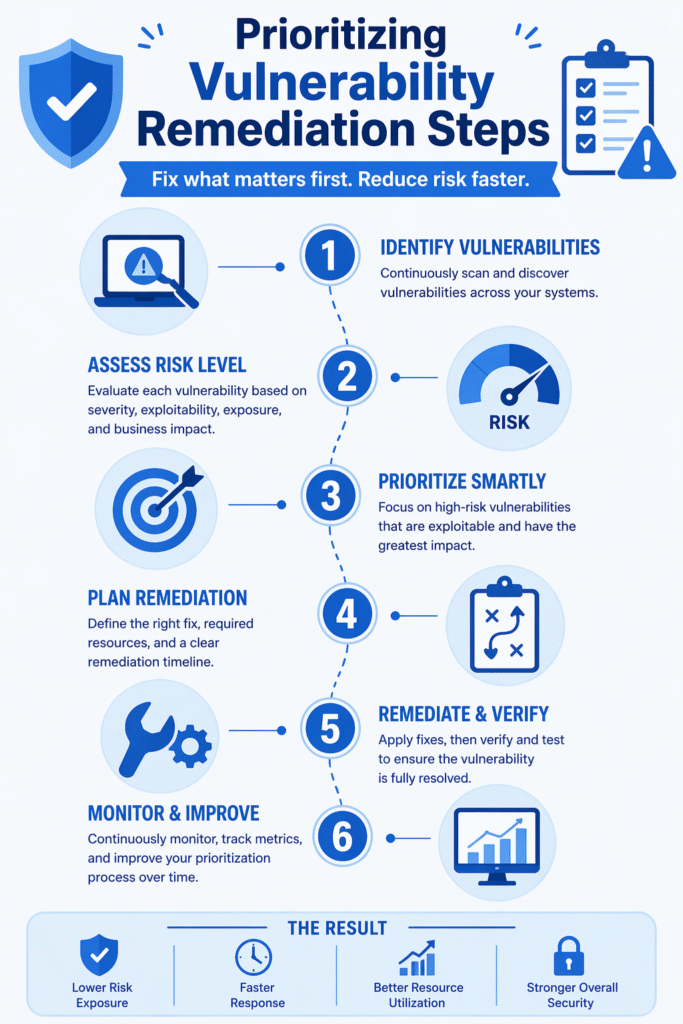
Effective prioritization depends on evaluating multiple risk factors.
Important factors include:
- Severity score (CVSS): Measures technical impact
- Exploitability: Likelihood of being attacked
- Business impact: Importance of affected systems
- Exposure level: Accessibility to attackers
“A vulnerability is a weakness which can be exploited by a threat actor.” – Wikipedia
Combining these factors provides a more accurate view of risk.
Using Risk-Based Prioritization Models
Risk-based models help organizations systematically rank vulnerabilities.
“Organizations that prioritize vulnerabilities based on risk exposure significantly reduce the likelihood of successful cyber attacks.” – ScienceDirect
Common approaches:
- CVSS-based scoring
- Threat intelligence integration
- Asset criticality mapping
This method ensures that remediation decisions are based on real-world risk rather than assumptions. Often, internal teams look at how mssps provide remediation guidance to benchmark their own internal scoring against industry standards.
Incorporating Threat Intelligence
Credits: NinjaOne IT Tech Tips
Threat intelligence provides insight into active attacks and emerging risks.
Benefits include:
- Identifying actively exploited vulnerabilities
- Understanding attacker behavior
- Improving prioritization accuracy
By integrating threat intelligence, organizations can focus on vulnerabilities that are most likely to be targeted.
Aligning Remediation with Business Impact
Not all systems are equally important. Prioritization should consider business impact.
Key considerations:
- Critical business systems
- Customer-facing applications
- Regulatory requirements
This ensures that vulnerabilities affecting essential operations are addressed first.
Balancing Speed and Accuracy
While speed is important, rushing remediation can lead to errors.
Best practices:
- Validate fixes before deployment
- Avoid disrupting critical systems
- Test changes when necessary
A balanced approach ensures both fast and reliable remediation.
Leveraging Automation for Prioritization
Automation tools can help organizations manage large volumes of vulnerabilities.
Common uses:
- Automated risk scoring
- Alert filtering
- Workflow prioritization
Automation improves consistency and reduces manual workload. These tools can automatically categorize various types security remediation recommendations so that administrators know whether a patch, configuration change, or workaround is required.
Tracking and Measuring Prioritization Effectiveness
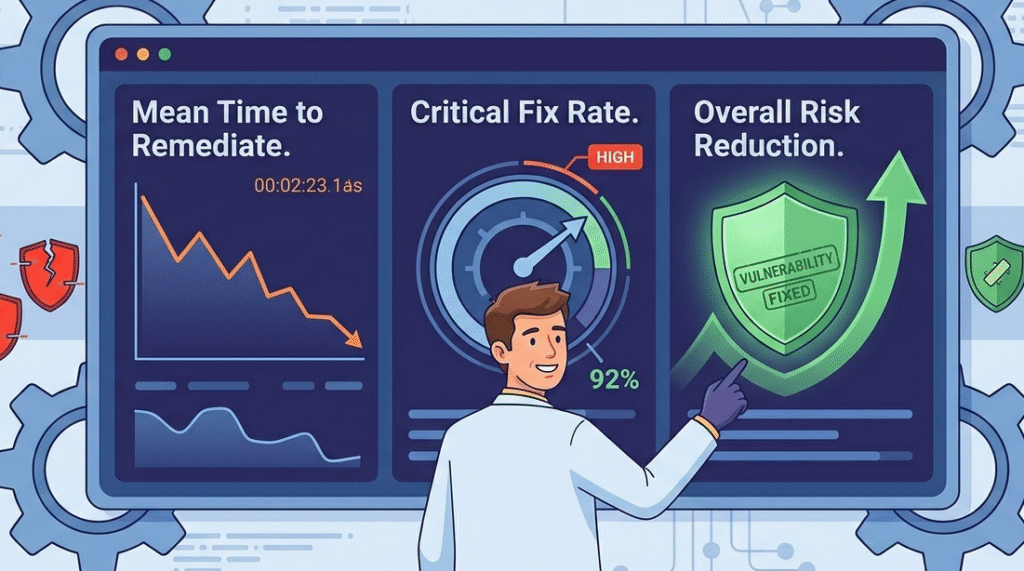
Organizations must evaluate how well their prioritization strategy works.
| Metric | Purpose | Benefit |
| Mean Time to Remediate | Measures response speed | Improves efficiency |
| Critical Fix Rate | Tracks high-risk issue resolution | Ensures focus on priorities |
| Risk Reduction | Evaluates overall improvement | Demonstrates effectiveness |
Tracking helps refine prioritization strategies over time.
Common Mistakes in Prioritization
Many organizations struggle with prioritization due to common mistakes.
Examples:
- Treating all vulnerabilities equally
- Ignoring business context
- Over-relying on severity scores alone
Avoiding these mistakes improves remediation outcomes significantly.
FAQ
What does prioritizing vulnerability remediation mean?
It means identifying which vulnerabilities should be fixed first based on their risk level, potential impact, and likelihood of exploitation, rather than addressing them in a random or chronological order.
Why can’t organizations fix all vulnerabilities at once?
Because resources such as time, budget, and personnel are limited. Attempting to fix everything simultaneously can lead to inefficiencies, delays, and increased risk if critical vulnerabilities are not addressed first.
How is vulnerability priority determined?
Priority is determined by combining multiple factors, including severity scores, exploitability, business impact, and threat intelligence. This multi-factor approach provides a more accurate understanding of which vulnerabilities pose the greatest risk.
Can prioritization improve overall security posture?
Yes, effective prioritization ensures that the most dangerous vulnerabilities are addressed quickly, reducing exposure and improving the organization’s ability to prevent and respond to cyber threats.
Focusing on What Matters: Prioritizing Vulnerability Remediation for Better Security
Prioritizing vulnerability remediation steps allows organizations to focus on the most critical risks and respond more effectively to threats. By combining risk analysis, business context, and automation, teams can improve efficiency and reduce exposure.
If you want to strengthen your remediation strategy and ensure the right vulnerabilities are addressed first, MSSP Security can help guide your organization toward smarter, more effective cybersecurity practices.
References
- https://en.wikipedia.org/wiki/Vulnerability_(computing)
- https://www.sciencedirect.com/science/article/abs/pii/S0167404820300699?via%3Dihub