Address
304 North Cardinal St.
Dorchester Center, MA 02124
Work Hours
Monday to Friday: 7AM - 7PM
Weekend: 10AM - 5PM
Address
304 North Cardinal St.
Dorchester Center, MA 02124
Work Hours
Monday to Friday: 7AM - 7PM
Weekend: 10AM - 5PM

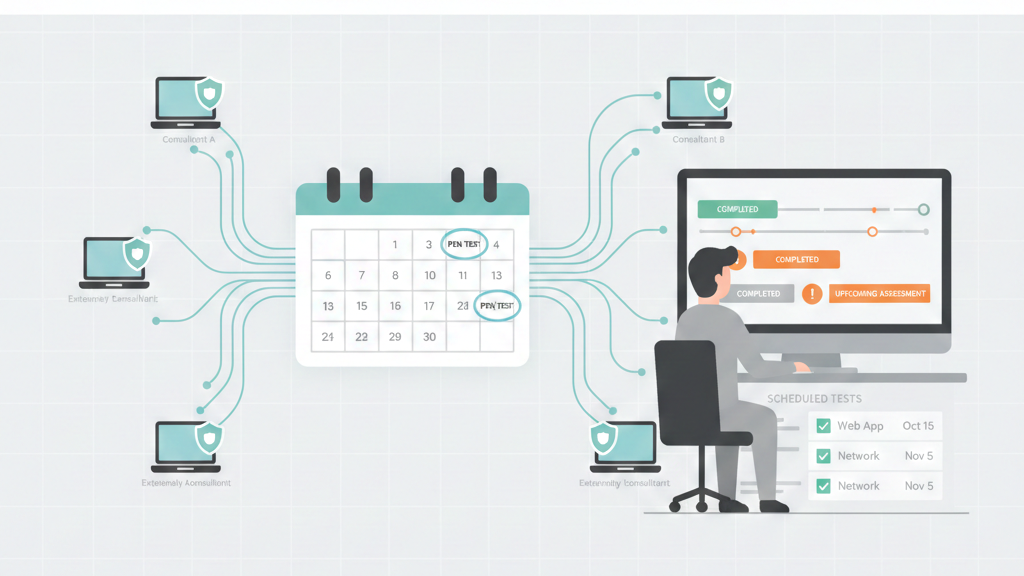
You need a centralized, hybrid model for outsourced pen test scheduling management. This blends automated, continuous scanning with scheduled, manual tests from external experts.
It aligns with compliance cycles like PCI DSS, keeping you audit-ready without quarterly production halts. Ditch the chaos of one-off engagements. What follows is a practical guide to make this system work. Keep reading to turn your security calendar from a liability into an asset.
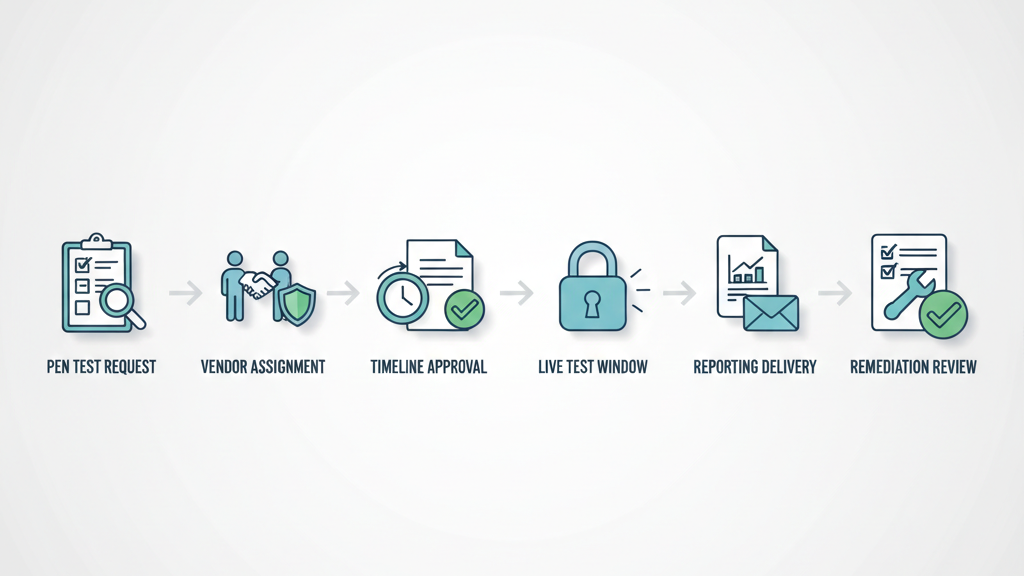
Too many companies treat a penetration test like a dentist appointment, something to just schedule and dread, when in reality penetration testing coordination is what turns scattered testing into a controlled security workflow.
You must define every asset, every off-limits system, and the rules of engagement. This document becomes your bible. Without it, you’re paying consultants to wander your network, which wastes time and money.
Fieldwork is where scheduling gets tactical. We coordinate with system owners and target off-hour windows to avoid business disruption. Then comes the quiet, critical work: our team validates findings and strips out false positives. Finally, reporting and closure. This isn’t just a PDF delivery; it’s a handoff for remediation, with clear retesting windows already scheduled.
For MSSPs we work with, this scales on a multi-tenant platform. Each client gets their own dashboard and schedule. Automated workflows handle recurring scans, while manual tests are slotted based on consultant availability and client deadlines. The goal is to eliminate operational drag entirely.
Simple Penetration Testing Tutorial for Beginners!
Credits: Loi Liang Yang
Forget the old debate of in-house versus outsourced. That’s a false choice. A hybrid model works because different problems need different tools. It’s like home maintenance: you mow your own lawn, but you hire an electrician to rewire the basement. One is routine; the other is a scheduled, expert job.
“Many organizations now schedule tests quarterly or even employ continuous Pentest-as-a-Service models to keep pace with frequent app updates and emerging threats… Unlike a one-off pentest, a [managed] program can be continuous… This is a way to have ongoing testing without continuously scheduling formal pentests.” – DeepStrike Blog
Our experience shows the clear trade-offs. An in-house team is always there, but they often miss things they built themselves. Their cost is a fixed, high salary line. An outsourced team brings a fresh, adversarial view at a predictable project cost, but you have to schedule them.
| Consideration | In-House Scheduling | Outsourced Scheduling |
| Objectivity | Lower (Built-in bias) | Higher (External adversary) |
| Cost Structure | High, Fixed Overhead | Predictable, Per-Project |
| Expertise Depth | Broad, Generalist | Deep, Specialized |
| Compliance Readiness | Requires Internal Validation | Inherently Audit-Ready |
The hybrid model is the practical answer. Use automation for constant, noisy vulnerability scanning. Then, strategically schedule external experts for quarterly deep dives or after major changes.
Managing pen test scheduling across multiple clients quickly exposes weak processes. We’ve seen missed emails, overlapping bookings, and rushed scopes quietly damage trust. Once structure replaced manual coordination, everything ran smoother, for our team and the MSSPs we support.
“The demand for pentesting services can vary depending on client requirements and project volumes. Partnering with a pentesting firm allows an MSSP to scale their testing capabilities up or down based on client needs.” – Northamptonshire Chamber
Standardization changed everything. Scoping templates, clear rules of engagement, and consistent reports turned messy onboarding into a smooth, repeatable process. Off-hour testing became standard after peak-time slowdowns impacted live systems. Key practices we now recommend for MSSPs:
Real-time findings replaced static PDFs, and automated follow-ups closed audit gaps. In practice, strong systems, not extra effort, are what let MSSPs scale pen test scheduling without losing control.
Everything looks locked in, contract signed, kickoff scheduled, then someone realizes the new cloud API never made it into scope, a breakdown we often uncover when teams skip properly interpreting penetration test results from previous cycles.
What follows is usually rushed testing, shallow coverage, or surprise fees. In our audits, the root cause almost always traces back to rigid time-based contracts that ignore how complex real environments actually are.
The smarter move we now advise MSSPs to take is buying flexible blocks of expert hours instead of a fixed “pentest package.” When teams can shift effort where risk actually lives, coverage improves fast. We also push hard for dedicated consultants. Without that, attention gets split, and results suffer.
To keep problems from snowballing:
From experience, proactive management beats damage control every time.

Email chains and spreadsheets don’t survive real scale. In every MSSP environment we’ve audited, outsourced pen test scheduling management only started working once automation tied everything together.
Modern platforms act like a control center, linking vendors, timelines, findings, and remediation into one continuous workflow, the foundation of managed penetration testing coordination instead of scattered handoffs.
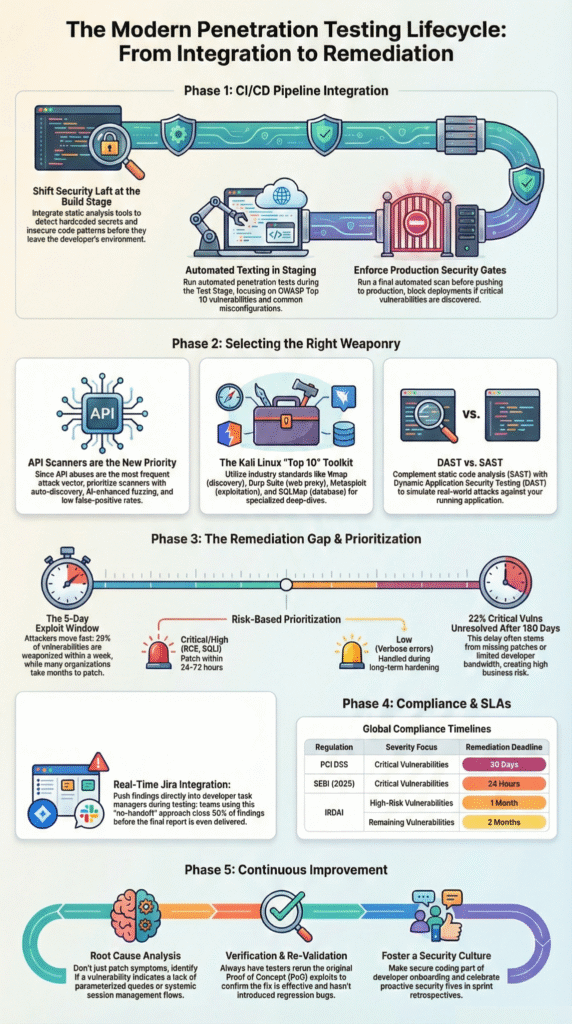
The strongest setups plug directly into CI/CD pipelines. When new builds hit staging, automated scans trigger instantly, and validated issues flow straight into Jira or ServiceNow as prioritized tickets. No waiting on PDFs, no weeks of report lag while risk sits untouched.
What truly changes client experience is white-labeled portals. Schedules, live results, and historical reports live in one branded space, while automation handles notifications, compliance evidence, and retest tracking. From what we’ve seen firsthand, when tools run the process, MSSP teams finally get to focus on real security work.
Outsourced pen test scheduling management helps align penetration testing services with your compliance requirements instead of rushing before audits. Teams plan vulnerability scans, manual pen testing, and retests around regulatory timelines.
This steady approach reduces last-minute stress, keeps evidence organized, and ensures security testing happens consistently rather than as a once-a-year checkbox.
Yes. Strong outsourced pen test scheduling management connects cloud penetration testing, web application testing, and API penetration testing into one testing calendar. Instead of running each separately, teams plan assessments together based on risk and system changes.
This prevents gaps, avoids overlapping disruptions, and ensures modern environments receive complete coverage.
Effective outsourced pen test scheduling management combines continuous vulnerability scanning with scheduled manual pen testing engagements. Automated vulnerability scans catch routine weaknesses, while expert-led penetration testing focuses on real attack paths and zero-day vulnerabilities.
Together, they form a structured penetration testing program that stays proactive instead of reactive.
It does. Outsourced pen test scheduling management organizes network penetration testing, mobile application penetration testing, wireless network testing, and web application penetration testing within one coordinated plan.
This ensures each environment gets tested at the right time without overwhelming internal teams or disrupting business operations across multiple systems.
When done right, outsourced pen test scheduling stops being a chore and becomes a strategic part of your security. The goal isn’t just compliance; it’s real resilience by systematically inviting experts to test your systems on your terms.
Start by auditing your current process for delays and miscommunication. Then, implement a hybrid model: use automation for coverage and strategically schedule deep, manual tests for critical assets. Talk to vendors about their scheduling flexibility and communication protocols, not just price. Your security calendar should work for you.
This operational shift is complex. If you’re an MSSP looking to streamline your security stack and optimize these processes, our team can help. Schedule a consultation with our experts to get started.

