

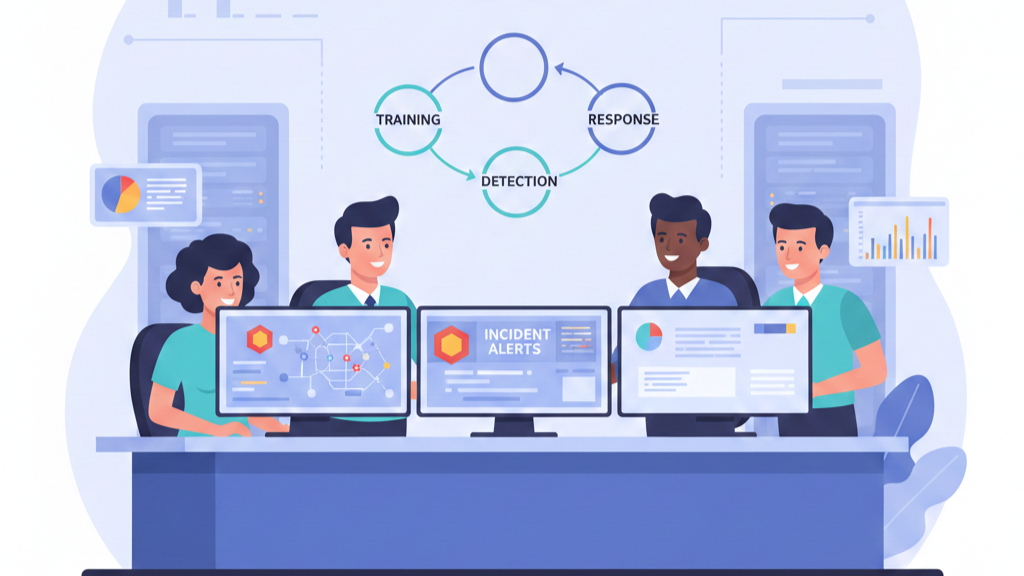
The most resilient security teams don’t just train, they practice their response in the flow of work. Integrating training incident response directly into your operational rhythm is what separates reactive teams from proactive defenders. It’s the difference between a theoretical playbook and a crew that moves with muscle memory when an alert fires.
We’ve seen it firsthand: embedding these drills cuts critical response times dramatically and transforms security from a compliance chore into a cultural strength. This approach ensures that when a real phishing campaign or ransomware attack hits, your people don’t freeze, they execute. Keep reading to learn how to build that ingrained readiness.
Incident Response Integration Highlights
- Cuts Critical Timelines: Formal, integrated training can reduce incident response times by up to 50% and lower data breach costs significantly.
- Builds Muscle Memory: Regular, role-specific simulations and tabletop exercises move knowledge from theory to instinct, preparing teams for high-pressure situations.
- Creates Measurable Resilience: Success is tracked through metrics like faster threat detection and remediation, proving the return on your training investment.
Why Bother Integrating Your IR Training?
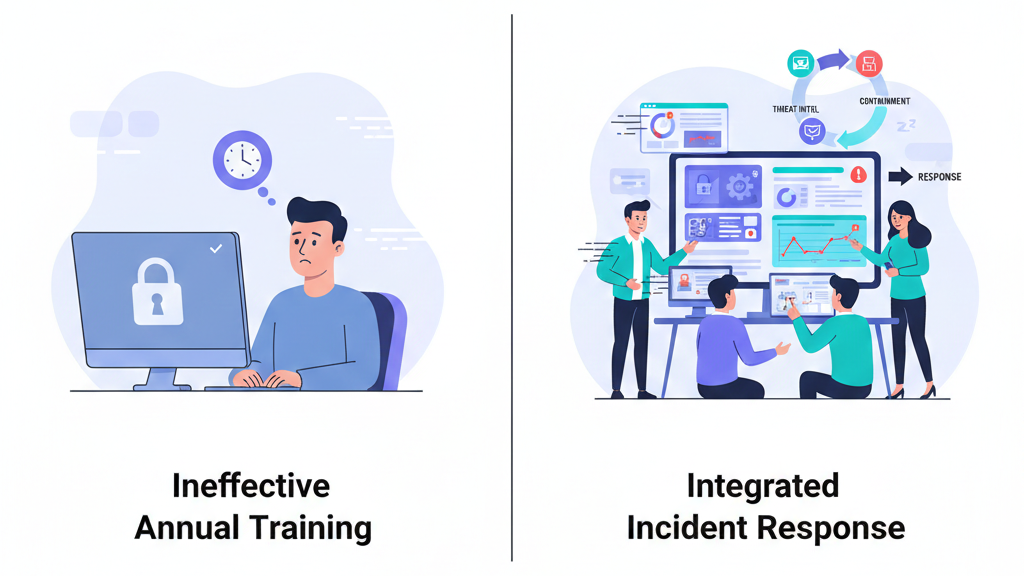
Why does integrated training matter? Because yearly training videos don’t work. People just click through them, creating a dangerous gap between knowledge and real-world action. We’ve seen this gap firsthand with our MSSP clients.
Integrated training closes it by making incident response part of the daily job, not an interruption, especially when supported by strong security awareness training management practices.
“Incident response training, on the other hand, is about action. It’s about what happens after something slips through the cracks, such as how teams coordinate, how decisions are made under pressure, and how quickly an organization can regain control. The most effective programs integrate both: broad awareness campaigns to reduce risk, and role-specific exercises to build confidence and clarity during an actual event.” – Sygnia
Think of it like a fire drill. You don’t just read the plan; you walk the route. The goal is the same: to build automatic response. Data from Ponemon Institute confirms that organizations with practiced programs suffer fewer damaging breaches. When training is woven into operations, a team’s reaction shifts from panic to coordinated action. It becomes a reflex.
What Does an Integrated Program Actually Look Like?
Credits: Struggle Security
An integrated program is a cycle, not a single event. It touches the entire incident management process. Here’s what you’re building:
- Clear Roles: Before an incident, everyone must know their job. Who declares it? Who talks to legal? Who handles the technical containment? We see confusion here often in our audits.
- Relevant Content: Training must match the role. Network engineers need hands-on malware analysis. Your communications lead needs to practice drafting a public statement for a breach. We use real adversary behaviors from frameworks like MITRE ATT&CK to build these scenarios.
- Hands-On Execution: Passive learning is forgotten. Retention comes from doing. A live tabletop exercise where the team works through a simulated supply chain attack is what builds real readiness.
- Full Lifecycle Coverage: The program should consistently move through four phases:
- Preparation: Defining policies, procedures, and communication tools.
- Identification & Analysis: Using your actual SOC tools for detection and reporting.
- Containment, Eradication & Recovery: Executing the steps to isolate the threat and restore operations.
- Lessons Learned: Holding after-action reviews that directly update playbooks and future training plans.
How to Weave Training into the Daily Grind
How do you fit training into the daily grind? Make it a natural, recurring part of the workflow, not a dreaded, separate event. For most teams, this starts with onboarding. New tech hires should learn how to report a suspicious email in their first week, not just find the coffee machine.
Next, focus on frequency and relevance to reduce human error risk security gaps that often slow response efforts. We push for short, monthly micro-drills, a 15-minute chat on a new ransomware variant or a walk-through of a recent ticket. This fights fatigue.
Then, run a larger tabletop exercise every quarter to test coordination across teams; sometimes we bring in an external MSSP partner to audit the response. Finally, treat every real incident as a training opportunity. The unscripted post-incident review is your best lesson plan.
A practical integration schedule:
| Activity | Frequency | Core Benefit |
| Micro-learning Sessions | Monthly | Maintains awareness without burnout |
| Tabletop Exercises | Quarterly | Tests communication and process gaps safely |
| Full Technical Simulations | Bi-Annually | Validates tools and technical playbooks under pressure |
The Common Pitfalls That Derail Readiness
Even strong programs can fail in a real incident. We often see MSSPs run the same “zombie” tabletop for years while client environments move to hybrid cloud. When drills don’t reflect platforms like AWS or Azure, teams build false confidence.
“Building an IR framework is an ongoing process. Regular updates, training, and collaboration with industry peers help businesses stay prepared for evolving cyber threats… Training security teams through simulations and tabletop exercises ensures that personnel are well-versed in executing response protocols under pressure.” – Rewterz
Another common gap is missing stakeholders. In our audits, legal and executive leaders frequently skip exercises. When a breach hits, decisions slow and communication suffers. We’ve seen this alone stretch response times by 30% or more.
The teams that improve fastest keep scenarios current, tie outcomes to MTTR, and require every after-action review to update playbooks and training.
Measuring What Matters: The ROI of Preparedness
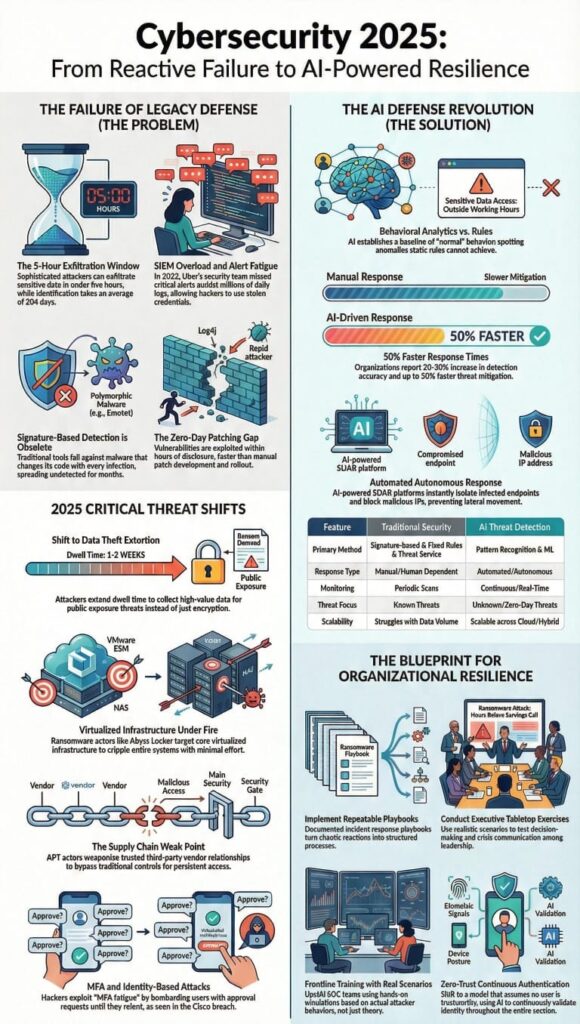
How do you know integrating training is actually working? You measure what operations feels, not just what compliance reports. We often tell MSSP clients to look past completion rates and focus on time-based metrics that leadership understands.
If Mean Time to Detect (MTTD) and Mean Time to Remediate (MTTR) are trending down, the program is doing real work. In our experience, teams that practice regularly spot threats far faster and close incidents with far less friction.
Still, numbers alone don’t tell the full story. During reviews, we also look for confidence shifts inside the team. Are tabletop participants making decisions faster? Are fewer process gaps surfacing after incidents? We’ve seen phishing simulation success rates improve as awareness becomes habit.
What ultimately resonates with executives is simple: faster resolution times, stronger simulation performance, and fewer repeat findings. That’s when integrated training clearly proves its business value.
Tools and Resources to Build and Sustain Momentum
You don’t need to build an integrated program from the ground up. In our work supporting MSSPs with product selection and audits, we consistently see strong results when teams anchor their efforts on proven frameworks first.
Guidance like NIST SP 800-61 gives structure to incident handling, while adversary-mapped test libraries help teams safely validate controls against realistic threats.
Hands-on practice is where momentum really builds. The most effective teams we work with use cyber ranges to simulate live incidents in safe, sandboxed environments.
Certifications and structured paths, especially when supported by the right awareness training platform, can also reinforce role clarity and keep skills current. The goal is simple: choose tools that match your actual stack and threat profile so training time directly improves response performance.
A starter kit for integration:
- Frameworks: NIST SP 800-61, MITRE ATT&CK®
- Simulation Content: Open-source atomic test libraries
- Practice Environments: Cloud-based cyber ranges for live-fire exercises
- Structured Education: Role-specific certification paths from recognized institutes
FAQ
What is integrating training incident response in daily operations?
Integrating training incident response means embedding incident response training into normal workflows, not treating it as a yearly event. Teams practice incident handling during real tasks, ticket reviews, and tabletop exercises.
This approach improves situational awareness, strengthens response efforts, and helps the incident response team react faster when security incidents or cyber threats appear in live environments.
How often should incident response training be conducted?
Most organizations benefit from layered incident response training. We typically see quarterly tabletop exercises, monthly micro-drills, and ongoing post-incident activities tied to real incident tickets.
The right cadence depends on your cyber threat exposure, security staff size, and incident management maturity. Regular repetition helps teams retain skills needed for ransomware attacks and other fast-moving cybersecurity threats.
Who should be involved in incident response exercises?
An effective incident response team goes beyond security staff. It should include technology personnel, legal counsel, help desk leaders, and communications stakeholders. In serious cyber crisis scenarios, coordination with local law enforcement or homeland security partners may also be required.
Broad participation improves situational awareness and ensures response plans work across business and technical functions.
What metrics prove incident response training is working?
Strong programs track operational outcomes, not just course completion. Focus on detection and reporting speed, triage and analysis quality, and remediation and restoration timelines.
Many teams also monitor incident management system data, phishing campaign results, and after-action reviews. If response efforts are faster and fewer process gaps appear, your incident handling infrastructure is improving.
From Theory to Instinct
The goal is to make expert response an instinct, not a scramble for a manual. It’s the shift from a team that panics to one that smoothly activates and contains because they’ve practiced the scenario repeatedly. This ingrained readiness is your best defense.
This requires a culture of continuous learning, where every drill and incident sharpens your team. Start by mapping one core scenario to your next quarterly review. Practice it, critique it, and improve it. Resilience is built one practiced response at a time.
To build this capability into your tech stack, get expert guidance. Our MSSP consulting helps with vendor-neutral product selection, auditing, and stack optimization to reduce tool sprawl and boost service quality. Let’s optimize your stack.
References
- https://www.sygnia.co/blog/incident-response-training/
- https://rewterz.com/blog/building-a-robust-incident-response-plan-best-practices-for-mssps