

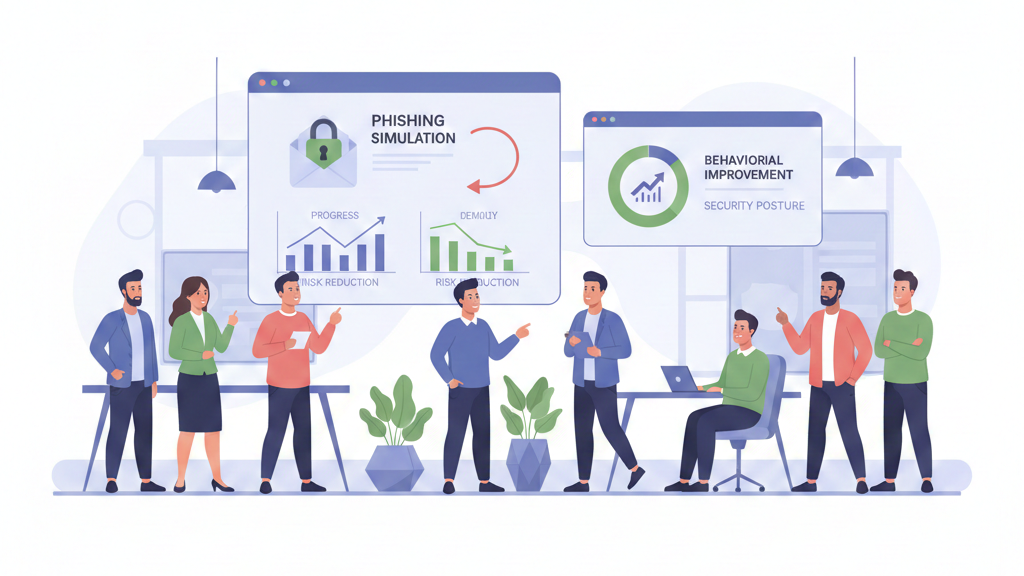
You’re probably looking at awareness training because your phishing click rates are too high and your team is stretched thin. We get it. The right platform isn’t about more content, it’s about less risk and less administrative headache. It turns your employees from the weakest link into your most reliable defense.
Forget the annual, forgettable videos. Modern solutions work continuously in the background, using smart simulations and timely coaching to change behavior for good. This guide cuts through the noise to show you what matters in 2026. Keep reading to choosing awareness training platform.
What Really Matters
- Focus on reducing your team’s ongoing workload, not just adding more training modules.
- Measurable behavior change, like a dropping phish-prone percentage, is the only metric that counts.
- Your platform must handle modern, multi-channel threats like vishing and deepfakes, not just email.
The Problem with Checking the Box
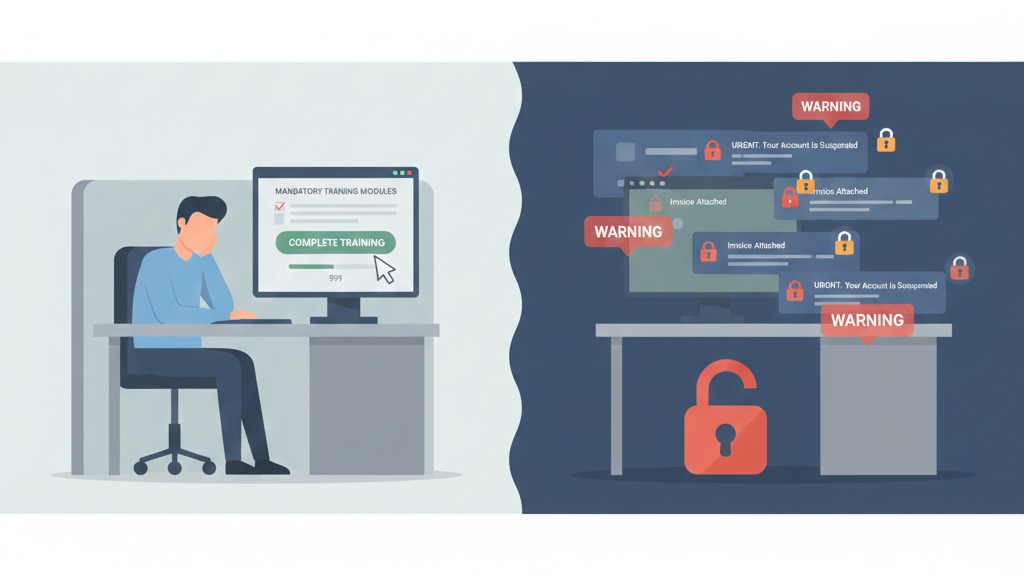
You know the drill. Everyone completes their annual security module, the compliance box gets checked, and then nothing changes. A phishing email slips through, someone clicks, and you’re back to square one. This model is broken because it treats security as a one-time event, whereas a managed security awareness training program ensures that vigilance becomes a daily habit.
“MSPs need multi-tenant control and white-label options. Internal teams may prioritize reporting depth or integrations… Manual platforms increase workload over time. Automation reduces friction and keeps programs running consistently.” – uSecure Blog
Human error is still involved in most breaches, a number that hasn’t budged much despite years of this kind of training. The threats have evolved, using AI to craft perfectly believable messages, but the training often hasn’t. It’s like practicing for a fistfight when the other guy brought a gun.
The static, yearly approach can’t keep pace. It creates a false sense of security, which might be more dangerous than no training at all. People forget. They get complacent.
- Treats security as an annual obligation, not an integrated behavior.
- Fails to adapt to AI-generated and personalized social engineering attacks.
- Creates knowledge that fades, not instincts that last.
You need a system that builds muscle memory, not just passes a test.
What to Look For (Beyond the Sales Pitch)
Credits: Parachute IT
When we audit platforms for MSSP clients, our first question is always about automation and how it simplifies security awareness training management for overstretched IT teams.
“Offering a white-labeled security awareness training service helps to create a unified user experience: Users won’t need to familiarize themselves with new logos, banners, or domains. Instead, they’re welcomed by the same branding that they know and trust, your own.” – CanIPhish
It needs to fit right into your existing workflow, integrating with Microsoft 365 or Google Workspace to pull user data automatically. If it creates more manual work, it’s already failing.
The content can’t be an afterthought. We’ve seen outdated slides that everyone ignores. You need interactive modules or high-quality video that actually holds attention. But the real difference-maker is the behavioral approach.
The most effective platforms we’ve tested use “Just-in-Time” training, delivering a short, relevant lesson the instant someone clicks a test phish. That’s when the learning happens. This method consistently drives up phishing report rates, turning a workforce from a potential risk into an active defense layer.
A Side-by-Side Look at What’s Out There
The market splits roughly into two camps. On one side, you have the established giants with massive libraries of content, sometimes boasting over a thousand verified modules. They’re comprehensive, often good for ticking a wide range of compliance boxes across different regulations.
On the other side, a newer breed of agile platforms focuses intensely on human risk management. These might use an OSINT-first approach, automatically finding and helping to remove employee data from broker sites to cut spear-phishing risk at the source.
Others lean heavily into gamification or offer a fully autonomous experience that claims to reduce high-risk user groups by significant margins without manual intervention. There are even managed service models that deliver story-driven, professionally animated episodes to boost engagement.
| Focus Area | Legacy Content Leaders | Modern HRM & Agile Platforms |
| Core Strength | Breadth of compliance-ready modules, vast template libraries. | Behavioral change, automation, and addressing root causes of risk. |
| Learning Style | Often structured, module-based paths. | Adaptive, microlearning, and heavily simulation-based. |
| IT Burden | Can vary, sometimes requiring more configuration. | Built explicitly for low-touch, automated management. |
| Best For | Organizations with stringent, varied compliance needs. | Teams prioritizing measurable risk reduction and admin simplicity. |
Why Email-Only Training Isn’t Enough Anymore
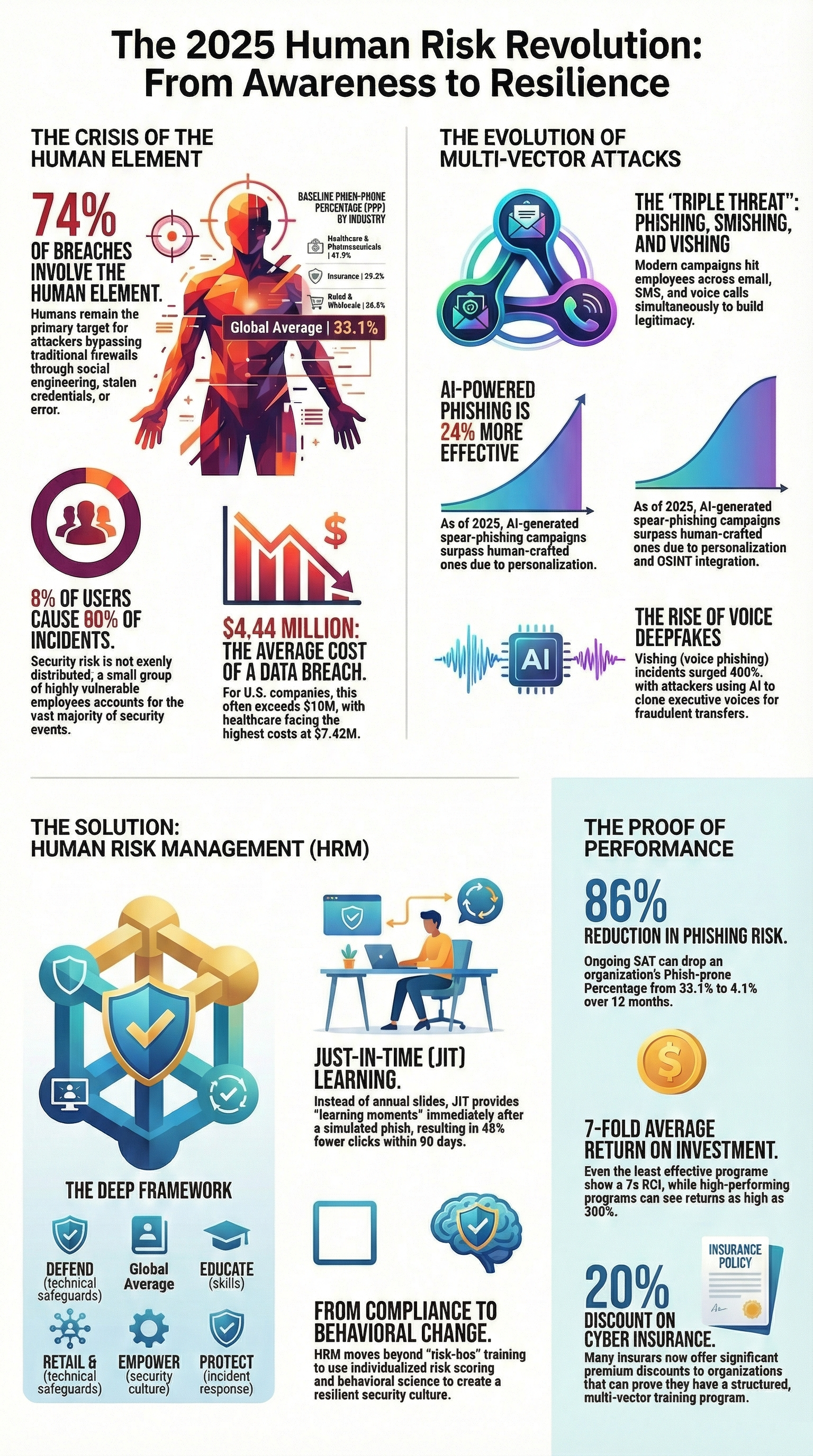
Email-only training used to move the needle, but modern defense requires outsourced phishing simulation training that covers vishing, smishing, and deepfakes to be truly effective.
We’ve seen it firsthand while auditing awareness programs for MSSPs, inbox simulations look great on reports, yet the same employees freeze when a “CEO” calls demanding an urgent transfer. Vishing hits differently when a real voice applies pressure.
Smishing feels personal when a fake login alert buzzes in your pocket. And now deepfake video adds a layer of realism most teams have never practiced against. People become sharp with phishing emails, but attackers don’t stay in one lane.
Modern social engineering is multi-channel, and attackers stack it on purpose. We’ve reviewed incidents where a phishing email set the stage for a follow-up vishing call using stolen details. That’s why today’s simulations must mirror reality, SMS, voice, video, and email working together.
Our work helping MSSPs evaluate training platforms keeps showing the same truth: awareness only sticks when employees practice across every channel they actually use.
Measuring Success: From Vanity Metrics to Real Value
Measuring success goes far beyond checking who finished a course. We’ve reviewed plenty of programs where completion rates looked perfect on paper, yet real-world risk barely moved.
What actually matters is reduction, especially phish-prone percentage over time. When we help MSSPs audit training outcomes, the strongest programs consistently drive those numbers from the 30% range into single digits within a year. That’s when behavior truly changes.
Another signal we watch closely is reporting rate. The moment employees stop quietly deleting suspicious messages and start flagging them, something clicks. They shift from being targets to becoming part of detection. We’ve seen early reports shave hours, sometimes days, off attacker dwell time.
The return shows up everywhere. Fewer compromised accounts. Fewer frantic investigations. Fewer expensive cleanups. When platforms provide clear analytics showing users moving from high risk to low risk, it tells a real improvement story. And when leadership sees risk dropping on a graph, buy-in follows fast.
Steering Clear of Common Pitfalls
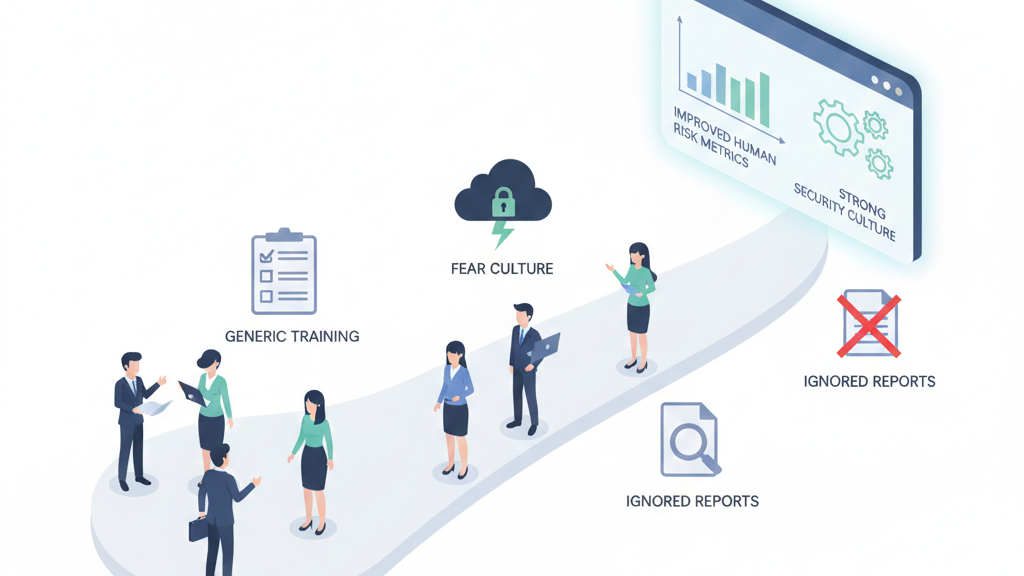
Even the strongest platform can fall flat if the program is handled wrong. We’ve walked into audits where phishing simulations were treated like a gotcha game, public callouts, quiet penalties, and zero trust.
The result is always the same: people stop reporting real threats. Fear kills visibility. Strong reporting cultures grow when employees feel safe admitting mistakes, not when they expect blame.
Generic training is another trap we see constantly. Finance teams face wire fraud and fake invoices. Executive assistants deal with impersonation. Everyone else gets different lures. Role-based learning isn’t a nice extra, it’s what makes awareness stick. And while automation matters, “set it and forget it” never works.
What consistently works is treating awareness as culture, not compliance. We encourage MSSPs to celebrate reports, show improvement, and explain the why. When platforms combine automation with clear analytics, teams stay focused on progress, not busywork, and real risk keeps dropping.
FAQ
How do security awareness training platforms reduce human risk from modern cyber threats?
Strong security awareness training platforms combine phishing simulations, interactive modules, and real-world social engineering scenarios. They expose employees to phishing emails, voice phishing, and AI-generated spear phishing in safe environments.
Over time, this builds behavioral change and creates a human firewall. With user behavior analytics and vulnerability measurement, organizations can track improvement, strengthen security posture, and lower phish-prone percentage across departments.
What features matter most when choosing a security awareness solution for real-world attacks?
Look for multi-channel threat coverage, comprehensive content library, and role-based learning paths. Effective training programs include phishing templates, AI simulations, and up-to-date training content reflecting evolving threat sophistication.
Automated nudges, baseline assessments, and clear reporting culture tools reduce admin work while improving employee engagement. The goal is measurable human risk management, not just course completion.
How does security awareness training support regulatory compliance and information security goals?
Well-designed security awareness programs reinforce password hygiene, multi-factor authentication, and data protection habits. They align with frameworks like ISO/IEC 27001 and evolving regulations such as the AI Act.
By improving user signals and security controls, organizations demonstrate proactive risk reduction. This strengthens overall information security, supports audits, and shows commitment to protecting personal data.
Can awareness training really stop phishing attacks and social engineering campaigns?
Yes, when done continuously. Phishing simulations mirror real phishing campaigns and social engineering attacks employees face daily. Over time, users recognize manipulation tactics faster, report threats earlier, and avoid risky clicks.
Combined with email security solutions and incident response plans, awareness training cuts dwell time, reduces identity theft risk, and limits damage from cyber threats.
Making Your Final Decision on a Training Platform
Your final choice is simple: does the platform cut human risk without becoming another chore for your team? Skip the flashy libraries. Look for automation that builds habits and proof of real behavior change. It should work inside daily apps, teaching through experience.
This is the foundation of a true human firewall. For MSSPs, selecting the right tools is critical for service quality. If you’re ready to evaluate platforms with a clear, vendor-neutral framework, our team can guide your process.
References
- https://usecure.io/blog/top-10-security-awareness-training-platforms-for-2026-complete-guide
- https://caniphish.com/blog/msp-security-awareness-training