

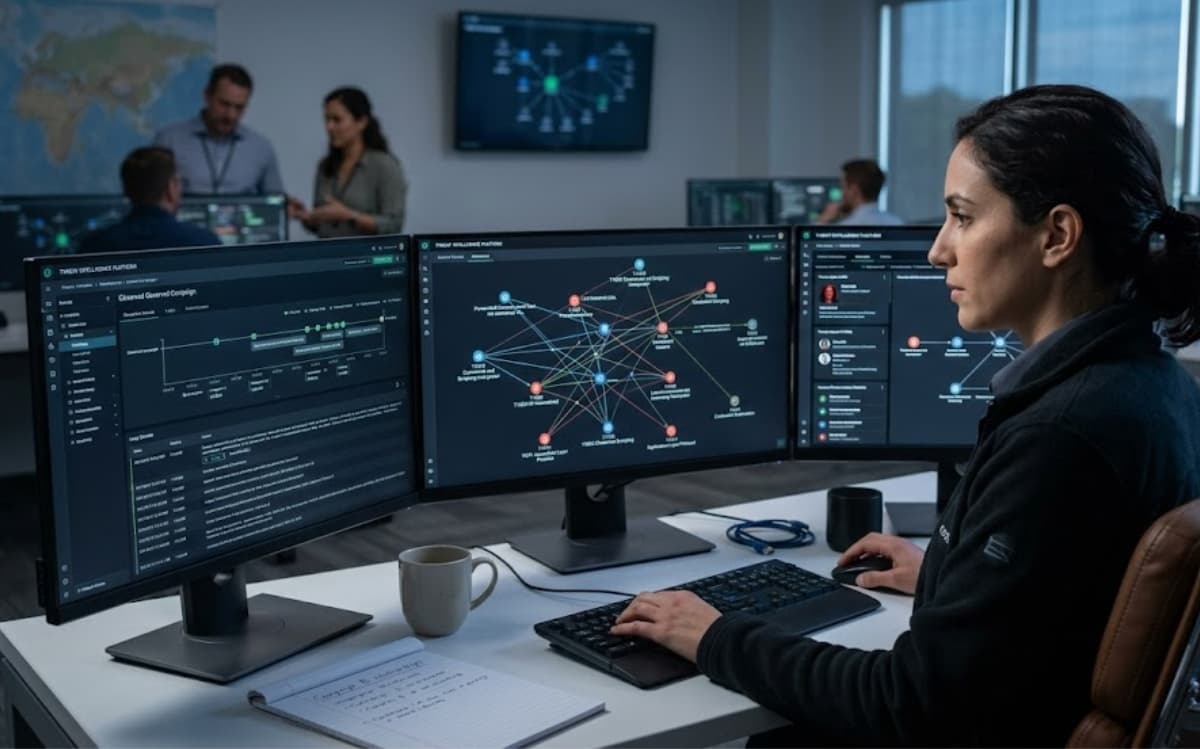
Modern attackers change their infrastructure and techniques so quickly that signature based detection alone is no longer enough. Threat hunting helps security teams find hidden attacker activity before it turns into a larger incident.
At MSSP Security, we have seen that the strongest results come from combining internal security data with threat intelligence inside a Threat Intelligence Platform.
This gives analysts the context they need to investigate real attacker behavior instead of chasing isolated alerts. Continue reading to learn how intelligence led threat hunting helps build faster, smarter security operations.
Threat Hunting Quick Wins
Improving threat hunting starts with better context, structured workflows, and continuous refinement across your security operations.
- Combine intelligence with internal telemetry
- Build hunts with clear hypotheses and ATT&CK mapping
- Connect TIP, SIEM, and automation for faster investigations
Why Is Threat Hunting Changing From IOC Searches To Intelligence Led Detection?
Threat hunting is changing because attackers change faster than lists of known indicators can keep up. An IP address or domain may only stay useful for a short time. The techniques behind an attack often last much longer. That is why more security teams now hunt for behavior instead of looking only for known IoCs.
Threat hunting today asks different questions. Instead of asking whether a malicious IP appeared on the network, analysts ask whether someone is acting like an attacker. That shift changes the whole investigation.
“Threat hunting is a proactive approach to identifying previously unknown or ongoing malicious activity within an organization’s environment.” – Cybersecurity and Infrastructure Security Agency (CISA)
Why Don’t Known Indicators Of Compromise Catch Every Attack?
Known IoCs only show part of the picture. Attackers replace servers, register new domains, and change malware every day. Some never use malware at all. They rely on tools already installed on Windows or Linux systems so their activity blends into normal operations.
Instead of focusing only on indicators, hunting teams should also watch for:
- Unusual account activity
- Unexpected PowerShell execution
- Privilege changes
- Lateral movement
- Command and control traffic
- Living off the land activity
Behavior usually lasts longer than infrastructure. That gives defenders a better chance to find hidden activity before more damage is done.
How Do You Build A Threat Hunting Program With A Threat Intelligence Platform?

A good hunting program follows a repeatable process. Random searches through millions of logs rarely uncover meaningful threats. There needs to be a reason behind every investigation.
Many SOC environments where analysts jumped from one alert to another without a plan. Progress was slow because every hunt started from scratch. Once the team began using structured hypotheses inside their TIP, investigations became easier to repeat and easier to improve.
Every hunt should begin with a question that can be tested. Building that process becomes easier when analysts understand the benefits of a Threat Intelligence Platform, especially for organizing intelligence, supporting hunting hypotheses, and connecting related attacker activity.
Why Should Every Hunt Begin With A Hypothesis?
A hypothesis gives analysts direction. It explains what they expect to find and why.
For example, a team might investigate whether a ransomware group is using stolen credentials to access remote systems. Another hunt might focus on unusual PowerShell activity after intelligence reports show attackers using that technique.
Starting with a hypothesis helps analysts avoid wasting time searching everything at once.
Useful hunting ideas often come from:
- Current attacker campaigns
- Industry trends
- Internal incidents
- Business risk
- New intelligence
Which Data Makes Threat Hunting More Effective?

Threat hunting only works when analysts can see what is happening across the environment. Missing data creates blind spots, and attackers know how to take advantage of them.
Collecting the right telemetry usually matters more than collecting more telemetry.
Which Telemetry Should Every Hunting Team Collect?
Different systems reveal different attacker behavior. A complete investigation usually combines several data sources instead of relying on one.
Most organizations should collect:
- Endpoint activity
- Identity logs
- Network traffic
- DNS records
- Email events
- Cloud logs
- Authentication records
Each one fills a gap. Endpoint logs show execution activity, while identity logs reveal account misuse. DNS records can uncover communication with suspicious domains that other tools miss.
Bringing these data sources together also highlights the benefits of using a TIP in security operations, helping analysts correlate activity more efficiently and investigate threats with greater context.
Threat Hunting With And Without A TIP
| Without A TIP | With A TIP |
| Separate alerts | Connected investigations |
| Manual lookups | Context included |
| Limited visibility | Rich threat intelligence |
| Slower investigations | Faster decisions |
| Reactive workflow | Intelligence led hunting |
How Does MITRE ATT&CK Improve Threat Hunting?
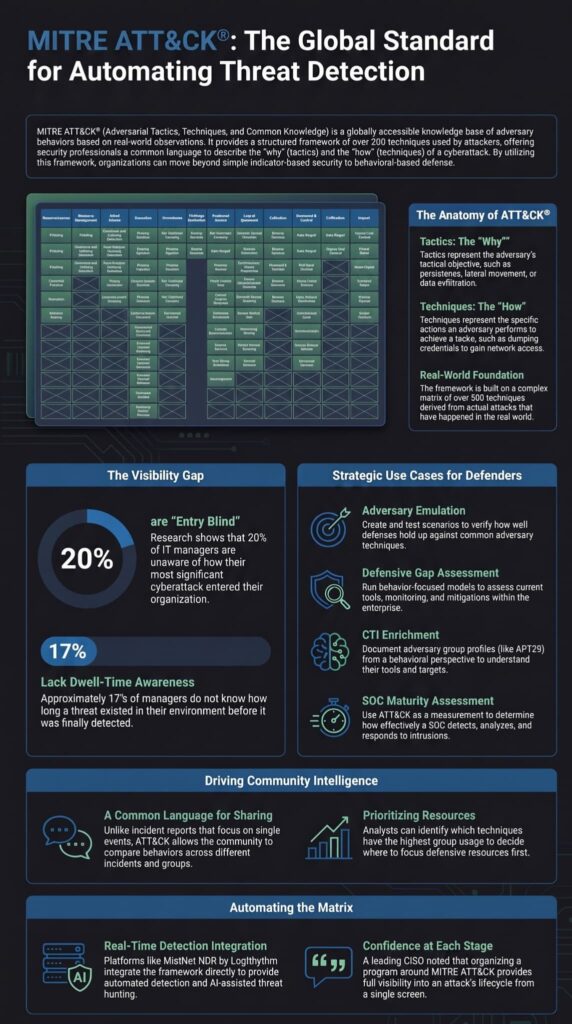
A threat hunt becomes much easier when everyone follows the same framework. That is one reason many security teams use MITRE ATT&CK. It gives analysts a common way to describe attacker behavior, compare findings, and spot gaps in their visibility.
The framework also helps organizations see what they are missing. Sometimes that matters more than knowing what they already detect.
“The ATT&CK knowledge base is used as a foundation for the development of specific threat models and methodologies in the private sector, in government, and in the cybersecurity product and service community.” – MITRE Corporation
How Does ATT&CK Mapping Improve Hunt Coverage?
ATT&CK focuses on attacker techniques instead of individual indicators. That gives analysts a more stable way to investigate threats because techniques usually stay the same longer than domains or IP addresses.
Teams can map detections to areas such as:
- Credential access
- Privilege escalation
- Persistence
- Lateral movement
- Command and control
- Defense evasion
How Can Automation Improve Threat Hunting Without Replacing Analysts?
Source: The Cyber Mentors
Automation speeds up routine work. It does not replace experienced analysts, and honestly it should not.
Teams spend most of their day copying indicators between tools, checking reputation services, and collecting basic evidence. Once those repetitive tasks became automated, investigators finally had time to focus on understanding attacker behavior instead of gathering information.
That shift alone can improve the quality of a hunt.
Which Hunting Tasks Should Be Automated?
Some activities follow the same process every time. Those are good candidates for automation.
Examples include:
- IOC enrichment
- Threat scoring
- Alert correlation
- Log collection
- Case creation
- Basic reporting
Automation keeps investigations moving, but analysts should still review important findings before major response actions take place. Organizations evaluating long term hunting capabilities should also consider choosing the right TIP vendor solution because integration quality and analyst workflows often have a greater impact than feature lists alone.
FAQs
What is the first step in improving threat hunting with a TIP?
The first step is creating a threat hunting program with clear objectives and defined processes. Teams should identify their most valuable data sources, establish hunting hypotheses, and determine how investigations will be performed. A threat intelligence platform brings together internal telemetry and external intelligence, giving analysts the context they need to support proactive threat detection and consistent investigations.
How does a threat intelligence platform improve threat hunting?
A threat intelligence platform improves threat hunting by adding contextual threat intelligence to indicators before analysts begin an investigation. It combines indicator correlation, threat intelligence enrichment, and threat scoring in one workflow. This approach helps analysts prioritize suspicious activity, reduce manual research, improve investigation workflows, and make faster decisions based on consistent and reliable intelligence.
Which data sources make threat hunting more effective?
Effective threat hunting depends on collecting information from multiple security sources. These include endpoint telemetry, network traffic analysis, log analysis, cloud environments, and identity systems. When combined with threat intelligence enrichment and MITRE ATT&CK mapping, these data sources improve anomaly detection, compromise detection, and attacker infrastructure analysis while providing broader visibility across the environment.
How can teams measure whether threat hunting is improving?
Organizations should measure how threat hunting improves daily security operations instead of only counting completed hunts. Useful metrics include mean time to detect, dwell time reduction, false positive reduction, investigation workflow efficiency, and hunt outcomes. Regular coverage analysis, hunt validation, and threat hunt reporting also help teams identify improvements and strengthen future hunting activities.
How often should organizations update their threat hunting process?
Organizations should review their threat hunting program regularly to keep pace with changing threats and technology. Teams should update detection rules, hunting playbooks, and hunting methodologies based on recent investigations and threat research. Continuous monitoring, shared intelligence, feedback loops, and security orchestration help ensure the hunting process remains effective and supports a stronger security posture.
Building a Stronger Threat Hunting Program with a Threat Intelligence Platform
A stronger threat hunting program starts with using threat intelligence in a way that supports real investigations. When your team has the right context, clear hunting workflows, and reliable data, it’s easier to spot attacker activity earlier and respond with confidence. Better processes lead to better results.
If you’re ready to strengthen your threat hunting capabilities, MSSP Security can help. Our vendor neutral consulting supports MSSPs with product selection, security audits, stack optimization, integration planning, and implementation guidance.
References
- https://www.cisa.gov/news-events/cybersecurity-advisories/aa23-347a
- https://attack.mitre.org/resources/