Address
304 North Cardinal St.
Dorchester Center, MA 02124
Work Hours
Monday to Friday: 7AM - 7PM
Weekend: 10AM - 5PM
Address
304 North Cardinal St.
Dorchester Center, MA 02124
Work Hours
Monday to Friday: 7AM - 7PM
Weekend: 10AM - 5PM

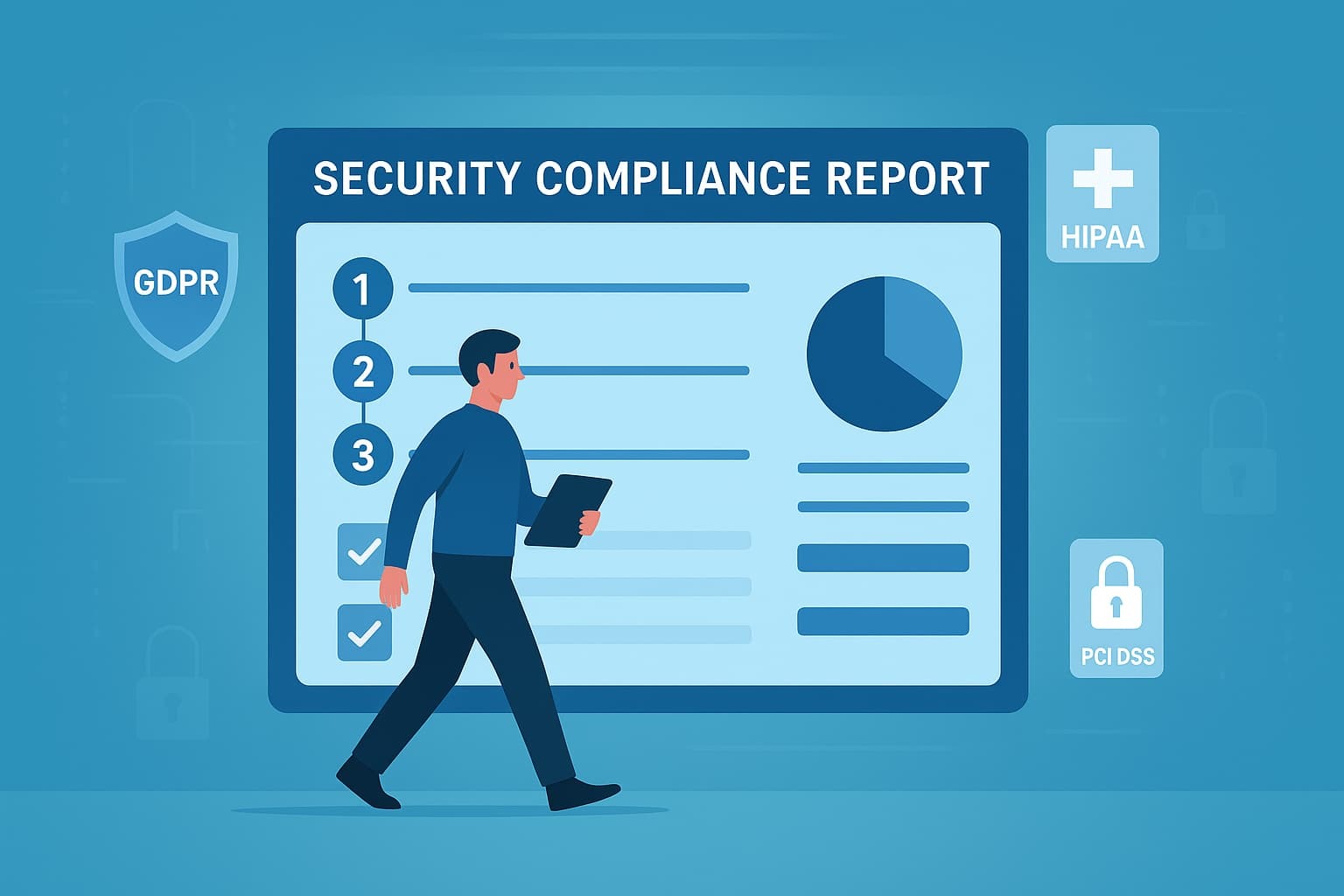
In today’s world, generating security compliance reports isn’t just a checkbox, it’s a necessity. Organizations face evolving regulations, increasing cyber threats, and rising scrutiny from customers and partners.
Producing clear, accurate, and timely compliance reports demonstrates commitment to security governance, aids in audit readiness, and supports proactive risk management.
If you’re wondering how to generating security compliance reports, keep reading to explore a practical, step-by-step guide based on real-world experience.
In my experience working alongside MSSP Security teams, one truth is clear: compliance reporting is the backbone of trust. It’s how companies prove they’re not just talking about security but actively managing it.
Statistics tell us that the cost of non-compliance can be staggering, ranging from hefty fines to irreparable reputation damage. Moreover, compliance reports build bridges with auditors, stakeholders, and customers by providing transparency.
We’ve seen firsthand how organizations that embrace compliance reporting effectively not only reduce their risk profile but also accelerate business opportunities.
A strong compliance program with regular reporting reassures partners and clients that security controls are in place and functioning. It’s about more than meeting requirements; it’s about fostering confidence and safeguarding the business.
Credit: Compliance with Kudzai
The foundation of a solid compliance report lies in defining clear objectives. Just as in basic compliance reporting practices, start by clarifying the purpose, are you preparing for an external audit, internal oversight, or executive review? Identifying your audience, whether auditors, executives, or IT teams, ensures clarity and precision throughout the MSSP compliance process.
Next, pinpoint the applicable regulations and standards your organization must comply with, such as GDPR, HIPAA, PCI DSS, or SOX. Assigning roles is crucial: designate who will gather evidence, analyze data, and draft the narrative. Establish a reporting schedule that ensures updates are timely and ongoing monitoring is embedded into your workflow.
From our experience, planning upfront prevents last-minute scrambles and fosters smoother collaboration across departments. [1]
Collecting accurate and comprehensive data is often the most labor-intensive phase. This includes logs, configurations, and vulnerability scans. Effective evidence collection ensures audit readiness by combining automation and centralized compliance tools that help maintain data integrity and reduce manual errors for MSSPs.
Remember, compliance evidence isn’t just technical data, it also encompasses policies, procedures, risk assessments, and incident reports. Keeping a well-documented trail supports audit readiness and strengthens your organization’s compliance narrative.
Our MSSP Security teams rely heavily on automation here to reduce manual errors and speed up evidence collection, freeing up valuable time to focus on analysis and remediation.
Raw data alone doesn’t tell the full story. The next step is to assess your security controls against compliance requirements. Are your controls fully effective, partially effective, or lacking? Identifying vulnerabilities and compliance gaps helps prioritize remediation efforts and informs stakeholders of risk exposure.
We often find that organizations benefit from categorizing compliance status clearly, this transparency is key to building trust internally and externally.
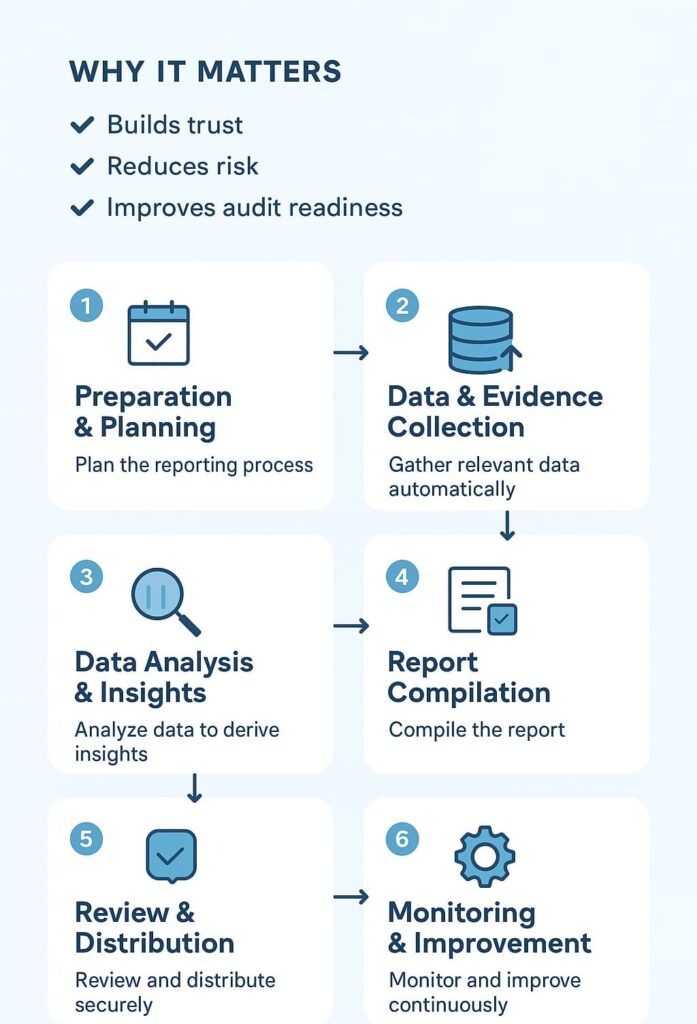
Crafting the report requires structure and clarity. Start with an executive summary that provides a high-level overview of compliance status and key findings. Clearly define the report’s scope, methodology, and systems assessed.
Tailor content based on your audience:
A well-organized report not only communicates compliance but also serves as a roadmap for continuous improvement.
Before distribution, conduct an internal review to verify accuracy and completeness. High-quality audit-ready reports ensure your findings are validated, signed off, and securely shared using trusted platforms. This step strengthens audit readiness and fosters confidence across compliance teams.
Securely share the report using trusted platforms to protect sensitive information. We emphasize the importance of controlled distribution, especially when reports contain confidential data.
Compliance isn’t a one-time task. Use your reports to guide remediation efforts and update policies accordingly. Implement automated monitoring tools to track compliance in real time, alerting your team to deviations before they escalate.
Regularly revisit and update reports to reflect new regulations, security posture shifts, or organizational changes. This dynamic approach keeps compliance meaningful and actionable. [2]
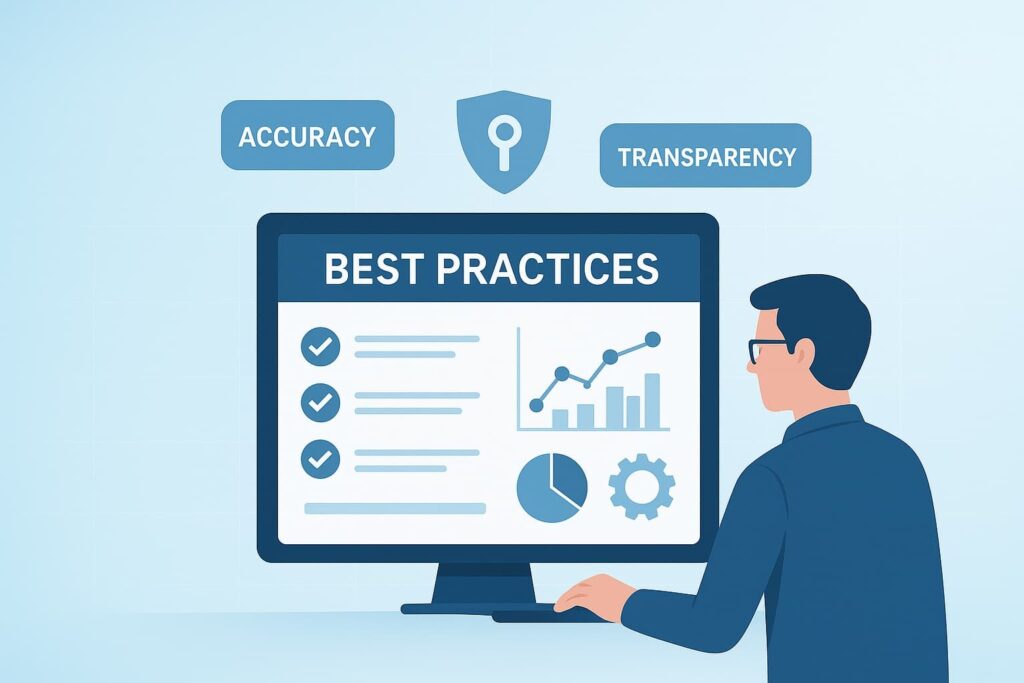
A security compliance report summarizes how well an organization meets its compliance framework and regulatory compliance requirements. It helps track audit readiness, control effectiveness, and data protection efforts.
These reports make compliance management easier by proving that security controls and access control policies are active and working as intended.
Compliance automation simplifies compliance reporting by cutting manual tasks and reducing errors. Automated report generation collects audit logs, compliance evidence, and control validation data in real time.
It speeds up the compliance workflow, supports continuous compliance, and helps teams focus more on risk mitigation and less on repetitive audit preparation work.
The compliance reporting process starts with identifying compliance standards like GDPR compliance, HIPAA compliance, or PCI DSS compliance. Then, teams gather audit evidence, track compliance metrics, and analyze audit findings.
Finally, they produce an audit report showing compliance status, security posture, and remediation plans for any gaps discovered during internal or external audits.
Organizations stay audit-ready by using compliance monitoring tools, maintaining audit trails, and performing control testing regularly. They also use compliance reporting software to automate report generation and track compliance KPIs.
This ensures ongoing audit compliance, effective security governance, and strong policy compliance without the last-minute stress of manual documentation management.
Generating security compliance reports can seem complex, but with structure and automation, it becomes a strategic advantage. At MSSP Security, we’ve seen how continuous monitoring transforms compliance into a tool for trust and resilience.
Rather than viewing it as a burden, use reporting to strengthen your security posture and demonstrate commitment to protection. If you need expert support, explore MSSP Security’s managed services.
We help streamline operations, reduce tool sprawl, and enhance visibility, so your organization stays audit-ready and focused on growth with confidence and clarity.

