

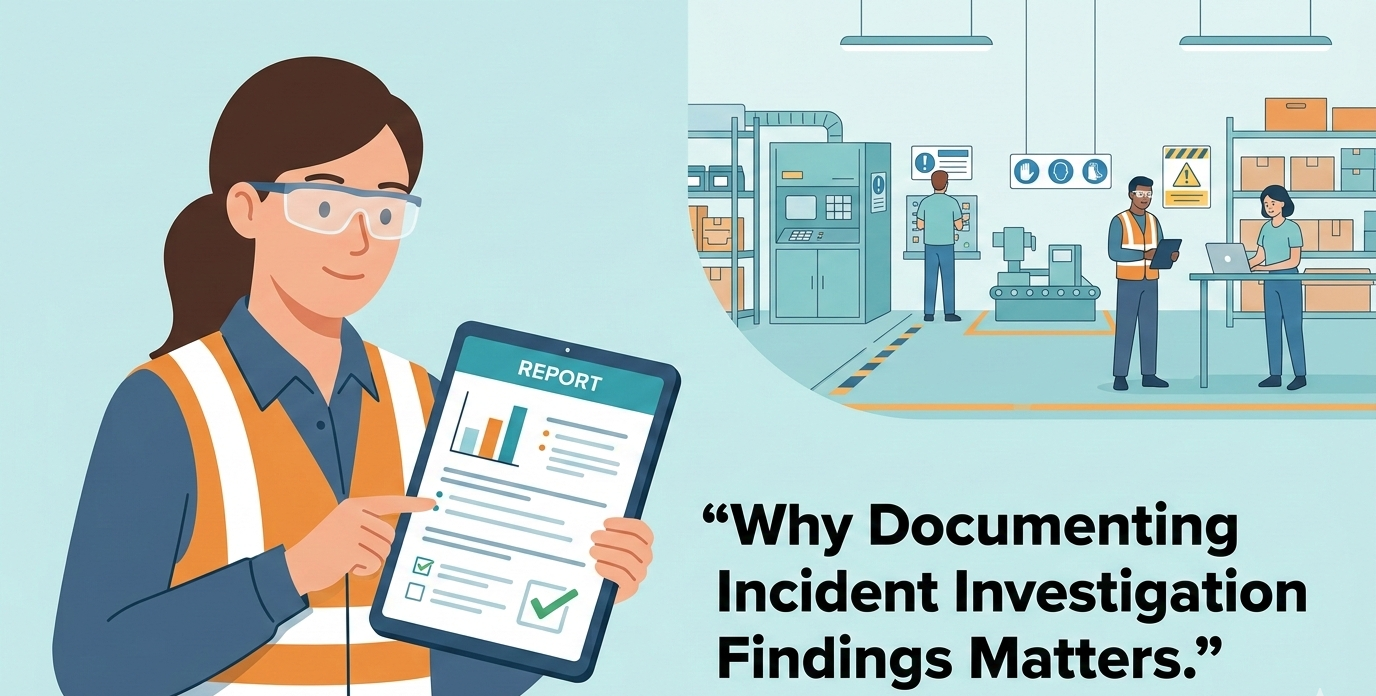
Documenting incident investigation findings does one essential thing: it turns a chaotic event into a structured plan for prevention. It’s the difference between reacting to a single failure and building a system that can’t fail the same way twice. A proper report isn’t just paperwork for OSHA or the legal team, though it certainly does that. It’s a blueprint.
It tells you exactly where a safety procedure broke down, where a hazard was ignored, and what needs to change so no one gets hurt tomorrow. We’ve seen it firsthand, a well-documented near-miss from last quarter often prevents this month’s catastrophic accident. Stick around, and we’ll show you how to build that blueprint.
What You Need to Remember
- A documented report provides a legally defensible record and a clear path to actionable safety improvements.
- Objectivity and factual evidence, not blame, form the foundation of a useful investigation document.
- The process only creates value when findings directly trigger assigned corrective actions and updated training.
What a Good Report Actually Does
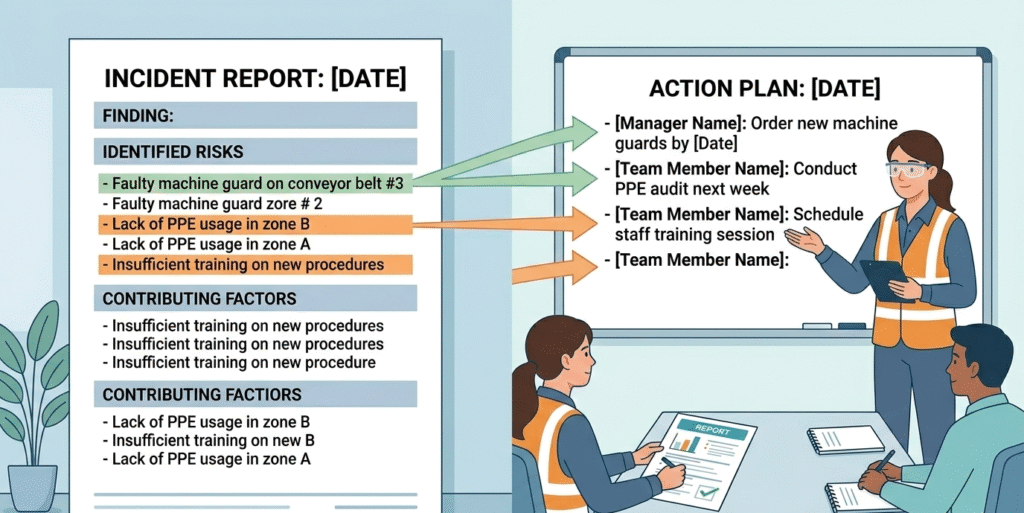
When something breaks, most teams rush to contain the damage and move on. We’ve seen that pattern across MSSPs during product rollouts and post-incident reviews. A strong report interrupts that reflex. It forces everyone to slow down and document what actually happened.
It’s not about blame. It’s about identifying the system gap, a misconfigured tool, an unclear SOP, an unsupported integration. Regulators like OSHA, or even internal audit teams, don’t just want acknowledgment. They want proof of understanding and prevention.
It forces everyone to slow down and document what actually happened. Following established incident investigation analysis steps ensures the report identifies system gaps, misconfigured tools, or unsupported integrations rather than focusing on blame.
A solid report:
- Creates a defensible, time-stamped record
- Demonstrates regulatory diligence
- Reduces liability exposure
- Supports budget requests with real data
In our consulting work, the difference between reactive chaos and controlled improvement almost always starts with documentation quality.
The Non-Negotiable Parts of Your Report
Credits: Watchman
Vague recollections don’t survive audits. Whether reviewing a failed product deployment or a safety incident, we insist on precision from the start.
The narrative should remain neutral. “The engineer deployed the update” works. “The engineer recklessly deployed the update” does not. We advise clients to anchor every statement to evidence, logs, photos, ticket histories, maintenance records.
A report should allow someone outside the event, a regulator, executive, or insurer, to reconstruct it clearly. When documentation feels factual and restrained, it earns credibility.
A simple table can organize the initial data effectively:
| Element | What to Document | Why It Matters |
| Basic Info | Date, Time (HH:MM), GPS/Precise Location | Establishes the “when & where” for all legal and internal timelines. |
| People | Names, Titles, Contact Info of Involved & Witnesses | Ensures follow-up interviews and protects witness contact information. |
| Immediate Facts | Description of injury/damage, Initial response actions | Sets the scope of the incident for the investigation team. |
Finally, document the immediate response. What emergency response protocols were activated? Who was notified? How was the area secured? This shows control and competence from the first moment, a critical part of the overall story for safety officers and legal reviewers alike.
Finding the “Why” Behind the “What”
Describing events isn’t enough. The real value comes from determining incident root cause. We often guide MSSPs through structured analysis like the 5 Whys to get past surface-level symptoms. A configuration failed. Why? A patch wasn’t applied. Why? The update schedule wasn’t enforced. Why? No ownership was assigned. That’s not a person problem, it’s a process failure.
“Documentation should answer the questions: Who, What, When, Where, Why, and How? … Completing documentation, it is never possible to document all aspects of an incident while it is going on, and achieving comprehensive documentation is very important to identify lessons for next time.” – Cynet
For more complex scenarios, teams may use:
- Fault Tree Analysis
- MORT (Management Oversight and Risk Tree)
- Structured post-implementation audits
What matters is showing the reasoning. A report should document the analytical path, not just the conclusion. In our experience, organizations improve faster when they shift the conversation from “who missed it?” to “what allowed it?”
The Critical Clock: Timelines for Filing
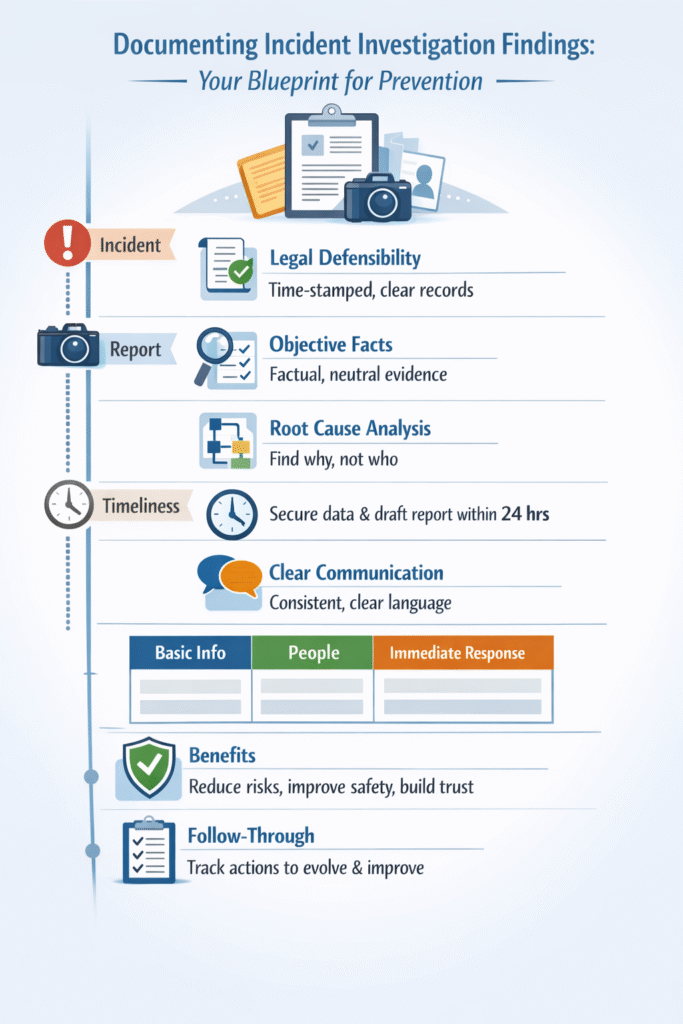
Time degrades evidence. We’ve reviewed cases where teams failed to analyze security incidents promptly; by the time they started, logs were overwritten and memories had blurred.
Within the first 24 hours, teams should:
- Secure logs, screenshots, and system states
- Collect initial statements
- Draft core facts
Serious incidents may trigger external reporting deadlines, OSHA notifications, regulatory filings, insurer alerts. Documentation must support those timelines without guesswork.
We advise clients to finalize a comprehensive report, including root cause and corrective actions, within a week. Momentum matters. When reports drag on, corrective action stalls. Timely documentation signals leadership commitment and keeps improvement efforts credible.
Writing It So It Can’t Be Misunderstood
Clarity wins. In every audit we conduct, the strongest reports share the same traits: short sentences, active voice, measurable facts.
“MSSPs must conduct detailed post-mortems after every incident, documenting findings and identifying areas for improvement. These reports serve as invaluable resources for refining response strategies and preventing similar incidents in the future.” – Rewterz
Instead of broad language, use specifics. Measurements. Log entries. Direct references to attachments.
Keep in mind:
- State what you can prove
- Avoid loaded terms like “negligent”
- Define technical jargon when needed
- Reference evidence directly
We remind clients that reports may reach regulators, attorneys, executives, or insurers. Each reader must interpret it the same way. When tone stays neutral and factual, the document protects the organization rather than exposing it.
From Paper to Practice: The Follow-Through
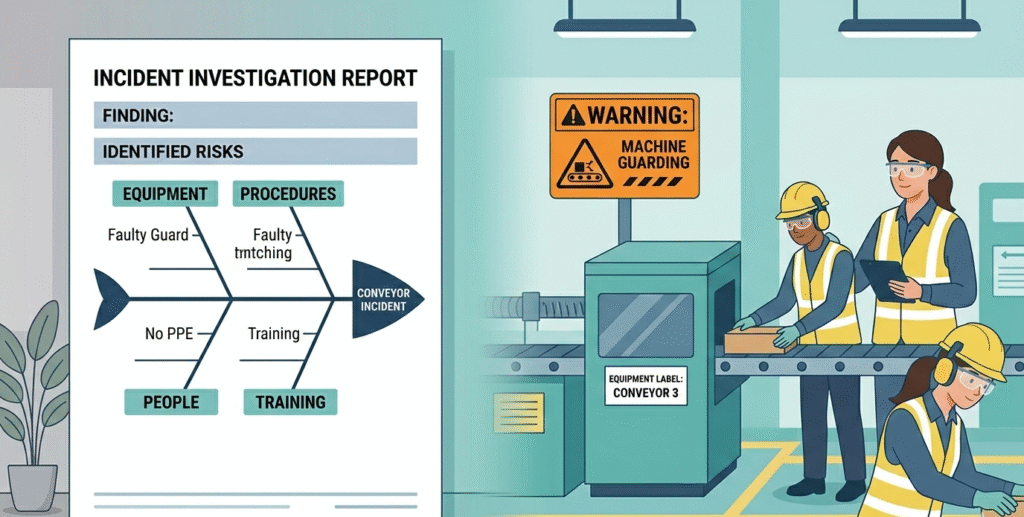
Submitting the report isn’t the finish line. It’s the starting point. Too often, we see corrective actions listed but never tracked. That turns documentation into theater. Each root cause must connect to a defined CAPA:
- Assigned owner
- Clear deadline
- Verification method
For example, updating a security tool policy should include audit validation. Retraining staff should include attendance records.
The strongest MSSPs treat investigation reports as improvement roadmaps. Updated procedures feed training. Audit findings shape vendor selection. Lessons integrate into the broader risk program.
When documentation drives action, and action gets verified, the organization actually evolves. That’s when reporting shifts from compliance exercise to competitive advantage.
FAQ
How do I start documenting incident investigation findings correctly?
Begin by securing the scene and starting Data Collection immediately. Record time, location, hazards and risks, and gather physical evidence before anything changes. Collect witness statements and witness contact information early.
Use structured incident report forms or an incident report template to guide consistency. A clear incident investigation process helps your investigation team document incident causes accurately and protect legal compliance.
What should I include in an incident report for workplace incidents?
A strong incident report should cover scene management details, emergency response actions, and inspection reports tied to the event. Include video surveillance footage references, physical evidence, and clear witness statements.
Document hazards and risks, affected safety devices, and personal protective equipment use. Good incident reporting connects facts to safety procedures and supports both safety officers and your safety management system.
How do I identify root incident causes beyond surface mistakes?
Go deeper than the first explanation. Use investigative techniques like the 5 Whys, Fault tree analysis, or Management Oversight and Risk Tree. These tools help your investigation team move past blame and uncover system gaps.
Review safety rule failures, missing safety measures, and weaknesses in the safety program. Root cause analysis should clearly link findings to realistic safety improvements.
How long should we keep investigation reports for legal compliance?
Retention depends on local laws and OSHA requirements, but most organizations keep every investigation report for several years. Records support legal defense in premises liability claims, workplace complaints, or Department of Labor reviews.
Store accident report files, hazard report documentation, and related evidence securely. Organized incident reporting protects employee safety and strengthens your overall safety culture.
Making Your Documentation Defend Your Future
A documented finding is more than a file. It’s proof your team chose improvement over avoidance. We’ve seen MSSPs either treat reports as compliance artifacts, or use them to strengthen operations. The difference shows in audit outcomes and client trust. When documentation drives real corrective action, it builds defensibility and operational maturity.
If you’re ready to turn findings into measurable improvements, JOIN us here. We help MSSPs streamline tool stacks, audit vendors, reduce sprawl, and make confident product decisions backed by 15+ years and 48K+ projects.
References
- https://www.cynet.com/incident-response/incident-response-sans-the-6-steps-in-depth/
- https://rewterz.com/blog/building-a-robust-incident-response-plan-best-practices-for-mssps