

Defining SLA KPI requirements means setting service commitments, measurable targets, calculation methods, and reporting rules. An SLA states what a provider agrees to deliver, while KPIs show whether the service meets those commitments. For Managed Security Service Providers (MSSPs), this may include incident response times, monitoring coverage, and service availability.
Each measure needs a target and a method of tracking performance. At MSSP Security, we use these details to help providers set practical expectations and clarify operational responsibilities. Clear requirements also make missed targets easier to review and address. Keep reading to learn how to define and manage SLA KPIs.
Quick Reference: What Should SLA KPI Requirements Include?
An effective SLA KPI framework should cover the following requirements:
- Define expected service outcomes before selecting performance indicators.
- Set measurable targets based on historical performance and operational capacity.
- Document calculation formulas, measurement periods, exclusions, and data sources.
- Align customer-facing SLAs with internal Operational Level Agreements (OLAs).
- Establish reporting schedules, escalation procedures, and corrective actions.
How Do SLA, KPI, and SLO Requirements Differ?
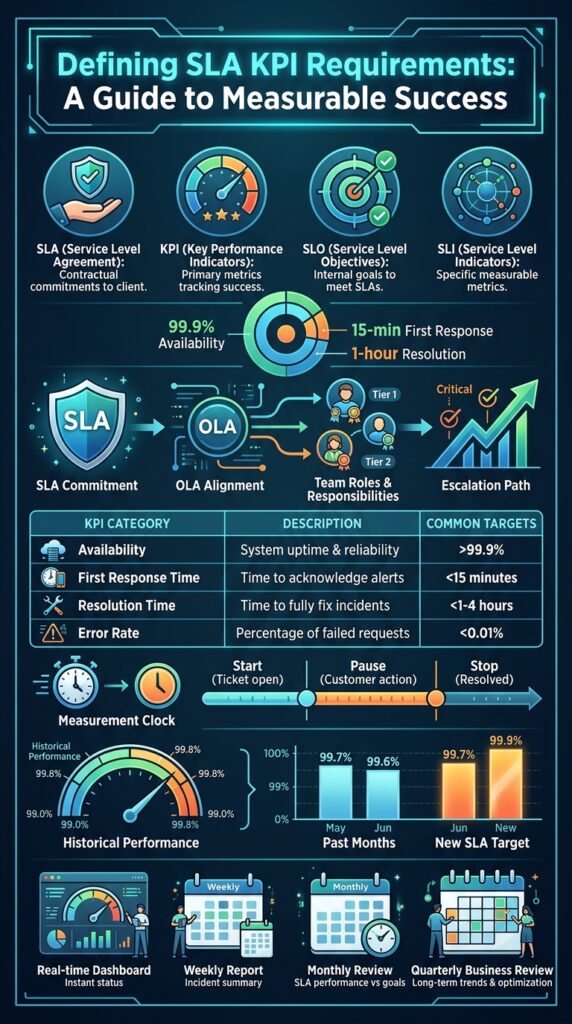
An SLA defines the service a provider promises, KPIs measure operational performance, and Service Level Objectives (SLOs) set specific performance targets. A Service Level Indicator (SLI) records the actual results.
For MSSPs, understanding these differences helps when defining SLA KPI requirements and assessing security products. Each term has a distinct purpose:
- SLA (Service Level Agreement): Defines external service commitments, such as 99.9% monthly availability.
- KPI (Key Performance Indicator): Tracks service performance, such as monthly uptime percentages.
- SLO (Service Level Objective): Sets an internal performance target, such as 99.95% availability.
- SLI (Service Level Indicator): Records actual performance, such as 99.92% measured availability.
IBM highlights the importance of defining performance measurements and their reporting methods:
“Clearly defining which metrics and key performance indicators (KPIs) will be used to measure performance and how this information will be communicated helps IT service management (ITSM) teams identify what data to collect and monitor.” – IBM
For example, an MSSP may promise 99.9% availability under its SLA while setting an internal SLO of 99.95%. The SLI records actual uptime, and the KPI tracks performance over time.
During product audits, we check whether security tools generate accurate reports to support these measurements. IBM’s SLA metrics guidance provides further context on defining and monitoring service performance.
What Should You Define Before Setting SLA KPI Requirements?
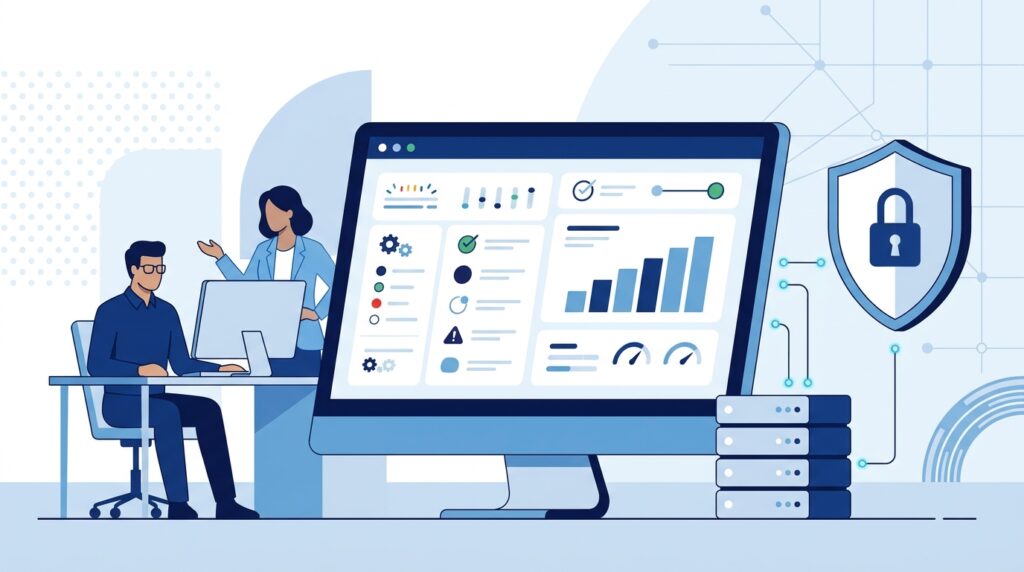
Before defining SLA KPI requirements, organizations need to understand their business needs, service scope, customer expectations, and operational responsibilities. These factors help MSSPs choose performance metrics that reflect actual service commitments rather than tracking numbers with little operational value.
The main service outcomes to consider include availability and uptime, incident response, resolution and restoration times, system performance, data quality, and security incident handling. Each area needs clear expectations. For example, an SLA should specify how quickly the provider acknowledges a security alert, how incidents are escalated, and how long service restoration should take.
Defining these expectations starts with a clear understanding of the services being delivered, their scope, and customer responsibilities. Our guide to defining MSSP service requirements explains how providers can establish these expectations before setting service commitments.
We recommend classifying services and incidents according to business impact before setting response targets. Providers should identify critical infrastructure, establish incident severity levels, document service exclusions, and clarify which responsibilities belong to the provider or customer.
A production outage might require an initial response within 15 minutes, while a routine service request allows more time. During product audits, we also check whether security tools support the monitoring, alerting, and reporting processes needed to meet these commitments.
How Do You Define Measurable SLA KPI Requirements?
Defining measurable SLA KPI requirements means giving each indicator a clear formula, unit, performance target, measurement period, and accountable owner. These details help MSSPs track service performance consistently and avoid confusion when reviewing results.
Common service KPIs include availability, first response time, resolution time, error rate, and backlog age. The table below shows how providers can measure them.
| KPI | Measurement | Example target |
| Availability | Actual service time / scheduled service time | 99.9% monthly |
| First response | Time until initial incident acknowledgment | 15 minutes for P1 |
| Resolution time | Time taken to resolve an issue | 8 hours for P1 |
| Error rate | Failed requests / total requests | Defined threshold |
| Backlog age | Time unresolved requests remain open | Defined threshold |
These targets are examples, not fixed industry standards. Each MSSP should consider its service scope, customer expectations, and operational capacity before agreeing on specific thresholds.
We also recommend documenting the data source, measurement period, and review process for every KPI. The SMART framework can help check whether targets are specific, measurable, achievable, relevant, and time-bound. During product audits, we assess whether security tools can provide reliable data to support these measurements and SLA reporting.
How Should You Define SLA Measurement Rules?
SLA measurement rules explain when the clock starts, stops, or pauses, and what qualifies as a completed commitment or breach. Clear conditions help MSSPs avoid disputes when calculating KPIs and reviewing service performance.
Each SLA should define the event that starts measurement, such as ticket creation or automated incident detection. It must also clarify what counts as an initial response, when an incident is considered resolved, and whether customer waiting time or scheduled maintenance pauses the clock.
Business hours need equal attention. A four-hour response target could mean four working hours or four consecutive hours, including weekends. We recommend documenting operating hours, 24/7 coverage, holidays, time zones, maintenance windows, and approved exclusions.
For MSSPs, these rules are particularly relevant when continuous security monitoring depends on customer approval for remediation. During product audits, we also check whether security tools record accurate timestamps and incident activity to support reliable SLA reporting.
How Do You Set Realistic SLA KPI Targets?
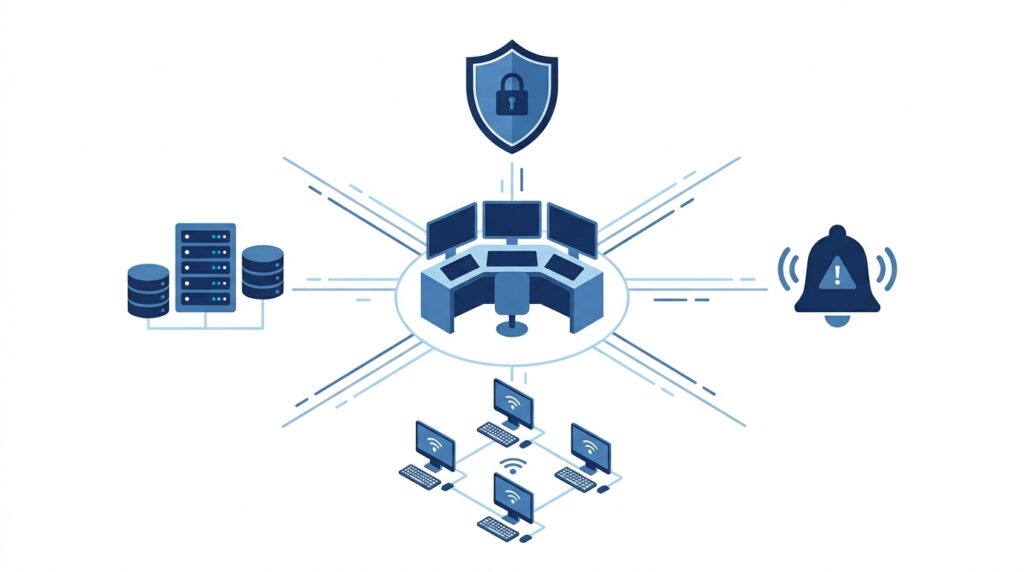
Realistic SLA KPI targets should reflect historical performance, customer impact, staffing capacity, infrastructure, and operational dependencies. Before agreeing to customer-facing commitments, we recommend taking these steps:
- Review historical performance. Check response times, availability, incident volumes, and resolution rates.
- Identify bottlenecks. Look for delays caused by limited staffing, manual processes, or technical dependencies.
- Assess service capacity. Review monitoring coverage, infrastructure, escalation procedures, and available resources.
- Set achievable targets. Use actual performance data as a baseline, then improve targets gradually as capabilities develop.
Microsoft Learn reinforces this approach:
“Before you create a service-level agreement (SLA), identify the service outcomes that you need to measure.” – Microsoft Learn
This highlights why MSSPs should establish measurable service outcomes before setting contractual targets.
Internal KPI targets should be stricter than contractual SLA limits to give teams room to manage unexpected delays. For example, an MSSP might promise incident resolution within eight hours while setting an internal target of two hours. In our consulting work, we assess whether security products and operational processes can support these commitments. Our recommendation: Maintain a reasonable buffer between internal targets and SLA commitments to protect service quality.
How Do You Align SLA Requirements With Internal OLAs?
Operational Level Agreements (OLAs) translate customer-facing SLA commitments into clear responsibilities for internal teams. An SLA might promise incident resolution within eight hours, but meeting that target could involve several departments. Without clear ownership and handoff procedures, delays can put the commitment at risk.
A practical OLA should define:
- Team responsibilities and service boundaries.
- Incident ownership, handoffs, and escalation procedures.
- Response, restoration, and resolution targets.
- Access permissions, dependencies, and approval requirements.
- KPI definitions, measurement methods, and reporting duties.
For example, an eight-hour resolution SLA could allocate 30 minutes for service desk triage, two hours for application support, three hours for infrastructure support, and one hour for validation. This uses 6.5 hours, leaving 1.5 hours for unexpected delays.
We recommend mapping the full workflow before approving external targets. During product audits, we also assess whether security tools support incident ownership, escalation, and reporting. This helps MSSPs identify operational gaps before they affect customer commitments.
How Do You Establish Reliable SLA KPI Data Sources?
Credit: NinjaOne IT Tech Tips
Reliable SLA KPI reporting depends on systems that capture accurate timestamps, service events, ownership, and performance results. Without consistent records, MSSPs may struggle to prove whether they have met contractual commitments. We recommend identifying a reliable data source for each KPI before setting targets.
Choosing the right tools is also essential for reliable KPI measurement. Through evaluation, selection, and onboarding consulting, MSSPs can assess whether selected security products provide the data, integrations, and reporting capabilities needed to support their SLA commitments.
Ticketing platforms track incident creation, response, escalation, and resolution times, while monitoring systems record availability and infrastructure performance. Observability tools measure application latency and error rates, and reporting platforms consolidate these results into dashboards and historical reports. Solutions such as Zabbix, Nagios, New Relic, and Power BI can support different measurement needs.
During product audits, we check whether these tools integrate properly and produce consistent data. Teams should also standardise ticket categories, verify timestamps, assign responsibility for KPI validation, and maintain audit trails. For example, separating project requests from security incidents prevents unrelated tickets from distorting response-time measurements. This gives MSSPs a more reliable basis for SLA reporting and performance reviews.
Why Should SLA KPIs Measure Actual Service Health?
SLA KPIs should measure actual service health, not just ticket compliance. A provider may meet response-time commitments while users continue experiencing performance problems. Combining operational metrics with service health indicators gives MSSPs a more accurate view of service quality.
Key measurements include SLA compliance rate, availability, response latency, error rate, and data freshness. Each reveals a different aspect of performance, helping teams identify issues that ticket reports might miss.
Availability requirements should also define what counts as downtime, which service components must remain functional, and where monitoring takes place. Response-time thresholds and error rates deserve equal attention.
For example, a website may pass uptime checks while loading too slowly for users. We apply the same approach when auditing security products. A monitoring platform might remain online but fail to collect endpoint telemetry or process security alerts. Assessing these capabilities helps MSSPs measure actual service health rather than relying on uptime figures alone.
How Should You Handle SLA Breaches and Escalations?
Effective SLA breach management requires clear procedures for notification, escalation, investigation, and corrective action. When a KPI falls below its target, both the MSSP and customer should know who is responsible and how the issue will be handled.
We recommend documenting a process that covers breach detection, service owner notification, severity-based escalation, root-cause analysis, and corrective actions with assigned deadlines. Recurring failures should also trigger a review of existing targets and service delivery processes.
Contractual remedies may include service credits, root-cause analysis reports, corrective action plans, additional performance reporting, or termination conditions. These terms should be agreed upon before service begins.
Security services also need clear rules for containment authority. An MSSP may investigate an incident and notify the customer but require approval before isolating endpoints or disabling accounts. During product audits, we assess whether security tools support timely alerts and maintain clear action records. Documenting these permissions helps prevent delays and confusion during security incidents.
How Do You Build an SLA KPI Reporting Framework?
An SLA KPI reporting framework helps MSSPs compare actual service performance with agreed targets. Regular reports show customers whether commitments are being met and help identify recurring issues.
A monthly SLA report should include each KPI’s name, target, actual result, compliance status, historical trend, responsible team, and required corrective actions. For example, an MSSP might report incident response times, monitoring availability, unresolved security alerts, and outstanding actions.
Reporting frequency should reflect service criticality. Real-time monitoring detects urgent incidents, while weekly reviews track recurring problems. Monthly reports compare performance against contractual commitments, and quarterly reviews assess longer-term trends and improvement priorities.
During product audits, we also check whether security tools provide accurate data for these reports. Critical security events may require immediate notification, while broader KPI trends can be reviewed monthly. Matching reporting schedules to operational needs helps MSSPs maintain clear performance records and keep customers informed.
What Common Mistakes Make SLA KPI Requirements Ineffective?
Vague definitions, unrealistic targets, unreliable data, and missing escalation procedures can make SLA KPI requirements difficult to measure and enforce. These problems often occur when targets are chosen without considering actual service capabilities.
Common mistakes include using unclear terms instead of measurable time limits, setting targets without reviewing historical performance, ignoring ticket categories, and relying only on ticket compliance. MSSPs should also define measurement rules, assign internal ownership through OLAs, and document breach procedures and contractual remedies.
Measurement quality matters more than ambitious targets. For example, promising 99.99% availability without sufficient monitoring coverage makes compliance difficult to verify. During product audits, we also check whether security tools provide reliable performance data and support accurate reporting.
KPIs should encourage teams to focus on resolution quality, customer impact, service health, and operational performance, rather than simply closing tickets quickly. Balanced measurements give MSSPs a more realistic view of service delivery.
How Can You Finalize Defining SLA KPI Requirements?
Before approving an SLA, MSSPs should review every KPI definition, performance target, measurement rule, data source, responsible owner, and contractual consequence. Each requirement needs to reflect the services provided and the team’s ability to meet its commitments. This includes checking historical performance, operational capacity, incident priorities, measurement periods, exclusions, and reporting schedules. Internal OLAs must also support external SLA commitments, with clear escalation procedures, breach remedies, and change-control processes.
We recommend testing the measurement process before signing the agreement. Monitoring tools should capture the required service events, while ticketing systems must record accurate timestamps and incident details. During product audits, we also assess whether selected security tools provide reliable data and support the reporting requirements.
For MSSPs preparing a statement of work (SOW), service descriptions, deliverables, reporting obligations, and acceptance criteria should match actual operational capabilities. A clear agreement helps prevent misunderstandings about service scope and responsibilities. Further details on documenting these requirements before implementation are available in the MSSP statement of work (SOW) guide.
How Can MSSP Security Help Define Effective SLA KPI Requirements?
MSSP Security helps organizations determine whether their security services and technology can support measurable operational commitments. Our consulting approach starts by reviewing service requirements, monitoring coverage, incident response expectations, and existing operational processes before assessing suitable security products.
We evaluate whether selected tools provide the detection, monitoring, alerting, and reporting capabilities needed to meet agreed SLA targets. This includes checking how platforms handle security alerts, support escalation workflows, and record performance data for KPI reporting. We also identify gaps between contractual expectations and the resources available to deliver the service.
For example, an MSSP might promise a specific incident response time without confirming whether its security platform can generate reliable alerts and notify the right team promptly. We help assess these capabilities before the commitment becomes part of the service agreement. This gives MSSPs a clearer basis for setting realistic SLA KPI requirements and selecting security products that support their operational needs.
FAQ
What Are the Most Important KPIs for an MSSP?
Important KPIs for an MSSP include service availability, incident response time, resolution time, security alert handling, error rate, and monitoring coverage. These measurements help evaluate service quality, operational efficiency, and compliance with customer commitments.
What Is the Difference Between SLA Compliance and KPI Performance?
SLA compliance measures whether a provider meets contractual service commitments, while KPI performance tracks specific operational results. KPIs provide the data needed to assess service performance and identify areas that require improvement.
How Often Should SLA Performance Be Reviewed?
Critical security events should be monitored in real time, while operational performance can be reviewed weekly. Monthly reports help assess contractual compliance, and quarterly reviews provide an opportunity to evaluate long-term trends and adjust service targets.
What Happens If an MSSP Fails to Meet an SLA Target?
The provider should follow documented breach procedures, including customer notification, escalation, root-cause analysis, and corrective action. Depending on the agreement, consequences may include service credits, additional reporting, or contract review.
How Can Security Products Support SLA KPI Compliance?
Security products support SLA compliance through reliable monitoring, automated alert notifications, incident tracking, accurate timestamps, and performance reporting. MSSPs should evaluate these capabilities before selecting new tools to ensure their technology can support agreed service commitments.
How Can You Build SLA KPI Requirements That Deliver Results?
Defining SLA KPI requirements means setting measurable targets, assigning clear responsibilities, and using reliable data to track service performance. For MSSPs, examples include 99.9% monthly availability, a 15-minute initial response to critical incidents, and 24/7 security alert monitoring. These targets should reflect operational capacity, incident severity, and monitoring coverage.
Internal OLAs, measurement rules, and reporting processes must also support customer-facing commitments.
MSSP Security provides vendor-neutral consulting to help MSSPs select and audit security products, reduce tool sprawl, and improve integration. With over 15 years of experience and 48,000+ projects completed, we offer needs analysis, vendor shortlisting, and PoC support.
Need help evaluating security products against your SLA requirements? Contact MSSP Security for practical recommendations.
References
- Quiroz-Vázquez, Camilo. “5 SLA metrics you should be monitoring.” IBM. Accessed November 16, 2026.
- “Configure SLA KPIs and service-level agreements.” Microsoft Learn. Accessed November 16, 2026.