

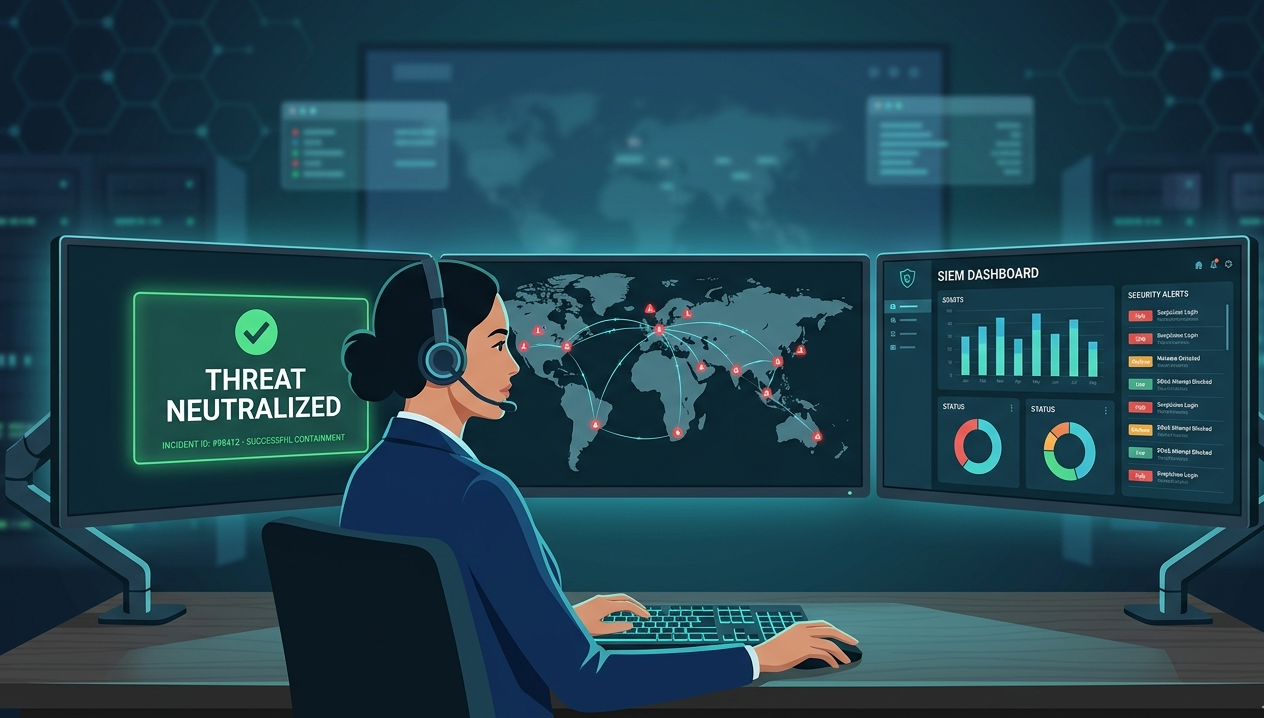
Security Operations Center analysts play a critical role in protecting organizations from cyber threats every day. A typical day in life SOC analyst professional involves monitoring alerts, investigating suspicious activity, escalating incidents, and supporting cybersecurity operations across multiple systems.
SOC analysts work in fast-paced environments where quick decisions, technical knowledge, and teamwork are essential. Their responsibilities help organizations improve threat visibility, reduce response times, and strengthen overall cybersecurity resilience. Keep reading.
Inside a SOC Analyst’s Daily Workflow
SOC analysts manage constant streams of alerts and security events while helping organizations detect and respond to cyber threats efficiently.
- SOC analysts monitor and investigate cybersecurity alerts daily.
- Communication and analytical skills are essential in SOC environments.
- Fast response and teamwork improve security operations performance.
Starting the Shift: Reviewing Alerts and Security Events

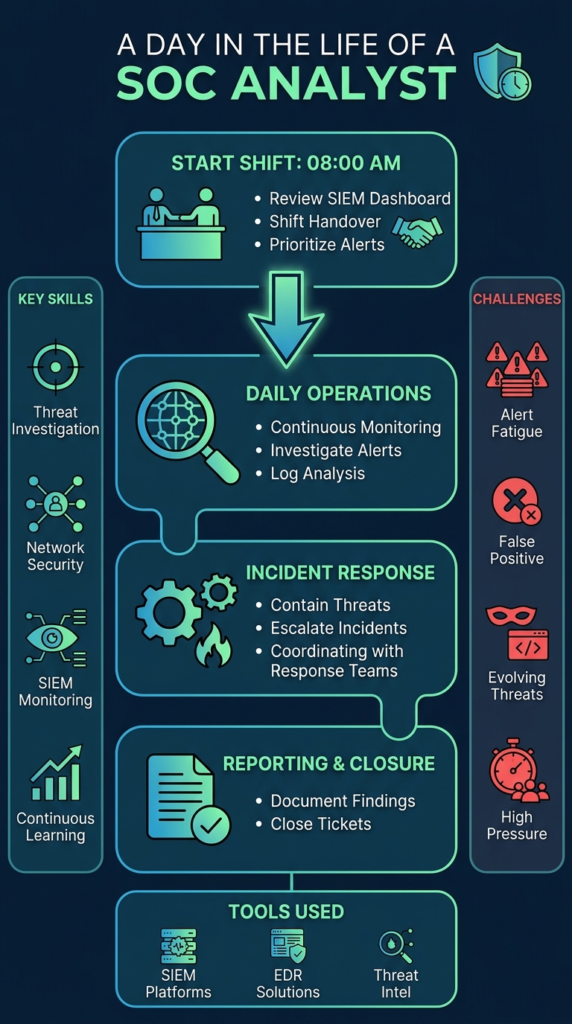
Most SOC analysts begin their shift by reviewing open incidents, recent alerts, and operational updates from previous teams. Shift handovers help analysts understand ongoing investigations and priority threats.
Daily starting tasks often include:
- Reviewing SIEM dashboards
- Checking unresolved tickets
- Monitoring endpoint alerts
- Reviewing threat intelligence updates
- Prioritizing active investigations
This process helps analysts maintain continuous security visibility across environments.
Monitoring and Investigating Threats
Credits: Tech with Jono
A major part of the day in life SOC analyst workflow involves monitoring systems for suspicious activity and investigating alerts generated by security tools.
| Daily Activity | Purpose |
| Alert Monitoring | Detect suspicious activity |
| Log Analysis | Investigate potential threats |
| Incident Escalation | Support response workflows |
| Threat Validation | Reduce false positives |
| Reporting | Document investigation findings |
SOC analysts continuously review logs, correlate events, and determine whether alerts represent real threats or normal activity.
Handling Security Incidents
When suspicious behavior is confirmed, SOC analysts escalate incidents and support containment efforts alongside incident responders and security engineers.
“The SOC’s effectiveness is not merely a product of its tools but of its ability to integrate human expertise with systematic processes to ensure that incident detection leads to timely and decisive containment.” – Journal of Cybersecurity and Information Management
Incident-related tasks may include:
- Collecting investigation data
- Isolating affected endpoints
- Escalating critical alerts
- Updating ticketing systems
- Coordinating with response teams
Fast and accurate communication is important during active cybersecurity incidents.
Collaboration Across Security Teams
SOC analysts regularly work with multiple departments to improve investigations and operational efficiency. Understanding the security team structure is vital for seamless handoffs during threat hunting and incident response.
Common collaboration areas include:
- Threat hunting support
- Detection rule improvement
- Incident response coordination
- Security engineering updates
- Threat intelligence sharing
Strong teamwork helps reduce response delays and improves overall SOC performance.
Security Tools SOC Analysts Use Daily
SOC analysts rely on several technologies to manage cybersecurity operations effectively.
Frequently used tools include:
- SIEM platforms
- EDR solutions
- Threat intelligence systems
- Ticketing platforms
- Firewall monitoring tools
These technologies help analysts investigate threats, manage alerts, and maintain operational visibility across networks and endpoints.
Challenges SOC Analysts Commonly Face
SOC environments can be demanding due to high alert volumes and constantly evolving threats.
Common challenges include:
- Alert fatigue
- False positives
- Fast-changing attack methods
- High-pressure incident response
- Managing multiple investigations simultaneously
Strong analytical thinking and operational discipline help analysts manage these challenges effectively.
Skills Needed for SOC Analysts
A successful career is built on a foundation of technical expertise and problem-solving. Organizations prioritize expert security analysts who can account for both human and organizational factors to ensure security monitoring succeeds.
“The SOC analyst’s effectiveness is not merely a technical problem; researchers must take into account human and organizational factors for security monitoring to succeed.” – BLS
Important skills include:
- Threat investigation
- Network security understanding
- SIEM monitoring
- Incident escalation
- Attention to detail
Continuous learning is also important because cybersecurity threats and technologies constantly evolve.
Career Growth for SOC Analysts
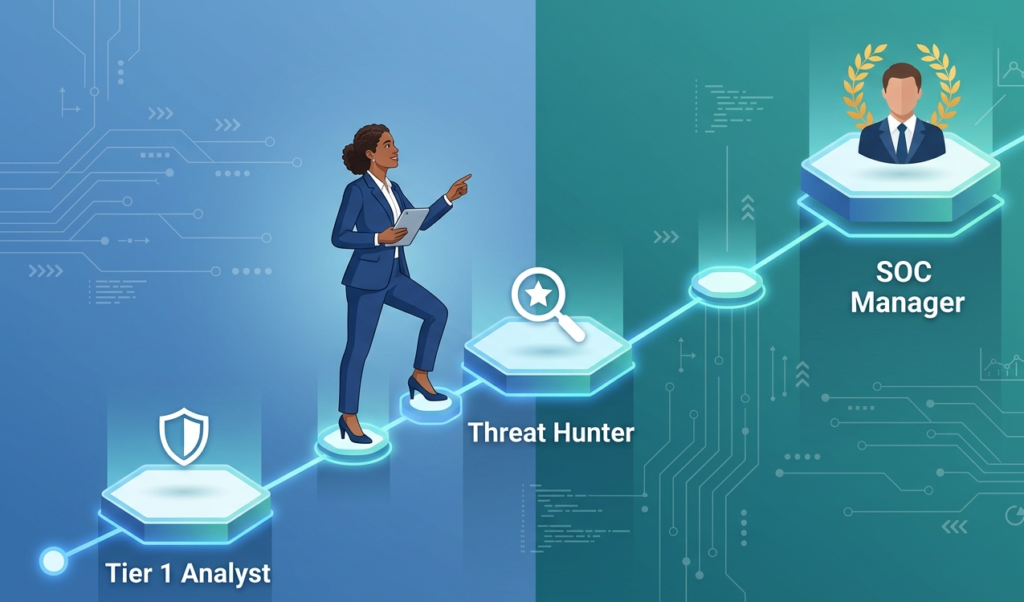
Transitioning through various security analyst roles often serves as a foundation for long-term cybersecurity careers. Hands-on experience allows entry-level professionals to build the technical expertise required for senior positions.
Common career progression includes:
- Tier 1 SOC Analyst
- Tier 2 Analyst
- Threat Hunter
- Incident Responder
- SOC Manager
Hands-on operational experience helps analysts build advanced cybersecurity knowledge over time.
FAQ
What does a SOC analyst do every day?
SOC analysts monitor alerts, investigate suspicious activity, escalate incidents, and support cybersecurity operations across networks and systems.
Is working in a SOC stressful?
SOC environments can be fast-paced and high-pressure, especially during active incidents, but strong teamwork and processes help manage workloads.
What tools do SOC analysts use?
Common tools include SIEM platforms, EDR solutions, ticketing systems, firewall technologies, and threat intelligence platforms.
Can SOC analysts grow into advanced cybersecurity roles?
Yes. Many SOC analysts move into threat hunting, incident response, security engineering, and leadership positions over time.
Supporting Stronger Cybersecurity Operations Every Day
Understanding the day in life SOC analyst workflow highlights the importance of skilled cybersecurity professionals in protecting modern organizations. SOC analysts improve visibility, support faster incident response, and strengthen operational resilience through continuous monitoring and investigation.
At MSSP Security, we help MSSPs improve cybersecurity operations, optimize security tools, strengthen visibility, and build scalable security strategies backed by more than 15 years of operational experience.
References
- https://www.proquest.com/scholarly-journals/security-operations-center-analysis-framework/docview/2548910321/se-2
- https://www.bls.gov/ooh/computer-and-information-technology/information-security-analysts.htm