

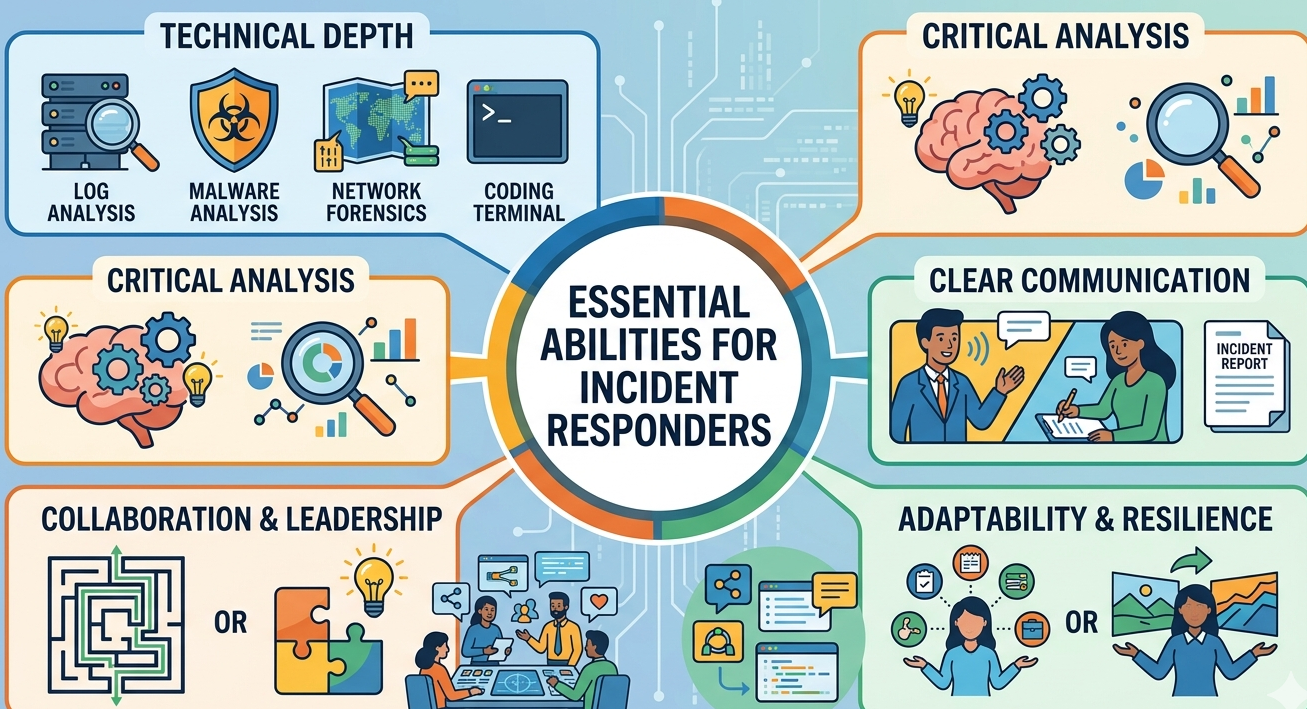
Cybersecurity incidents can happen at any time, making skilled incident responders essential for modern security operations. Incident responders investigate attacks, contain threats, and help organizations recover from security breaches quickly and efficiently.
The incident responder required skills combine technical expertise, analytical thinking, communication, and fast decision-making under pressure. These professionals play a critical role in minimizing damage, reducing downtime, and improving overall security resilience across organizations and MSSPs. Keep reading.
The Skills Behind Effective Incident Response
Incident responders work in high-pressure environments where quick decisions and accurate investigations are critical.
- Technical investigation skills improve threat containment speed.
- Communication supports faster coordination during incidents.
- Continuous learning strengthens long-term incident response readiness.
What Does an Incident Responder Do?
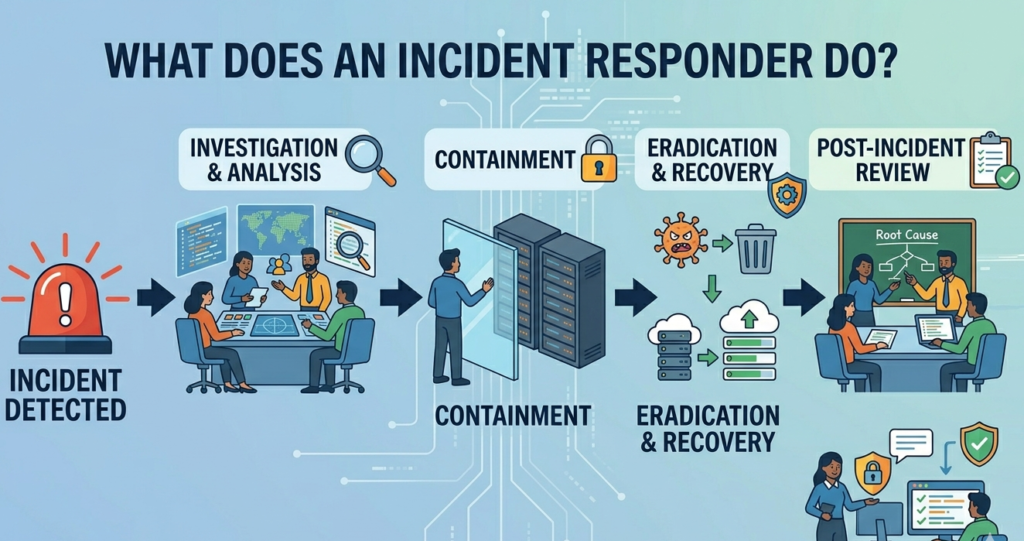
An incident responder manages cybersecurity incidents from detection through recovery. Their responsibilities involve identifying threats, analyzing malicious activity, containing attacks, and supporting system restoration.
“This transition demands new skill sets, blending technical proficiency with strategic and ethical considerations, and underscores the growing importance of AI literacy across security teams” – World Economy Forum
Key responsibilities include:
- Investigating security incidents
- Analyzing malicious behavior
- Coordinating containment efforts
- Supporting recovery processes
- Documenting incident findings
Incident responders often work closely with those in security analyst roles, collaborating during active security events to ensure full visibility.
Core Incident Responder Required Skills
Successful incident responders need a strong combination of technical and analytical capabilities to manage cybersecurity threats effectively.
| Skill | Why It Matters |
| Threat Analysis | Identifies malicious activity quickly |
| Network Security | Helps investigate attack movement |
| Malware Investigation | Supports threat containment |
| Log Analysis | Improves visibility into incidents |
| Incident Coordination | Strengthens response efficiency |
Important technical skills include:
- SIEM platform experience
- Endpoint investigation
- Threat intelligence analysis
- Firewall and network monitoring
- Basic scripting knowledge
These abilities help responders manage incidents across complex environments, often bridging the gap between investigation and the broader SOC responsibilities handled by the engineering team.
Analytical Thinking and Decision-Making
Credits: Group-IB
One of the most important incident responder required skills is analytical thinking. Responders must evaluate alerts quickly and determine the severity of threats under pressure.
Strong analytical skills help teams:
- Prioritize security incidents
- Identify attack patterns
- Reduce response delays
- Improve investigation accuracy
- Support faster containment decisions
Fast and accurate decision-making is critical during ransomware attacks, phishing incidents, or insider threat investigations.
Communication Skills During Incidents
Incident responders regularly communicate with leadership, technical teams, vendors, and sometimes customers during security events.
“Effective communication is a critical yet often overlooked component of cybersecurity incident response… timely disclosure, message consistency, and proactive stakeholder engagement are essential for effective incident management” – JCACR
Strong communication helps:
- Coordinate response efforts
- Provide clear status updates
- Escalate incidents properly
- Improve post-incident reporting
- Reduce operational confusion
Clear documentation is also essential for audits, compliance, and future security improvements after incidents are resolved.
Security Tools Incident Responders Use
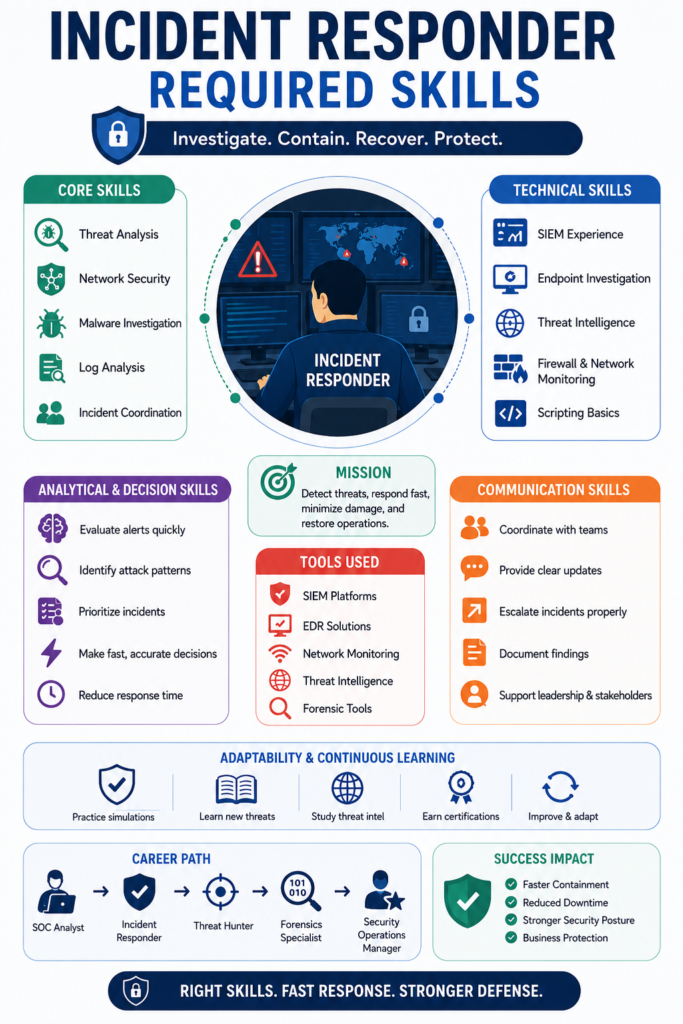
Incident responders rely on multiple technologies to investigate threats and support response activities.
Commonly used tools include:
- SIEM platforms
- EDR solutions
- Network monitoring tools
- Threat intelligence platforms
- Forensic investigation tools
Understanding how these systems work together improves visibility and speeds up cybersecurity investigations.
Adaptability and Continuous Learning
Cyber threats constantly evolve, which means incident responders must continue improving their skills and knowledge over time.
Continuous learning often includes:
- Practicing incident simulations
- Learning new attack techniques
- Studying threat intelligence
- Earning cybersecurity certifications
- Improving automation workflows
Adaptability helps incident responders stay effective against modern cyber threats and changing attack methods.
Career Path for Incident Responders
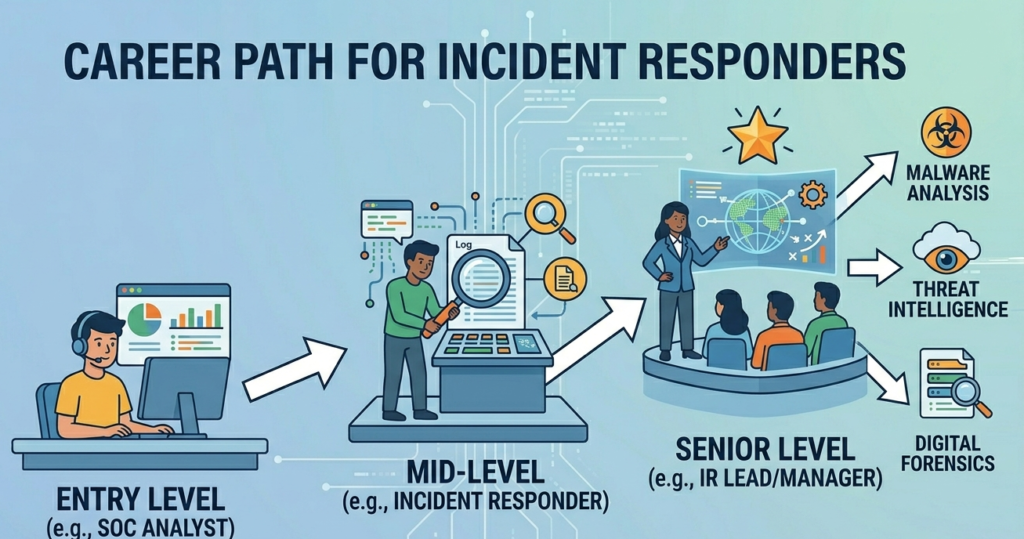
Many cybersecurity professionals move into incident response after gaining experience in SOC operations or after spending time in a threat hunter role to better understand attacker behavior.
Common career progression includes:
- SOC Analyst
- Incident Responder
- Threat Hunter
- Digital Forensics Specialist
- Security Operations Manager
Hands-on experience and operational exposure are essential for long-term growth in incident response careers.
FAQ
What are the most important incident responder required skills?
Threat analysis, log investigation, network security knowledge, communication, and analytical thinking are among the most important incident response skills.
Do incident responders need coding skills?
Basic scripting knowledge is helpful for automation, investigation support, and faster data analysis during incidents.
What tools do incident responders use?
Common tools include SIEM platforms, EDR solutions, forensic tools, threat intelligence systems, and network monitoring technologies.
Are certifications useful for incident responders?
Yes. Certifications help validate technical knowledge and improve career opportunities in cybersecurity operations.
Building Stronger Cybersecurity Response Capabilities
The incident responder required skills organizations depend on continue evolving as cyber threats become more advanced and complex. Strong technical knowledge, communication, and analytical thinking help incident responders contain threats faster and improve organizational resilience.
At MSSP Security, we help MSSPs optimize cybersecurity operations, improve visibility, streamline security tool integration, and strengthen response capabilities through expert consulting backed by more than 15 years of operational experience.
References
- https://www.weforum.org/publications/global-cybersecurity-outlook-2026/in-full/3-the-trends-reshaping-cybersecurity/
- https://jracr.com/index.php/jracr/article/view/564