Address
304 North Cardinal St.
Dorchester Center, MA 02124
Work Hours
Monday to Friday: 7AM - 7PM
Weekend: 10AM - 5PM
Address
304 North Cardinal St.
Dorchester Center, MA 02124
Work Hours
Monday to Friday: 7AM - 7PM
Weekend: 10AM - 5PM

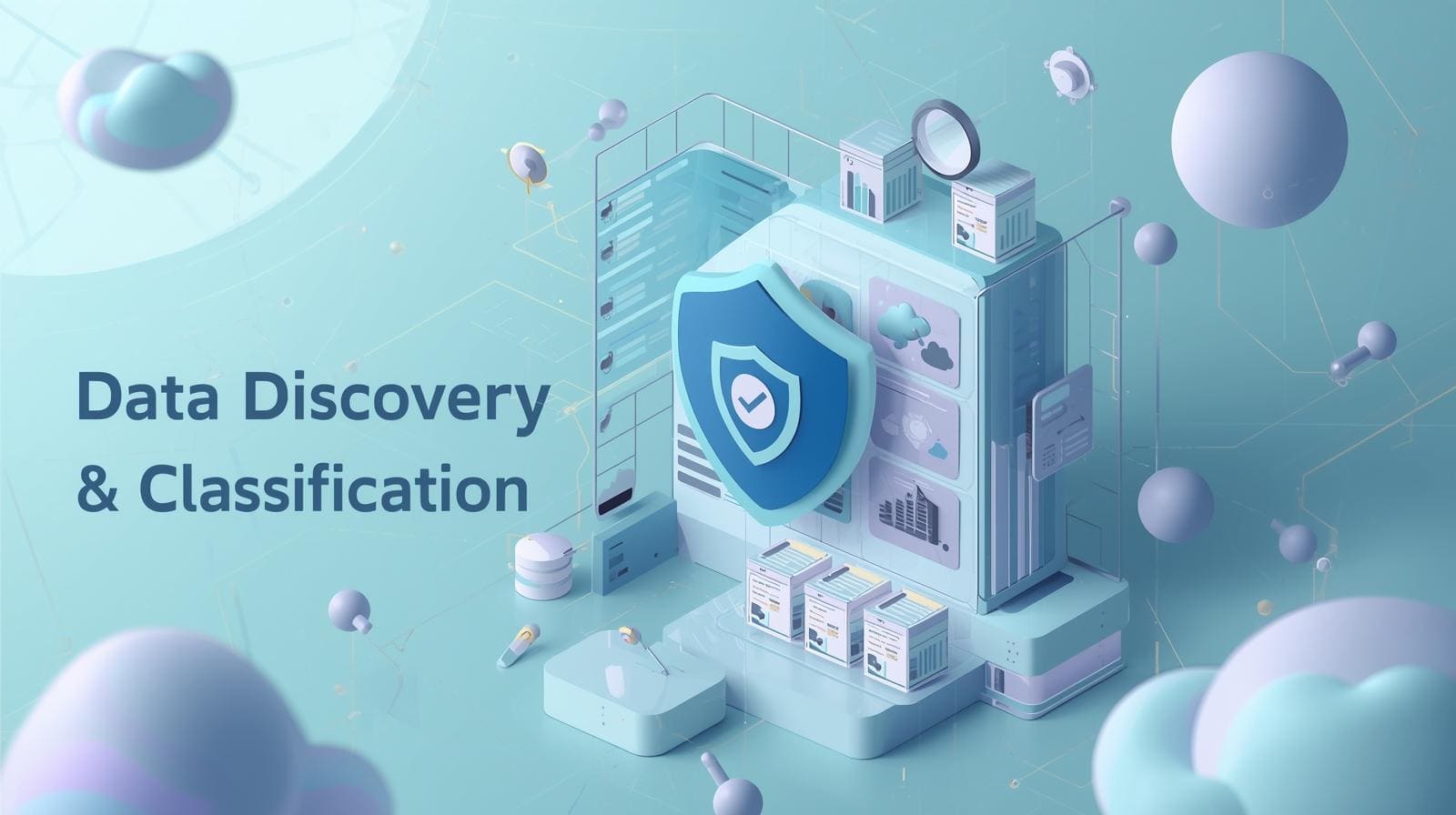
Real data protection begins with data discovery, classification, and DLP working together, not with a single tool or perimeter control. Most environments are full of databases, file shares, SaaS apps, and backups that grew faster than anyone’s ability to track what’s inside them.
Firewalls, alerts, and dashboards help, but they can’t answer the core question: what sensitive data do we actually store, and where is it now? We’ve seen strong teams still miss audits or incidents because that map didn’t exist. If you care about reducing blind spots more than adding tools, keep reading.
Shadow data is the quiet risk sitting behind many security strategies, expanding while no one is really watching.
It includes old file shares, personal cloud drives, archived backups, abandoned databases, and forgotten exports that still hold live, sensitive information. All it widens the attack surface, even when it is no one’s main priority.
In hybrid and multi cloud environments, this grows faster than governance can keep up. Unstructured data spreads across:
Regulators do not draw a line between tidy and messy data. They expect protection for all personal data, not just what sits in labeled systems with clear owners. That gap between expectations and reality is where risk quietly builds.
We have seen teams spend heavily to secure certain applications and endpoints while high risk data remained unmonitored in overlooked storage, test environments, or unmanaged cloud buckets. The financial impact is direct:
Protecting the wrong assets is not just inefficient, it creates a false sense of safety while real exposure stays in the background. Before going further into controls and tooling, it helps to map how discovery, classification, and DLP connect as a lifecycle rather than separate projects.
| Phase | Action | Key Technology |
| Discovery | Locate hidden assets | Network probes and cloud scanners |
| Classification | Assign sensitivity levels | ML models and metadata tagging |
| DLP | Enforce security policies | Real-time blocking and encryption |
This lifecycle keeps programs focused and prevents skipping steps under pressure.

If you skip this step or only half-do it, every control you add after that is built on guesses. Policies, encryption, DLP, access rules, they all assume you actually know:
Without those answers, you’re basically running a security program on top of a blind spot.
Many teams still start with spreadsheets, interviews, and “institutional knowledge.” That works for about a week. Then:
The environment changes faster than humans can track it, and the “inventory” becomes fiction.
Automated discovery isn’t just a fancy scanner. It should work like a living map of your data, updating as your environment shifts.
What automated discovery should actually do
Automated discovery isn’t just a fancy scanner. It should work like a living map of your data, updating as your environment shifts, especially when “less than half (46 %) of unstructured sensitive data has been discovered,” which means a large portion of critical information remains unseen without proper discovery. [1]
For teams expanding into more complex environments, this often overlaps with advanced security services that focus on uncovering risk across hybrid infrastructure. A solid system will:
This turns “we think our customer data is here” into “we know exactly where it is, how much of it there is, and who’s touching it.”
Finding data isn’t enough, you need to shape that info into an inventory that security and engineering teams actually use. That usually means:
Once the inventory is alive and connected, your later phases, like access control, monitoring, or encryption, can hook into it instead of guessing where the crown jewels might be.
Discovery is the moment when security stops being theoretical and becomes grounded in what actually exists in your environment. Without it, every other phase is just trying to secure a map you’ve never seen.
Automated data discovery uses agentless probes and scanners to locate data at rest across databases, file systems, endpoints, and cloud storage. Agentless discovery reduces deployment friction and scales better in large environments.
We often uncover sensitive data in places no one monitors anymore. Legacy systems tend to hold more risk than modern platforms.
Data lineage tracking shows how PII moves between systems. Exports become reports. Reports become email attachments. Copies multiply quietly.
Mapping this flow reveals which systems truly matter and which controls need reinforcement.
Shadow IT detection locates sensitive files stored in unauthorized SaaS applications or personal cloud accounts. These locations frequently bypass standard access controls.
From our experience supporting discovery programs at MSSP Security, shadow IT findings often drive the fastest executive buy-in because the risk is immediately visible.

Discovery finds the data. Classification gives it meaning. Without classification, DLP rules lack precision.
Content-based classification uses regex pattern matching to identify structured data such as credit card numbers, national identifiers, or health records. This method works well for regulated formats.
It also generates false positives if used alone, which is why context matters.
Context-aware tagging evaluates file location, access patterns, ownership, and user roles. A spreadsheet in a finance directory carries different risk than the same file in a public folder.
Context often resolves ambiguity where content scanning cannot.
ML classification models learn from examples to recognize intellectual property, internal documents, and proprietary formats. These models excel with unstructured data.
We have seen classification accuracy improve dramatically once ML models are tuned with real business samples.
User-defined labels allow employees to tag data during creation. When combined with automation, this improves accuracy without slowing workflows.
User participation works best when classification tiers are simple and intuitive.
This is where data discovery classification DLP becomes operational protection rather than documentation.
When classification feeds directly into managed data loss prevention operations, enforcement moves beyond static rules and starts adapting to how data is actually used across endpoints, networks, and cloud services.
DLP policy enforcement triggers actions based on classification tags. Highly confidential data receives stricter controls than internal use data, and this is vital given that “77 % of organizations experienced insider-related data loss in the past 18 months,” showing that threats often come from within unless policies and monitoring are tightly aligned. [2]
When teams invest time in configuring DLP rules and policies that reflect real workflows instead of idealized assumptions, it significantly improves meaningful enforcement results.
This risk-based approach reduces noise and improves adoption.
DLP blocks unauthorized USB transfers, suspicious email attachments, cloud sharing links, and risky uploads. Enforcement happens across endpoints, networks, and cloud services.
We have repeatedly seen simple USB blocking policies stop accidental data loss that no one expected.
Behavioral DLP analytics detect unusual data movement patterns before exfiltration occurs. These signals often surface insider risk or compromised accounts early.
Automated alerting prioritizes high risk violations and suppresses low impact events. Reducing false positives protects analyst focus.
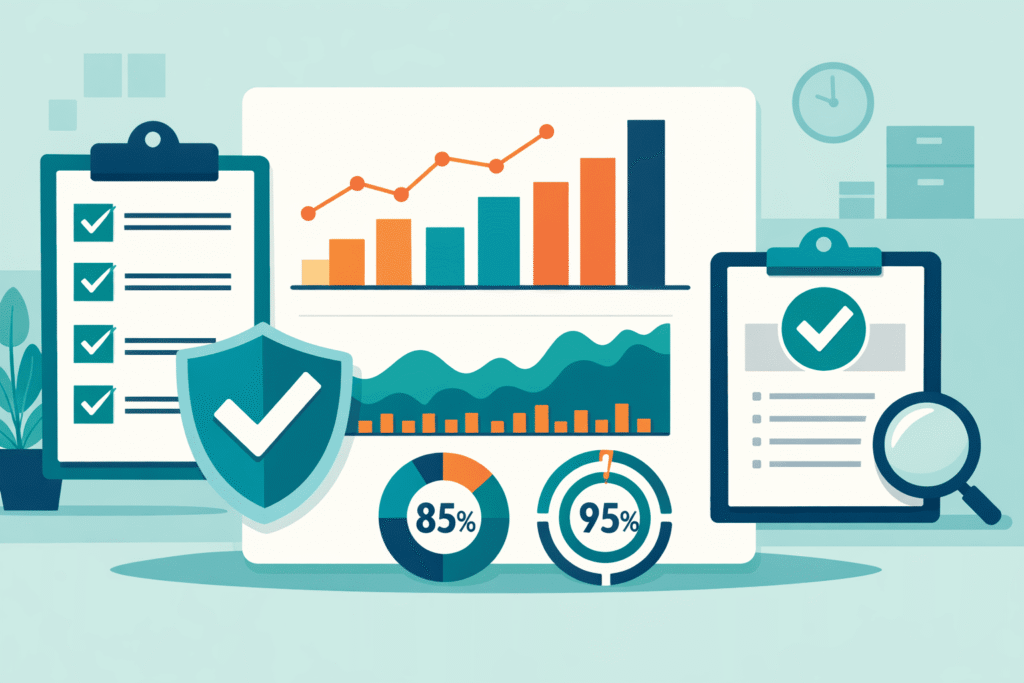
We’ve seen a lot of teams brag about how many alerts they trigger, like it proves their security is working. It feels loud and busy, but not actually safer.
Real success doesn’t look like a blinking dashboard, it looks like quiet systems and fast, calm reactions when something actually goes wrong.
Success is not measured by how many alerts fire. It is measured by reduced exposure and faster response.
To make that real and not just a slogan, you can track success with a few grounded signals:
When your security program is working, alerts become more precise, investigations get shorter, and auditors stop finding surprises. That’s what success looks like: less chaos, more control, and a response process that feels practiced instead of panicked.
Data risk scoring quantifies exposure across the inventory. Leadership can see progress without diving into technical detail.
Automated reports support GDPR, HIPAA, and PCI DSS audits. Evidence generation becomes repeatable instead of manual.
According to the European Data Protection Board, demonstrable controls and accountability are central to enforcement outcomes.
Classification accuracy improves over time when incident logs and threat simulations feed back into tuning. Static rules degrade quickly.
AI-powered DLP improves detection of subtle data movement anomalies. UEBA models highlight behavior shifts that static rules miss.
Zero-trust models verify access at every step, tying data access to identity, device posture, and context rather than location.
Future-proof architectures must support multi cloud discovery and remote work without sacrificing visibility. Automation makes that scale achievable.
At MSSP Security, we consistently see organizations succeed when discovery, classification, and DLP are treated as one system, not separate projects.
Data discovery classification DLP uses data discovery tools to run sensitive data scanning across cloud data discovery, endpoints, databases, and unstructured data find locations.
It relies on file system crawl, data at rest scan, and network data probe methods to build a clear data inventory process. This approach helps identify shadow data detection issues and reduce unknown risk early.
Teams improve results by combining content-based classify techniques with context-aware tagging and metadata classification.
Regex pattern match, ML classification model, and PII classification rules work together to apply proper sensitivity labeling. Regular tuning helps false positive reduce efforts while supporting compliance classification and data governance label goals without slowing daily workflows.
Shadow data detection reveals hidden data locator gaps caused by data sprawl identify issues across legacy systems and shared storage.
Without endpoint data mapping and database discovery scan coverage, DLP policy enforcement may miss risky files. Accurate discovery automation ensures DLP content inspect rules apply to all sensitive data, not just known repositories.
Once classified, data discovery classification DLP triggers data loss prevention actions through a DLP rule engine.
This includes exfiltration prevention, USB data block, email DLP filter checks, and DLP quarantine action. Risk-based DLP and adaptive DLP response adjust controls using data risk scoring and real usage behavior.
Yes, multi-cloud discovery relies on automated data hunt workflows, discovery agentless scans, and data source catalog mapping.
These capabilities support data volume mapping, data lineage tracking, and real-time data scan needs. When integrated with cloud DLP gateway controls, teams gain consistent visibility and protection across hybrid and multi-cloud systems.
Data discovery, classification, and DLP don’t end after deployment, they become the backbone for governance, security, and compliance. When you invest here, breach risk drops, audits get easier, and every security choice gets sharper.
As visibility improves, protection turns precise, enforcement gets quieter, and trust starts to last.
We offer vendor‑neutral consulting for MSSPs to cut tool sprawl, tune integrations, and strengthen your stack with clear, tested recommendations grounded in real operations.
Secure your data pipeline and build a stack that actually fits your business, schedule expert MSSP consulting here.

