

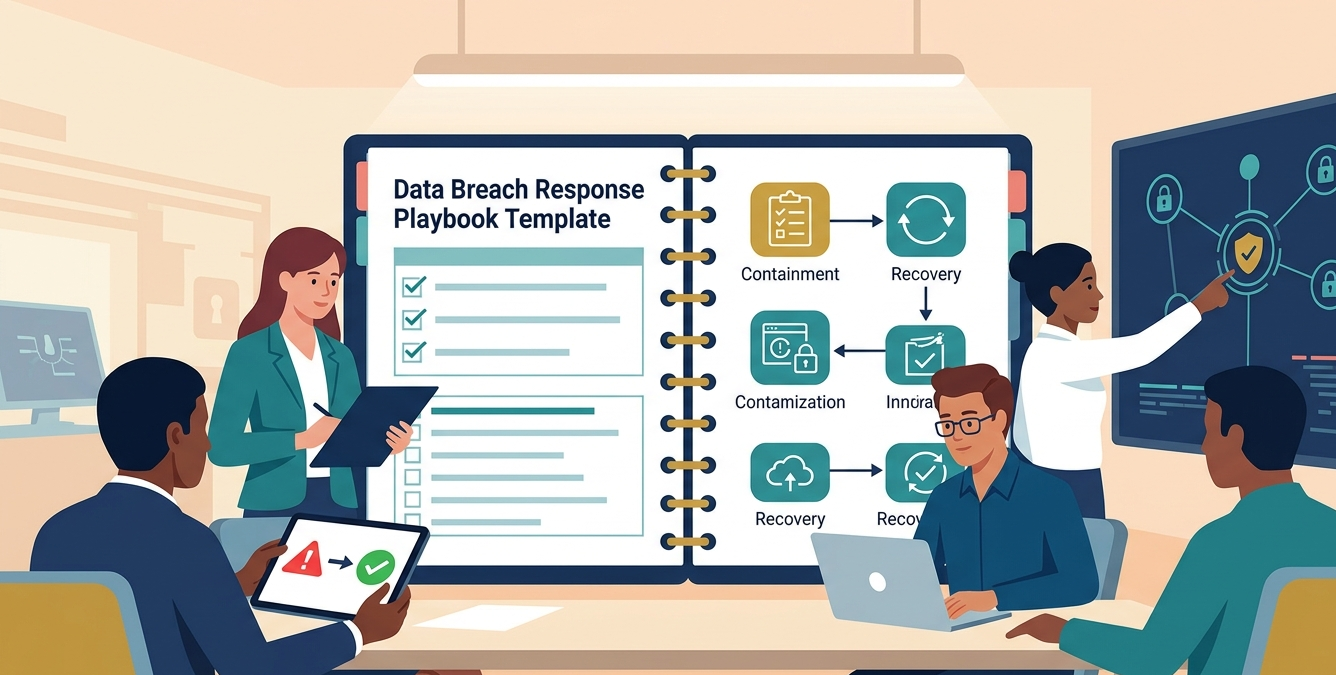
A data breach can escalate within minutes, and without a clear process, teams often react too slowly or inconsistently. We’ve seen how confusion during early response stages leads to bigger losses and reputational damage.
That’s why having a structured data breach response playbook template is essential. It ensures everyone knows what to do, when to act, and how to communicate effectively. In this guide, we’ll walk through a practical framework based on real-world experience, keep reading to build a stronger, faster response system.
Key Takeaways: Data Breach Response Playbook Template Essentials
A well-designed playbook helps teams act fast and consistently during incidents. It reduces downtime, improves coordination, and ensures compliance.
- Clear roles and responsibilities prevent confusion
- Predefined steps speed up response time
- Communication plans protect brand reputation
What Is a Data Breach Response Playbook Template?
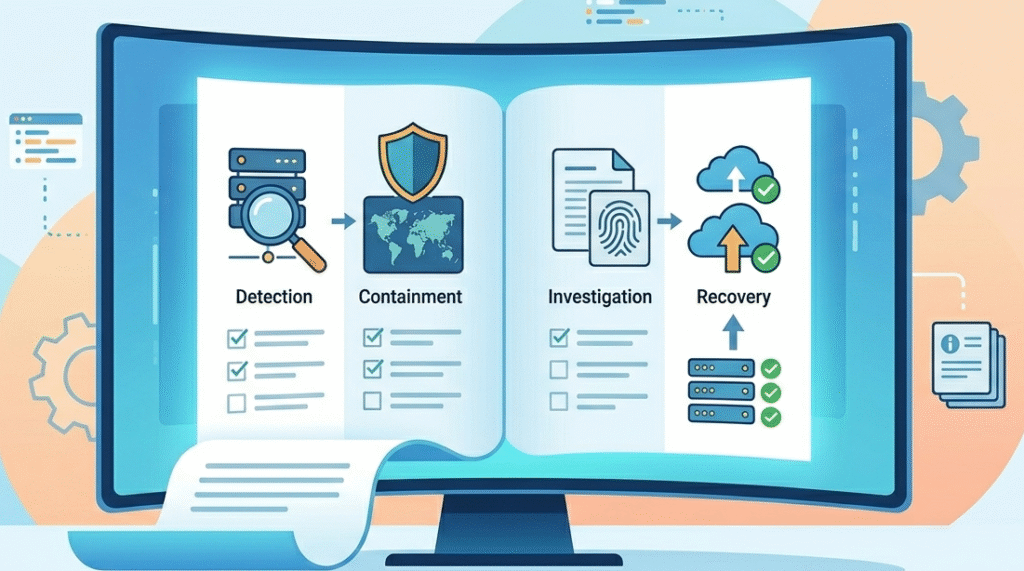
A data breach response playbook template is a structured document outlining how an organization detects, responds to, and recovers from a breach.
From our experience, organizations without a playbook rely too much on improvisation. That often leads to delays and errors. A proper template standardizes actions so teams don’t waste time deciding what to do next.
Core elements include:
- Incident identification procedures
- Escalation paths
- Containment strategies
- Recovery steps
It acts as a repeatable framework, ensuring consistency across incidents by following proven security response playbook examples that standardize actions.
Core Components of an Effective Playbook
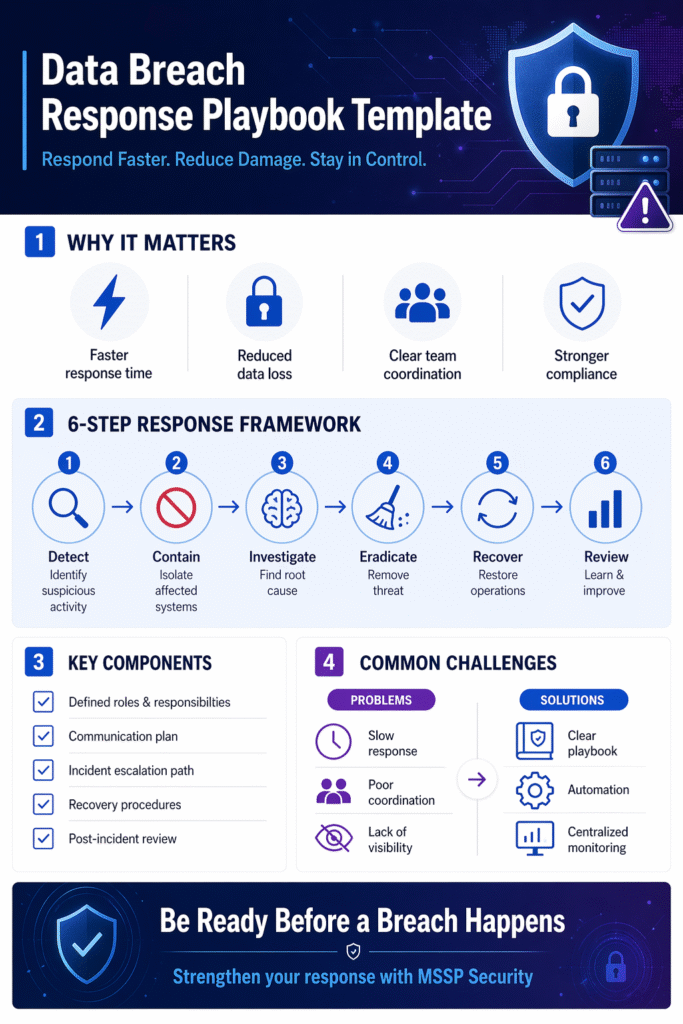
An effective playbook must cover every phase of incident response clearly.
Key components:
- Preparation: tools, access, and training
- Detection & Analysis: identifying threats quickly
- Containment: limiting damage immediately
- Eradication: removing the root cause
- Recovery: restoring systems safely
- Post-Incident Review: learning and improving
“A data breach is a security incident in which information is accessed without authorization.” – Wikipedia
We’ve found that missing even one phase can weaken the entire response strategy.
Data Breach Response Workflow Template
| Phase | Action | Responsible Team | Outcome |
| Detection | Identify suspicious activity | Security Team | Incident confirmed |
| Containment | Isolate affected systems | IT & Security | Spread minimized |
| Investigation | Analyze root cause | Security Analysts | Threat understood |
| Eradication | Remove malicious elements | IT Team | Threat eliminated |
| Recovery | Restore operations | IT & Ops | Systems back online |
| Review | Document lessons learned | All Stakeholders | Improved future response |
This structure helps ensure nothing is overlooked during high-pressure situations.
Real-World Challenges and How We Address Them
Credits: Dundas Lawyers
In practice, response is rarely as smooth as the template suggests. We’ve seen delays caused by unclear ownership and poor communication.
Common issues:
- Lack of coordination between teams
- Delayed escalation decisions
- Incomplete visibility of systems
To address this, we prioritize clarity in roles, integrate monitoring tools early, and establish clear ransomware response playbook steps. When working with MSSP Security, we focus on simplifying workflows so teams can act without hesitation.
Best Practices for Implementation
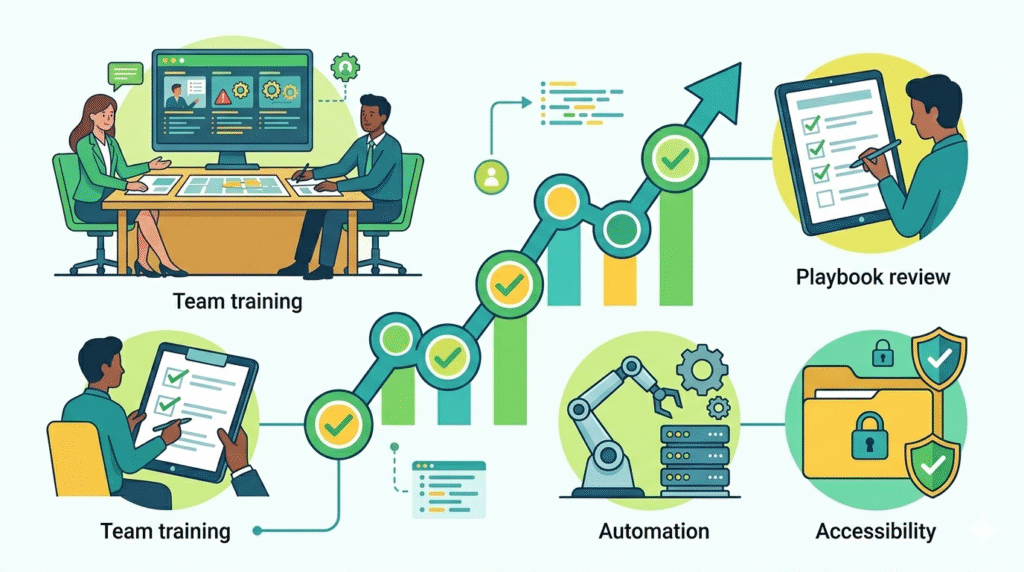
To make your playbook effective, it must be actionable and regularly updated.
Best practices:
- Run simulations and tabletop exercises
- Update the playbook after every incident
- Utilize effective SOAR playbooks to automate repetitive response steps
- Ensure documentation is easy to access
- Align with compliance requirements
“Incident response is an organized approach to addressing and managing the aftermath of a security breach.” – Wikipedia
We’ve learned that a playbook is only useful if teams actually use and understand it.
FAQ
What should be included in a data breach response playbook template?
A comprehensive playbook should include detection methods, escalation procedures, containment steps, communication plans, and recovery strategies. It should also define roles clearly so each team member knows their responsibilities during an incident.
How often should a playbook be updated?
It should be reviewed after every incident and updated at least quarterly. Threat landscapes evolve quickly, so outdated playbooks can create gaps in response effectiveness.
Who is responsible for executing the playbook?
Typically, the security team leads execution, but IT, legal, and communication teams also play critical roles. A cross-functional approach ensures a coordinated and effective response.
Can small organizations benefit from a playbook?
Yes, even small teams benefit greatly. A simple, well-structured playbook helps reduce confusion and ensures faster action, which is critical regardless of company size.
Strengthening Your Data Breach Response Strategy
A strong data breach response playbook template is not just documentation, it’s a critical defense tool. It helps teams act quickly, reduce damage, and recover efficiently. From our experience, organizations that invest in structured response plans handle incidents with far more confidence.
If you’re looking to improve your security posture, MSSP Security can help streamline your response strategy and ensure your playbook is ready when it matters most.
References
- https://en.wikipedia.org/wiki/Data_breach
- https://en.wikipedia.org/wiki/Incident_management