Address
304 North Cardinal St.
Dorchester Center, MA 02124
Work Hours
Monday to Friday: 7AM - 7PM
Weekend: 10AM - 5PM
Address
304 North Cardinal St.
Dorchester Center, MA 02124
Work Hours
Monday to Friday: 7AM - 7PM
Weekend: 10AM - 5PM

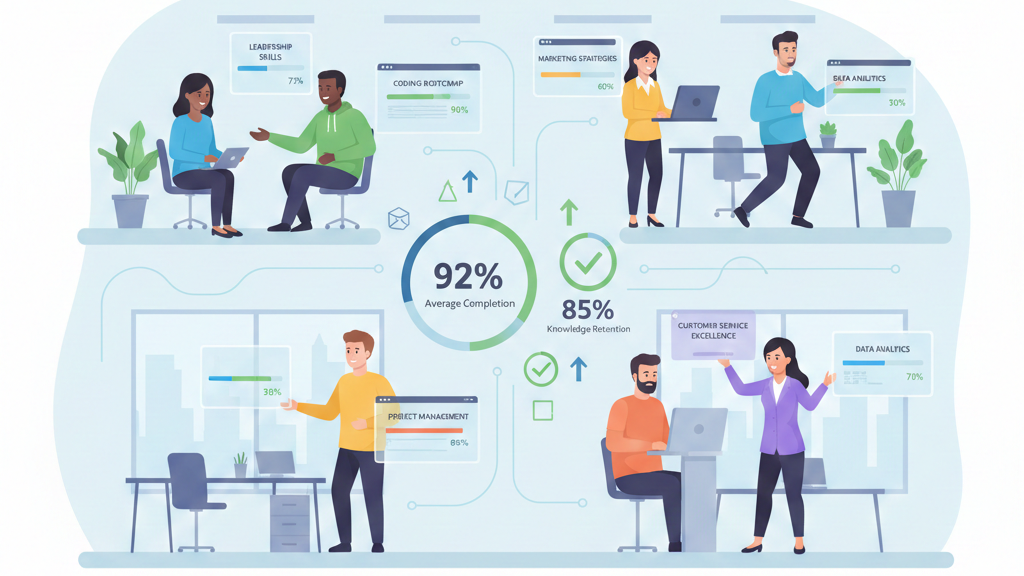
A salesperson doesn’t need a deep dive on firewall protocols, and a network engineer doesn’t need advanced negotiation scripts. That’s the simple, glaring truth. Generic, one-size-fits-all corporate training is a primary reason for the 70% knowledge drop-off within days. Customizing training content roles is the direct answer.
It’s about aligning what people learn with what they actually do, every single day. This shift from broad to specific is what transforms a compliance checkbox into a genuine performance tool. The data shows it can lift organizational productivity by 17%. Keep reading to see how you can build programs that stick, not just satisfy a log.
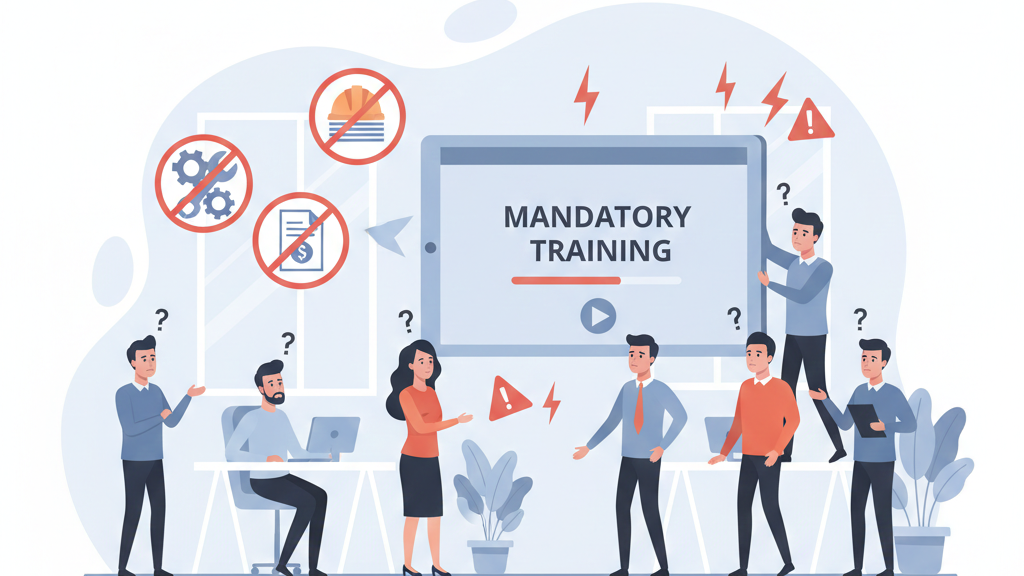
We’ve all sat through that mandatory annual training. The scenarios feel disconnected from reality, the examples irrelevant to your actual job. You just click through, tuning out.
The disconnect is total. For a cybersecurity analyst, a generic data privacy course covers basics they already know. It completely misses the hands-on incident response drills they need for their specific SIEM tools.
We saw this flaw firsthand at our own firm, MSSP Security. Our initial onboarding was a single, massive block of information. New SOC analysts and compliance auditors got the exact same content. The result was predictable.
The SOC team was bored by regulatory overviews, while the auditors were lost in technical threat-hunting jargon. Engagement was poor, and time to proficiency was frustratingly slow.
The business cost is real. Studies show that role-specific relevance drastically cuts down the typical 70% knowledge drop-off. For the MSPs we consult with, prioritizing specialized security awareness training management directly means faster onboarding for their teams and far fewer costly, preventable errors.
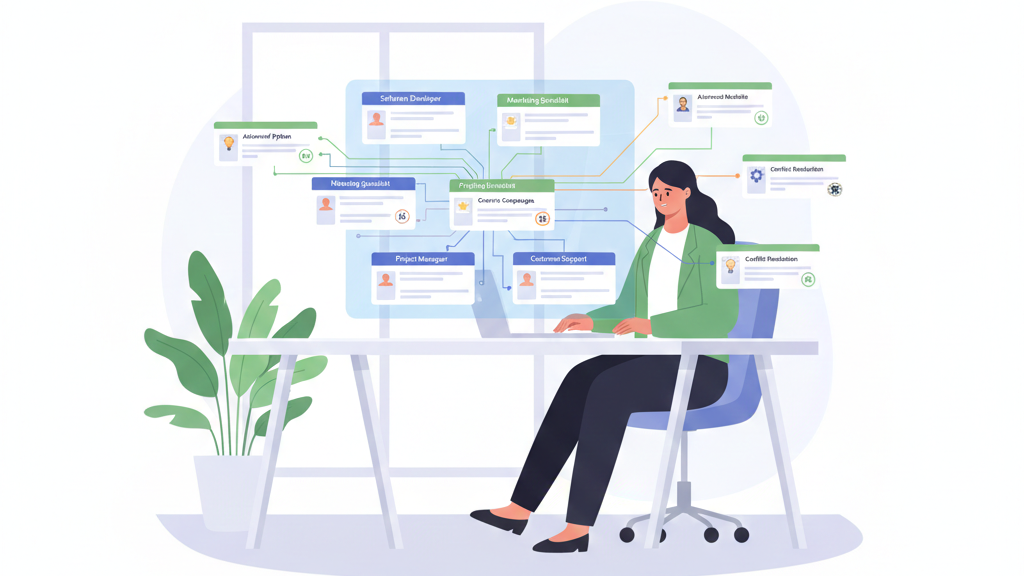
So how do you escape the generic trap? It starts with listening, not assuming. You must move past job titles and map the actual competencies and daily pain points.
“Recognizing this [that one size does not fit all], our cyber security awareness training champions role-based learning, offering distinct courses for managers and IT professionals, each designed to address the unique challenges and responsibilities inherent to their roles within an organisation’s cyber security structure.” – SoSafe Cybersecurity
This process isn’t about creating more content. It’s about creating the right content. It prevents the classic pitfall of overtraining experts on fundamentals while leaving novices struggling with advanced concepts they encounter daily.
With a clear map of needs, the build phase begins. This is where theory becomes practice. The goal is to construct learning journeys that feel less like school and more like a guided rehearsal for the job.
Map Competencies to Content. If “conducting a vulnerability assessment” is a key competency for an IT security role, the training must include a simulated environment to practice, not just a video lecture.
Gather Continuous Feedback. Use short, embedded surveys within modules. Ask, “Was this scenario realistic to your role?” This creates a loop for constant refinement.
Design for Application. Use branching scenarios where a salesperson’s choices in a negotiation simulation change the outcome. For safety training in a warehouse, use VR to practice hazard identification in a virtual dock.
Select the Right Delivery Method. Field technicians need mobile-friendly microlearning they can access on a tablet. Leadership teams might benefit from condensed, strategic case studies discussed in virtual instructor-led sessions.
Iterate with Analytics. Use your Learning Management System (LMS) data not just for completion rates, but to see where people struggle or skip content. This shows you where your customization might have missed the mark.
Training can’t look the same for everyone. The delivery must match the function’s rhythm and tools.
| Role Category | Primary Focus | Recommended Delivery Method |
| Technical/IT & Cybersecurity | Hands-on troubleshooting, protocol adherence, threat response. | Interactive virtual labs, sandboxed environments, scenario-based simulations. |
| Sales & Customer Support | Communication, product knowledge, empathy, and negotiation. | Role-playing exercises, conversation simulators, mobile-ready product microlearning. |
| Leadership & Management | Strategic decision-making, financial oversight, conflict resolution. | Peer coaching circles, business case studies, and focused workshop sessions. |
| New Hires & Onboarding | Cultural integration, core compliance, essential tool proficiency. | Gamified onboarding pathways, mentor shadowing, and milestone-based learning paths. |
For example, our team builds a managed security awareness training program for high-risk roles in finance, recognizing that a generic anti-money laundering (AML) lecture is ineffective. Instead, we create custom modules for investigators, focusing on forensic transaction tracing, and for frontline staff, focusing on recognizing and reporting red-flag behaviors.
The content stems from the same regulatory overviews (Governance, Risk, and Compliance – GRC principles), but the application is worlds apart.
The question always arises: “This sounds great for 50 people, but what about 5,000?” This is where technology transitions from a delivery platform to a design partner. Adaptive learning paths, powered by intelligent rules engines, can automate much of the role-based branching.
An AI-driven system can assess a learner’s initial knowledge, place them on the appropriate point in a learning path, and serve harder or remedial content based on quiz performance. It acts like a digital tutor.
For instance, a veteran salesperson might test out of basic product modules and be fast-tracked to advanced competitive analysis content, while a new hire is guided through the fundamentals.
The key is to use these tools to enable your role-based strategy, not to auto-generate content without nuance. The human-designed framework of competencies must come first.
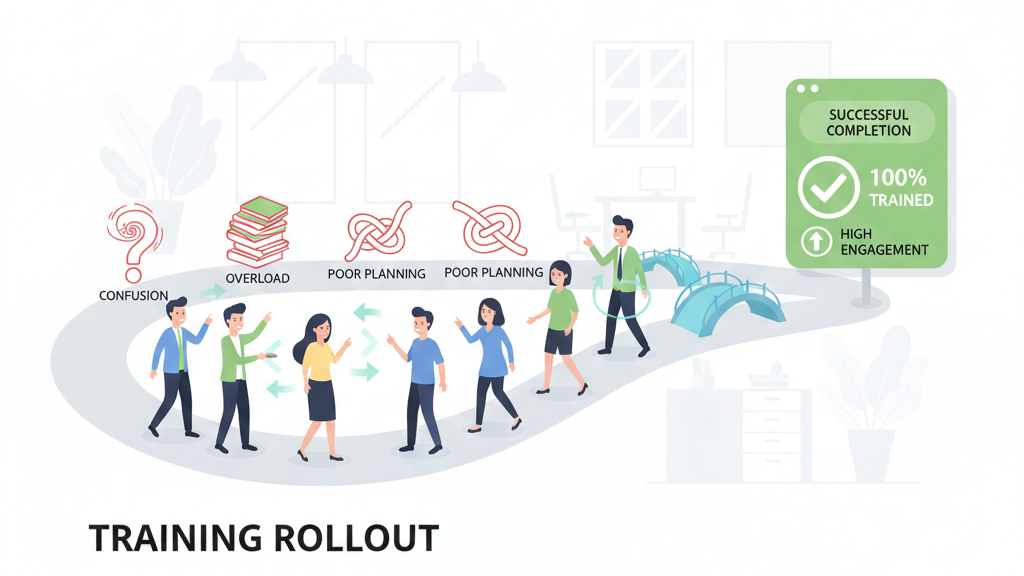
Even with the best intentions, role-based programs can stumble. Awareness of these traps is your best defense.
“Role-based security awareness training is essential because different job roles face unique cybersecurity risks. Tailoring training to specific roles improves both awareness and response, leading to better protection against cyber threats.” – Keepnet Labs
Beware of “Customization Theater.” This is the trap of simply slapping different job titles on the same generic slide deck. True customization changes the core examples, scenarios, and depth of content. If it doesn’t solve a specific daily work hurdle, it’s just decoration.
Guard Against Algorithmic Bias. When using adaptive technology, audit the paths. Ensure that recommendations for leadership training or advanced technical skills are equitably accessible across demographics, not inadvertently favoring one group.
Don’t Isolate the Learner. Even the most sophisticated digital program needs human connection. Blend digital modules with opportunities for mentorship, manager check-ins, or peer discussion forums, especially for soft skill development like communication or leadership.
Start with a pilot by implementing outsourced phishing simulation training for one or two key roles; this allows you to measure results against a control group before a full-scale rollout.
Customizing training content roles aligns training modules with real job tasks, risks, and daily decisions. High-risk roles receive focused safety training, compliance training, and scenario-based quizzes, while other teams follow adaptive learning paths.
This targeted approach improves learning objectives, strengthens learning outcomes, and helps employees apply knowledge faster through relevant learning experiences instead of generic training materials.
Role-based learning works especially well for corporate training, compliance training, and on-the-job training. Teams handling regulatory adherence, personal data, or safety risks need tailored training programs built around their responsibilities.
Adaptive learning paths within learning management systems help deliver the right training content at the right level, improving performance management and long-term knowledge retention.
Learning management systems organize training resources into personalized learning paths, track progress, and adjust delivery methods. They support blended learning, online training, and instructor-led training in one platform.
By aligning training objectives with job roles, learning management tools help create adaptive learning experiences that drive stronger learning initiatives and measurable professional development results.
High-risk roles often face strict regulatory compliance requirements, including regulatory overviews and laws such as anti-money laundering regulations. Customized training content ensures these employees receive focused guidance, realistic scenarios, and clear learning objectives.
This improves regulatory adherence, builds compliance champions across teams, and reduces costly mistakes caused by misunderstood or irrelevant training materials.
Tailoring training by role isn’t a trend, it’s an operational must. It respects your team’s time and intelligence by giving them what they specifically need to do their jobs better. This shift from a generic course catalog to dynamic, role-specific learning paths turns training from a cost into a performance accelerator.
The path is clear: stop broadcasting and start targeting. Build for real-world application. Your training should feel like a relevant tool, not an obligation.
Ready to move past generic? Let’s start with one critical role.

