

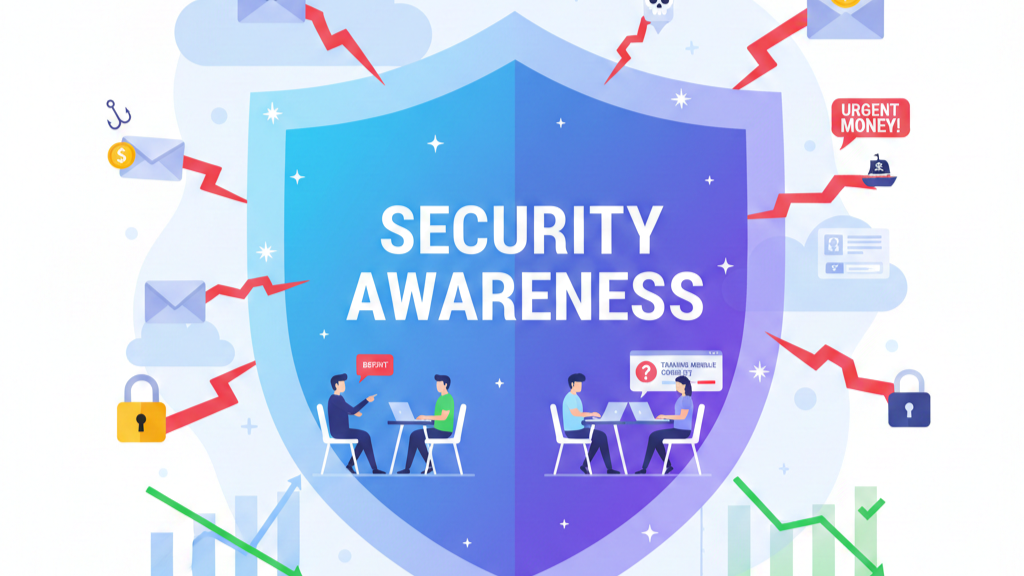
Forget software bugs. Your real security risk is the employee who clicks a bad link. We’ve seen it happen.
A managed security awareness training program fixes this. It swaps your yearly, forgettable training for continuous micro-lessons and fake phishing tests. This builds a real security culture, it’s not just for compliance. Humans cause most breaches, and you can’t update them once a year.
Keep reading to know ready-made program changes your team from a liability into your best defense.
What You’ll Get From This Guide
- Continuous training beats annual sessions by fighting the natural “forgetting curve.”
- Role-based modules and realistic phishing simulations target actual department risks.
- Measurable behavior change, not just completion rates, proves real ROI and strengthens your security posture.
What This Program Actually Is
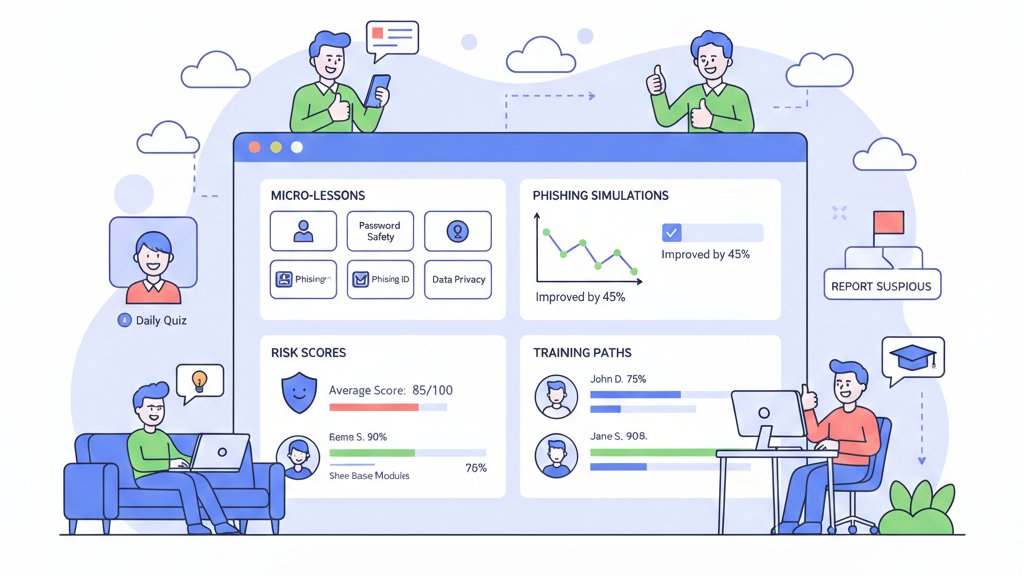
Working with MSPs, we’ve seen what works. This isn’t about a policy binder. A managed security awareness program is a living, outsourced service for continuous education. The platform must do the heavy lifting, providing the tools and intelligence so you can focus on strategy rather than the day-to-day security awareness training management
The core idea is simple: harden the human firewall. People make mistakes, so the program uses bite-sized lessons and regular phishing simulations. This weaves security into daily work, making it a habit instead of a yearly chore. We audit for programs that create this habitual vigilance.
From our reviews, key components are:
- A library of updated, short training modules.
- Automated phishing simulators with realistic templates.
- Detailed reporting on user risk and program impact.
Why Your Annual Training Doesn’t Work
Credits: Vyond
That mandatory yearly security training is a waste of time. People click through it, barely paying attention. Within weeks, they’ve forgotten almost everything. It’s a classic cycle: a frantic scramble to check the compliance box, then immediate amnesia.
“Managed Security Awareness Training teaches employees to recognize and report bad emails, uniting your human defenders in the fight against phishing… our industry-proven methods, based in behavioral science, will better prepare your employees to recognize and resist malicious phishing attempts, transforming one of your biggest liabilities into your strongest defense.” – HBS
A continuous program breaks that cycle. It works through small, frequent touchpoints, a two-minute video on a new scam one week, a quick quiz the next. This rhythm matches today’s threats, where AI can generate a phishing email that looks perfectly real. The goal is to build a habit, not rely on a hazy memory from last year.
The gap is between knowing something and actually doing it. An annual lecture informs people. It doesn’t change what they click on Tuesday afternoon. Regular, managed engagement builds practical reflexes, and that’s what stops a real attack.
The Engine of a Modern Platform
So what’s under the hood of a good program? It’s more than just a video library. A modern platform is a cohesive system designed for measurable behavioral change. It integrates several key functions to create a closed loop of education, testing, and improvement.
At MSSP Security, we built our program around this principle. A continuous program breaks that cycle by utilizing outsourced phishing simulation training to ensure that employees are constantly tested against the newest, most sophisticated email threats.
| Feature | What It Does | Why It Matters |
| AI-Driven Simulated Phishing | Sends realistic, evolving test emails and vishing calls. | Measures real-world vulnerability, not theoretical knowledge. |
| Predictive Risk Scoring | Analyzes user behavior to flag high-risk individuals. | Lets you focus coaching where it’s needed most. |
| Role-Based Training Paths | Delivers specific modules to finance, HR, or IT teams. | Makes training relevant, fighting disengagement. |
| Automated Compliance Reporting | Tracks completion and performance for frameworks like PCI DSS. | Simplifies audit proof without manual spreadsheets. |
Targeting the Real Threats: Role-Based Training
Generic training is a critical mistake. Treating your CEO the same as an intern ignores the threat landscape. A finance manager faces sophisticated business email compromise scams, while an IT admin might be targeted with technical social engineering. A one-size-fits-all approach misses these nuances entirely.
Role-based modules fix this. They deliver targeted content that resonates because it’s directly applicable. Your finance team gets simulations mimicking urgent wire transfer requests. Your HR staff learns to identify scams targeting employee data. This specificity drives the lesson home, making the training stick.
The result is a stronger, more adaptive security posture. When training reflects actual job functions, employees see it as a useful tool, not a corporate mandate. They become active participants in their own defense, which is the foundation of a genuine security culture.
The Mistakes That Kill Your Security Culture
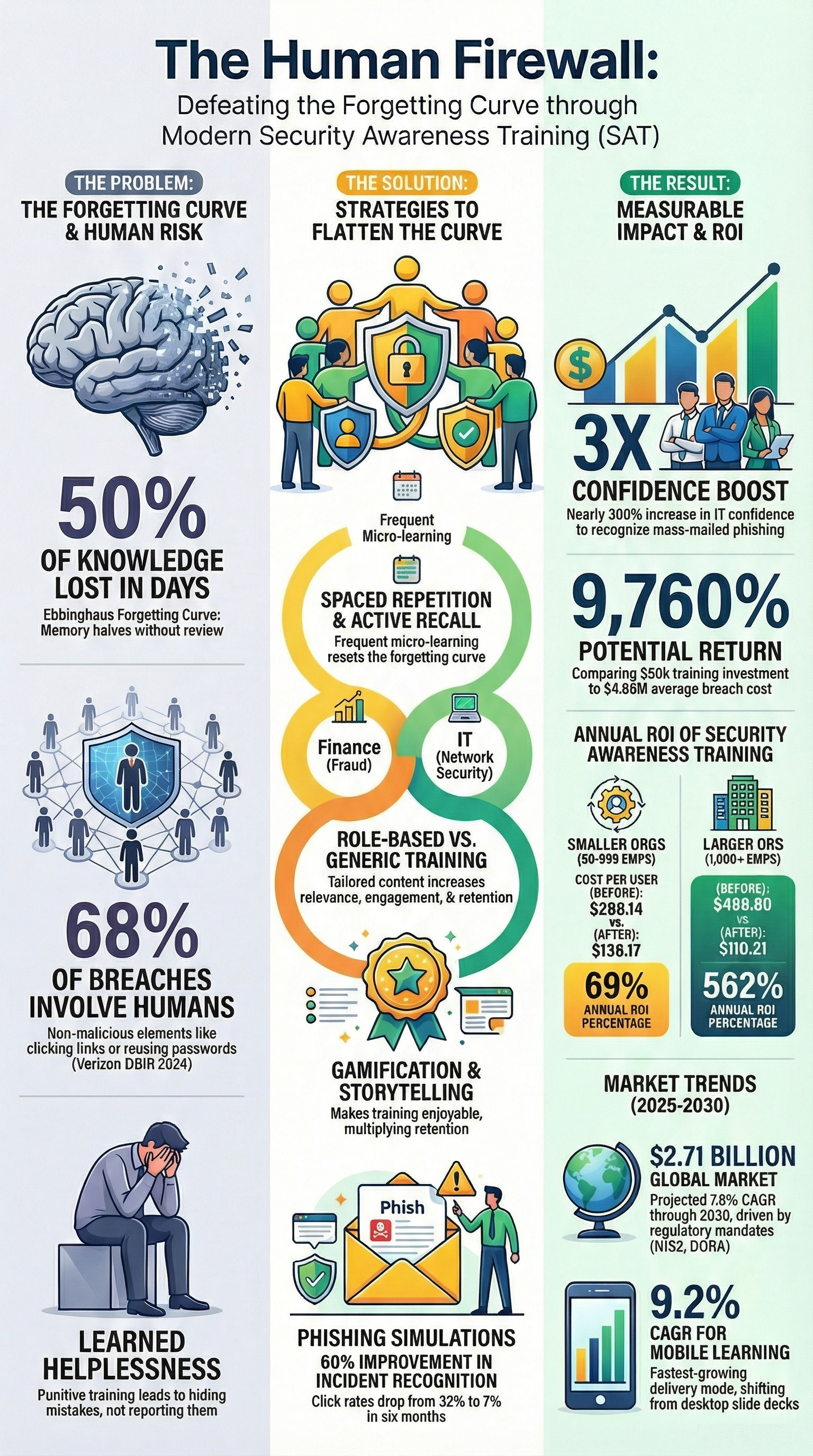
You can have the best platform and still fail. How? By building a program on fear and punishment. If clicking a test phishing email leads to public shaming, people will hide their mistakes. They won’t report suspicious emails, they’ll delete them. You’ve just killed your early warning system.
Positive reinforcement is the alternative. Gamification, small rewards for reporting tests, constructive coaching for failures. This builds psychological safety. It tells your team it’s okay to be fooled by a simulation, because that’s how we learn. The data supports this, showing reporting rates can skyrocket with the right culture.
Another fatal error is infrequent engagement. A quarterly phishing test isn’t enough. Threats evolve daily. Your training must pulse regularly to maintain awareness. Without consistent touchpoints, the security-first mindset fades, replaced by the daily grind. Consistency breeds habit.
Measuring What Actually Matters
How do you know it’s working? Completion percentages are a vanity metric. They please auditors but ignore real risk. True ROI is measured in behavior change. By measuring security awareness effectiveness, you can see if phishing click rates dropped and if employees are reporting suspicious emails faster.
“Our end-to-end Managed Phishing and Security Awareness Training program alleviates your resource constraints so you can drive behavioral change with your employees and build resilience against the most advanced cyberattacks. By leveraging software, social engineering expertise, and real-world testing scenarios, we ensure your weakest link is hardened against the most sophisticated phishing attempts.” – eSentire
The financial argument is clear. A single avoided breach justifies the investment. With the global average cost sitting at millions, even a modest reduction in incident likelihood delivers a massive return. The program pays for itself not in theory, but in prevented disasters.
Look for a platform that gives you this depth. You need reports on simulation performance, risk score trends, and knowledge assessment results. This data is your roadmap. It shows where your security posture is strengthening and where you need to direct your coaching efforts for continuous improvement.
Getting Started Without the Headache
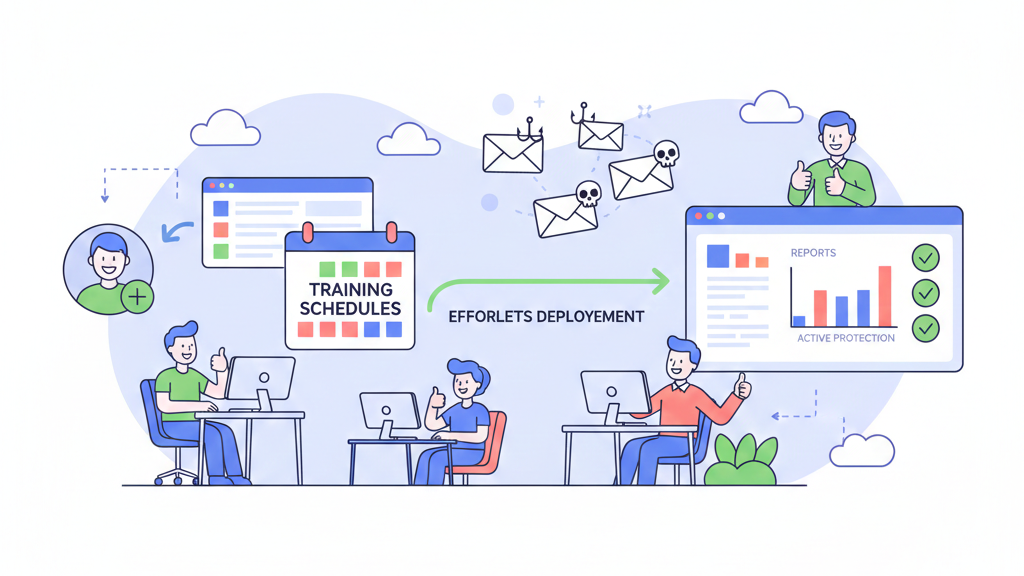
Implementation shouldn’t be a project. The best managed programs are turnkey. They plug into your existing environment, like Microsoft 365, and auto-enroll users. At MSSP Security, we’ve seen a full curriculum deployed in minutes, not weeks. The goal is to remove friction, for you and your users.
The process is straightforward. It starts with a baseline phishing test to gauge current vulnerability. Then, a tailored training calendar is auto-assigned. Simulations run continuously in the background, with reports flowing to your dashboard. Your team learns, your security posture hardens, and you get back your time.
The managed service handles the updates, the new phishing template creation for AI-driven threats, and the compliance paperwork. You get the results without the operational burden. It’s the difference between building a car and having a driver, you arrive at your destination of a stronger security culture without having to manage every turn.
FAQ
How does security awareness training reduce human error from phishing and social engineering attacks?
A strong security awareness training program teaches employees how phishing emails, social engineering tactics, and deepfake scams actually look in daily work. Through phishing simulation tools, simulated phishing campaigns, and realistic attack simulations, staff learn to spot cyber threats early.
This repeated exposure builds safer online behavior, reduces security incidents, and creates lasting behavior change across the organization.
What should a managed security awareness training program include to improve security posture?
An effective security awareness program should combine training modules, phishing simulation, learning assessments, and adaptive security content. It should cover password security, physical security, email security, and current cybersecurity threats.
AI-driven simulated phishing, personalized phishing awareness training, and predictive risk scoring help improve overall security posture while strengthening a security-first culture across different risk domains.
How do phishing simulations and social engineering tests help prevent real security breaches?
Simulated phishing tests expose employees to realistic phishing tactics, CEO fraud attempts, and social engineering attacks without real harm. These phishing campaigns use varied phishing templates and testing scenarios to mirror the threat landscape.
Over time, users recognize malicious actors faster, report suspicious emails, and reduce user risk that often leads to costly security breaches.
Can a managed security awareness program support regulatory compliance and security policies?
Yes. Security awareness training programs support regulatory compliance by reinforcing security policies tied to PCI DSS, SOC 2, and other cybersecurity frameworks. Regular awareness training helps document user behavior improvement, incident tickets, and learning progress.
This shows auditors that your organization actively manages security risk while improving the effectiveness of security awareness across departments.
Your Path to a Human Firewall
Think of this training as building a strategic defense layer, not an expense. It targets your most unpredictable risk: your own team. Shifting to continuous, engaging education turns human fallibility from a weakness into an asset.
The process has three stages. First, admit the old annual training model is broken. Next, pick a platform designed to change behavior, not just pass audits. Finally, succeed when security becomes part of the daily routine, a shared responsibility.
You can stick with a static policy document or choose a dynamic, living defense. The right program builds real certainty, transforming your workforce into a vigilant human firewall.
References
- https://www.hbs.net/services/managed-security-awareness-training
- https://www.esentire.com/what-we-do/security-awareness-training-managed-phishing-training