


Automated threat intelligence enrichment helps security teams make faster decisions by adding useful context to raw Indicators of Compromise, or IoCs, before analysts begin an investigation. Instead of reviewing separate threat feeds, reputation data, and internal logs one by one, teams receive the information they need in one place.
At MSSP Security, we have seen this reduce repetitive work and help analysts spend more time investigating real threats instead of gathering basic details. Better context leads to quicker, more consistent decisions while keeping experienced analysts in control. Continue reading to see how automated enrichment improves everyday security operations.
Quick Enrichment Wins
Automating threat intelligence enrichment gives analysts better context, helping them investigate faster and respond with more confidence.
- Turn raw IoCs into actionable intelligence
- Improve alert prioritization with richer context
- Reduce manual investigation across SOC workflows
Why Is Automated Threat Intelligence Enrichment Becoming A Core SOC Capability?
Security teams already have plenty of data.
The real problem is figuring out what matters.
Every day, analysts review alerts from endpoints, cloud services, email platforms, firewalls, and identity systems. Some alerts deserve immediate action. Others turn out to be harmless. Knowing the difference often takes time, and that is where many investigations slow down.
Threat intelligence enrichment fills in the missing pieces.
“Cyber threat intelligence helps organizations understand the threats that have, will, or are currently targeting them, allowing them to make faster, more informed security decisions.” – Cybersecurity and Infrastructure Security Agency (CISA)
Instead of showing only an IP address or file hash, the system adds useful information before an analyst even opens the case. That could include reputation, previous sightings, malware activity, or links to a known campaign.
Why Can’t Security Teams Rely On Raw IoCs Alone?
A raw indicator only tells part of the story.
An IP address might belong to a trusted cloud provider today. A week later, attackers may start using it. A domain could appear suspicious because it is brand new, or because it was involved in phishing yesterday. Looking at the indicator alone does not explain the risk.
Analysts need context before they can decide what to do.
Useful enrichment often includes:
- IP reputation
- Domain history
- Malware links
- Threat campaigns
- Previous sightings
- Risk score
This information helps security teams spend less time researching and more time
How Does Automated Threat Intelligence Enrichment Actually Work?
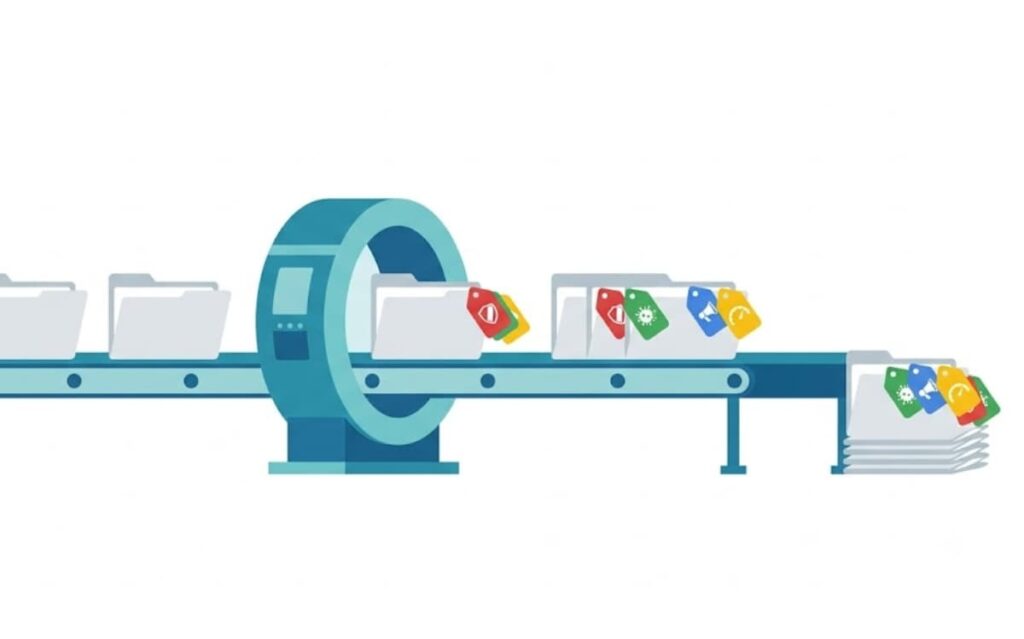
The process is easier than many people expect.
Every indicator follows the same basic path. The platform collects information, checks different sources, organizes the results, then sends everything back with added context.
Because every alert follows the same workflow, investigations become more consistent across the SOC.
Whether an analyst has one year of experience or ten, everyone starts with the same information.
What Happens From Indicator Collection To Enrichment?
The process usually begins when a new indicator enters the environment.
That indicator may come from a SIEM alert, endpoint detection, firewall logs, email security, or another monitoring tool.
The enrichment platform then checks several trusted intelligence sources automatically.
Finally, the platform assigns a confidence score and sends the completed result back into the investigation.
The workflow usually looks like this.
| Step | What Happens | Result |
| Indicator arrives | New alert appears | Investigation begins |
| Intelligence lookup | Multiple sources checked | More context collected |
| Data organized | Information is standardized | Easier review |
| Correlation | Related activity identified | Better visibility |
| Risk scoring | Confidence calculated | Faster decisions |
Why Is Data Normalization Just As Important As Enrichment?

Collecting information is only the first step.
Different intelligence sources store data in different formats. If that information is not cleaned and organized, analysts may see duplicate records or inconsistent results.
Normalization fixes that.
It places everything into the same structure so security tools can compare indicators more accurately.
Without it, automation becomes much less useful.
A clean dataset also makes reporting easier, improves search results, and reduces confusion during investigations.
“Organizations should normalize and correlate security event data to improve analysis and support more effective detection and response.” – National Institute of Standards and Technology (NIST), Cybersecurity Framework
How Does Automated Enrichment Improve Security Operations?
Adding context before an analyst opens an alert changes the pace of an investigation. Instead of spending the first several minutes gathering information, the analyst can begin reviewing the threat right away.
That may not sound like a huge difference, but across hundreds of alerts each week, those saved minutes add up. These improvements highlight some of the practical threat intelligence platform benefits that help security teams work more efficiently.
How Does Enrichment Reduce Alert Fatigue?
Alert fatigue happens when analysts receive more alerts than they can reasonably review.
Without context, every alert can look equally important. That forces analysts to spend time checking events that turn out to be harmless.
Enrichment helps separate routine activity from higher risk events.
Teams often notice improvements such as:
- Faster alert review
- Better prioritization
- Fewer unnecessary investigations
- Improved analyst focus
- More consistent decisions
Automation does not remove every false positive.
And it should not.
Analysts still need to review unusual situations because every organization has different users, systems, and business needs.
How Does Automated Enrichment Connect With SIEM And SOAR?
Source: John Hammond
Threat intelligence enrichment works best when it supports tools that security teams already use.
A TIP is not meant to replace a SIEM or a SOAR platform.
It makes them more useful.
Each platform has a different role, and together they create a smoother investigation process. Strong TIP security operations depend on sharing enriched intelligence across these tools so analysts can work from the same context.
How Does SIEM Use Enriched Threat Intelligence?
A SIEM collects logs and security events from across the environment.
That alone is valuable.
But a log entry does not always explain whether something is dangerous.
Enrichment fills in that gap.
When a SIEM receives additional threat intelligence, analysts can understand an alert much faster. This level of integration is one factor organizations often evaluate when choosing a TIP vendor that fits their security operations.
Benefits often include:
- Better alert context
- Improved detection
- Faster investigations
- More accurate prioritization
- Stronger visibility
FAQs
What should teams automate first in threat intelligence enrichment?
Teams should begin by automating repetitive tasks that slow investigations. Good starting points include IOC enrichment, alert enrichment, threat feed aggregation, and reputation analysis. These activities fit naturally into threat enrichment workflows because they add useful context before analysts review alerts. This approach improves analyst productivity while allowing security professionals to make the final decisions on higher risk incidents.
How does automated threat intelligence enrichment reduce false positives?
Automated threat intelligence enrichment adds contextual threat intelligence, threat scoring, domain reputation, hash reputation, and malicious IP enrichment to alerts before analysts investigate them. This additional context supports security alert triage, improves incident prioritization, and contributes to false positive reduction. As a result, security teams can spend more time investigating genuine threats instead of reviewing low risk or duplicate alerts.
Can automated enrichment work with existing security tools?
Yes. Most organizations integrate enrichment processes through SIEM integration, SOAR integration, EDR integration, and API integration. Many teams also use STIX TAXII to exchange threat intelligence between platforms. These integrations allow threat intelligence workflows to share data automatically, improve investigation support, and maintain consistent information across security operations without creating duplicate work.
Why is threat data normalization important during enrichment?
Threat intelligence often comes from multiple sources that use different formats and naming conventions. Threat data normalization, data deduplication, and intelligence aggregation create consistent records before enrichment begins. When combined with multi-source correlation, these processes improve threat visibility, reduce duplicate indicators, and make security monitoring and automated analysis more accurate and reliable.
How does enrichment support faster incident response?
Enrichment provides analysts with additional context before they respond to security events. By combining automated IOC analysis, threat data correlation, campaign tracking, MITRE ATT&CK mapping, and incident response enrichment, security teams can make faster and better informed decisions. This process strengthens security automation, supports automated response, and improves the overall SOC workflow during active security incidents.
Building Stronger Security Operations With Automated Threat Intelligence Enrichment
Automated threat intelligence enrichment helps you understand security alerts faster by adding the context your team needs before an investigation starts. That means less time switching between tools and more time responding to real threats with confidence. Faster decisions make a real difference.
If you’re ready to improve your threat intelligence workflow, MSSP Security can help. Our vendor neutral consulting supports tool selection, integration planning, stack optimization, and workflow improvements that fit your security operations.
References
- https://www.cisa.gov/topics/cyber-threats-and-response/information-sharing
- https://www.nist.gov/cyberframework