

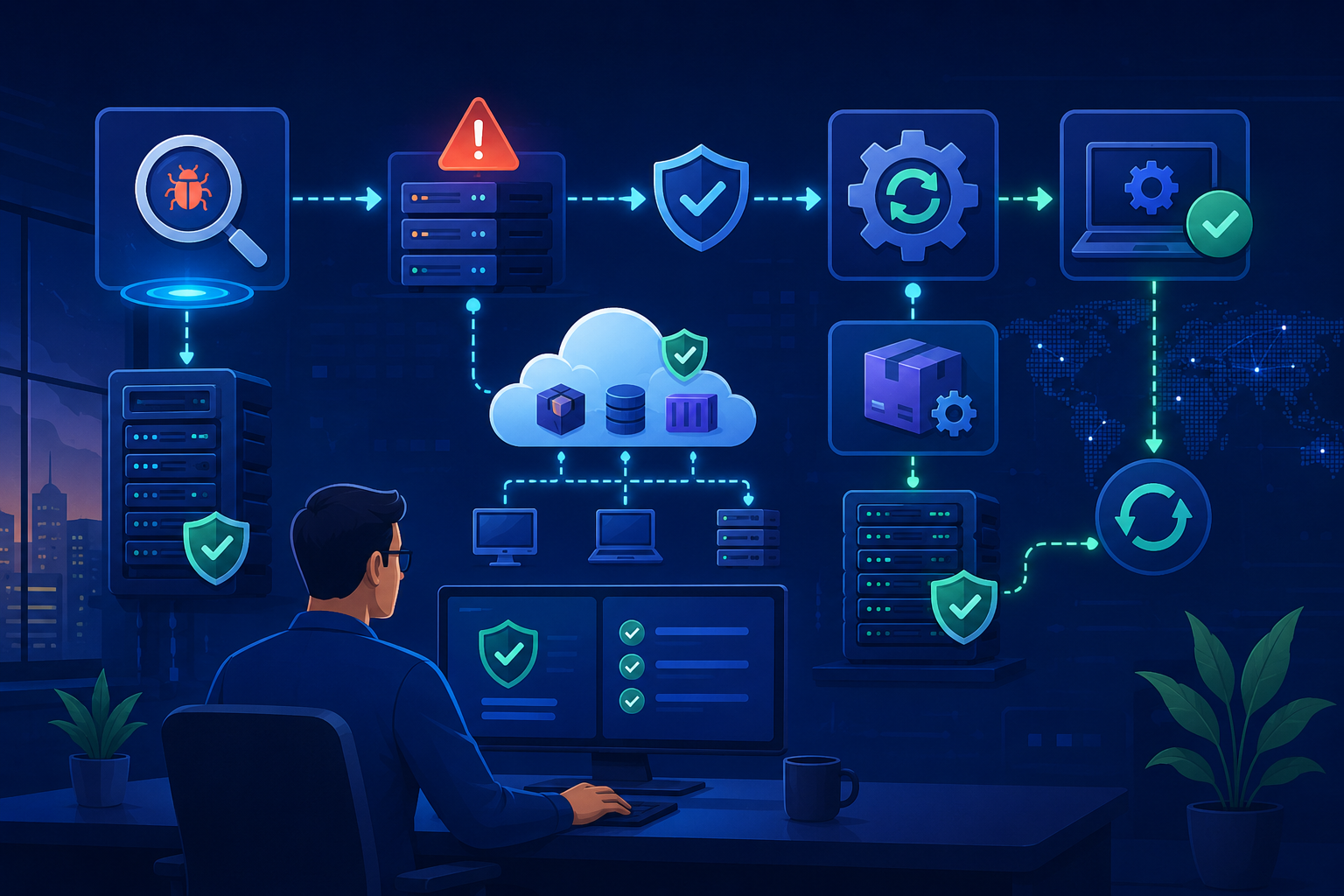
Integrating scanners patch management connects vulnerability scanning with patch deployment to streamline remediation through a unified workflow.
By linking security findings directly to patch management, organizations can reduce manual effort, accelerate remediation, improve visibility, and strengthen compliance.
At MSSP Security, we have seen that integrating these processes helps security and IT teams respond to vulnerabilities more efficiently while maintaining a stronger security posture.
Keep reading to learn how scan-to-patch integration works and the best practices for successful implementation.
Why Is Integrating Scanners Patch Management Important?
Integrating scanners patch management helps organizations connect vulnerability scanning with patch deployment to improve remediation efficiency. Key points include:
- Integrating scanners patch management enables faster remediation, better visibility, and reduced manual effort.
- Automated scan-to-patch workflows prioritize risk, streamline patch deployment, and verify remediation through rescans.
- Continuous monitoring, accurate asset inventories, and strong governance support compliance and long-term cybersecurity resilience.
What Is Integrating Scanners Patch Management?
Integrating scanners patch management connects vulnerability scanners and patch management systems into a single remediation workflow. Instead of manually reviewing scan reports, organizations can automatically turn vulnerability findings into prioritized patching tasks.
Understanding how Vulnerability Scanner Technology Explained works helps organizations see how scanning tools identify vulnerabilities, detect missing patches, and provide the data needed for effective remediation.
A typical scan-to-patch workflow integration includes:
- Scanning assets for vulnerabilities
- Mapping vulnerabilities to available patches
- Prioritizing remediation based on business risk
- Deploying approved updates
- Validating remediation with automated rescans
This closed-loop vulnerability and patch management process helps ensure vulnerabilities are detected, remediated, and verified.
At MSSP Security, we’ve worked with MSSPs to evaluate and audit security products, and we’ve found that scanning tools deliver the most value when they integrate smoothly with patch management workflows.
Organizations using disconnected tools often face delayed remediation, inconsistent prioritization, duplicate work, and limited visibility into progress.
By integrating vulnerability scanning with patching, organizations can reduce manual effort, improve operational efficiency, strengthen compliance, and build a more consistent approach to managing cybersecurity risks.
Why Integrating Scanners Patch Management Matters?
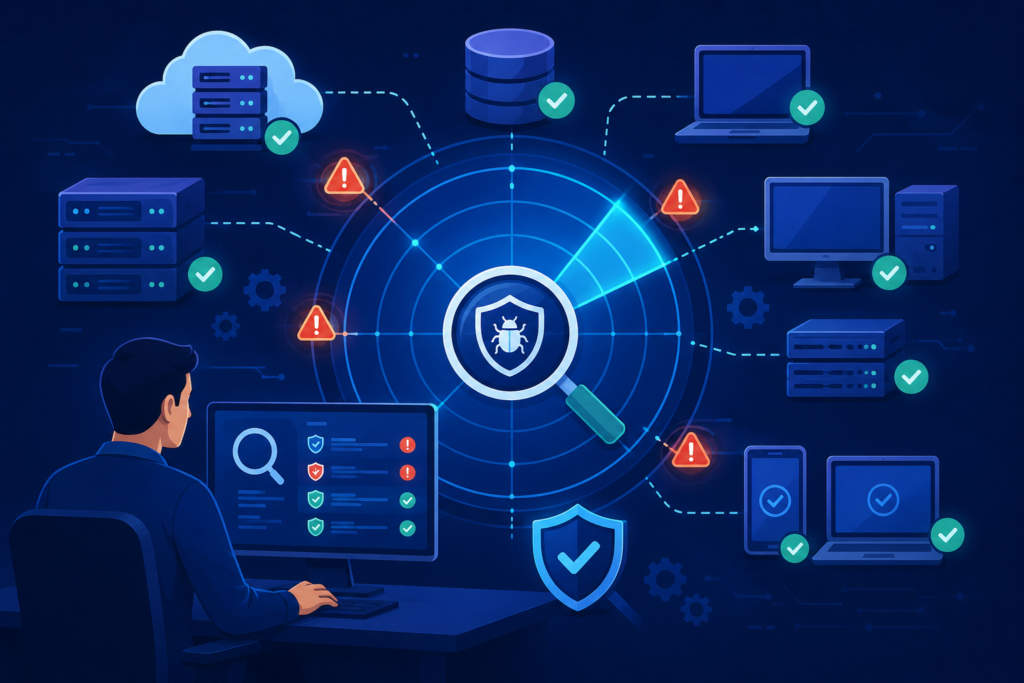
As IT environments grow across cloud platforms, on-premises infrastructure, and remote endpoints, managing vulnerabilities manually becomes increasingly difficult. Integrating scanners patch management creates a connected workflow that helps organizations discover, prioritize, remediate, and verify vulnerabilities more efficiently.
Instead of transferring scan results between separate tools, a scan-to-patch workflow integration improves visibility and helps security teams respond faster. At MSSP Security, we’ve worked with MSSPs to evaluate and audit security products, and we’ve seen that solutions with strong integration capabilities create smoother remediation processes and fewer operational challenges.
“Vulnerability management should be a key aspect of an organization’s risk management or ERM framework.” – ISACA
This highlights that vulnerability management should support broader business risk decisions rather than function as a standalone security activity.
An integrated approach helps organizations:
- Automate remediation and reduce manual workload
- Apply risk-based patching based on business impact
- Improve visibility into vulnerabilities and patch status
- Strengthen collaboration between security and IT teams
By connecting vulnerability detection with remediation, organizations can build a more consistent and effective security process.
How Does an Integrated Scan-to-Patch Workflow Work?
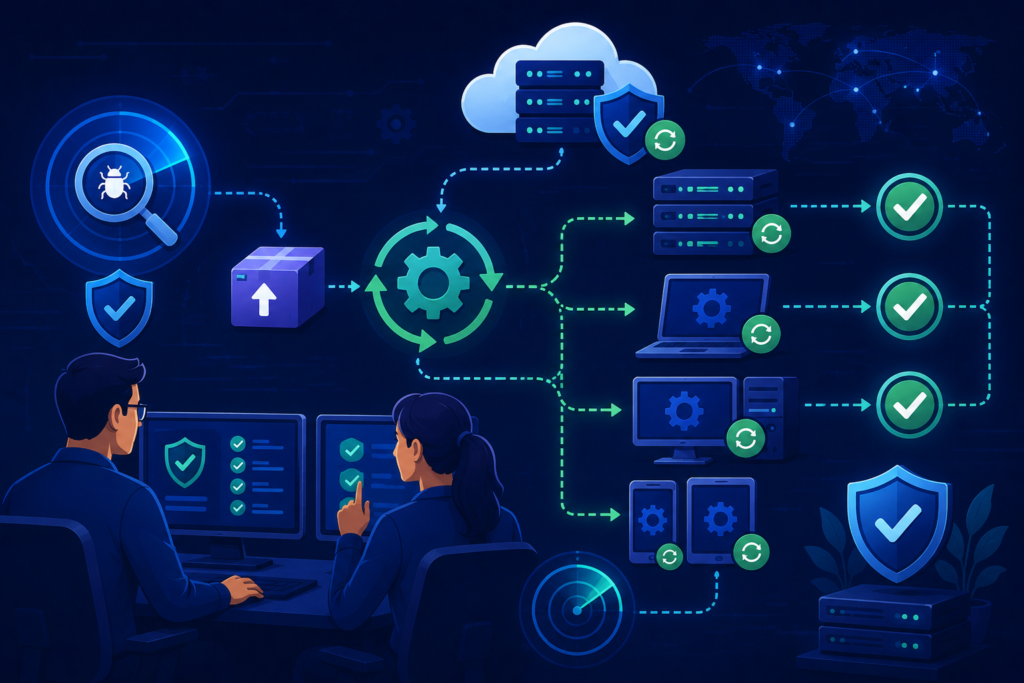
An effective integrating scanners patch management strategy connects vulnerability discovery, remediation, and validation into one continuous process.
Instead of treating scanning and patching as separate activities, organizations can use a scan-to-patch workflow integration to move security findings from detection to resolution while maintaining visibility at every stage.
Proper interpreting vulnerability scan results helps security teams understand vulnerability severity, affected assets, and remediation priorities before moving findings into the patch deployment process.
“Regular scans of enterprise systems and patch versions are essential.” – ISACA Journal
This highlights why continuous scanning is a critical part of effective patch management. Regular assessments help organizations identify missing updates, prioritize remediation efforts, and verify that vulnerabilities have been properly addressed.
A typical workflow includes:
- Discovering and inventorying assets
- Performing vulnerability scans to identify missing patches and known CVEs
- Prioritizing findings using risk-based patching from scanner data
- Mapping vulnerabilities to suitable patches
- Deploying updates through automated patch deployment from scans
- Validating remediation through pre-patch and post-patch rescans
- Monitoring remediation metrics and compliance over time
Through our work at MSSP Security, we’ve helped MSSPs evaluate and audit security products before introducing them into production environments.
One key lesson we’ve learned is that workflow success depends heavily on selecting tools that integrate properly. The right combination reduces manual handoffs, improves remediation accuracy, and makes ongoing vulnerability management easier to maintain.
By adopting this closed-loop vulnerability and patch management approach, organizations can reduce remediation delays, verify patch effectiveness, and build a more consistent security program over time.
What Components Are Needed for Successful Scanner and Patch Management Integration?
Credit: Abhishek Security Vision
Successfully integrating scanners patch management takes more than connecting a vulnerability scanner to a patch management platform.
Organizations need technologies that work well together, consistent remediation processes, and collaboration between security and IT teams to support a closed-loop vulnerability and patch management strategy. Key components include:
- A vulnerability scanning platform to discover assets, identify vulnerabilities, and detect missing patches
- A patch management system to deploy updates, schedule maintenance, and track remediation
- An accurate asset inventory and CMDB to support risk-based patching from scanner data
- Automation for ticket creation, patch assignment, approval workflows, validation rescans, and compliance reporting
- Centralized dashboards that provide visibility into vulnerabilities, patch status, SLAs, and remediation progress
In our work at MSSP Security, we’ve partnered with MSSPs to evaluate and audit security products before they are deployed in production environments.
One thing we’ve learned is that choosing tools with strong integration capabilities often has a bigger impact than simply adding more security products.
When vulnerability scan data to patch management flows seamlessly between systems, organizations spend less time managing disconnected workflows and more time reducing risk through faster, measurable remediation.
How Does Integrated Patch Management Improve Security Operations?
When organizations adopt integrating scanners patch management, vulnerability data becomes part of the patching process instead of remaining in separate reports.
This connected approach helps security and IT teams prioritize remediation using risk-based patching from scanner data, reducing delays and improving visibility throughout the remediation lifecycle. Key benefits include:
- Faster remediation through automated patch management workflows
- Better visibility into vulnerabilities, patch status, and compliance from a centralized view
- Stronger collaboration between security and IT with shared remediation priorities
- More reliable compliance reporting supported by documented remediation activities
- Continuous improvement using metrics such as MTTR, patch compliance, and patch success rates
Over the years, we’ve worked with MSSP Security clients to evaluate and audit security products before they become part of an MSSP’s technology stack.
One thing we’ve consistently observed is that integration matters just as much as product capabilities. Even well-designed tools can create operational bottlenecks if they don’t exchange data effectively.
Organizations that choose compatible solutions build a smoother remediation workflow, reduce repetitive administrative work, and gain clearer insight into security performance.
Our experience shows that a well-integrated environment not only accelerates remediation but also makes it easier to measure progress and strengthen security operations over time.
What Are the Best Practices for Prioritizing Patches From Scan Results?
A successful integrating scanners patch management strategy depends on more than finding vulnerabilities.
Organizations also need a consistent way to determine which issues should be remediated first. While technical severity is an important starting point, risk-based patching from scanner data delivers better results when business priorities and operational requirements are considered alongside vulnerability information.
Before prioritizing patches, teams should also focus on managing false positives scanners to ensure remediation decisions are based on accurate findings.
Validating scan results helps prevent unnecessary patches, reduces operational disruption, and improves confidence in vulnerability management processes.
The table below shows common factors organizations evaluate before assigning patch priorities.
| Priority Factor | Why It Matters |
| Business impact | Determines how much disruption a vulnerability could cause to critical operations. |
| Asset criticality | Gives higher priority to systems that support essential business services. |
| Exploitability | Focuses remediation on vulnerabilities that attackers are actively exploiting or can exploit easily. |
| Internet exposure | Public-facing systems generally require faster remediation than internal-only assets. |
| Regulatory requirements | Helps organizations meet compliance deadlines and industry obligations. |
A practical prioritization strategy should:
- Consider business impact, asset criticality, exploitability, and regulatory requirements.
- Address actively exploited vulnerabilities and internet-facing assets first.
- Align remediation timelines with internal SLAs and maintenance windows.
- Test patches before deployment to minimize operational disruption.
- Automate routine tasks while keeping expert oversight for high-impact changes.
- Continuously rescan systems and adjust priorities as new risks emerge.
Working with MSSP Security, we’ve helped MSSPs evaluate and audit security products to ensure they provide meaningful risk context instead of simply generating long lists of findings.
One lesson we’ve consistently learned is that selecting tools with accurate prioritization capabilities is just as important as automation itself.
When organizations combine reliable vulnerability data with experienced decision-making, they can remediate critical risks faster, maintain compliance, and improve long-term security outcomes.
How Can Organizations Automate Vulnerability Remediation?
A well-planned integrating scanners patch management strategy helps organizations automate routine remediation without losing control over critical decisions.
By understanding the automated vulnerability scanning benefits, organizations can improve detection speed, reduce manual analysis, and create more efficient remediation workflows when scan results are connected directly with patch management systems.
Instead of moving scan results between disconnected systems, security teams can use automated patching from scan results to streamline remediation while keeping governance and operational requirements intact.
An effective automation strategy should:
- Automatically convert vulnerability findings into remediation tasks.
- Prioritize patches using business impact, asset criticality, and vulnerability severity.
- Integrate remediation with IT service management (ITSM) and approval workflows.
- Schedule deployments around maintenance windows to minimize business disruption.
- Validate remediation through automated post-patch rescans.
- Generate compliance reports while tracking unresolved vulnerabilities and approved exceptions.
Over the years, our team at MSSP Security has helped MSSPs evaluate and audit security products before they become part of client environments. One pattern we’ve seen repeatedly is that automation delivers the greatest value when the selected tools exchange data reliably and fit existing workflows.
Organizations that connect vulnerability scan data to patch management can reduce repetitive administrative work, improve accountability, and spend more time addressing real security risks instead of managing disconnected processes.
What Challenges Should Organizations Expect When Integrating Scanners and Patch Management?
Implementing integrating scanners patch management can significantly improve remediation, but the process is rarely without challenges.
A reliable scan-to-patch workflow integration depends on accurate asset data, well-integrated technologies, and governance that keeps remediation aligned with business and operational priorities.
Common challenges include:
- Incomplete asset inventories that leave devices outside the remediation process
- False positives that require validation before patch deployment
- Missing patches that require temporary compensating controls
- Legacy systems with compatibility or testing constraints
- Failed patch deployments caused by installation or configuration issues
- Maintenance windows that limit deployment opportunities
- Exception management for vulnerabilities that cannot be remediated immediately
Throughout our work at MSSP Security, we’ve partnered with MSSPs to evaluate and audit security products before they are introduced into client environments.
One lesson we’ve learned is that integration problems often begin long before deployment, usually during product selection.
Choosing solutions that exchange data reliably and fit existing workflows helps organizations avoid unnecessary complexity later.
Even with a strong closed-loop vulnerability and patch management strategy, we believe experienced oversight remains essential to validate critical findings, manage exceptions, and keep remediation aligned with real business risk.
How Should Organizations Measure the Success of an Integrated Patch Management Program?
A well-executed integrating scanners patch management strategy should produce measurable improvements beyond simply connecting security tools.
Organizations need to understand whether the integration is reducing remediation time, improving patch effectiveness, and making daily operations more efficient. Measuring the right outcomes helps teams identify what is working and where remediation workflows still need refinement.
Key metrics to monitor include:
- Mean Time to Remediate (MTTR) to measure how quickly vulnerabilities are resolved after detection
- Patch compliance to confirm managed assets receive required security updates
- Critical vulnerability backlog to track unresolved high-risk findings over time
- Patch success and validation rescan rates to verify vulnerabilities are actually eliminated
- SLA performance to measure whether remediation meets internal response targets
- Operational efficiency, including fewer manual tasks, faster approvals, and better collaboration between security and IT
Throughout our work at MSSP Security, we’ve supported MSSPs in evaluating and auditing security products with long-term operational performance in mind. One thing we’ve learned is that reporting capabilities matter just as much as detection features.
Organizations that regularly review these metrics can make better product decisions, fine-tune automation, and strengthen their closed-loop vulnerability and patch management processes as their environments continue to evolve.
What Are the Best Practices for Building a Sustainable Integrated Remediation Strategy?
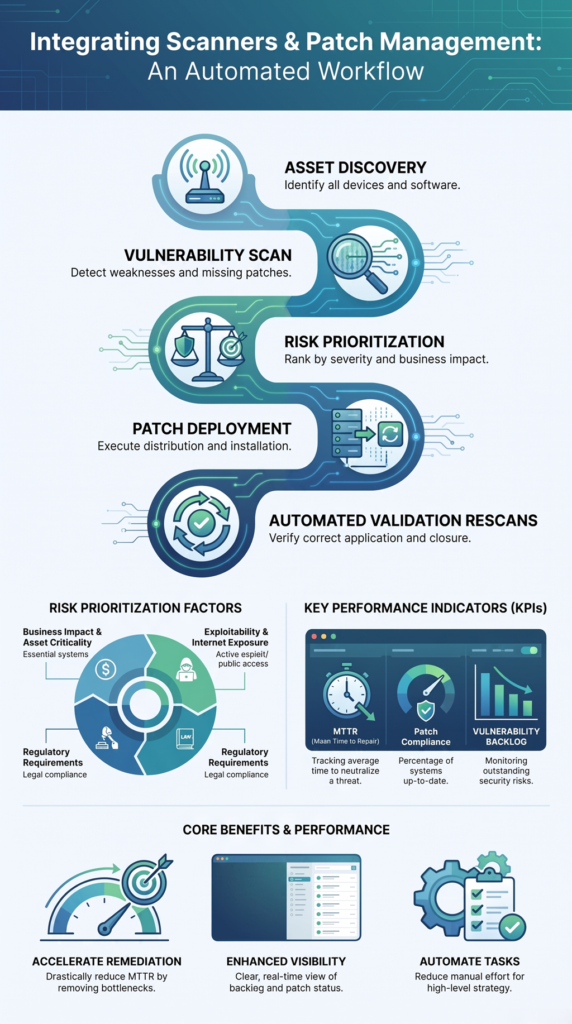
Creating a sustainable integrating scanners patch management strategy takes more than connecting a vulnerability scanner to a patch management platform.
Organizations need repeatable processes that keep remediation consistent as their environments expand. A strong program combines automation, governance, continuous validation, and collaboration to ensure security improvements last over time.
Best practices include:
- Align vulnerability scans with patch cycles and planned maintenance windows.
- Maintain an accurate asset inventory to support complete vulnerability and patch coverage.
- Automate routine tasks such as ticket creation, patch assignment, validation rescans, and compliance reporting.
- Verify remediation regularly through rescans and continuous monitoring.
- Establish governance for approvals, exception management, risk acceptance, and change control.
- Track metrics such as MTTR, patch compliance, and vulnerability backlog to identify opportunities for improvement.
- Encourage collaboration between security, IT operations, infrastructure, and compliance teams.
During our work at MSSP Security, we’ve helped MSSPs evaluate and audit security products with long-term operations in mind, not just feature lists.
We’ve consistently found that organizations build stronger remediation programs when they select products that integrate smoothly and support existing workflows.
Technology plays an important role, but lasting results come from combining the right tools with well-defined processes and experienced teams that can adapt remediation strategies as business and security requirements evolve.
FAQ
How does integrating scanners patch management improve security?
Integrating scanners patch management connects vulnerability scanning with patch deployment to accelerate remediation, improve visibility, and verify fixes through automated rescans.
What is a scan-to-patch workflow integration?
A scan-to-patch workflow integration links asset discovery, vulnerability scanning, risk prioritization, patch deployment, and validation into one continuous remediation process.
Can organizations automate patching from scan results?
Yes. Automated patching from scan results can create remediation tasks, schedule deployments, and validate fixes, while critical systems may still require human approval.
Why are post-patch scans important?
Post-patch scans confirm vulnerabilities have been resolved, identify failed deployments, and support closed-loop vulnerability and patch management.
Which metrics measure the success of integrating scanners patch management?
Key metrics include MTTR, patch compliance, critical vulnerability backlog, validation rescan success, SLA performance, and operational efficiency.
Why Is Integrating Scanners Patch Management Essential?
Integrating scanners patch management helps organizations connect vulnerability discovery with remediation through a unified workflow.
This approach improves risk prioritization, automates routine tasks, validates remediation with rescans, and increases visibility across the patch management process.
At MSSP Security, we’ve seen that selecting the right products and integrating them effectively leads to more consistent security outcomes. Learn how our vendor-neutral consulting helps MSSPs optimize their security stack and remediation workflows.
References
- https://www.isaca.org/resources/isaca-journal/issues/2019/volume-3/practical-patch-management-and-mitigation
- https://www.isaca.org/resources/news-and-trends/isaca-now-blog/2025/a-practical-approach-to-integrating-vulnerability-management-into-enterprise-risk-management