

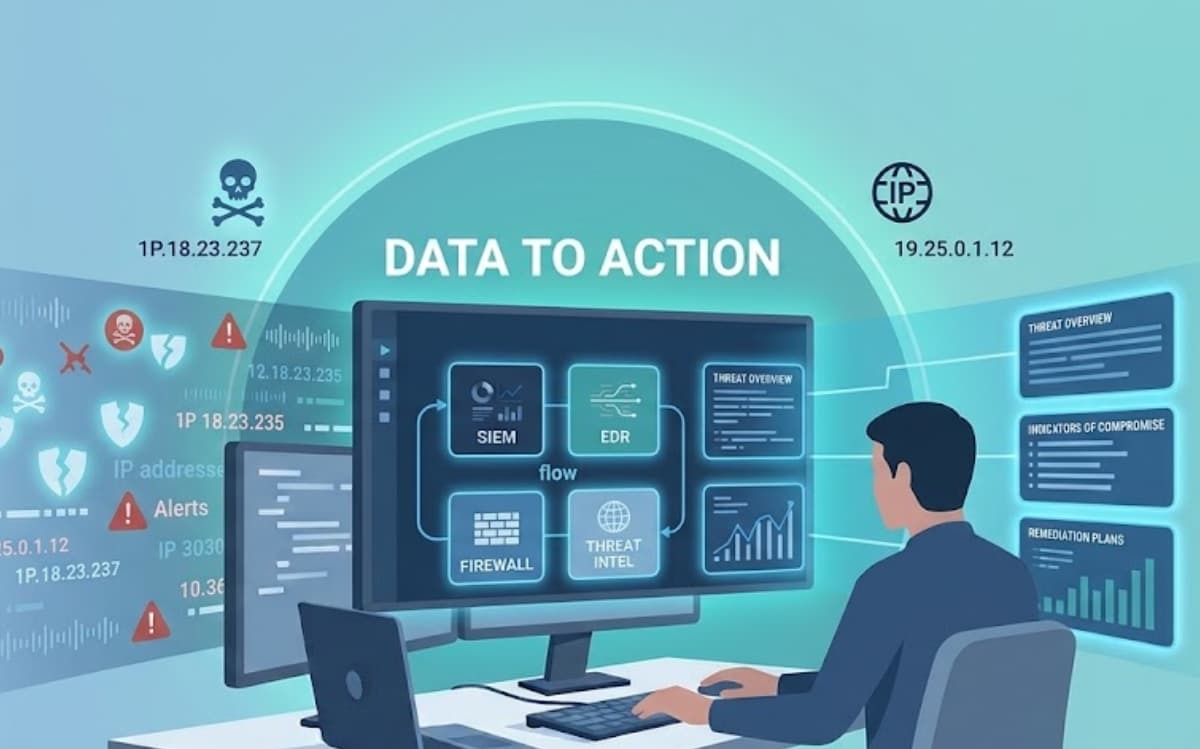
Managing threat data and Indicators of Compromise (IoCs) in a Threat Intelligence Platform (TIP) helps security teams understand threats faster and respond with better information. A TIP turns raw data such as malicious IP addresses, domains, and file hashes into useful intelligence by adding context, reputation details, and risk levels.
From our experience at MSSP Security, successful IoC management is not about collecting more feeds. It is about knowing which data matters and making it useful for analysts. A clear process for validation, enrichment, and integration helps security teams improve daily investigations. Keep reading to learn how effective IoC management works.
Quick Intelligence Wins: Managing Threat Data and IOCs Better
A Threat Intelligence Platform helps security teams organize threat data, improve investigation accuracy, and turn scattered indicators into useful intelligence for faster security decisions.
- Improve threat visibility with enriched IOCs
- Reduce alert noise through smarter threat prioritization
- Strengthen proactive defense with automated intelligence workflows
Why Is IoC Management Important For Threat Intelligence Operations?
IoC management helps security teams control the information they collect and use. Without a clear process, threat intelligence can become messy and difficult to trust.
A security team may collect thousands of indicators every day. Some may be useful. Some may already be outdated. Others may not apply to the organization at all.
A TIP helps answer important questions:
- Is this indicator reliable?
- Is this threat still active?
- Has this appeared in our environment?
- How serious is the risk?
These answers help analysts focus on threats that need attention.
Poor IoC management can create problems such as:
- Too many false alerts
- Repeated investigations
- Wasted analyst time
- Low confidence in threat data
A strong process does the opposite. It helps teams understand which indicators are worth investigating.
“The organization also needs to make sure the information is usable and applicable in their environment; that it is actionable and can be used to drive the operational processes and decisions.” – Cybersecurity and Infrastructure Security Agency (CISA)
Where Does Threat Data Enter A TIP?
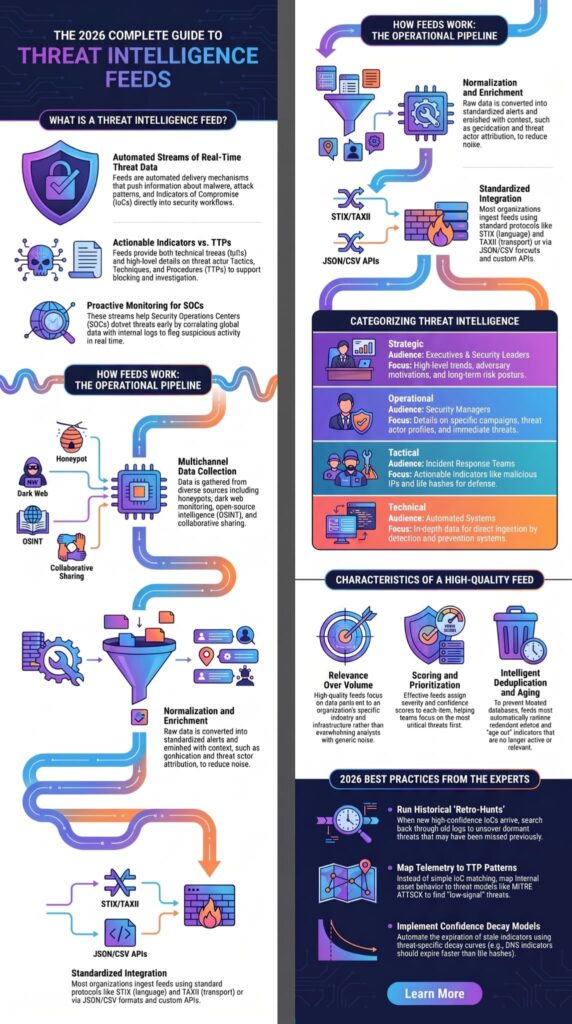
Threat data can come from different sources. A TIP brings this information together so security teams have one place to review and manage it. Understanding the benefits of using TIP helps teams see why centralized intelligence management can improve visibility and investigation workflows.
Common sources include:
- Threat intelligence feeds
- Internal security alerts
- Incident records
- Security research
- Industry sharing groups
The information collected may include:
- Malicious IP addresses
- Suspicious domains
- File hashes
- Email indicators
- Malware details
Each source provides a different piece of information.
One source may identify a malicious domain. Another may connect that domain to a phishing campaign. Internal security logs may show that an employee device accessed it.
When these details come together, the investigation becomes clearer.
How Does IoC Enrichment Help Analysts?
A raw indicator gives analysts a starting point. Enrichment gives them the bigger picture.
A TIP can add details such as:
- Threat reputation
- Malware connections
- Previous activity
- Related campaigns
- Threat actor information
- Confidence scores
“Sharing information about threats and vulnerabilities can help organizations better understand risks and improve their ability to respond to cyber incidents.” – CISA Information Sharing
Imagine an analyst finds a suspicious file hash on an endpoint.
The hash alone does not explain much.
After enrichment, the analyst may learn that the file is linked to a known malware family and has appeared in recent attacks.
How Do Security Teams Prioritize IoCs?
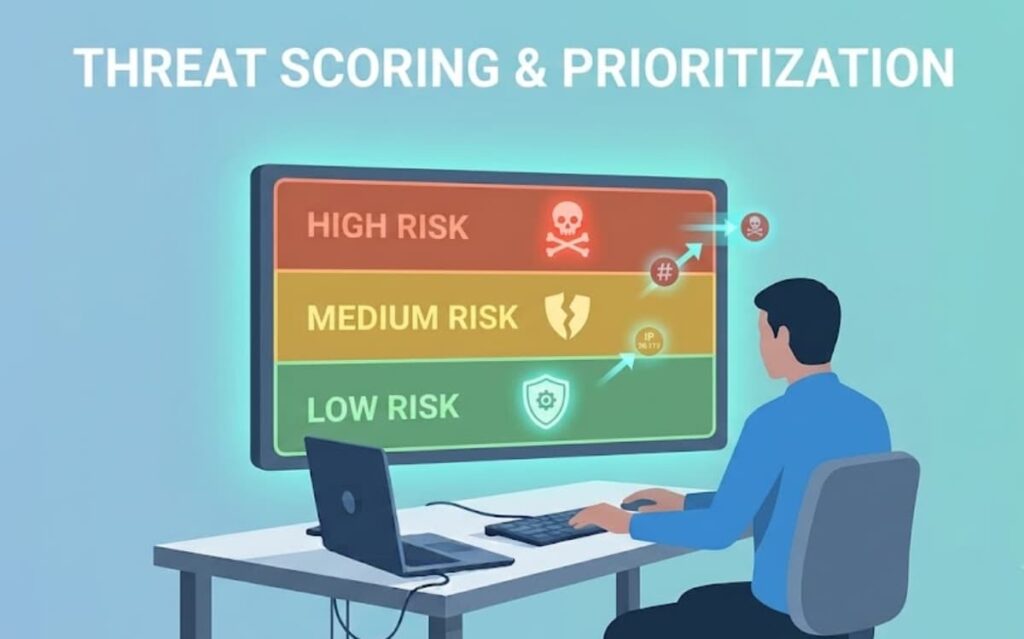
Not every indicator deserves the same level of attention.
A suspicious domain from an unknown source should not always receive the same response as an indicator connected to an active attack campaign.
Security teams need context. A key threat intelligence platform benefit is helping analysts add risk context to indicators, making it easier to prioritize threats and focus on the activity that requires attention.
A TIP helps by adding scoring and risk information that supports better decisions.
How Does A TIP Connect IoCs With Security Tools?
A Threat Intelligence Platform becomes more useful when it works with the security tools already used by a team. Most security teams do not investigate threats in one place. They move between SIEM, SOAR, EDR, firewalls, and other platforms during daily operations.
Choosing the right TIP vendor solution can help organizations build integrations that match their security needs and operational workflows.
The problem is usually not a lack of data.
It is the lack of connection between tools.
When a TIP shares trusted intelligence with other security platforms, analysts get more information without spending extra time searching for it manually.
How Does SIEM Integration Improve Threat Detection?
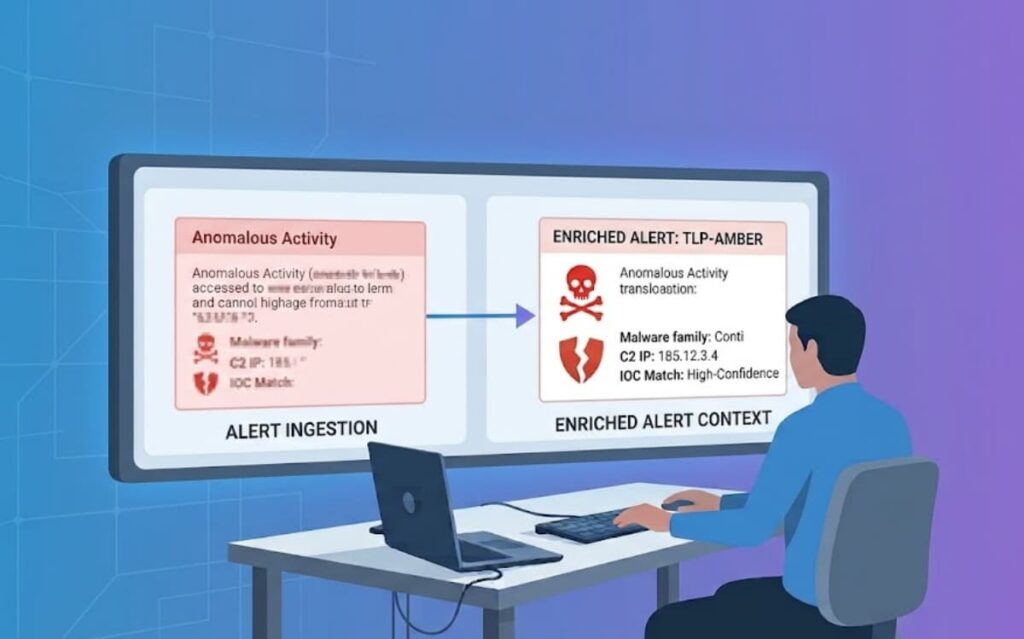
A SIEM collects security events from different areas of an organization. It brings together logs from endpoints, networks, applications, cloud systems, and user activity.
But raw events do not always explain what is happening.
The SIEM can receive information such as:
- Malicious IP addresses
- Suspicious domains
- Malware hashes
- Threat reputation
- Risk ratings
With this added information, analysts can decide faster whether an alert needs attention.
A connection to an unknown IP address may look low risk at first. After enrichment, the team may discover that the same IP was used in a malware campaign. The investigation changes because the analyst now has a clearer picture.
This is one area we often review when helping MSSPs evaluate security products. A platform may have strong features, but the daily workflow matters more. If analysts cannot use the intelligence easily, the value drops.
What Are Common Mistakes In Threat Data Management?
Threat data management often looks easier than it is. Many organizations collect large amounts of intelligence but struggle to turn that information into something useful.
More data is not always better.
Sometimes it creates more work.
Why Should Organizations Avoid Fully Automated IoC Decisions?
Automation can improve speed, but security teams should be careful about letting systems make every decision.
Threat data still needs human review.
A system may identify a suspicious IP address and recommend blocking it. But the organization may need more information first.
Security teams should consider:
- Confidence score
- Business impact
- Previous activity
- Possible exceptions
- Current investigation details
How Can Organizations Build A Better IoC Management Process?
A good IoC management process is not only about technology. It also depends on how teams review, organize, and use threat information.
The process should help analysts answer one question.
What should we do next?
Which Practices Improve Threat Intelligence Workflows?
Source: Orane Reid
Organizations can improve their IoC process by creating clear steps for handling threat information.
Useful practices include:
- Reviewing intelligence quality
- Removing duplicate indicators
- Adding threat context
- Updating confidence scores
- Connecting tools properly
- Reviewing outdated data
These steps help keep threat intelligence useful over time.
A TIP should reduce manual effort, not create another place where analysts need to search.
FAQs
What is the best way to manage threat data and IOCs?
Managing threat data and IOCs requires a structured process for collecting, organizing, validating, and analyzing security information. Teams can use IOC management practices to track indicators of compromise, improve threat visibility, and support investigations. A threat intelligence platform helps combine data from multiple sources, add context, and turn raw indicators into actionable intelligence for security operations.
How does IOC enrichment help security teams investigate threats?
IOC enrichment adds relevant details to indicators before analysts begin an investigation. It can provide information about malicious IPs, suspicious hashes, malicious domains, and related attack activity. This helps teams improve alert triage, perform stronger threat correlation, reduce false positives, and determine whether an indicator is connected to a larger security incident.
Why is threat feed management important for security teams?
Threat feed management helps organizations control the quality, accuracy, and relevance of incoming intelligence. Without proper filtering, teams may receive outdated, duplicated, or low-value data. Using threat feed aggregation, data validation, and intelligence normalization allows analysts to maintain reliable intelligence sources that support threat hunting, security monitoring, and incident response.
How can organizations improve IOC accuracy during investigations?
Organizations can improve IOC accuracy by applying data validation, reputation analysis, and context enrichment before using indicators in security workflows. Reviewing IP reputation, domain reputation, and hash reputation helps analysts understand the reliability and risk level of each indicator. This supports better threat assessment, compromise analysis, and risk prioritization during investigations.
How does managing IOCs support threat hunting and incident response?
Managing IOCs helps security teams identify patterns that may indicate active attacks or previous compromises. By connecting indicators with threat correlation, campaign tracking, and adversary tracking, analysts can improve threat hunting activities. This also supports faster incident response because teams have better context when investigating suspicious activity across endpoints, networks, and other security environments.
Managing Threat Data and IoCs in a TIP for Stronger Security Operations
Managing threat data and IoCs in a Threat Intelligence Platform helps you turn large amounts of security information into useful insights. The goal isn’t collecting more indicators, it’s making sure your team gets the right information when it matters. A strong process helps analysts investigate faster and make better decisions. That’s the real value.
If you’re looking to improve your IoC management strategy, MSSP Security can help. Our vendor neutral consulting supports MSSPs with tool selection, security audits, stack optimization, and integration planning.
References
- https://www.cisa.gov/topics/cyber-threats-and-response/information-sharing
- https://www.cisa.gov/resources-tools/resources/assessing-potential-value-cyber-threat-intelligence-feeds-white-paper