

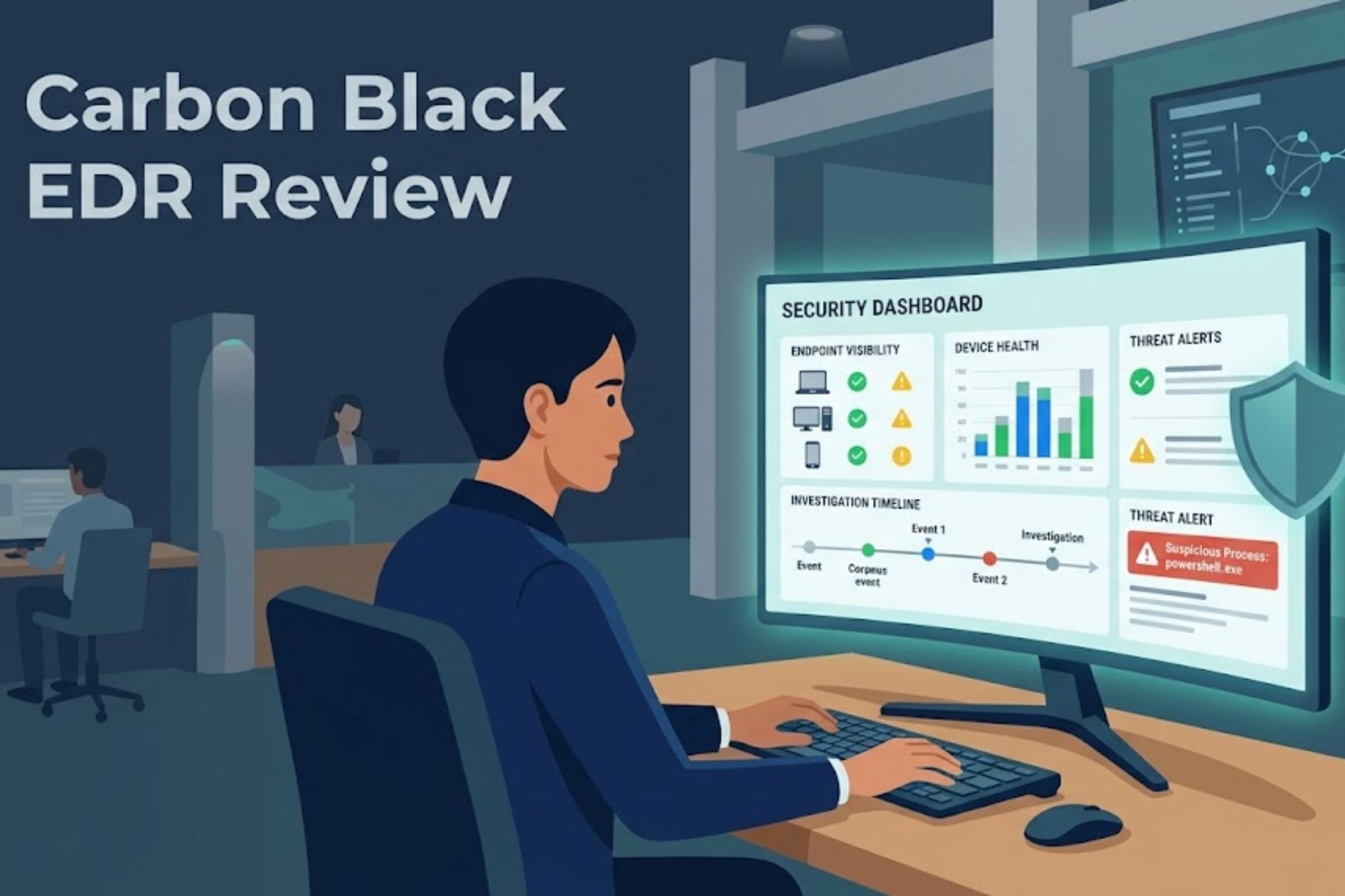
At MSSP Security, we often work with organizations that need deeper endpoint visibility for investigations and threat hunting. Carbon Black EDR is a strong option for security teams that want detailed endpoint telemetry, powerful investigation tools, and greater insight into attacker activity across their environment.
The platform is built for security operations centers and incident response teams that manage complex infrastructures. It helps analysts monitor endpoint activity, investigate security incidents, and understand exactly what happened during an attack. While its capabilities are extensive, the right fit depends on an organization’s security maturity, operational processes, and available expertise.
In this review, we examine Carbon Black EDR’s core features, practical advantages, and important considerations before deployment. Keep reading to see how the platform performs in real world security operations and whether it aligns with your organization’s needs.
What Matters in Carbon Black EDR
Carbon Black EDR delivers strong visibility and investigation capabilities, but its real value depends on how well it fits your security team’s workflow and operational maturity.
- Carbon Black EDR provides deep endpoint visibility
- The platform is built for experienced security teams
- Carbon Black EDR delivers the most value when matched with mature security operations
Why Is Carbon Black EDR Still Used By Enterprise SOCs?
Carbon Black EDR is still used by many enterprise SOCs because it gives security teams a detailed view of endpoint activity. It is built for investigation, not only alerting.
That difference matters.
When an incident happens, security teams need more than a warning that something is wrong. They need to know what happened, where it started, and what the attacker did next.
“detection and analysis, containment, eradication, and recovery” – NIST
For EDR platforms, this highlights why visibility and investigation capabilities matter beyond simple threat alerts.
From our work helping MSSPs select and audit security products, we have seen this come up often. Bigger security teams usually care about visibility and control. They want tools that help analysts investigate an incident without missing important details.
A good EDR platform should answer questions like:
- What process ran first?
- Which files changed?
- Did the attacker move further?
- What devices were affected?
Carbon Black EDR is designed around these types of investigations.
Security teams usually review the platform for:
- Endpoint investigations
- SOC operations
- Incident response
- Threat hunting
- Endpoint visibility
- Security analysis
What Makes Carbon Black EDR Different From Other EDR Platforms?
Carbon Black EDR focuses heavily on endpoint data. Instead of only showing alerts, it gives analysts a record of activity happening on devices.
This type of visibility is also important when organizations evaluate managed endpoint solutions, especially for teams looking at options such as a Microsoft Defender for Endpoint managed service or other managed security approaches.
This helps teams look back and understand an attack.
The platform collects information such as:
- Process activity
- File changes
- Registry changes
- Network connections
- User actions
We often pay close attention to this area during MSSP product reviews. More data can help investigations, but only if the team knows how to use it.
That is where experience matters.
A security analyst who understands attacker behavior can use this information to find important clues. A team without that experience may need extra training or support.
How Does Attack Chain Visualization Help Investigations?
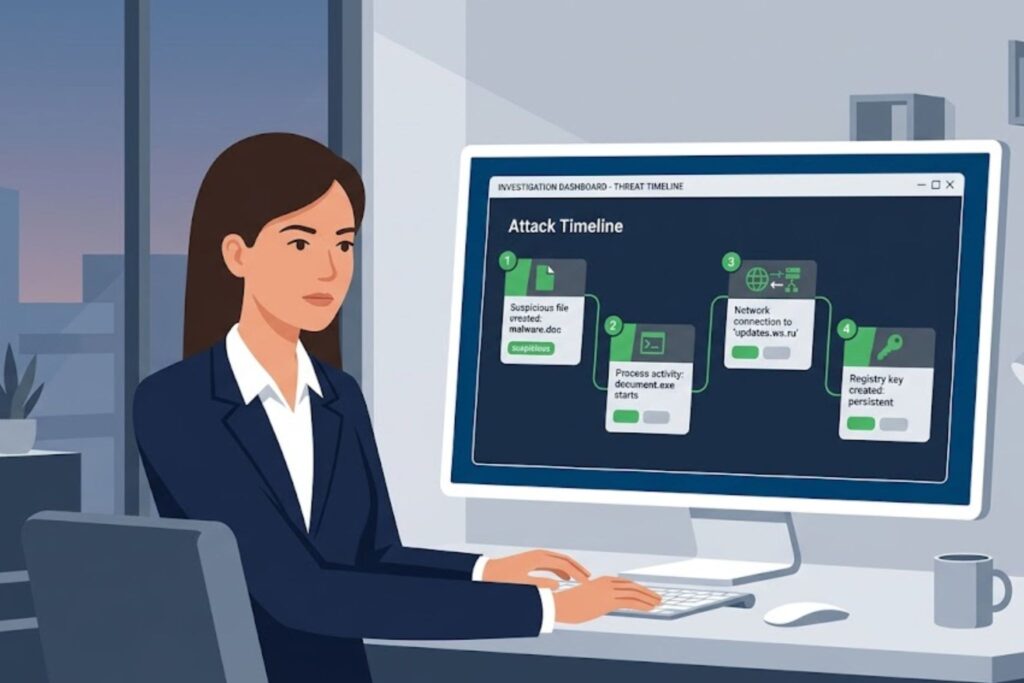
Security investigations are often about connecting small events together.
A single alert may not explain much. But when those events are connected, the bigger picture becomes easier to understand.
Carbon Black EDR helps analysts view relationships between processes and activities. This can show how an attack moved through a device.
For example:
- A user opens a suspicious attachment
- A command process starts
- PowerShell runs a script
- Files are modified
Seeing the full sequence helps analysts understand what happened.
In our experience, this type of visibility helps MSSPs explain incidents to customers too. A customer does not only want to know that an alert happened. They want to understand what was found and what actions were taken.
Clear investigation records make those conversations easier.
Which Carbon Black EDR Features Matter Most?
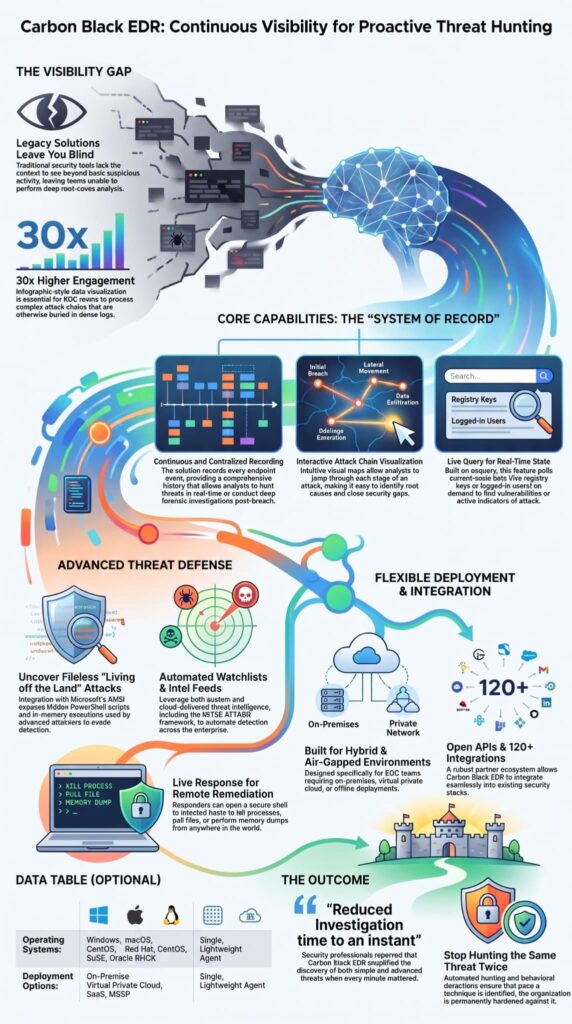
Not every feature gets the same attention from security teams. The ones that usually matter most are the features that help analysts investigate and respond faster. When evaluating capabilities, many organizations compare different EDR XDR tools to understand how detection, investigation, and response features fit into their security operations.
The main areas organizations review include:
- Live Response
- Threat hunting
- Custom queries
- Watchlists
- Policy controls
- Endpoint telemetry
Each one supports a different part of daily security work.
How Good Is Carbon Black EDR For Threat Hunting?
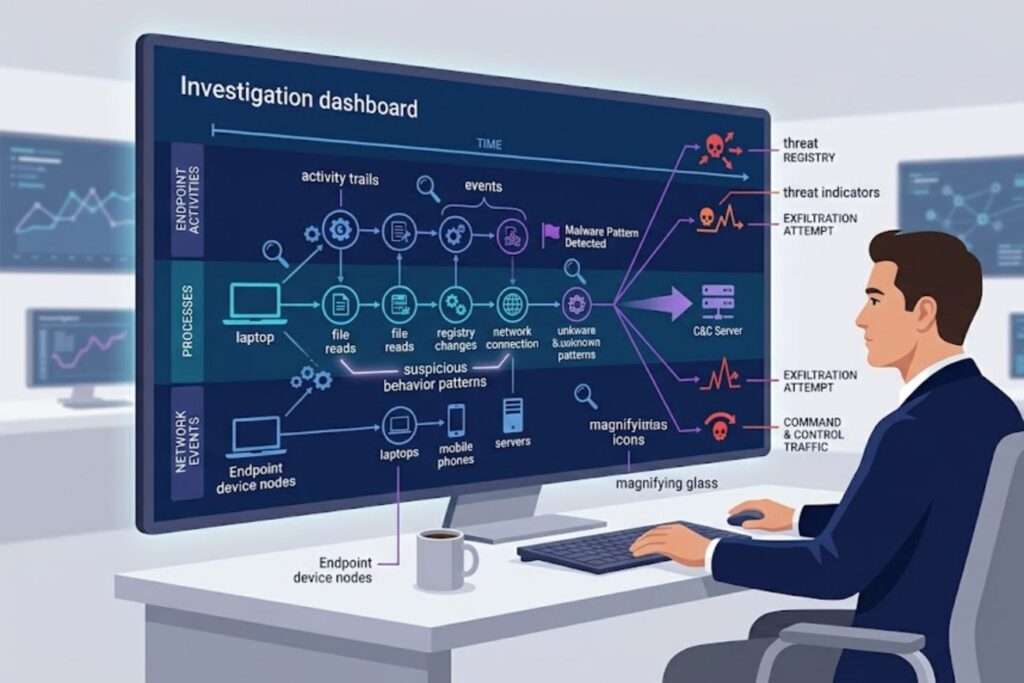
Carbon Black EDR is a strong fit for teams that spend a lot of time investigating security events. Its biggest advantage is the amount of endpoint information it gives analysts.
Threat hunting is not only about finding a known threat. It is about looking for unusual behavior and asking, “what happened here?”
CISA highlights that threat hunting helps organizations proactively search for threats that may have already bypassed traditional defenses and established a presence in their environment. This is why endpoint data, historical activity, and investigation capabilities are important parts of modern security operations.
From our work with MSSPs, we have seen more customers asking for deeper investigations. They do not only want an alert. They want someone to explain what happened, what was affected, and what needs to happen next.
Carbon Black EDR helps with this by giving analysts access to:
- Historical endpoint activity
- Search tools
- Process details
- Investigation records
- User and device behavior
This approach works well for security teams that already have investigation skills. The platform gives them more information to work with.
More information also means more responsibility. Analysts need to know what they are looking for and how to connect the dots.
What Are The Biggest Pros And Cons Of Carbon Black EDR?
Source: Cyber Security and AI
Carbon Black EDR offers strong investigation features, but it is not the right fit for every organization. When comparing security platforms, organizations should consider their operational needs, existing tools, and long-term goals before choosing an EDR XDR solution provider that matches their environment.
The platform gives security teams deep visibility. The tradeoff is that teams need the right skills and processes to use that visibility properly.
| Capability | Carbon Black EDR |
| Main purpose | Investigation and threat hunting |
| Endpoint data | Detailed activity records |
| Threat hunting | Search based investigations |
| Response tools | Live Response |
| Investigation view | Process activity tracking |
| Deployment | Cloud and on premises options |
| Best fit | Enterprise SOC teams |
Where Carbon Black EDR Works Well
Carbon Black EDR works best for organizations that need detailed security investigations.
Some common benefits include:
- Strong endpoint visibility
- Detailed forensic information
- Flexible deployment choices
- Investigation focused workflows
- Long term activity records
For many enterprise teams, this level of detail is valuable.
During our MSSP consulting projects, we often review how much investigation information a customer really needs. Some teams need a quick answer. Others need enough evidence to understand every step of an attack.
Carbon Black EDR is better suited for the second group.
It gives analysts room to investigate and understand the full story.
Where Carbon Black EDR Can Be Challenging
The same features that make Carbon Black EDR useful can also make it harder to manage.
Common challenges include:
- More analyst training
- More policy tuning
- More hands on investigation
- More complex workflows
A smaller team may struggle to use the platform fully without additional support.
That does not make the platform a bad choice.
It means the organization needs to be realistic about its resources.
A large SOC with experienced analysts may see the complexity as a benefit. A small team with limited time may prefer a simpler approach.
FAQs
What makes EDR different from traditional antivirus?
EDR solutions provide more than basic malware blocking. They use endpoint visibility, endpoint telemetry, and behavioral analytics to help security teams understand suspicious activity across devices. Unlike traditional antivirus tools that mainly focus on known threats, endpoint detection and response solutions support deeper investigations, threat analysis, and faster responses to complex attacks.
How does endpoint visibility improve security investigations?
Strong endpoint visibility allows analysts to review activity across devices, including running processes, file changes, and network connections. Capabilities such as process monitoring, file system monitoring, and network connection monitoring help security teams trace attack activity, identify threat patterns, and perform detailed attack investigation during security incidents.
What should teams evaluate before choosing an EDR platform?
Teams should consider more than detection accuracy when selecting an EDR platform. Important factors include threat detection, incident response, automation capabilities, performance impact, management features, and integration with existing security workflows. A complete evaluation should also consider scalability, investigation capabilities, and whether the platform supports daily security operations effectively.
How can EDR tools help reduce alert overload?
EDR tools can reduce alert overload by improving alert triage, generating high-fidelity alerts, and reducing unnecessary notifications through false positive reduction. Security teams can combine behavioral analysis, threat intelligence, and investigation tools to prioritize serious incidents. This helps improve SOC efficiency by allowing analysts to focus on genuine threats.
Can EDR support proactive threat hunting?
Yes. EDR solutions support proactive security efforts through advanced threat hunting, retrospective hunting, and query-based hunting capabilities. Analysts can create custom queries to search for unusual activity, investigate hidden threats, and identify signs of compromise before attacks become more severe. These capabilities strengthen cyber defense and improve incident prevention.
Is Carbon Black EDR The Right Fit For You?
You can spend time learning a security platform and still find it slows your team down. That’s the problem. Carbon Black EDR can provide deep insight, but the right choice depends on whether it fits your daily workflow and security needs.
At MSSP Security, we help you review your options based on how your team works. Our approach focuses on your real requirements, so you can choose a solution with more confidence. Contact MSSP Security to evaluate if Carbon Black EDR matches your goals.
References
- https://csrc.nist.gov/pubs/sp/800/61/r3/final
- https://www.cisa.gov/resources-tools/services/cyber-threat-hunt-assessment