


At MSSP Security, we know that choosing an endpoint security platform is about much more than comparing detection scores. For managed service providers, the real question is how well a solution supports daily operations, customer management, and long term growth.
Organizations comparing CrowdStrike and SentinelOne for MSSPs should look beyond independent test results alone. Both platforms consistently perform well in evaluations from MITRE ATT&CK, AV Comparatives, and SE Labs. However, those reports only show part of the picture. The better choice depends on how your team delivers managed security services, handles multiple customer environments, and scales efficiently without creating extra operational work.
In our experience, small workflow differences often have a bigger impact than expected. Keep reading to see how CrowdStrike and SentinelOne compare across the areas that matter most for MSSP success.
The Bottom Line on CrowdStrike vs SentinelOne
Choosing the right EDR platform is about finding the best operational fit for your MSSP, not simply selecting the platform with the strongest benchmark results.
- Operational fit matters more than benchmark scores.
- Automation and analyst workflow differ significantly.
- MSSP Security starts with business requirements, not vendor marketing.
Why Are MSSPs Still Comparing CrowdStrike Vs SentinelOne In 2026?
CrowdStrike and SentinelOne have both earned a strong reputation in endpoint security. That’s one reason MSSPs still compare them before making a decision.
Both vendors achieved 100% protection in MITRE ATT&CK testing. However, SentinelOne relied on automated alerts, while CrowdStrike used human-driven OverWatch intervention.
This proves your choice depends on how your SOC operates, not just detection scores. Many security teams also compare capabilities alongside other EDR and XDR tools to understand how different platforms support real-world operational requirements.
We’ve worked with MSSPs that were happy with a product during the trial. Then daily operations started. That is usually when the real differences show up. Some platforms are easier to manage across many customers. Others save analysts time during investigations. Those things matter every single day.
Detection is important. Of course.
“Zero trust focuses on protecting resources (assets, services, workflows, network accounts, etc.), not network segments.” – National Institute of Standards and Technology (NIST)
That shift reflects why many MSSPs now evaluate how a platform supports daily operations, visibility, and workflows instead of relying only on detection performance.
Still, customers don’t usually ask us which product scored higher in a lab. They want to know whether their team can respond faster, onboard new clients without extra work, and keep operations running smoothly as the business grows. Those questions often have a bigger effect on profit than a small gap in test results.
When we review platforms with clients, we spend more time looking at areas like these.
- Multi tenant management
- SOC workflows
- Automation
- Licensing
- Growth potential
- Daily administration
That gives a much better picture of how the platform fits into an MSSP business.
How Does CrowdStrike Vs SentinelOne Compare For MSSP Operations?
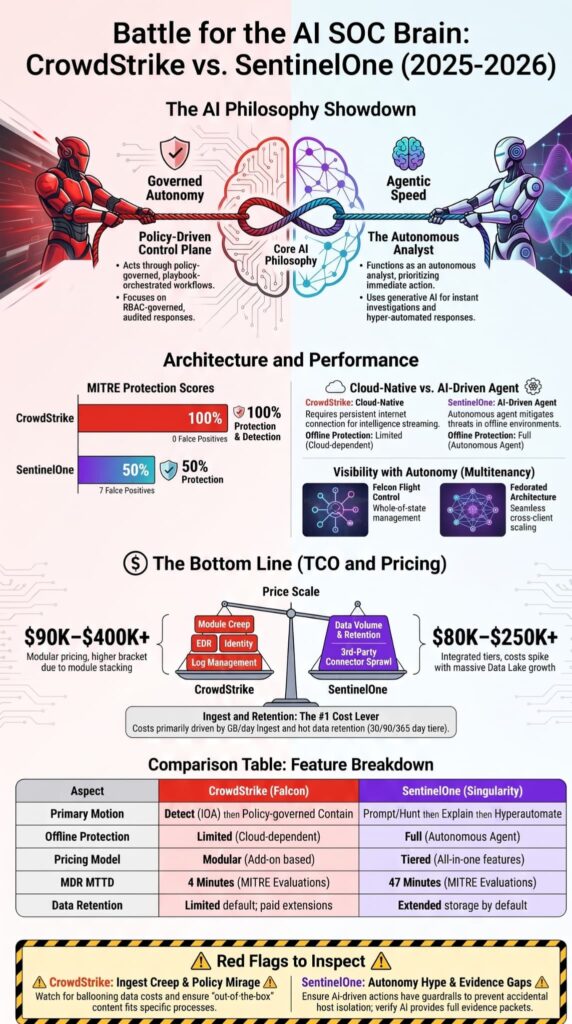
Both platforms are built for large environments, but they don’t work the same way. The security features may look similar at first glance. Daily management feels different after a few weeks of real use.
During product reviews, we often watch administrators spend very little time comparing malware detections. Instead, they look closely at user permissions, customer separation, reporting, and policy management.
Those tasks become part of the daily routine, so they deserve more attention than feature lists. Organizations evaluating enterprise endpoint protection often compare these operational capabilities with findings from a detailed Carbon Black EDR review before making a final decision.
Multi Tenant Management
CrowdStrike Falcon uses Flight Control to manage multiple customer environments from one central console. Administrators can assign permissions, separate customer environments, and manage policies without moving between different portals.
SentinelOne Singularity follows a structure based on Global, Account, Site, and Group. Many MSSPs find this layout familiar because it matches the way customer environments are already organized. Shared policies are easy to apply, while individual customers can still have their own settings when needed.
Both platforms support the core capabilities that most providers expect.
| Feature | CrowdStrike Falcon | SentinelOne Singularity |
| Multi tenant management | Flight Control | Global, Account, Site, Group |
| Customer separation | Yes | Yes |
| Central management | Yes | Yes |
| Policy control | Flexible | Flexible |
| API support | Extensive | Extensive |
| Best fit | Large enterprise teams | Growing MSSPs and mixed customer environments |
For most MSSPs, scalability is not the problem. Both products can handle large deployments. The bigger question is which management style feels more natural for the people using it every day.
Which Platform Reduces SOC Workload More?

Every alert takes time. That is why SOC efficiency matters so much for an MSSP. Even a small improvement in daily workflows can save hours over the course of a week. As the customer list grows, those hours add up.
“Zero trust requires the enterprise to monitor the resources used to conduct its primary mission(s).” – NIST
For MSSPs, platforms that simplify monitoring, investigation, and response can reduce manual effort while helping analysts focus on higher-priority incidents.
We’ve seen this during product reviews. Licensing costs usually get most of the attention at first. Then the discussion shifts. Teams begin asking how quickly they can investigate alerts, whether analysts need to jump between different screens, and how much manual work is left after an incident starts. Fair questions.
Automation vs Analyst Driven Investigation
Source: Paperclick
This is where the platforms begin to separate.
We have helped lean SOCs configure SentinelOne to trigger automatic VSS rollbacks, restoring encrypted files in under 90 seconds. Conversely, CrowdStrike requires your team to open a manual Real Time Response (RTR) command shell, which offers total surgical control but adds manual labor
Teams can collect evidence, run scripts, and perform detailed investigations before deciding what to do next. That extra flexibility is useful for organizations with experienced responders who want to stay involved throughout the investigation.
Neither model is better for every MSSP. We’ve seen lean teams benefit from more automation because they have fewer people covering more customers. Larger SOCs often prefer having greater control over each investigation.
Which EDR Platform Offers Better Value For An MSSP?
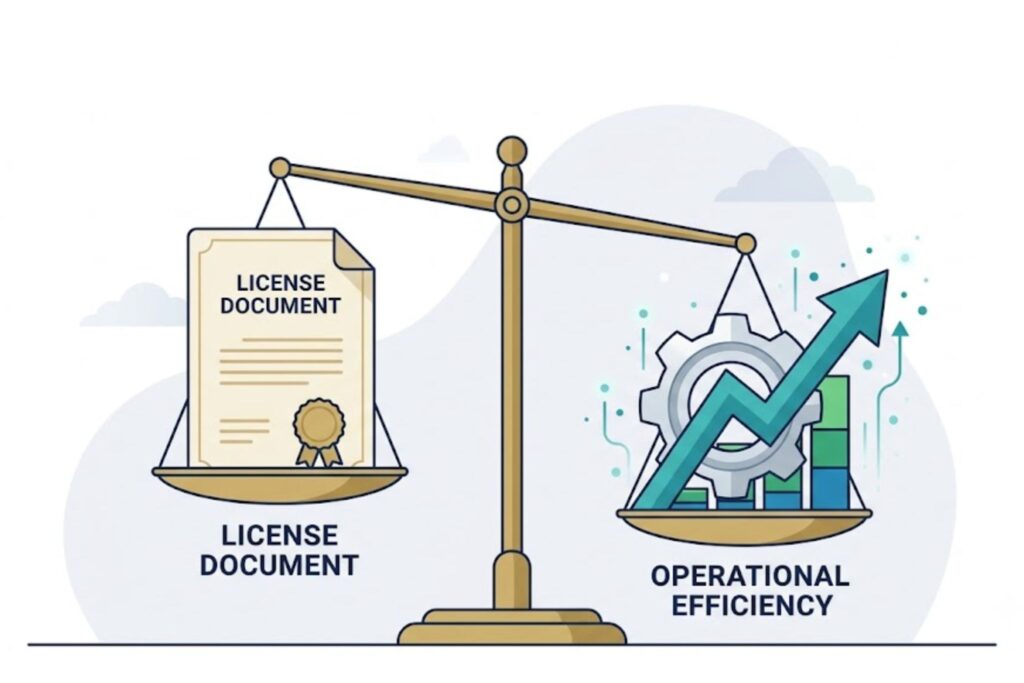
The cheapest license is not always the least expensive option over time.
There is onboarding to consider. Support. Policy management. Training. Daily operations. Those costs continue long after the first purchase. Many organizations also evaluate whether a dedicated Microsoft Defender managed service offers a better balance between operational effort and long-term ownership costs.
When we help MSSPs evaluate products, we look at the total cost of running the platform, not only the subscription price. Sometimes a product with a higher license cost ends up saving money because analysts spend less time managing it.
CrowdStrike’s Modular Licensing
CrowdStrike uses a modular licensing model. Customers can choose individual Falcon products such as Falcon Insight, Identity Protection, Falcon Spotlight, Cloud Security, and Data Protection.
That flexibility appeals to enterprise customers with different security requirements across business units.
There is another side to it.
Managing several product modules across multiple customers can increase administrative work. Sales teams, billing teams, and technical teams may all need to keep track of different combinations of services.
SentinelOne’s Bundled Editions
SentinelOne groups many capabilities into broader editions, including Core, Control, Complete, and Singularity.
Many MSSPs like this approach because it keeps service packages easier to explain and easier to sell. It also makes onboarding more consistent since customers within the same package receive similar features.
We’ve found that providers serving many mid market organizations often appreciate that consistency. It removes a few moving parts from daily operations.
FAQs
Is crowdstrike vs sentinelone mssp the only comparison worth making?
No. A thorough evaluation should include more than a direct crowdstrike vs sentinelone mssp comparison. Decision-makers should also compare mssp endpoint security, managed security service provider edr, endpoint detection and response comparison, xdr platform comparison, and overall security vendor comparison. Reviewing these factors provides a clearer picture of platform capabilities, operational efficiency, and long-term scalability for mssp.
How does licensing affect long-term MSSP profitability?
Licensing affects both operating costs and revenue potential. Before choosing a platform, evaluate subscription licensing, annual contract terms, partner program pricing, channel partner benefits, and opportunities for recurring revenue mssp. Comparing the total cost of ownership alongside licensing flexibility helps determine whether a platform supports sustainable business growth and predictable profitability.
What features help MSSPs manage multiple client environments efficiently?
An effective platform should provide a multi-tenant console, centralized management, policy management, API integrations, SOC integration, SIEM integration, and security orchestration. These capabilities enable security teams to manage multiple customer environments from a single interface, automate routine tasks, and deliver consistent managed endpoint protection and co-managed security services.
Which capabilities improve ransomware protection and incident response?
Strong endpoint security platforms combine cyber threat detection, behavioral analytics, machine learning detection, AI-powered security, and a threat intelligence platform to identify suspicious activity quickly. Features such as automated response, device isolation, rollback capability, incident response, and threat hunting help contain attacks faster and strengthen overall cyber resilience.
What should small businesses prioritize when evaluating endpoint protection?
Small businesses should prioritize deployment ease, low resource usage, performance impact, and cross-platform support for Windows protection, macOS protection, and Linux protection. They should also evaluate real-time monitoring, offline protection, endpoint visibility, malware detection, endpoint hardening, and value for money to ensure the platform meets both current security needs and future business growth.
Choose the EDR Platform That Fits Your MSSP
The wrong EDR platform can slow your team down, even if it performs well on paper. That’s the difference. Both CrowdStrike and SentinelOne provide strong endpoint protection, but the better choice depends on how your analysts work, how your customers are supported, and how your business plans to grow.
At MSSP Security, we recommend solutions based on your real operational needs, not product claims. Our team reviews your environment, workflows, compliance requirements, and growth plans to help you make a confident decision.
If you’re planning your next EDR investment, contact MSSP Security to find the platform that best supports your team and your long term business goals.
References
- https://csrc.nist.gov/pubs/sp/800/207/final
- https://www.nist.gov/publications/zero-trust-architecture