

Cyber threats continue evolving faster than traditional security defenses. Organizations now rely on proactive security specialists who search for hidden threats before damage occurs. A strong threat hunter role description includes threat detection, behavioral analysis, incident investigation, and continuous monitoring across complex environments.
Threat hunters help security teams identify suspicious activity that automated systems may miss. Their work improves visibility, strengthens response readiness, and reduces long-term cybersecurity risk for businesses and MSSPs. Keep reading.
Inside the Mind of a Threat Hunter
Threat hunters focus on proactive cybersecurity operations rather than waiting for alerts alone. They investigate unusual behavior, analyze attack patterns, and uncover hidden threats across networks and endpoints.
- Threat hunters proactively search for advanced cyber threats.
- Analytical and technical skills are essential for investigations.
- Threat hunting improves visibility and incident response speed.
What Is a Threat Hunter?
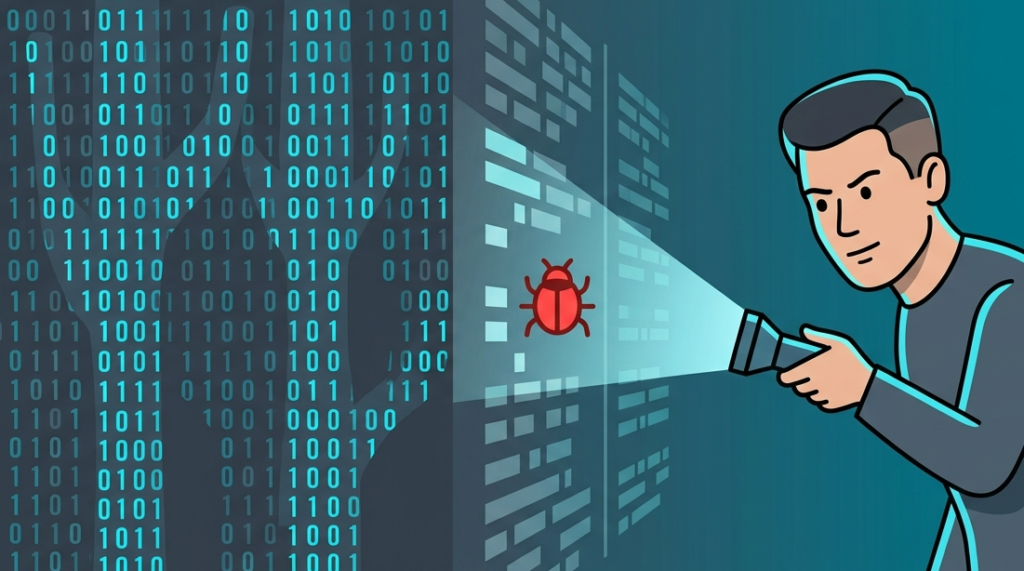
A threat hunter is a cybersecurity professional responsible for proactively identifying threats that bypass automated security systems. Instead of relying only on alerts, threat hunters analyze data, investigate anomalies, and search for indicators of compromise across environments.
“Your efforts to enhance cybersecurity governance and risk management practices… will significantly improve your capacity to anticipate, withstand, and recover from cyber threats”. – ArXiv
Their work supports:
- Early threat detection
- Faster incident response
- Reduced attacker dwell time
- Improved security visibility
- Better SOC performance
Threat hunters often work closely with those in specialized security analyst roles, incident responders, and security engineers to strengthen organizational defense strategies and leverage cross-functional analyst expertise.
Core Threat Hunter Role Description and Responsibilities
Threat hunters investigate suspicious behavior and continuously monitor systems for advanced attacks that traditional tools may overlook.
| Responsibility | Purpose |
| Threat Investigation | Identify hidden malicious activity |
| Behavioral Analysis | Detect unusual user or system behavior |
| Threat Intelligence Review | Monitor emerging attack techniques |
| Incident Support | Assist during security incidents |
| Log and Data Analysis | Correlate events across environments |
Daily responsibilities often include:
- Reviewing SIEM and EDR data
- Investigating abnormal activity
- Creating threat-hunting hypotheses
- Monitoring attacker tactics and techniques
- Improving detection rules and workflows
Skills Required for Threat Hunters
Credits: Huntress
A successful threat hunter combines technical expertise with analytical thinking and strong investigative abilities.
Important skills include:
- Network traffic analysis
- Threat intelligence interpretation
- Malware behavior understanding
- SIEM and EDR platform experience
- Scripting and automation basics
Soft skills are equally important, including:
- Critical thinking
- Attention to detail
- Communication skills
- Documentation ability
- Problem-solving under pressure
Threat hunters must adapt quickly as cybercriminal tactics continue evolving.
Security Tools Threat Hunters Commonly Use
Threat hunters rely on multiple technologies to investigate suspicious activity and improve visibility across systems.
Commonly used tools include:
- SIEM platforms
- EDR solutions
- Threat intelligence platforms
- Network monitoring tools
- Sandbox analysis systems
These tools help analysts correlate events, investigate indicators of compromise, and identify advanced attack behavior before major damage occurs.
Difference Between Threat Hunters and SOC Analysts
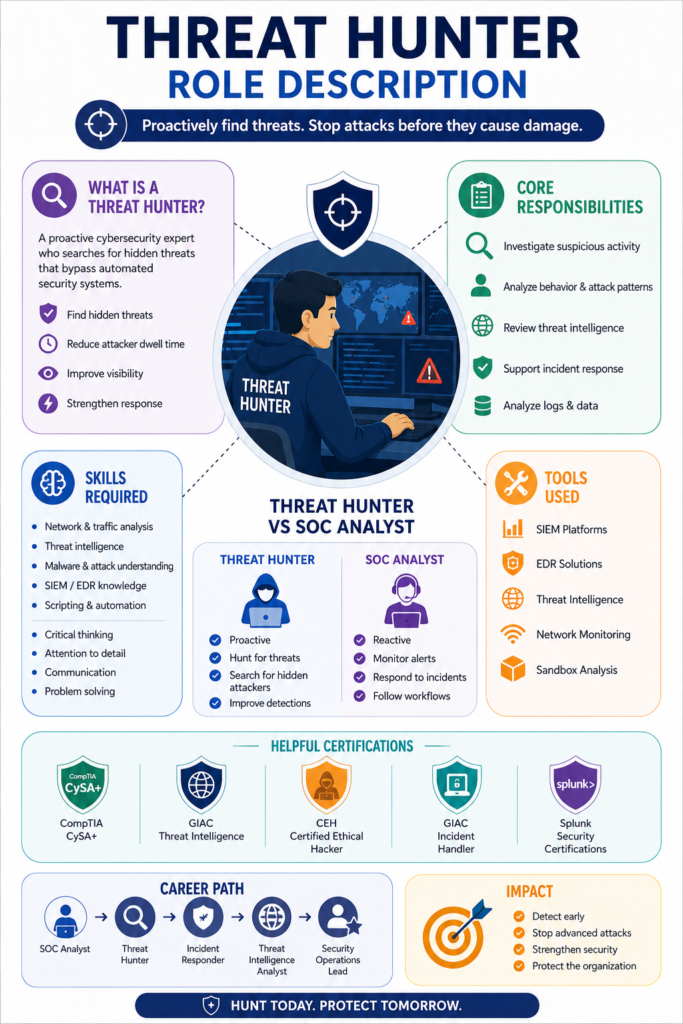
Although both roles support cybersecurity operations, their focus areas are different.
SOC analyst responsibilities typically:
- Monitor alerts
- Respond to incidents
- Escalate threats
- Handle operational workflows
Threat hunters primarily:
- Search proactively for hidden threats
- Investigate stealthy attacker behavior
- Analyze long-term attack patterns
- Improve detection strategies
Both roles work together to strengthen organizational cybersecurity resilience.
Certifications Helpful for Threat Hunters
Many organizations value certifications that validate cybersecurity and investigation skills.
“AI algorithms enable SIEMs to extract meaningful insights from massive datasets, allowing for the identification of subtle anomalies and hidden threats that may not be detected by traditional detection methods”. – ResearchGate
Popular certifications include:
- CompTIA CySA+
- GIAC Certified Threat Intelligence
- Certified Ethical Hacker (CEH)
- GIAC Certified Incident Handler
- Splunk Security Certifications
Hands-on experience often matters just as much as certifications when building a threat-hunting career.
Career Path for Threat Hunters
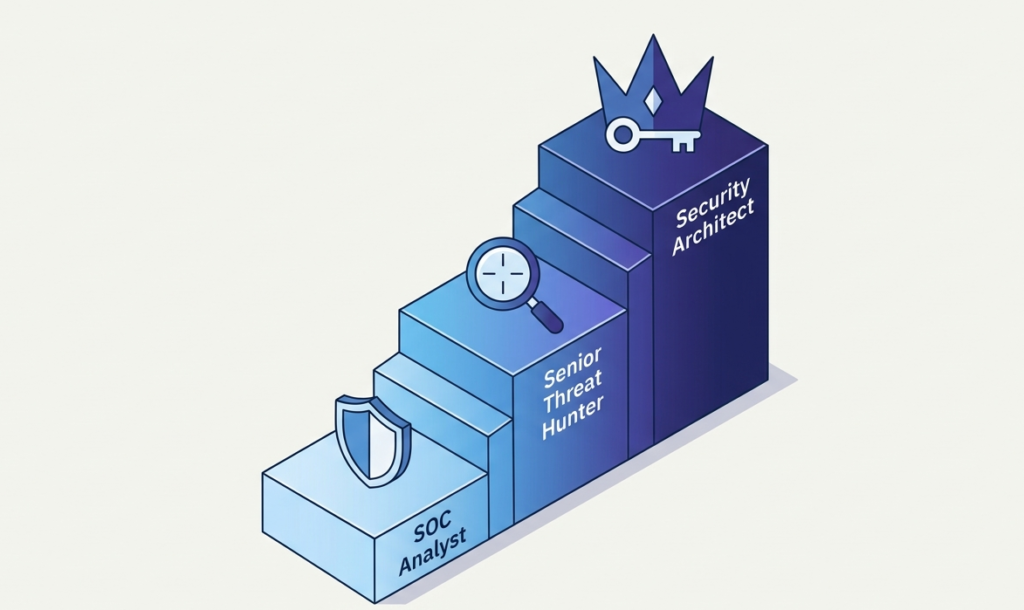
Many professionals transition into threat hunting after mastering the foundational skills needed security analyst teams require, often moving into the role after gaining significant SOC or incident response experience.
Common career progression includes:
- SOC Analyst
- Threat Hunter
- Incident Responder
- Threat Intelligence Analyst
- Security Operations Lead
As organizations expand cybersecurity operations, demand for proactive security professionals continues increasing across industries.
FAQ
What does a threat hunter do daily?
Threat hunters investigate suspicious activity, analyze attacker behavior, review threat intelligence, and proactively search for hidden threats within networks and systems.
Is threat hunting different from incident response?
Yes. Threat hunting focuses on proactively finding threats before detection, while incident response manages confirmed security incidents.
Do threat hunters need coding skills?
Basic scripting knowledge is helpful for automating searches, analyzing data, and improving investigation workflows.
What industries hire threat hunters?
Threat hunters work in finance, healthcare, technology, government, MSSPs, and organizations managing sensitive digital infrastructure.
Building Stronger Cyber Defense Through Proactive Threat Hunting
A well-defined threat hunter role description highlights the importance of proactive cybersecurity operations in modern organizations. Threat hunters help reduce attacker dwell time, improve visibility, and strengthen overall security readiness through continuous investigation and analysis.
At MSSP Security, we help MSSPs optimize operations, improve security visibility, streamline tool integration, and strengthen cybersecurity services with expert consulting backed by 15+ years of operational experience and thousands of completed projects.
References
- https://arxiv.org/abs/2403.10327
- https://www.researchgate.net/publication/393598297_Hybrid_AI_for_Predictive_Cyber_Risk_Assessment_Federated_Graph-Transformer_Architecture_with_Explainability