

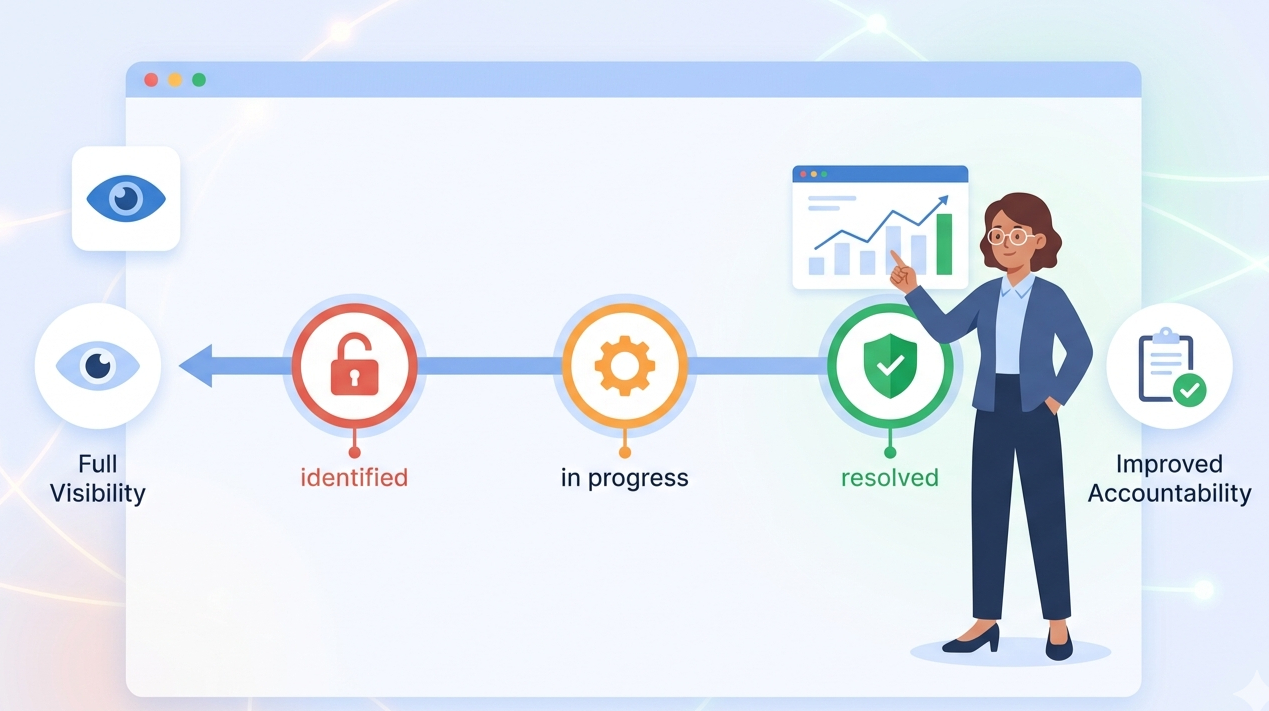
Understanding tracking remediation progress status is essential for organizations that want to ensure vulnerabilities are not only identified but also fully resolved. Without proper tracking, remediation efforts can become disorganized, delayed, or incomplete.
Security teams need clear visibility into what has been fixed, what is still pending, and how quickly issues are being resolved. Tracking remediation progress status provides that clarity, enabling better decision-making and faster response. This article explains how effective tracking strengthens cybersecurity outcomes. Keep reading.
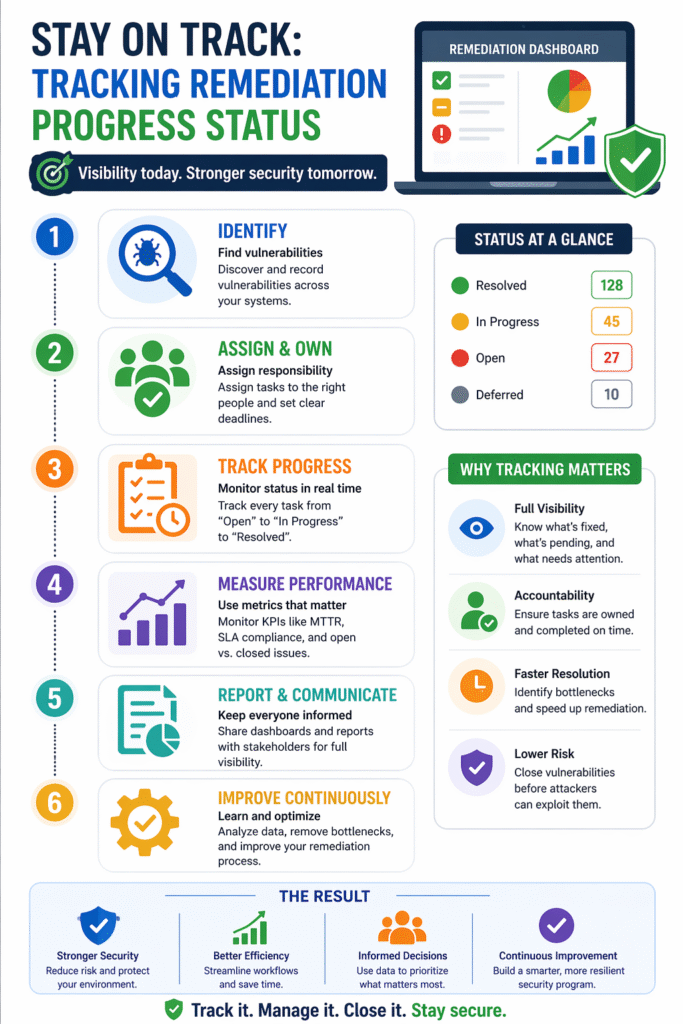
Key Insights on Tracking Remediation Progress Status
Tracking remediation progress status ensures that security efforts are measurable, transparent, and effective.
- Full visibility: Know the status of every vulnerability
- Improved accountability: Ensure tasks are completed on time
- Better decision-making: Use data to optimize remediation strategies
Why Tracking Remediation Progress Status Matters
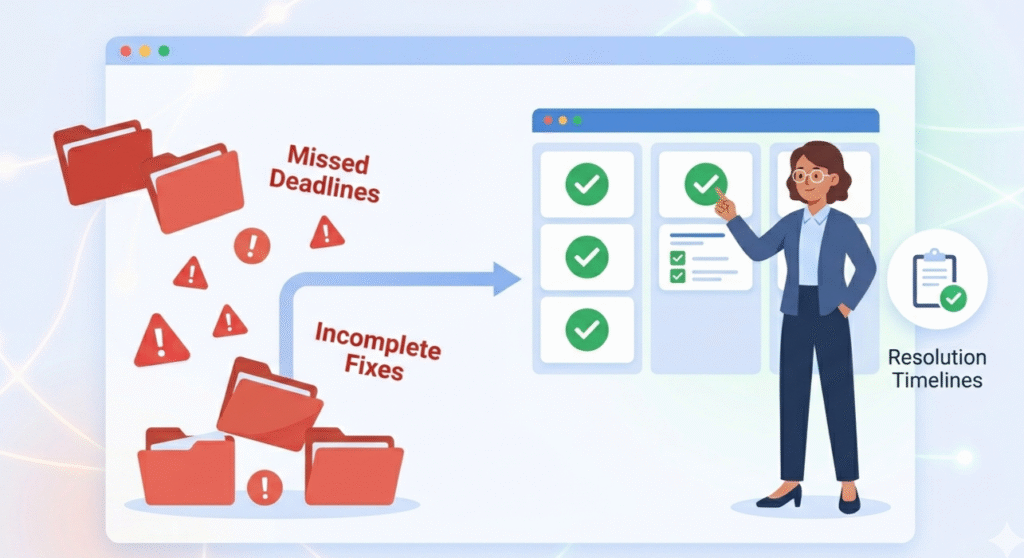
Without tracking, organizations risk losing control over remediation efforts. Vulnerabilities may remain unresolved or overlooked.
Key risks:
- Missed deadlines
- Incomplete fixes
- Lack of accountability
Tracking remediation progress status ensures that every vulnerability is addressed and nothing falls through the cracks.
Key Components of Effective Tracking
Successful tracking requires structured data and clear processes.
Important components:
- Vulnerability identification
- remediation guidance to assist technical teams
- Assigned ownership
- Status updates
- Resolution timelines
“A vulnerability is a weakness which can be exploited by a threat actor.” – Wikipedia
Tracking these components ensures a complete view of remediation progress.
Using Dashboards for Real-Time Visibility
Credits: Minority Business Success Experts
Dashboards provide a centralized view of remediation status across systems.
Key features:
- Real-time updates
- Visual progress indicators
- Risk-level categorization
- Summary reports
Dashboards help teams quickly understand the current state of remediation and prioritize actions.
Integrating Tracking with Ticketing Systems
Ticketing systems play a key role in managing remediation tasks.
Benefits include:
- Assigning responsibilities
- Tracking task completion
- Maintaining audit trails
- Automating workflows
Integration ensures that remediation activities are organized and traceable.
Defining Metrics for Tracking Progress
Organizations need measurable indicators to evaluate remediation performance.
| Metric | Purpose | Benefit |
| Mean Time to Remediate | Measures resolution speed | Improves efficiency |
| Open vs Closed Issues | Tracks workload | Identifies backlog |
| SLA Compliance | Ensures deadlines are met | Maintains accountability |
Metrics provide insight into how effectively vulnerabilities are being resolved.
Ensuring Accountability Across Teams
Tracking remediation progress status assigns responsibility to specific individuals or teams. Success often depends on coordinating remediation efforts across departments to ensure everyone understands their role in the fix.
Best practices:
- Assign clear ownership
- Set deadlines
- Monitor performance
- Provide regular updates
This ensures that remediation tasks are completed efficiently.
Overcoming Common Tracking Challenges
Organizations may face challenges when tracking remediation.
Common issues:
- Inconsistent data updates
- Lack of standardized processes
- Limited tool integration
- Poor communication
Addressing these challenges improves tracking accuracy and reliability.
Automation in Tracking Remediation Progress Status
Automation enhances tracking efficiency and consistency.
Examples:
- Automatic status updates
- Real-time alerts
- Workflow automation
Automation reduces manual effort and ensures up-to-date information.
Continuous Improvement Through Tracking
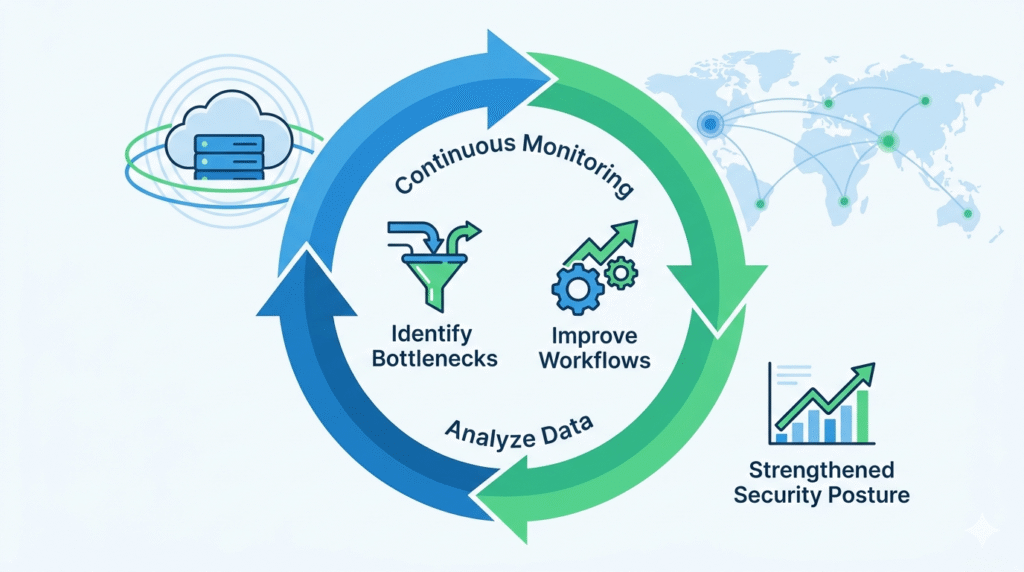
Tracking remediation progress status supports ongoing improvement.
Key actions:
- Analyze tracking data
- Identify bottlenecks
- Improve workflows
- validating remediation through follow-up assessments
“Continuous monitoring is a key component of effective information security management.” – NIST
Continuous tracking helps organizations strengthen their security posture over time.
FAQ
What does tracking remediation progress status mean?
It refers to monitoring the status of vulnerability remediation efforts, including what has been fixed, what is in progress, and what still needs to be addressed.
Why is tracking important in remediation?
Because it ensures that vulnerabilities are not overlooked, deadlines are met, and remediation efforts are completed efficiently and accurately.
What tools are used for tracking remediation?
Common tools include dashboards, ticketing systems, and security management platforms that provide visibility and automate tracking processes.
How can organizations improve tracking effectiveness?
By defining clear metrics, using automation, maintaining consistent updates, and ensuring strong communication across teams.
Turning Visibility into Action: Tracking Remediation Progress Status Effectively
Tracking remediation progress status allows organizations to manage vulnerabilities with clarity and control. By improving visibility, accountability, and efficiency, organizations can ensure that every issue is resolved properly.
If you want to enhance your tracking capabilities and strengthen your remediation process, MSSP Security can help streamline monitoring, reporting, and overall cybersecurity management.
References
- https://en.wikipedia.org/wiki/Vulnerability_(computing)
- https://nvlpubs.nist.gov/nistpubs/Legacy/SP/nistspecialpublication800-137.pdf