

Let’s face it, nobody got into automated compliance report generation to spend their days buried in Excel sheets and hunting down signatures. Teams waste weeks just gathering basic data for SOC 2 reports, while HIPAA paperwork piles up on desks across departments.
Yet some forward-thinking companies found a way out of this mess. They’ve ditched the manual grind, letting smart tools handle the grunt work instead. At MSSP Security, we’re seeing stressed-out teams breathe easier once they make the switch from paper pushing to automated tracking.
Stick around to see why spreadsheets might finally be going extinct.
Key Takeaways
- Automated compliance reporting cuts weeks of manual work down to hours, improving accuracy and audit readiness.
- Continuous compliance monitoring and intelligent workflows provide real-time visibility and proactive risk management.
- MSSP Security offers integrated automation solutions that free teams from paperwork, letting them focus on strategic security.
The Pain Point: Manual Compliance Reporting is Costly and Inefficient

Working with MSSP teams over the years, we’ve watched countless hours vanish into the compliance black hole. Some clients spend whole weeks just gathering evidence from different systems, while others fight endless battles with outdated spreadsheets and missing audit trails.
Many of these challenges stem from not having a solid foundation in basic compliance reporting processes that connect every layer of security management efficiently.
These aren’t just minor headaches. Compliance officers miss critical updates buried in email threads, leading to gaps that auditors flag months later. One MSSP partner admitted spending 40 hours monthly on reports that should take 10. Another found three separate teams tracking the same controls in different ways.
Most managed service providers struggle to see their real compliance status until it’s audit time. Our assessments reveal they typically waste 30% of their budget on manual busywork, money better spent on growing their security offerings. This drain affects everyone, from analysts drowning in paperwork to executives stalling new projects while waiting for compliance sign-off.
Core Components of Automated Compliance Report Generation
Credits: TheComplyGuide
To understand how automation transforms compliance, it helps to break down its key components:
Data Integration
A well-tuned automated system plugs right into your tech stack, whether that’s AWS logs, Microsoft 365 controls, or custom apps. We’ve seen MSSPs cut their data gathering from weeks to hours once everything connects. No more pestering admins for screenshots or digging through old emails for evidence.
Compliance Rule Engine
The heart of automation is a smart rule engine that applies regulatory frameworks like SOC 2, HIPAA, GDPR, or ISO 27001. It evaluates collected data against these standards, identifying compliance status and gaps instantly.
Evidence Collection
Automation doesn’t just gather data; it collects verifiable evidence such as system logs, audit trails, and control statuses to substantiate compliance claims. MSSPs using evidence collection tools can automatically capture system data, ensuring every audit step remains traceable and fully verifiable.
Report Templates
Predefined or customizable templates ensure reports meet auditor and regulator expectations, presenting compliance data clearly and consistently.
Scheduling and Alerts
Reports can be generated on a regular cadence or on demand. Automated alerts notify compliance officers of upcoming deadlines, missing data, or risk deviations, supporting timely remediation.
Audit Trail and Documentation
Every action, from data collection to report generation, is logged to provide a transparent audit trail, crucial for accountability and traceability.
How Automated Compliance Report Generation Works
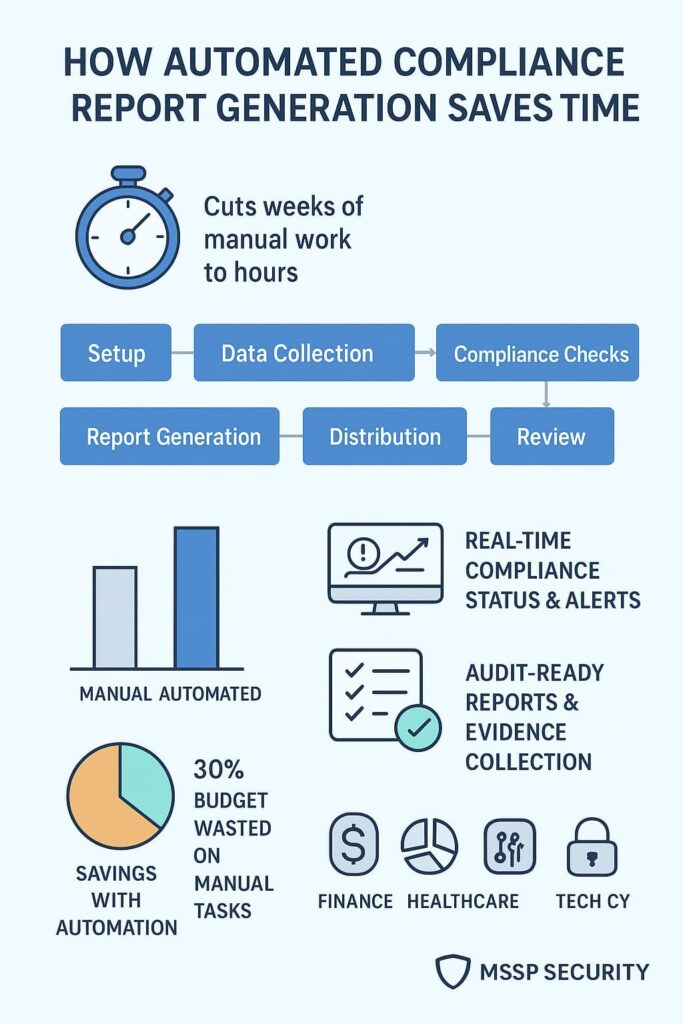
We’ve implemented automated compliance solutions that follow a straightforward process:
- Setup: Define your compliance requirements, choose or tailor report templates, and configure integration points with your data sources.
- Data Collection: The system continuously or periodically pulls relevant data across your technology stack.
- Compliance Checks: Data is evaluated against compliance rules in real time, flagging any deviations.
- Report Generation: Reports are compiled automatically, complete with charts and narratives aligned with the applicable regulatory framework.
- Distribution and Storage: Finalized reports are securely sent to stakeholders and archived for future reference.
- Review and Corrections: Alerts prompt remediation actions for any identified gaps before the next audit cycle.
This cycle not only reduces manual workload but keeps compliance status fresh and audit-ready at all times. [1]
Benefits of Automation
Time Savings
What once took compliance teams weeks can now be accomplished in hours or even minutes. This efficiency gain accelerates reporting cycles and reduces stress during audit seasons.
Accuracy and Consistency
Automated systems eliminate human errors common in manual data handling. They enforce consistent application of compliance rules, ensuring reliable and standardized reports.
Continuous Compliance
With near real-time updates, organizations gain continuous visibility into their compliance posture, enabling proactive risk management rather than reactive firefighting.
Simplified Audits
Audit-ready reports and comprehensive evidence reduce back-and-forth with auditors, shortening audit durations and improving outcomes.
Resource Optimization
By automating routine tasks, teams can focus on strategic priorities like risk mitigation and security improvements, areas where human expertise adds the most value.
Use Cases Across Industries
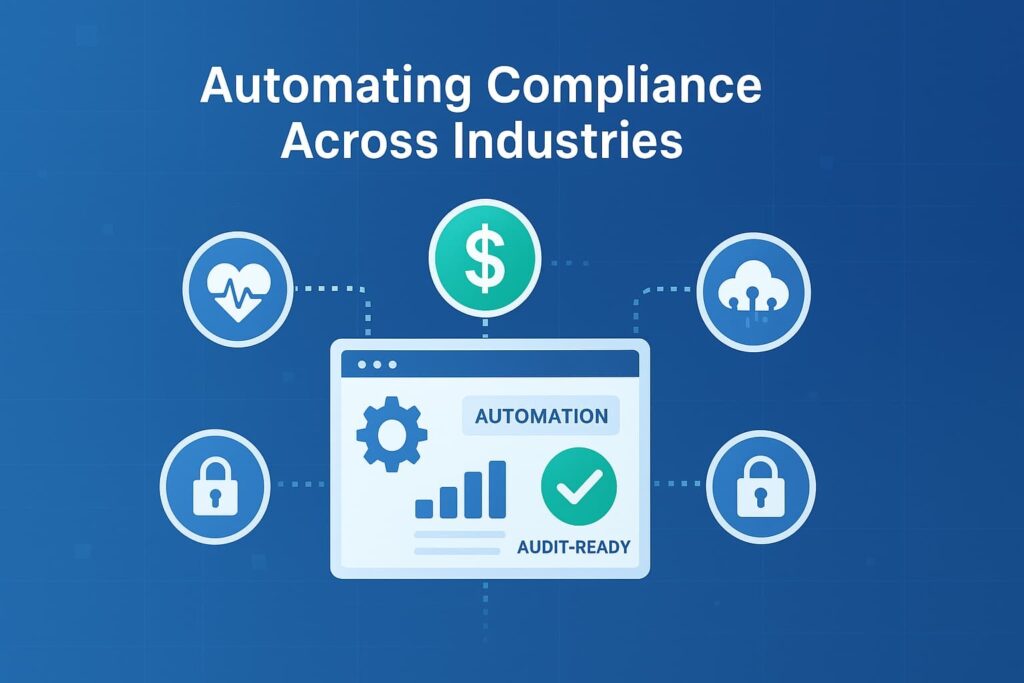
- Financial Services: Automating SOX, FINRA, and SEC reporting to maintain strict regulatory adherence.
- Healthcare: Ensuring HIPAA compliance with continuous monitoring and documentation.
- Technology: Supporting SOC 2 certification readiness through real-time control tracking.
- Global Privacy: Managing GDPR and CCPA compliance with automated data governance reports.
- Security Frameworks: Generating ISO 27001 status reports with minimal manual effort. [2]
Choosing the Right Automated Compliance Reporting Tool with MSSP Security
When evaluating compliance automation tools, consider:
- Integration Capabilities: Does the solution connect effortlessly with your existing IT and cloud platforms?
- Supported Frameworks: Can it handle the specific regulations relevant to your industry and geography?
- Customization Options: Are report templates and workflows adaptable to your organization’s unique needs?
- Reporting Features: Does it offer real-time dashboards, scheduling, and audit trails?
- Security and Privacy: Is your compliance data protected with enterprise-grade encryption and access controls?
- Pricing and Scalability: Will the platform scale as your business grows without prohibitive costs?
At MSSP Security, we understand these requirements because we’ve walked this path ourselves. Our integrated automation solutions align with your compliance goals while allowing your teams to focus on what truly matters, protecting your business.
For managed providers seeking long-term value, MSSP compliance reporting services offer scalable automation that unifies compliance visibility across clients and frameworks.
FAQ
1. How does automated compliance reporting improve efficiency and accuracy?
Automated compliance reporting replaces manual data entry with compliance automation software that integrates data across systems. This ensures regulatory compliance reports stay accurate and consistent.
By using compliance workflow automation and continuous compliance monitoring, teams reduce errors, speed up audits, and focus on improving security instead of fixing reporting mistakes.
2. What features should I look for in compliance automation software?
Effective compliance automation software should include real-time compliance reporting, compliance data integration, and audit-ready reports. Tools with compliance dashboards, compliance analytics, and automated compliance checks simplify oversight.
Look for compliance task automation, evidence collection automation, and compliance report scheduling to reduce manual work and stay audit-ready year-round.
3. How does continuous compliance monitoring help prevent compliance gaps?
Continuous compliance monitoring uses compliance controls monitoring and compliance risk scoring to track performance against regulatory framework compliance standards.
With automated compliance alerts and compliance status monitoring, organizations spot issues early. This proactive approach reduces compliance reporting errors and helps maintain audit-ready documentation at all times.
4. Can automation handle complex frameworks like SOC 2, HIPAA, or GDPR?
Yes, advanced compliance management tools support multi-framework automation for SOC 2 automated reporting, HIPAA compliance reporting, and GDPR compliance reports.
These compliance reporting templates and regulatory compliance technology streamline cross-framework reporting, allowing compliance readiness assessments and compliance documentation automation without juggling multiple spreadsheets.
Conclusion
Automated compliance report generation isn’t just a technological upgrade; it’s a strategic shift. It frees organizations from the manual, error-prone grind, enabling faster, more accurate, and insightful reporting. With continuous monitoring, intelligent workflows, and audit-ready documentation, compliance becomes seamless and sustainable.
Automation empowers teams to move beyond paperwork toward proactive governance. For those ready to embrace this change, MSSP Security offers the tools and expertise to make compliance automation a reality.
Streamline your compliance journey with expert MSSP consulting, no hard selling, just proven solutions to optimize tools, enhance visibility, and reduce operational friction.
References
- https://law.mit.edu/pub/thedawnofaneweraofcompliance/release/
- https://atlan.com/know/data-governance/regulatory-reporting-automation/