

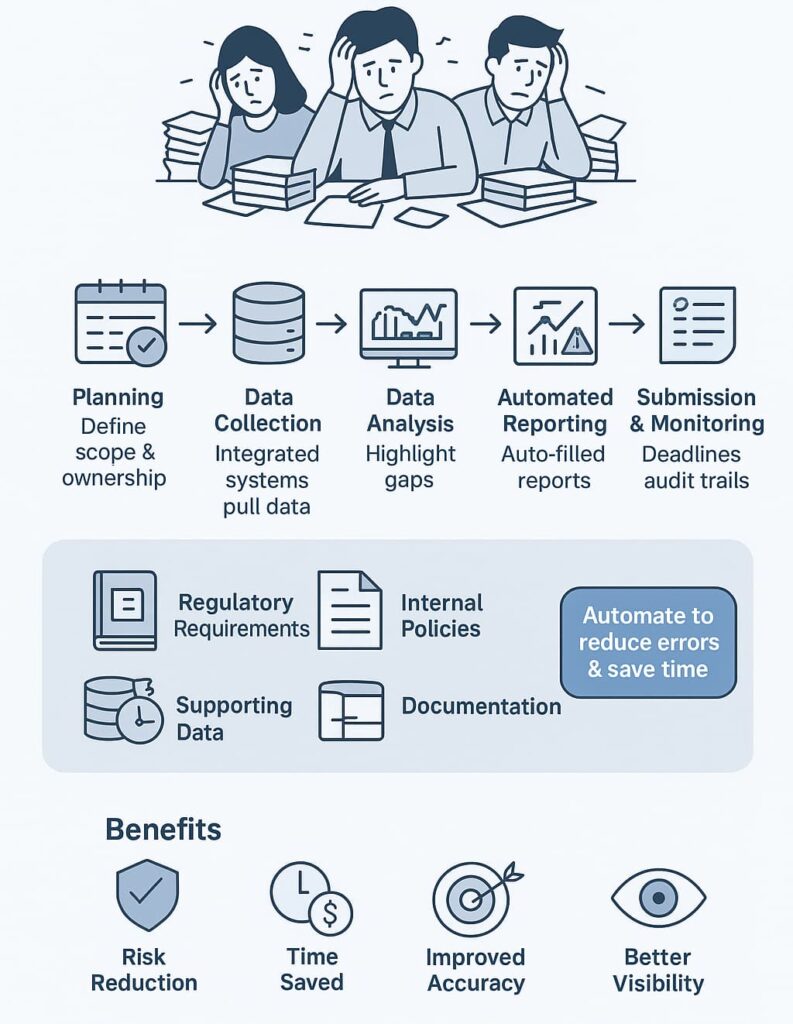
Stacks of paper scattered everywhere. Coffee stains on regulatory forms. Three different versions of the same report, and nobody knows which is current. Yeah, compliance reporting is a mess for most companies.
The usual problem? Too much manual work, not enough time. Teams end up scrambling at the last minute, copying numbers between files at 2 AM, hoping they didn’t mess up somewhere. It’s exhausting, and frankly, dangerous for business.
There’s a better way to handle this chaos, without burning out your staff or risking major mistakes.
Want to stop dreading compliance season? Read on for simplifying compliance reporting process.
Key Takeaways
- Simplifying compliance reporting reduces risk, saves resources, and improves accuracy.
- Automation and standardized workflows are critical for real-time compliance monitoring and audit readiness.
- Effective compliance management requires continuous review and integration of regulatory updates.
Why Simplify Compliance Reporting?

Most security providers struggle with juggling multiple regulatory frameworks. The pressure builds as teams rush to meet deadlines, often working late into the night fixing spreadsheet errors. We’ve watched countless MSSPs burn through staff who quit after months of mind-numbing compliance tasks.
Organizations face real consequences when compliance goes wrong:
- Hefty fines that could’ve been avoided
- Staff burnout from endless paperwork
- Mixed-up versions of reports creating audit nightmares
- Problems found too late to fix properly
Our work with MSSPs reveals a common thread, manual compliance drains resources better spent on protecting clients. When providers streamline these processes, we see immediate improvements. Teams catch issues early, audits run smoother, and everyone sleeps better knowing nothing slipped through the cracks.
The key is shifting from reactive to proactive compliance. Having spent years helping MSSPs evaluate security products, we understand what works. Smart automation and clear workflows make compliance manageable, not perfect, but significantly better than the chaos of manual tracking. [1]
Understanding the Core Components of Compliance Reporting
No MSSP can escape the basics, compliance starts with knowing what rules matter. After years of guiding security providers, we’ve learned that rushing past fundamentals leads to costly mistakes later.
Four critical pieces make up any solid compliance program:
- Regulatory Requirements
Which rules actually apply to your operation? We often find MSSPs wasting time on irrelevant standards while missing crucial ones. HIPAA might matter for healthcare clients, while others need SOC 2 or GDPR compliance. - Internal Policies
Your rulebook needs to match external requirements. Many providers have outdated policies that don’t align with current regulations, creating unnecessary headaches during audits. - Supporting Data
Numbers don’t lie, but they need context. Clean, organized evidence makes the difference between passing and failing an audit. Most MSSPs struggle to pull the right data when auditors ask. - Documentation
Nobody enjoys paperwork, but clear reports keep auditors happy. We’ve seen too many providers scramble to piece together last-minute documentation, usually with poor results.
These building blocks form the base for simpler compliance reporting. Understanding the fundamentals of basic compliance reporting ensures every MSSP builds a strong foundation that keeps processes efficient and consistent. Miss one, and the whole system becomes shaky.
Step 1: Planning for Simplified Reporting
Credits: TheComplyGuide
A solid plan is the foundation of any successful compliance effort. Here’s what we recommend:
- Identify applicable regulations and internal policies to focus your reporting scope.
- Define clear reporting requirements and deadlines to avoid last-minute scrambles.
- Assign ownership and responsibilities to ensure accountability at every step.
- Develop standardized reporting templates to maintain consistency and reduce guesswork.
From our experience at MSSP Security, clarity at this stage prevents confusion down the line and makes automation more effective.
Step 2: Streamlining Data Collection and Validation
Collecting and validating data manually is a common bottleneck. To simplify:
- Use integrated data collection tools that pull data automatically from systems like HR, finance, and IT.
- Automate data extraction to minimize manual effort and human errors.
- Implement validation checks to ensure data accuracy before it enters reports.
Automated workflows here not only save time but also build trust in the data’s reliability, a critical factor for audit readiness.
Step 3: Analyzing Data for Compliance Gaps
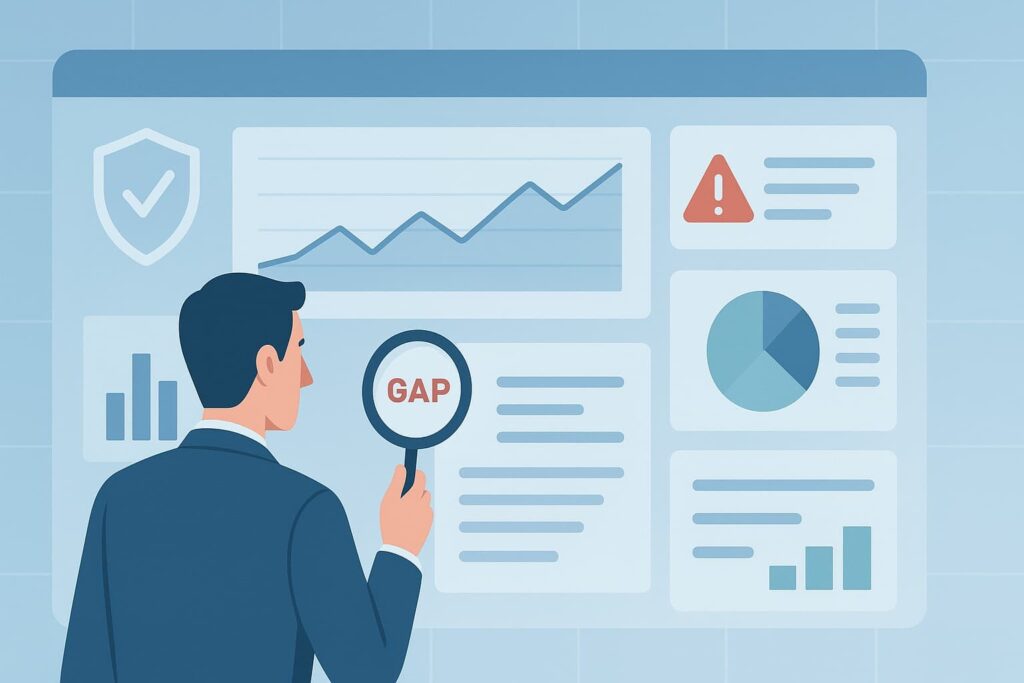
Gathering data is just one piece of the puzzle. Understanding what it means is crucial.
- Analyze data to identify patterns, discrepancies, and compliance gaps that might otherwise go unnoticed.
- Use real-time dashboards to visualize compliance status and progress clearly.
- Set up automated alerts to notify responsible parties immediately when potential violations or risks arise.
This proactive approach ensures issues get addressed early, reducing the risk of regulatory penalties.
Step 4: Automating Report Generation
Reports should be a byproduct of your data and analysis, not a manual chore.
- Leverage standardized report templates to maintain regulatory compliance and clarity.
- Automate data population within reports to reduce errors and speed up production.
- Ensure reports meet jurisdictional requirements, customizing where necessary.
For example, generating a HIPAA compliance report by automatically integrating patient record data streamlines what used to be a cumbersome manual process.
Step 5: Submitting and Monitoring Reports
Finally, managing submissions and follow-ups ensures nothing falls through the cracks.
- Submit reports to designated authorities on time using centralized document management systems.
- Maintain audit trails and records of all submissions for accountability.
- Employ automated reminders to track upcoming deadlines and audit dates.
Continuous monitoring here closes the loop, supporting a culture of ongoing compliance rather than intermittent checks. Maintaining audit-ready reports throughout the year helps teams stay prepared instead of scrambling only when deadlines hit.
Essential Tools for Simplifying Compliance Reporting
Technology plays a key role in simplifying compliance workflows. Here’s what we’ve found essential:
- Compliance Management Systems: Central platforms that consolidate all compliance activities, policies, and evidence. Effective evidence collection compliance ensures these systems maintain credibility, traceability, and readiness for any regulatory audit.
- Document Management Systems: Securely store and version control compliance documents, ensuring audit readiness.
- Workflow Automation Tools: Streamline task assignments, approvals, and collaboration, reducing bottlenecks.
- Data Analytics and Visualization Tools: Provide actionable insights through dashboards and compliance metrics.
At MSSP Security, we rely on integrated solutions that combine these capabilities, enabling clients to accelerate compliance while minimizing manual work.
Best Practices for Continuous Improvement
Compliance is not a one-time project; it’s a continuous journey.
- Regularly review and update compliance processes to reflect regulatory changes and organizational growth.
- Seek feedback from stakeholders to identify pain points and opportunities for refinement.
- Stay informed about regulatory developments to proactively adapt your compliance strategy.
By doing so, organizations maintain their edge and reduce the likelihood of surprises during audits. [2]
The Benefits of Simplified Compliance Reporting
Putting these steps and tools into practice results in:
- Reduced risk of fines and penalties thanks to timely and accurate reporting.
- Improved operational efficiency and productivity by freeing teams from manual tasks.
- Enhanced accuracy and reliability through data validation and automation.
- Better visibility into compliance status, supporting informed decision-making.
Our experience at MSSP Security confirms these benefits consistently translate into stronger security postures and greater stakeholder confidence.
FAQ
1. How does compliance automation help simplify the compliance reporting process?
Compliance automation streamlines repetitive tasks like data validation, compliance evidence collection, and report generation. Automated workflows and compliance dashboards make it easier to track regulatory requirements and audit readiness.
This approach improves accuracy, shortens reporting cycles, and allows compliance teams to focus more on risk assessment and continuous monitoring rather than manual documentation.
2. What role does compliance management play in improving audit readiness?
Effective compliance management ensures all compliance documentation, audit trails, and reporting software are aligned with compliance frameworks.
By using compliance management platforms with automated workflows and audit preparation tools, organizations can simplify evidence mapping and ensure audit readiness without last-minute stress. This helps build consistent reporting accuracy across all regulatory compliance standards.
3. How can organizations improve compliance reporting accuracy and efficiency?
To improve compliance reporting accuracy, teams can use compliance analytics, compliance reporting templates, and compliance workflow automation. These tools reduce human error, enforce data validation, and standardize reports.
Continuous monitoring and compliance tracking software also support real-time compliance updates, ensuring reports remain consistent and reliable across multiple frameworks and regulatory reporting needs.
4. What are best practices for compliance process automation and optimization?
Compliance process automation works best when combined with compliance workflow orchestration, compliance control monitoring, and regular risk assessment. Organizations should define compliance standards clearly, automate compliance task management, and integrate compliance data sources.
This creates efficient, transparent reporting cycles that enhance compliance reporting efficiency and ensure long-term regulatory compliance readiness.
Conclusion
Simplifying the compliance reporting process is not just about ticking boxes, it’s about building a resilient, efficient framework that drives growth and trust. By embracing automation, standardization, and continuous monitoring, organizations can turn compliance from a burden into a true competitive advantage.
We’ve walked this path ourselves and invite you to explore how these principles can elevate your operations.
Streamline Your Compliance with Expert MSSP Consulting, Our team offers tailored consulting to help MSSPs optimize tools, enhance visibility, and reduce operational friction. With over 15 years of experience and 48K+ projects completed, we’ll guide you in selecting, integrating, and maximizing the right solutions for your business success.
References
- https://sprinto.com/blog/compliance-automation-guide/
- https://sprinto.com/blog/compliance-reporting/