

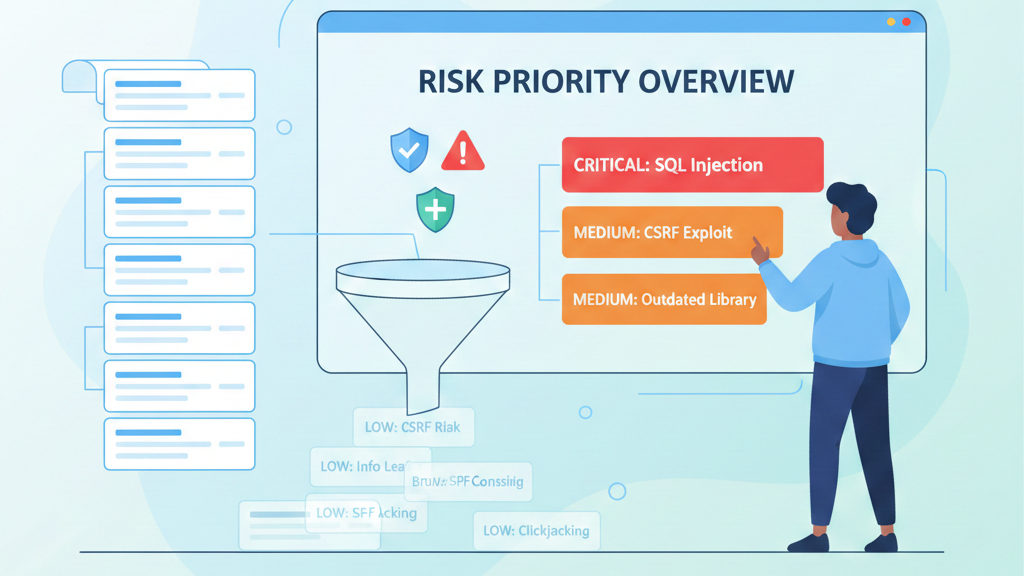
Start with the critical flaws in systems that face the internet, especially if exploit code exists. Next, weigh the business context. A medium bug in a payment portal is usually a bigger problem than a high-severity one on an isolated server.
Match every finding to your specific assets and data flows. This process turns a generic report into a clear risk assessment for your environment. You’re aiming to shut the doors an attacker is most likely to try.
Read on for prioritizing pen test findings remediation.
What You Really Need to Know
- Forget the CVSS score alone. The real risk depends on what’s exposed. A critical flaw on an internal test box is less urgent than a medium one on your public website.
- Tackle the quick wins first. Fixing easy but critical issues shows fast progress and clears the team’s plate for bigger, tougher projects.
- Never assume a patch worked. You must retest. Without validation, you might leave the door open or break something else.
From Report Overload to Real Risk Reduction: Why Prioritization Matters
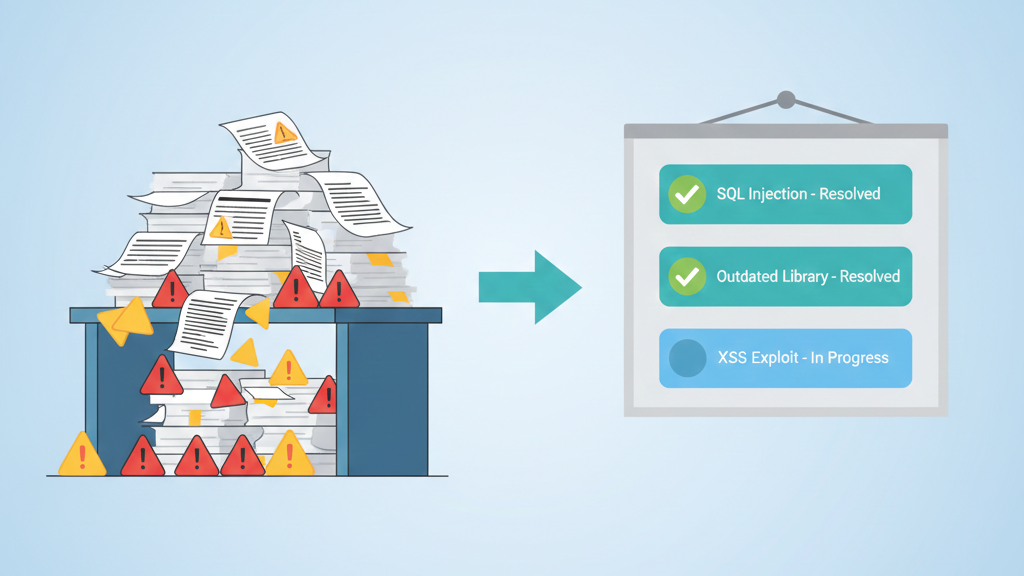
That first major pentest report landed on a client’s desk like a brick. It was thorough, but as a tool for action, it was useless. The CISO looked overwhelmed; the tech lead just sighed at the mountain of work. The report listed every flaw but gave no clue what to fix first.
We see this all the time. Teams get a perfect “what” but no “what next.” They burn out trying to tackle everything at once. The real risk reduction starts after the testers leave, when strong penetration testing coordination turns findings into clear remediation priorities.
That’s the hard part we help with, turning that overload into a clear, defensible plan.
How Do You Sort the Crisis from the Clutter?
Credits: Vinrays Academy
You sort crisis from clutter by adding context to the standard severity labels. Think like a triage nurse assessing the whole patient, not just the wound. The urgency changes based on exploitability and what’s at stake.
- Critical/High: These are active crises. Remote Code Execution on a public server or a SQL injection flaw in a login page. Treat them as keys to your kingdom left in the open. Act within 24-72 hours.
- Medium: Serious issues that often need scheduled work, like certain misconfigurations. Plan for these in your next 30-60 day cycle.
- Low: Security hygiene and best-practice gaps. Fold these into your standard development sprints for long-term hardening.
The goal is sequence, not neglect. Stop the most immediate threats first.
What Truly Decides What Gets Fixed First?
This is the point where most teams have to move past generic severity scores and confront their real risk profile. On paper, two “High” findings look equal. In practice, they almost never are. We’ve watched MSSP partners debate for hours over vulnerability lists that offered no real direction, until context finally changed the conversation.
“Risk-based prioritization simplifies your penetration testing reports, clearly highlighting the vulnerabilities posing the biggest risk to your business. This clarity makes it easy to decide exactly where to put your resources.”– PlexTrac Blog
One factor that always shifts priorities fast is exploitability. When our consultants spot a public exploit or a ready-made Metasploit module, the clock starts ticking. Add internet exposure and sensitive data into the mix, and the urgency multiplies.
A moderate flaw on a public system holding customer records routinely jumps ahead of a critical issue buried on an internal test server.
There’s also the reality of remediation effort. We often advise knocking out quick, high-impact fixes first to build momentum before tackling longer projects. When we apply this lens during audits, fifty “Highs” usually collapse into three clear priorities, and progress finally begins.
Quick Wins or Deep Surgery? You Need Both.
Remediation isn’t an either-or game. It’s a balancing act between stopping the bleeding and curing the disease. You need a strategy that delivers immediate risk reduction while building long-term resilience.
“The key to effective remediations is understanding that not all findings are created equally. Critical and high severity flaws are as serious as their name suggests, so in this way you’ll get maximum impact for minimum effort.” – Bulletproof Blog
| Action Type | What It Is | Timeline | Primary Impact |
| Quick Wins | Patching a critical library, disabling an unused high-risk service, applying a security header. | Hours to Days | Closes specific, exploitable entry points. Provides fast ROI and team morale boost. |
| Strategic Fixes | Implementing network segmentation, rolling out a robust multi-factor authentication scheme, redesigning a vulnerable authentication flow. | Weeks to Months | Builds architectural resilience, prevents whole classes of attacks, and improves overall security posture. |
The trick is to pipeline them. Use the momentum and credibility gained from quick wins to secure the budget and buy-in for the strategic projects. One without the other leaves you either constantly firefighting or waiting for a breach while you plan a grand, unfinished architecture.
Why Skipping the Retest Is Like Leaving Surgery Mid-Cut
A finding is not fixed because a patch was applied. It’s fixed when the original proof-of-concept exploit no longer works and no new vulnerability was introduced. This verification step is where many programs fall apart.
We’ve retested “remediated” systems only to find the patch failed, or worse, the fix broke something else and opened a different attack vector.
- Retesting: The original penetration testers should, ideally, rerun their specific exploits. This confirms the exact issue is closed.
- Automated Validation: Supplement this with automated vulnerability scans against the affected systems. It catches regressions and broader issues.
- Documentation: This step creates your audit trail. Record the vulnerability ID, the fix date, the method, and the evidence of closure. This isn’t just busywork, it’s the data that proves your security program is effective to auditors and boards.
Without this closed loop, you have no idea if your risk has actually decreased. You’re just hoping.
The Hard Truths That Stall Security Programs
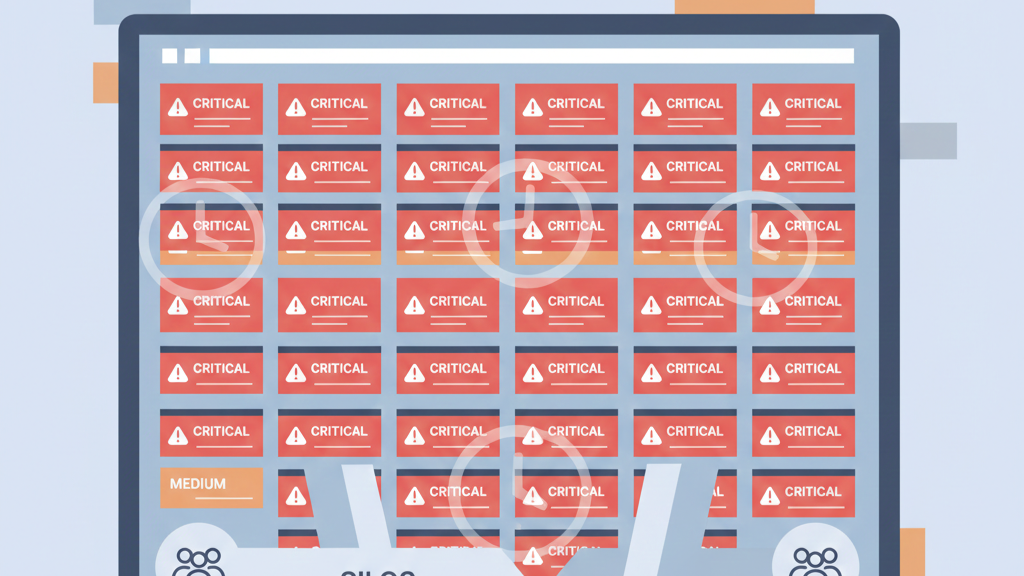
Even with a solid remediation plan on paper, we’ve seen programs stall for reasons that have nothing to do with tools or technical skill. More often, it’s organizational friction that quietly kills momentum.
One of the biggest traps is the “one-off” mindset. Without outsourced pen test scheduling management, a penetration test gets done to satisfy compliance, the report is delivered, and then it disappears into shared drives and ticket queues with no real owner.
Another pattern we encounter is teams trying to fix everything at once. The backlog grows, priorities blur, and progress slows to a crawl. Silos make it worse. When testers hand off reports without ongoing collaboration, the nuance behind attack paths and real risk never reaches the engineers doing remediation.
What’s changing now is tighter integration. Our audits increasingly focus on managed penetration testing coordination that connects testing directly into vulnerability workflows, with ownership, timelines, and retesting baked in, turning assessments into an ongoing improvement loop instead of a forgotten document.
FAQ
How do security teams use penetration testing results to improve overall security posture?
Security teams review penetration testing reports to understand real attack vectors, not just scan results. They compare critical findings, risk ratings, and business impact to see where defenses fail first.
This process strengthens security controls, guides remedial action, and helps shape a long-term security program framework that improves the organization’s cybersecurity posture over time.
What role does the Common Vulnerability Scoring System play in remediation decisions?
The Common Vulnerability Scoring System helps teams rank critical issues based on exploitability and potential damage. When combined with risk assessment and threat intelligence, it shows which security weaknesses pose real danger.
Instead of fixing everything blindly, teams focus on vulnerabilities most likely to lead to code execution, data exposure, or system compromise.
How does vulnerability management connect pen test findings to real business risk?
Vulnerability management turns a penetration test report into an action plan. Teams link technical flaws to business impact, such as Customer Data exposure or payment system downtime.
This approach aligns patch management, access control updates, and security measures with what actually threatens operations, rather than chasing low-risk issues that look severe on paper.
Why should web application and internal network findings be prioritized differently?
Web application flaws often sit on the External network and are easier for attackers to reach. Internal network issues may require stolen credentials or phishing attempts first.
By comparing attack surface management data with penetration testing methodologies, teams can see which weaknesses attackers will hit fastest and which ones need layered security controls to contain damage.
From Overwhelmed to Operational
Prioritizing findings is about a practical order, not a perfect one. Focus on what an attacker would actually exploit in your specific setup. Silence the loudest alarms first, then build for the long term. Always retest to confirm a fix worked.
That thick report is raw material. Filter it, find the true priorities, and build a clear plan with owners and deadlines. This turns a team that finds problems into one that solves them.
If your process feels chaotic, it might be time to review the whole cycle, not just the test. We help MSSPs streamline their stack and operations with expert, vendor-neutral consulting.
References
- https://plextrac.com/risk-based-prioritization-helps-you-focus/
- https://www.bulletproof.co.uk/blog/pen-test-remediations