Address
304 North Cardinal St.
Dorchester Center, MA 02124
Work Hours
Monday to Friday: 7AM - 7PM
Weekend: 10AM - 5PM
Address
304 North Cardinal St.
Dorchester Center, MA 02124
Work Hours
Monday to Friday: 7AM - 7PM
Weekend: 10AM - 5PM


Prevent phishing business email compromise by focusing on how people trust routine emails, not just on blocking bad links. Most BEC incidents start quietly. Inboxes look normal. Then one believable message lands, and money moves before anyone questions it. It does not feel like an attack. It feels like work.
We work with MSSPs that already run full security stacks, email gateways, SIEM, SOAR, the usual controls. Still, BEC slips through because attackers aim at timing, authority, and habit, not the mail server itself. Our role is to help MSSPs choose, test, and audit controls that reduce this risk without slowing daily email and payment flows. Keep reading to see how this actually works in practice.
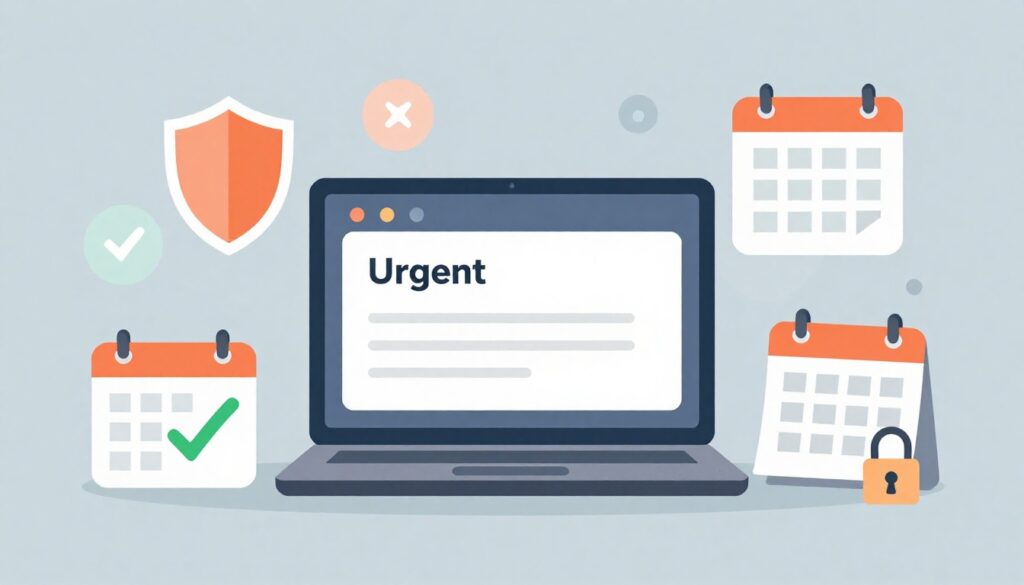
BEC attacks are patient. That’s the part that surprises people. Business Email Compromise (BEC) occurs when cybercriminals gain unauthorized access to a business email account through social engineering or spoofing and then convince employees to make fraudulent financial transfers. Attackers exploit trust and legitimate internal workflows, not malware flaws [1].
Attackers sit quietly, watching how leaders write, how vendors talk, what finance teams do when quarter-end stress hits. The email that kicks things off might not have a link or an attachment at all.
We’ve seen incidents where everything looked clean on the surface. No malware. No URL rewrites. No obvious signs. Just a request that fit the time, the tone, and the person it “came from.” That’s why traditional rules miss it, and why organizations that only think in terms of “bad links” keep getting surprised.
The pattern is simple, though:
Once you see that pattern, you stop looking only for bad files and start watching for bad decisions.
Table Common Business Email Compromise Scenarios
| BEC Scenario | What the Email Looks Like | Primary Risk | Prevention Focus |
| Executive Impersonation (CEO Fraud) | Urgent wire request from CEO or CFO tone | Unauthorized fund transfer | Email spoofing defense, MFA for executives, out-of-band verification |
| Vendor Invoice Fraud | Legitimate invoice with changed bank details | Payments sent to attacker accounts | Email verification protocols, dual authorization payments |
| Payroll Diversion | Employee requests direct deposit change | Salary theft | Sender legitimacy check, HR phishing risk training |
| Lookalike Domain Spoofing | Internal-style request from similar domain | Trust-based fraud | DMARC reject policy, domain spoofing block |
| Compromised Internal Account | Normal email from real inbox | Silent long-term fraud | Compromised account detection, email forwarding rules removal |
Across different MSSPs and their clients, these BEC scenarios repeat with minor variations. As shown in Table, the names, dollar amounts, and sender details change, but the underlying patterns stay the same.
Most incidents fall into a small set of plays:
In each case, the attacker relies on the same levers highlighted in the table: authority, routine, and time pressure. The technical signals may look clean, but the risk emerges when normal workflows are pushed just far enough that no one pauses to verify.
The tech still matters, but the real point of failure is how everyday decisions are made under pressure.
Spam filters do a decent job blocking bulk junk, mass marketing, obvious scams, malware-driven campaigns. BEC is built to walk straight around that.
We see this a lot in product evaluations for MSSPs:
From a filter’s point of view, it’s “clean.” From a finance manager’s point of view, it’s urgent. From an attacker’s point of view, it’s perfect.
This is why BEC demands layered defenses that watch behavior, not only content. Signature-based tools are still useful, but they rarely stand alone. In practice, many MSSPs close this gap by pairing internal controls with outsourced email filtering protection that can analyze sender behavior and message context beyond basic spam scoring.
According to the FBI Internet Crime Complaint Center (IC3) 2024 data, business email compromise was one of the top sources of reported financial loss, contributing to nearly $2.8 billion in adjusted losses in the U.S. alone [2].
Technology, when tuned well, should knock out as many fake emails as possible before humans ever see them. The problem we keep running into when we audit products and deployments is not “no tools,” but half-finished setups and weak policies.
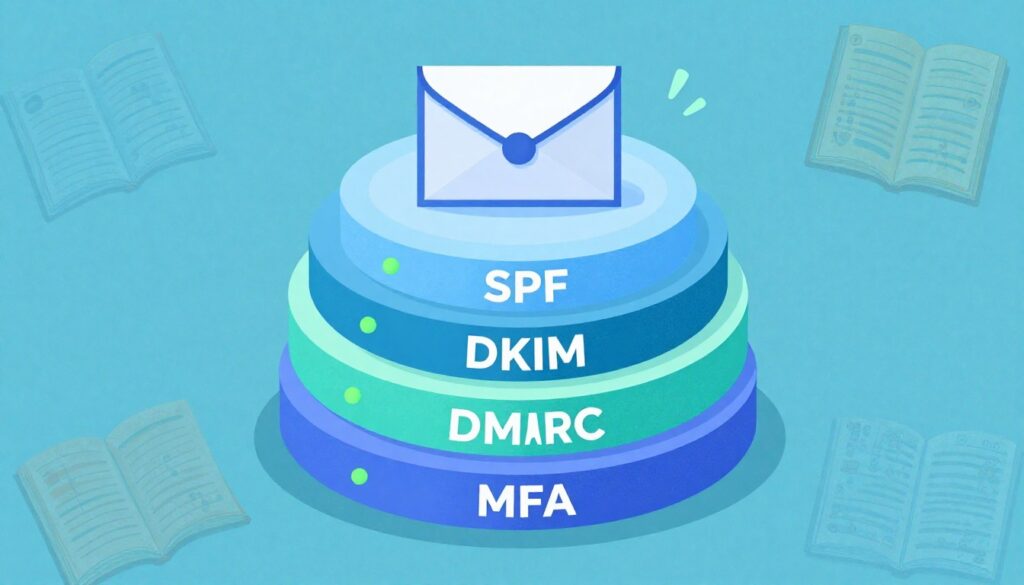
Email authentication is like caller ID for mail. It doesn’t solve everything, but it makes impersonation much harder.
At a basic level:
We often see MSSP clients with:
A stronger setup looks like this:
When these are done right, spoofed domains get blocked instead of “probably allowed.”
Monitoring-only DMARC (p=none) is like a smoke alarm that never makes a sound. Data comes in, but attacks still pass straight through. Attackers rely on that.
We’ve watched organizations move from:
and see domain-level impersonation drop sharply. A reject policy tells receiving mail servers:
For MSSPs, we usually recommend a phased move:
That shift closes one of the easiest doors attackers use.
Passwords alone are easy to steal. We’ve seen attackers harvest them through fake login pages, reused credentials, or basic password spraying. Once they get in, they sit in mailboxes, set forwarding rules, and study patterns.
Phishing-resistant MFA makes that a lot harder. Stronger methods include:
For BEC, we always tell MSSPs to start with:
When those people are protected, attackers can’t just walk into the mailboxes that matter most, even if they have the right password.
Email doesn’t exist in a bubble. Once an attacker lands in one place, they try to move sideways. We’ve seen compromises spread through:
Basic hygiene goes a long way:
When we help MSSPs evaluate tools, we look for products that make these checks easier to automate, instead of leaving them as once-a-year tasks.
Modern email protection isn’t just about scanning attachments. Better tools look at behavior over time.
Signals that help catch BEC include:
Good platforms flag emails like:
When we test products for MSSPs, we focus on how well they handle context, not just how many known malware samples they block. A properly tuned managed email security gateway helps surface signals like unusual timing, sender behavior shifts, and silent forwarding changes, which matter more in BEC than attachment detection alone.
Even with strong tools, the last line of defense is how people actually move money and approve changes. Policy is what gives them permission to slow down, to question, and sometimes to refuse.
Out-of-band verification means: don’t trust the same channel that made the request. If the request came through email, confirm it another way.
For high-risk actions, we recommend habits like:
We’ve watched this simple step stop large wire transfers mid-flight. The email “looked right,” but the voice on the phone said, “No, that’s not from me.”
One person should not be able to move large sums alone. When we review controls with MSSPs and their clients, we push for:
This means attackers must compromise:
Dual authorization doesn’t just protect money. It also protects employees who now have a policy-backed reason to say, “I can’t do this alone.”
A BEC policy is not just a PDF in a folder. It’s a shared agreement about:
We’ve seen simple reminders work well:
When that policy is visible and repeated, staff don’t feel like they’re “being difficult” when they ask to verify. They’re just following the rules.
Least privilege is the quiet hero of BEC defense. If an attacker compromises one account but can’t reach payment systems, HR records, or executive threads, the damage stays much smaller.
Strong setups often include:
Our work with MSSPs often includes auditing which accounts can see what, then recommending tools that give more granular control instead of “everyone in this group sees everything.”
People are not the problem. Unprepared people are. When employees know the patterns, they start catching attacks before tools do.
We’ve watched training sessions where once people see a few real BEC examples, they start to notice the same tells:
Modern BEC emails are often well-written. No obvious grammar issues. That’s why we focus on context and behavior over spelling mistakes. The key question is, “Does this request match how we normally do this?”
Generic phishing tests catch some awareness gaps, but BEC needs its own drills. When we advise MSSPs, we suggest simulations that mirror:
Good drills:
Over time, we’ve seen organizations go from “nobody reports anything” to “security hears about suspicious emails within minutes.” That time shift matters.
Finance and HR live in the blast zone for BEC. Their training has to be deeper than a once-a-year slide deck.
We usually recommend:
When training feels specific to their daily work, we see engagement go up. They stop viewing it as theory and start seeing it as part of doing their jobs well.
One of the worst patterns we see is quiet shame after a click or a reply. People hesitate to report because they’re afraid of trouble. That delay gives attackers room to move.
A healthier model:
Organizations that reward fast reporting end up with more signal, quicker containment, and fewer repeat incidents from the same techniques.

Even the best defenses will miss something. When they do, speed and clarity matter more than perfection.
Once BEC is suspected, the first goals are:
Key steps we recommend and see in mature playbooks:
We’ve seen attackers hold onto access for weeks through quiet forwarding rules alone. Cleaning those up is often where control is actually regained.
Any known piece of the attack can become a defense if shared quickly:
MSSPs that have solid tooling can push these indicators into:
Automation shines here, because manual blocking in the middle of a live incident is slow and error-prone. When email-based fraud overlaps with broader compromise indicators, teams often rely on malware analysis incident response workflows to correlate email artifacts with endpoint and network signals before attackers can pivot further.
If money has already moved, we always tell clients: don’t wait, call the bank now. Hours matter.
A strong plan includes:
Sometimes transfers can be frozen or reversed early. The longer the delay, the more likely the funds are gone for good.
Different regions and sectors have different laws, but in many cases there are:
In the United States, we often see clients file with The FBI Internet Crime Complaint Center (IC3).
Legal and compliance teams should be pulled in quickly. We’ve seen better outcomes when this is rehearsed ahead of time rather than improvised during chaos.
This is where our own work connects most with MSSPs. Many providers already manage firewalls, EDR, and SIEM, but email-focused monitoring and product selection lag behind.
We help MSSPs:
Continuous monitoring, shared playbooks, and tested integrations give MSSPs the ability to react faster, with fewer blind spots. That means fewer quiet compromises and shorter dwell time when one does happen.
To prevent phishing business email compromise, teams must slow down just enough to check requests. Use out-of-band verification like calling a known phone number. Add dual authorization payments so one person cannot move money alone. These simple steps support wire transfer fraud prevention while keeping finance work moving.
Weak email setup helps executive impersonation attacks succeed. Missing SPF records setup, broken DKIM authentication, or no DMARC implementation leaves doors open. Without a reject DMARC policy, fake CEO fraud scams can reach inboxes. Strong email spoofing defense and domain checks stop many attacks early.
Phishing-resistant MFA protects email accounts even if passwords are stolen. Multi-factor authentication email controls block login attempts from attackers pretending to be leaders. MFA for executives helps stop authority impersonation before damage happens. It also makes compromised account detection easier by flagging strange login behavior.
Not all phishing emails use links or malware. Employees should look for urgent email red flags, pressure to act fast, and requests to keep things secret. Grammar error phishing is less common now. Employee cybersecurity awareness helps staff question emails that feel wrong, even if they look clean.
Fast action matters in BEC incident response. Lock the account, reset access, and remove email forwarding rules. Share indicators to block similar emails. Use suspicious email reporting right away. If money moved, call the bank and file a law enforcement BEC report as soon as possible.
When you line up these layers, authentication, MFA, smart policies, trained staff, and fast response, the shape of BEC changes. Attackers still try, but they hit fewer gaps and face more people willing to pause and verify. For MSSPs, this is where real resilience is built: not by adding more tools, but by making the stack work under pressure.
Talk to MSSP Security to get expert, vendor-neutral consulting that helps MSSPs reduce tool sprawl, audit and optimize email security stacks, improve integration, and make clearer decisions. With 15+ years of experience and 48K+ projects completed, we support needs analysis, PoCs, and practical recommendations that fit real operations.

