Address
304 North Cardinal St.
Dorchester Center, MA 02124
Work Hours
Monday to Friday: 7AM - 7PM
Weekend: 10AM - 5PM
Address
304 North Cardinal St.
Dorchester Center, MA 02124
Work Hours
Monday to Friday: 7AM - 7PM
Weekend: 10AM - 5PM

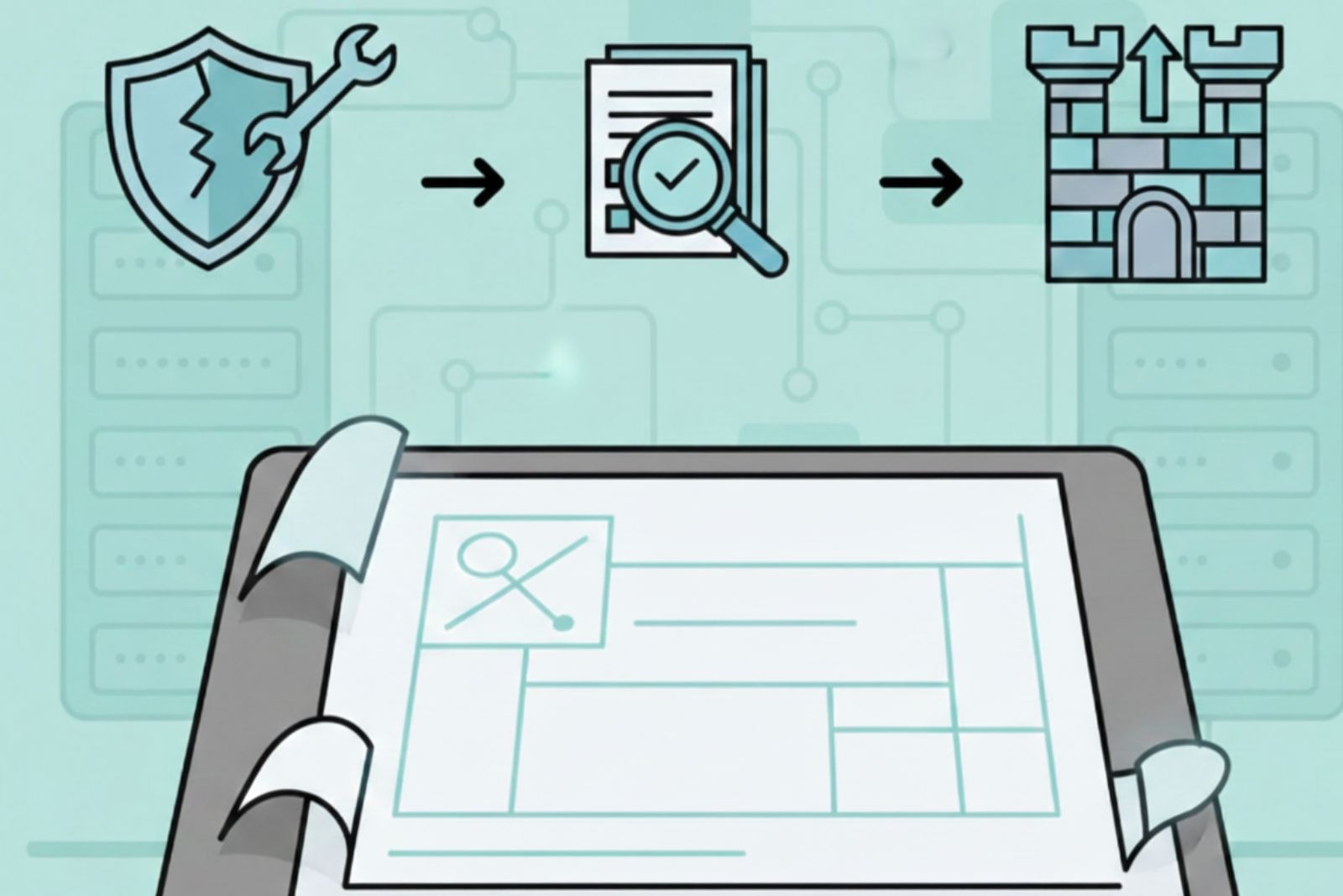
The incident is over. The fire is out. Now comes the real work. Post-incident remediation reporting isn’t about assigning blame. It’s about building a stronger defense.
It’s the process of turning a moment of failure into a foundation for future success. We see it time and again. Organizations that skip this crucial step are the ones that get hit again, often harder.
This guide will walk you through a simple, powerful framework. You’ll learn how to document what happened, figure out why it happened, and make sure it never happens again. Keep reading to transform your post-incident remediation reporting response from reactive to resilient.
We’ve all been there. The alert comes in. The adrenaline spikes. For the next several hours, or even days, the entire team is focused on one thing. Stop the breach. Contain the damage. Get the systems back online. It’s a whirlwind.
When the “all clear” is finally given, the natural reaction is to breathe a sigh of relief and try to forget it ever happened. That’s the worst thing you can do. That period right after an incident is the most valuable learning opportunity your security team will ever have. The digital crime scene is still fresh.
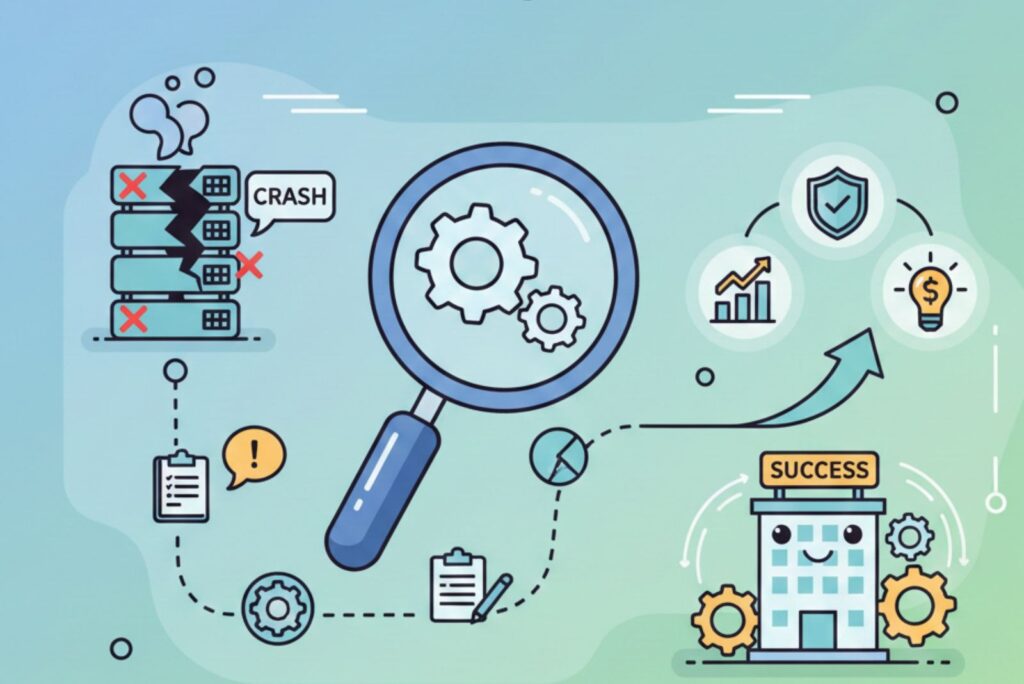
The details are clear in everyone’s mind. This is the moment to harness that energy. To ask the hard questions. To build something better. Post-incident remediation reporting is that process. It’s the structured way you capture the chaos and turn it into clarity.
Think of it like a doctor’s report after a surgery. The surgery itself fixed the immediate problem. But the report details what was found, what was done, and what the patient needs to do to stay healthy. Without that report, the same problem could easily come back. Your organization’s security health depends on its own version of that report.
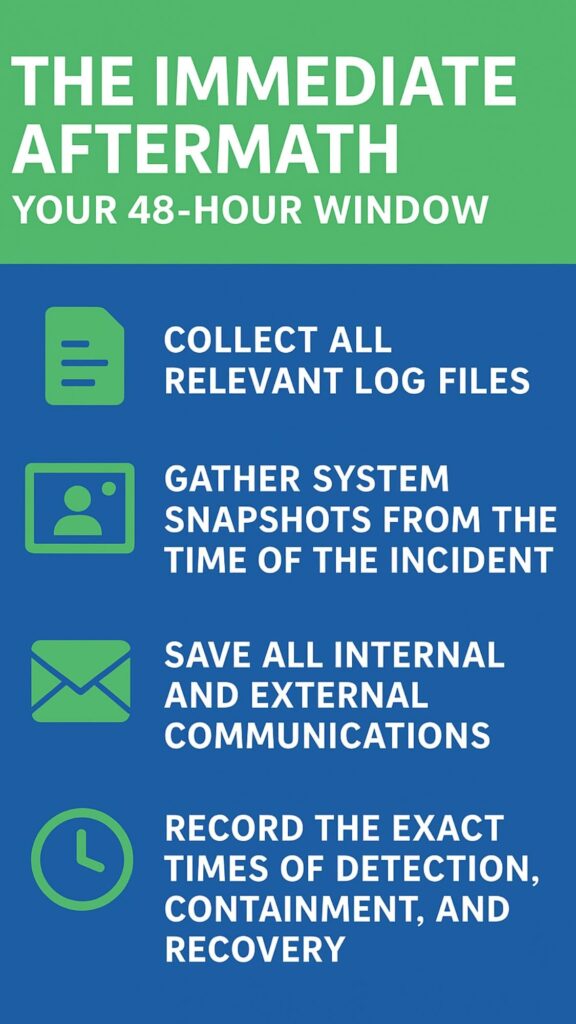
The first two days are critical. Memories fade fast. Details get fuzzy. Your goal is to capture the raw facts before they change. This isn’t about analysis yet. It’s about documentation. Gather every piece of data you can find.
Start with the timeline. When did the first alert trigger? Who was notified? What was the first action taken? Document every step, big and small, in the order it happened. This timeline becomes the backbone of your entire report. It’s the unbiased story of the event.
This process can feel tedious. But it’s the foundation for everything that follows. At MSSP Security, we automate much of this initial data collection through streamlined digital forensics and incident response processes.
Our tools pull logs and events into a central timeline, saving your team precious time and ensuring nothing is missed. The focus can then shift from gathering data to understanding it.
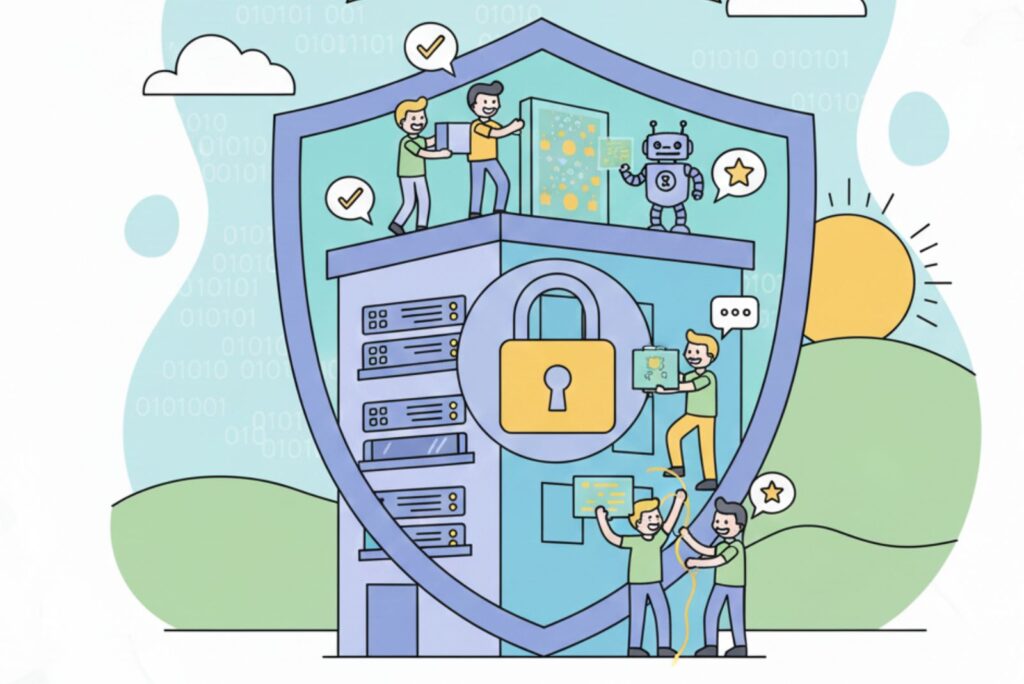
This might be the most important part. If people are afraid of being punished, they will not tell the whole truth. They might hide mistakes or downplay their role. This kills the learning process. A blameless culture focuses on the why, not the who (1).
The goal is to understand the conditions that led to the action. Why did the engineer miss that configuration error? Was the documentation unclear? Was the training insufficient? The problem is almost always in the process, not the person. When we conduct a PIR, we start with a simple rule. We are investigating the system, not the individuals.
Everyone feels safe to share their perspective. You get a complete picture of the incident. You uncover the real, systemic issues that need fixing. This is how you build true resilience. It turns a post-mortem from a witch hunt into a collaborative workshop for improvement.
Now you have the facts. The timeline is set. The next step is to figure out the underlying cause. This is where many teams go wrong. They stop at the first “why.” The server went down because it was overloaded. But why was it overloaded? You have to dig deeper.
A simple technique is the “5 Whys.” You keep asking “why” until you get to a fundamental process or policy failure. For example, a phishing email was clicked.
Now you have a real, actionable root cause. The problem isn’t the employee who clicked the link. The problem is a lack of investment in proactive threat intelligence. That’s a problem you can fix.
Another method is the Fishbone diagram, which helps you visualize all the potential contributing factors, like people, processes, technology, and environment, a crucial step when choosing the right DFIR provider to support deeper investigations.
Source: ExterroMedia
A report that sits on a shelf is useless. The entire point of this exercise is to create change. The “Lessons Learned” section must be transformed into concrete action items. This is the “remediation” in post-incident remediation reporting.
Every identified gap needs a clear owner and a due date. Did the incident reveal a flaw in your communication plan?
The action item is to update the plan, and the IT director owns it, due in two weeks. Was a specific security control ineffective? The action is to research and implement a better control, owned by the security team, due in 30 days.
Different audiences need different information. Your technical team needs the deep dive. Your executives need the high-level impact and the plan to prevent recurrence. Regulatory bodies might need a specific format, especially under frameworks like NIST 800-61 or CMMC (2).
Prepare a short executive summary. It should clearly state what happened, what the business impact was (downtime, data exposure), the root cause, and the key action items being taken. Be transparent. Trying to hide the severity of an incident destroys trust. Honesty, even about failures, builds credibility.
For third-party vendor incidents, your reporting process is key. You need to hold vendors accountable to their SLAs (Service Level Agreements), especially when relying on a specialized data breach investigation service to verify the full scope of exposure.
Your PIR document becomes the evidence you use to ensure they implement proper remediation and prove it to you. This protects your organization when a breach originates in someone else’s system.
Post-incident remediation reporting is a simple process that helps you understand what happened during a security incident and how to prevent it from happening again. It gathers facts, reviews mistakes without blame, and turns them into clear improvements.
This report becomes a guide for fixing weak spots, improving your tools, and updating your team’s response steps. When done well, it turns a stressful event into a chance to grow stronger and safer as an organization.
A blameless review helps your team feel safe to speak honestly about what happened. When people fear punishment, they hide details, and you miss the real cause of the problem.
A no-blame culture encourages open sharing, which leads to better learning and stronger fixes. This way, you look at broken processes,not people. Your team works together to prevent the same issues from happening again, building trust and improving your overall security response.
The first 48 hours after an incident are the best time to capture details while they’re still fresh. You should gather logs, system snapshots, alerts, messages, and all actions taken. Build a timeline of events from the first alert to recovery.
Focus on facts, not opinions. This early data gives you a clear picture of what happened. It helps your team analyze the issue later and find the real cause without guessing or missing key information.
A root cause is the real reason an incident happened,not just the surface problem. For example, a system may fail because it overloaded, but the true cause could be poor planning or missing updates.
Finding the root cause helps you fix issues that lie deep in your processes. When you solve the real reason something went wrong, you prevent future incidents. This saves time, money, and stress, while making your systems more dependable and safer.
Turning lessons into action means assigning someone to fix each problem you identified. Every task should have an owner and a deadline. You should add these tasks to your regular team meetings so nothing gets lost or forgotten.
This step makes sure the new improvements become part of your daily operations. That’s how you close the loop and build long-term security strength.
SOPs and playbooks guide your team during normal operations and emergencies. When you discover better ways to respond or new risks to watch for, these documents must be updated. If not, your team may repeat old mistakes. Updated procedures help everyone follow the same improved steps. They make sure your future response is faster and smoother. By keeping these documents fresh, you create a system that gets smarter after every incident.
Executives need a simple summary that explains what happened, how it affected the business, and what your team is doing to prevent it in the future. They don’t need deep technical details,just a clear story of impact and recovery.
Be honest and direct. Transparency builds trust and helps them support needed changes, like new tools or better processes. A strong summary helps leaders see the value of your work and approve improvements faster.
Regulators and auditors often require specific formats based on rules like NIST or CMMC. Your report should include timelines, root causes, actions taken, and proof of fixes. Be clear, accurate, and complete. Following these guidelines helps you stay compliant and avoid penalties.
Good reporting also shows that your team handled the incident responsibly. When you provide organized, detailed information, auditors trust your process more and the review becomes much easier.
When a vendor’s system causes an incident, you need clear proof of what happened and how they plan to fix it. A strong report helps you hold vendors to their agreements and make sure they take responsibility.
It also protects your company by showing you followed the right steps. Clear vendor reporting keeps everyone accountable. It ensures future issues are less likely because each partner is required to improve their own systems and processes.
Post-incident reporting helps you learn from each event instead of repeating the same mistakes. By turning problems into action and updating your processes, your security system grows stronger over time.
Each incident becomes a chance to train your team, improve your tools, and strengthen your defenses. Instead of reacting to threats, you start preparing for them. This ongoing learning creates a smarter, more resilient organization that can handle challenges with greater confidence.
Post-incident remediation reporting is not a punishment. It’s a gift. It’s your organization’s chance to learn from experience and evolve. It transforms fear into confidence.
By dedicating time to a structured, blameless review, you stop fighting the same fires over and over. You build a security posture that actually gets smarter and stronger with every challenge.
The next time an incident occurs, see it for what it is. A costly, stressful, but incredibly valuable training exercise. Your report is the lesson plan. The action items are the homework.
And a more resilient organization is the final grade. Start your next review with this blueprint in MSSP Security. You might just find that the worst day of your quarter becomes the most important one for your future.

