


Security incidents move fast, and without a clear structure, response efforts often become chaotic. From our experience, teams that rely on ad hoc decisions struggle with delays and inconsistent outcomes. Playbook driven incident response changes that by providing predefined, actionable steps for handling threats.
Instead of reacting blindly, we follow structured guidance aligned with real scenarios. This approach helps reduce confusion, improve coordination, and accelerate recovery. In this article, we’ll break down how playbook-driven response works and how to implement it effectively, keep reading.
Key Insights: Playbook Driven Incident Response
Before diving deeper, here are the key points:
- Playbooks standardize incident response actions
- Faster and more consistent decision-making
- Reduces human error during high-pressure situations
What Is Playbook Driven Incident Response?
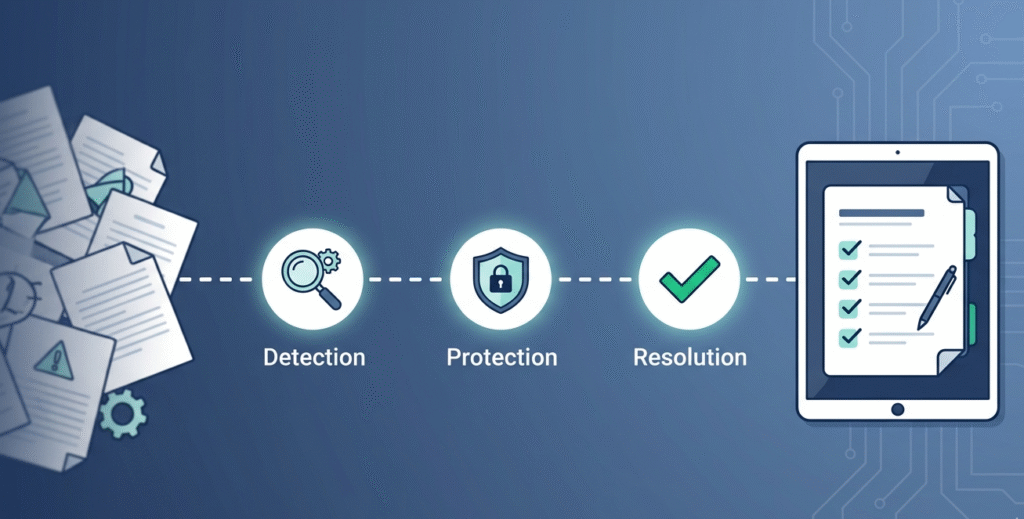
Playbook driven incident response is a structured approach where predefined procedures guide how security teams detect, analyze, and respond to threats.
- Uses step-by-step response actions
- Aligns teams during incidents
- Reduces reliance on improvisation
- Ensures consistency across cases
“An incident response is an organized approach to addressing and managing the aftermath of a security breach.” – Wikipedia
At MSSP Security, we’ve seen how structured playbooks help teams move from reactive firefighting to controlled, efficient response.
Why Playbook Driven Incident Response Matters
Without playbooks, incident response often depends on individual experience, which can vary widely.
- Improves response speed and efficiency
- Minimizes operational confusion
- Enhances communication across teams
- Supports compliance and documentation
In practice, organizations using MSSP Security services often experience clearer workflows and faster containment once playbooks are introduced.
Core Components of a Playbook Driven Approach
Credits: Horizon Computer Solutions
Every effective playbook should include key response phases.
| Component | Purpose |
| Detection | Identify suspicious activity |
| Analysis | Confirm and assess the threat |
| Containment | Limit spread and damage |
| Eradication | Remove the threat |
| Recovery | Restore systems and operations |
| Lessons Learned | Improve future response |
We’ve found that consistent structure ensures every incident is handled with clarity and discipline, especially when utilizing proven security response playbook examples as a foundation for your team.
Benefits of Playbook Driven Incident Response
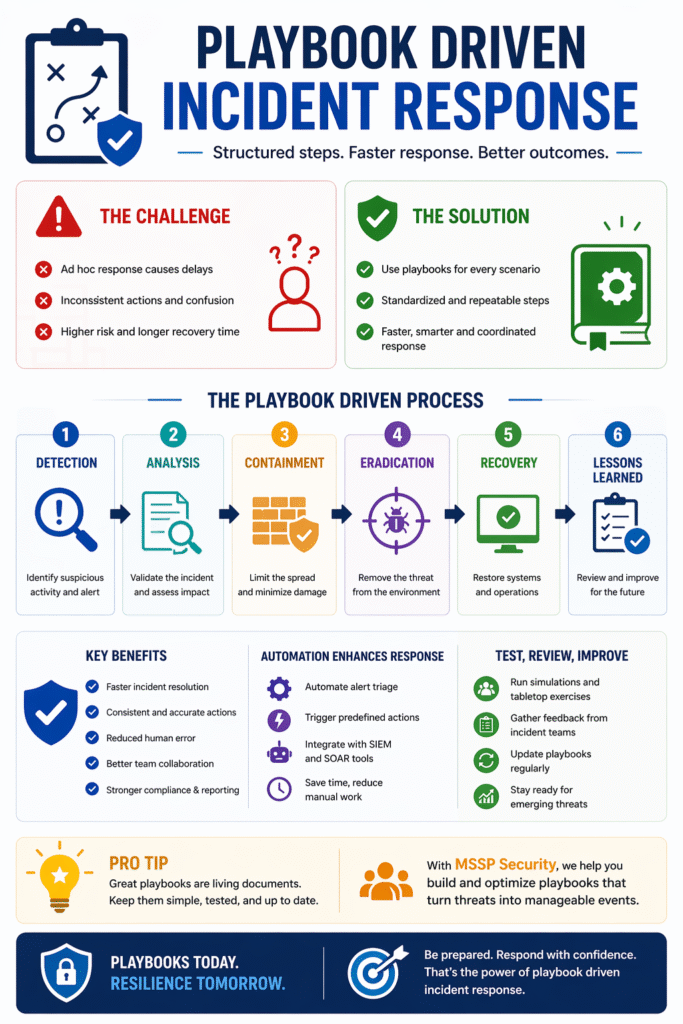
Playbooks provide measurable advantages in real-world operations.
- Faster incident resolution
- Reduced manual errors
- Better coordination between teams
- Scalable response processes
- Improved audit and compliance readiness
“Standardized procedures improve operational efficiency and reduce variability in outcomes.” – ResearchGate
From experience, teams that adopt playbook driven approaches quickly notice improved confidence during incidents.
Integrating Automation into Playbook Driven Response
Automation enhances the effectiveness of playbooks.
- Automate alert triage and prioritization
- Trigger predefined response actions
- Integrate with security tools
- Reduce repetitive manual tasks
At MSSP Security, we often recommend gradual automation to maintain control while increasing speed and efficiency.
Testing and Improving Playbooks Continuously
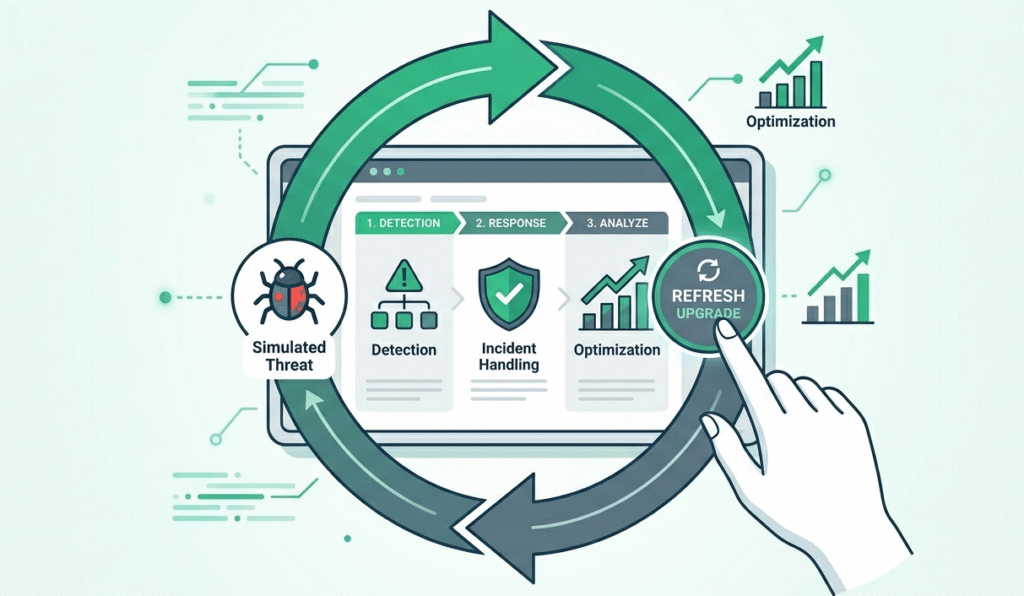
Playbooks must evolve alongside the threat landscape, which is why customizing playbooks for specific threats is essential for modern defense. In our experience, this tailored approach ensures procedures remain practical and effective, rather than becoming outdated documents.
- Conduct regular simulations
- Run tabletop exercises
- Collect feedback from incident teams
- Update based on new threats
In our experience, testing incident response playbooks through regular simulations ensures procedures remain practical and effective, rather than becoming outdated documents.
FAQ
What is playbook driven incident response?
Playbook driven incident response is a structured method where predefined procedures guide how teams handle security incidents.
It ensures that every step, from detection to recovery, is clearly defined, reducing uncertainty and enabling faster, more coordinated actions. This approach also helps standardize responses across teams, making outcomes more predictable and easier to improve over time.
How does playbook driven response improve security operations?
It improves operations by eliminating guesswork and creating consistent workflows. Teams can respond faster because they don’t need to decide every step in real time. Additionally, it enhances collaboration, as everyone follows the same framework, and supports automation, which further increases efficiency and reduces manual errors.
Can small teams implement playbook driven incident response?
Yes, small teams can benefit significantly from this approach. Even a few well-defined playbooks for common threats can improve clarity and speed. Smaller teams often see immediate value because structured guidance reduces the need for deep expertise in every situation.
How often should playbooks be updated?
Playbooks should be reviewed regularly, typically every quarter, and updated after major incidents or when new threats emerge. Continuous improvement ensures that playbooks remain aligned with current risks, technologies, and organizational changes.
Strengthening Security with Playbook Driven Incident Response
Optimizing your MSSP’s technology stack shouldn’t be a guessing game. With 15 years of experience and 48,000+ completed projects, we provide vendor-neutral consulting to eliminate tool sprawl and streamline operations.
From auditing to PoC support, our expert guidance ensures your service quality matches your operational maturity. Build a high-visibility, integrated infrastructure that aligns perfectly with your business goals.
Ready to transform your security operations? Join us and optimize your stack today.
References
- https://en.wikipedia.org/wiki/Incident_response
- https://www.researchgate.net/publication/Standardization_and_Operational_Efficiency