

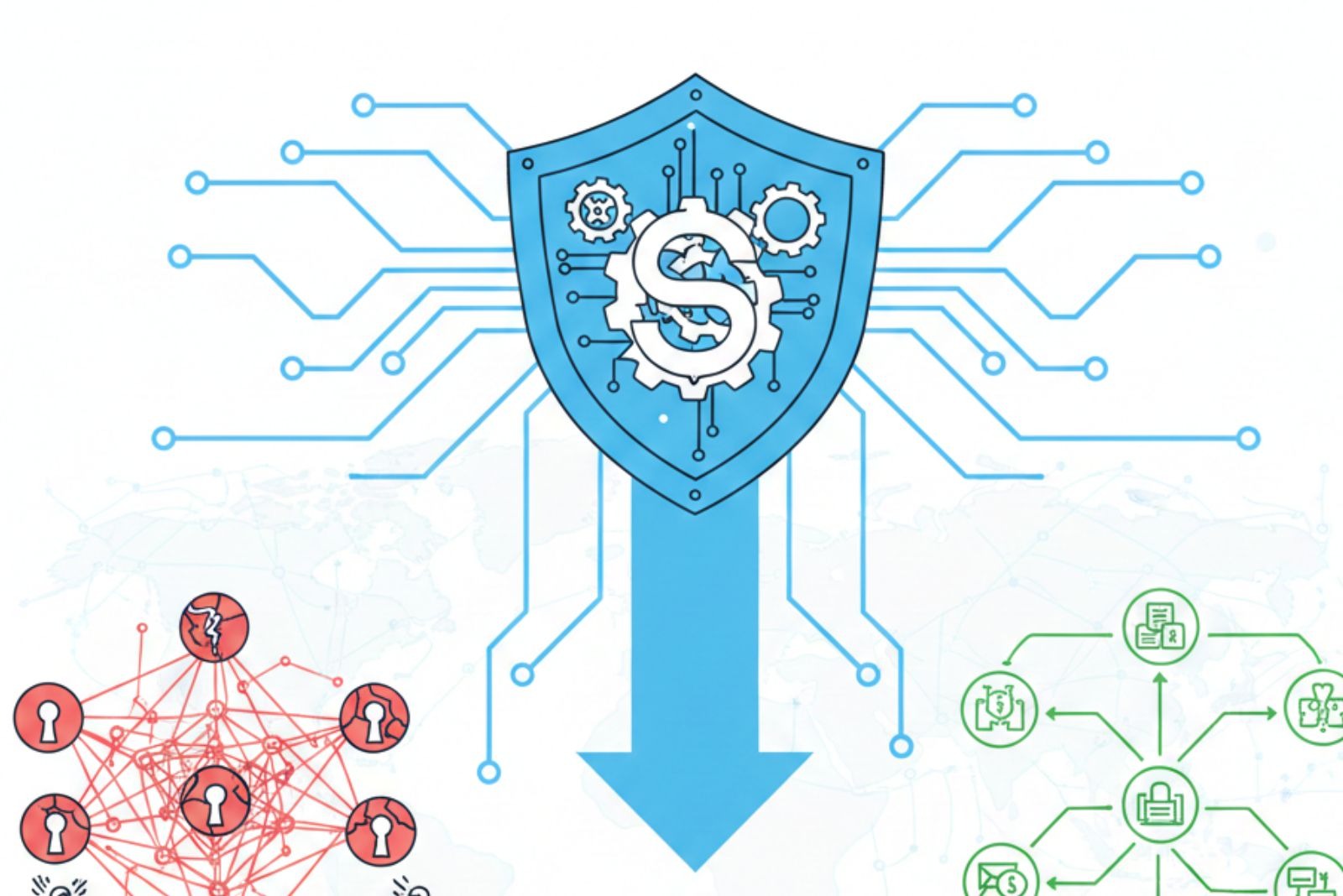
The security alert floods in, a relentless digital tide. Your team is drowning in data, not threats. Outsourced security automation orchestration is the answer.
It hands the complex work of connecting your security tools and automating responses to a specialized team. This isn’t just about buying software, it’s about buying back your team’s time and sanity.
Keep reading to see how this model turns security chaos into a calm, managed process in outsourced security automation orchestration
Key Takeaways
- A managed SOAR platform handles the technical setup and 24/7 monitoring for you.
- It can be up and running in months, not the year-plus an in-house build often takes.
- The subscription cost is predictable, often cheaper than hiring scarce security talent.
Closing the Skills Gap with Outsourced Security Automation
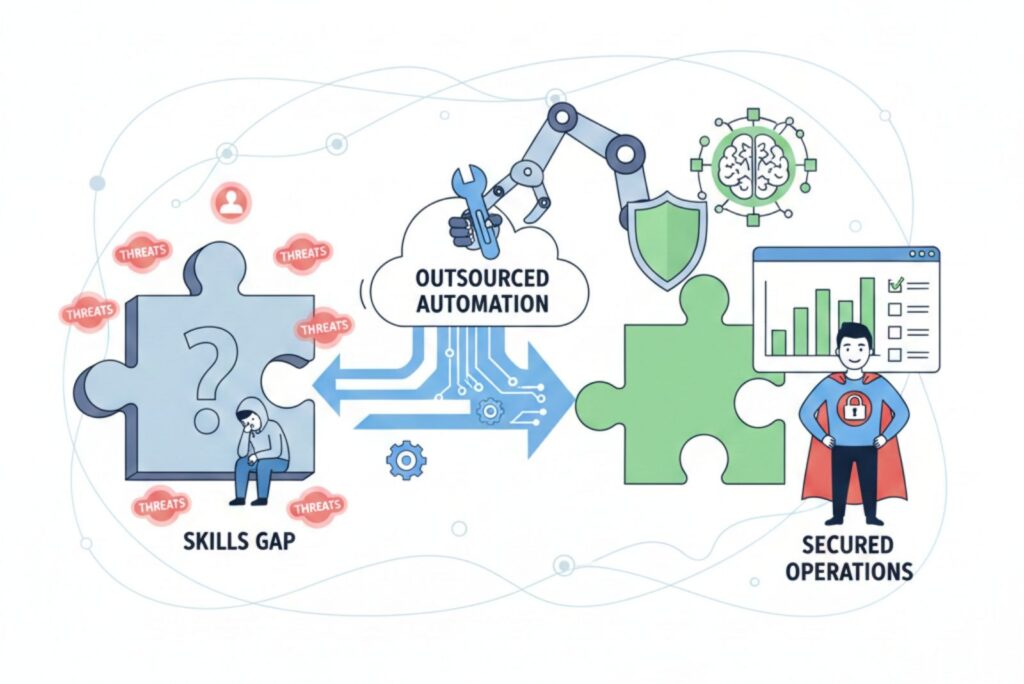
We’ve seen it firsthand. A company’s security dashboard blinks red with hundreds of alerts daily. Their small team is overwhelmed, chasing false positives while real threats slip through. This is the skills gap in action. There aren’t enough experts to go around.
Outsourcing your security automation flips the script. Instead of you building and maintaining a complex SOAR system, a provider like MSSP Security does it through proven security orchestration automation and response capabilities. We manage the playbooks, the integrations, the constant tuning.
Instead of you building and maintaining a complex SOAR system, a provider like MSSP Security does it. We manage the playbooks, the integrations, the constant tuning. You get the results: a faster, more resilient security posture without the internal headache.
The numbers back this up. The market for these services is exploding, especially among small and medium businesses. They simply can’t compete for the expensive talent needed to run this tech themselves. So they rent the expertise.
Centralized Management Lets You Focus on Strategy
Think of it like running a power plant. You don’t want your best engineers constantly shoveling coal. You want them monitoring the grid, planning for future capacity. Outsourced
SOAR is the automated coal shovel. The provider handles the gritty, day-to-day work of keeping the automation engine running smoothly. This includes tuning playbooks so they correctly identify real threats.
It also means scaling the system up as your company grows, an approach strengthened by the broader advantages outlined in the managed SOAR platform benefits model , which ensures your automation expands cleanly as new tools come online.
Division of Duties That Keeps Your Security Team Effective
You stay in control of the big picture. Your team reviews the reports, guides the overall security strategy, and handles the complex incidents that require human judgment. The provider handles the heavy lifting. This separation of duties is crucial. It prevents alert fatigue and burnout in your team. They become force multipliers, not just button-pushers.
The key tasks managed for you include:
- Playbook creation and updates
- API integration maintenance
- System scaling and performance
- Baseline alert tuning
The SOAR provider acts as the conductor, making sure all the instruments play in harmony. This alone can save countless hours of meeting time and technical frustration.
Rapid Deployment Gets You Protected Faster
Building a SOAR capability from scratch inside your company is a marathon. It can easily take a year or more. You have to select the software, hire or train the experts, and then integrate it with every security tool you own.
It’s a huge project that delays your time to value. An outsourced model is a sprint. A good provider can have a basic system operational in three to six months. They have pre-built connectors and experienced engineers who do this every day.
What might take an internal team weeks to figure out can be done in days. This rapid deployment means you start seeing benefits much sooner. You’re not waiting a year for a return on your investment, you’re seeing improved security within a quarter.
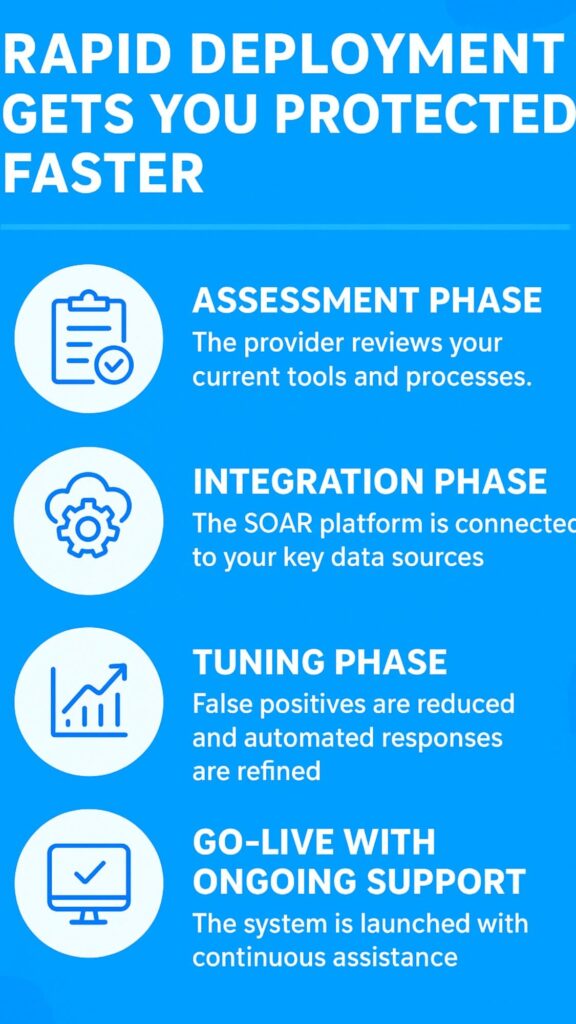
- Assessment phase: The provider reviews your current tools and processes.
- Integration phase: The SOAR platform is connected to your key data sources.
- Tuning phase: False positives are reduced and automated responses are refined.
- Go-live with ongoing support: The system is launched with continuous assistance.
24/7 Coverage Fights Threats While You Sleep
Cyber threats don’t keep business hours. An attack can start at 2 AM on a Saturday. Most companies don’t have security staff working at those times. This is a major vulnerability. These SOCs have analysts working in shifts around the clock, every day of the year. They monitor the automated systems and step in when needed.
The automation handles the common stuff instantly. For example, if a known malicious IP address tries to connect to your network, the SOAR system can automatically block it.
If a phishing email is reported, the system can quarantine it across all user mailboxes in minutes. These actions happen in real-time, far faster than any human team could respond.
- Automation handles the volume: Machines process large numbers of alerts quickly.
- Human oversight handles the complexity: Analysts review nuanced cases and make decisions.
- Every alert gets attention: Nothing is missed, regardless of timing.
- Provides peace of mind: Clients know their systems are monitored around the clock.
- Transforms security into an always-on capability: Protection extends far beyond standard office hours.
The Cost Efficiency is a Clear Win
Hiring cybersecurity talent is expensive and difficult. There’s a well-documented shortage of experts. The salary for a skilled SOAR engineer can be prohibitive for many organizations. And that’s just one person, you likely need a team for 24/7 coverage. Outsourcing changes the math. You pay a predictable subscription fee. This fee covers the platform, the expertise, and the monitoring. It turns a large, variable capital expense into a manageable operational cost.
The return on investment is measured in hard metrics. The most compelling is the reduction in Mean Time to Remediate (MTTR). By automating responses, companies have cut the time it takes to contain a threat by 90% (1).
What used to take hours or days now takes minutes. This directly translates to less damage and lower recovery costs. There’s also the soft ROI. Your internal team is freed from tedious tasks. They can work on projects that actually move the business forward, improving their job satisfaction and retention.
Customization Tailors the System to Your Needs
You might worry that an outsourced solution is one-size-fits-all. The best providers offer deep customization. They use no-code or low-code workflow builders. This means your team can design and modify automated processes without needing to write a single line of code. They can drag and drop elements to create a playbook that matches your exact business logic.
This extends to threat intelligence. A good provider will enrich your alerts with context from global threat feeds. They can map activity to the MITRE ATT&CK framework, which helps you understand the tactics of an attacker. This customization ensures the system learns your environment. It gets better at telling the difference between normal activity and a real threat. This reduces false positives over time, making the alerts you do get much more reliable.
The system should fit you, not the other way around. During implementation, the provider will work with you to identify your most critical assets and processes.
Making the Switch to Managed SOAR
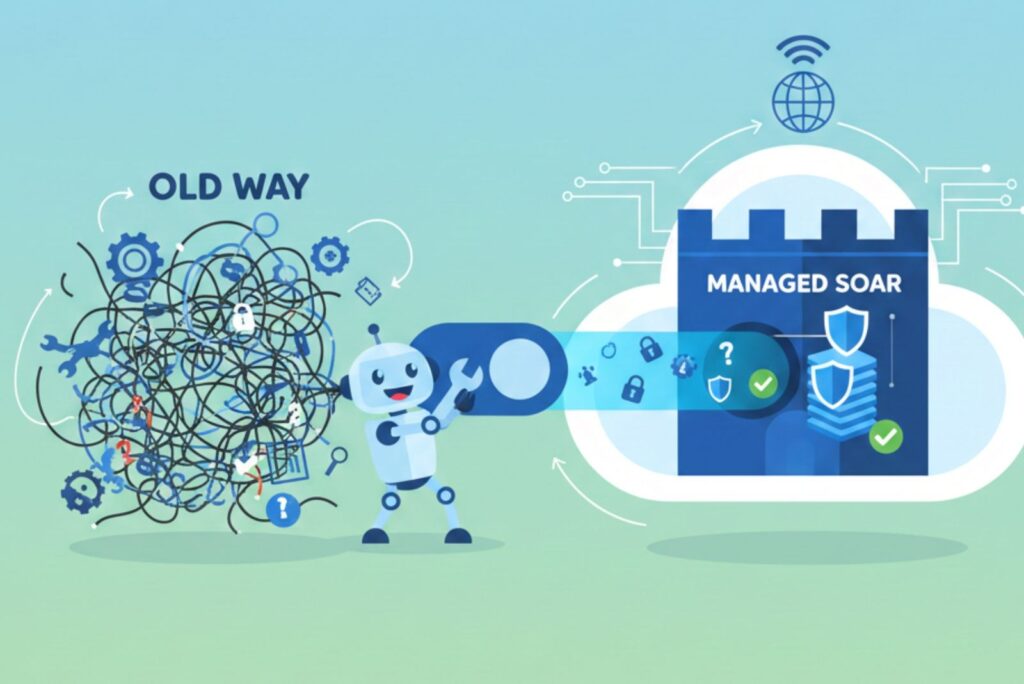
The decision to outsource is a big one. It’s about acknowledging that security is a specialized field. Trying to do everything yourself can spread your team too thin. The implementation framework is designed to make the transition smooth.
Next is the integration. This is where the technical magic happens. The provider’s platform connects to your existing security tools. Data starts flowing. Playbooks from the provider’s library are adapted to your environment. This phase builds the core engine of your new security operation (2).
Tuning Phase & Ongoing Partnership
Source: CYDERES
A refined SOAR deployment doesn’t stop at launch,it strengthens over time through careful calibration, continuous monitoring, and a long-term collaborative approach.
- Calibrates to your normal network activity: The system learns what “normal” looks like in your environment.
- Cuts down on false alarms: Fine-tuning reduces noise so your team only sees the alerts that matter.
- Prepares the system for reliable automation: Ensures accuracy before full deployment.
- Go-live marks the beginning, not the end: Launching the system starts a long-term collaboration.
- Quarterly business reviews: Your provider shares metrics, highlights what’s working, and identifies improvement areas, similar to the structured post-incident insights emphasized in post-incident remediation reporting, ensuring the system continuously evolves.
- Adapts to evolving threats: Automated defenses evolve as the cyber landscape changes.
- Sustains long-term value: Continuous optimization keeps the model effective and future-ready.
FAQs
What is outsourced security automation orchestration?
Outsourced security automation orchestration means handing the setup, management, and operation of your security automation to a specialized team. Instead of your staff doing all the hard work, experts connect your tools, build playbooks, and run 24/7 monitoring.
This helps you catch threats faster and cut response time by up to 90%. It simplifies your security workload and gives you a system that reacts quickly, even when your team is offline or focused on bigger goals.
How does outsourcing help close the security skills gap?
Many companies struggle to hire skilled security experts. The demand is high, and the talent pool is small. Outsourcing fills this gap by giving you access to a team of trained professionals who already know the tools, playbooks, and best practices.
Instead of building everything from scratch, you get instant expertise. This helps your team stay ahead of threats, reduces errors, and keeps important security tasks from piling up. It’s a practical way to stay protected without hiring a large staff.
Why does outsourced SOAR reduce alert fatigue?
Security teams often face hundreds of alerts every day, many of them false positives. Outsourced SOAR reduces this noise by automating common tasks and filtering out low-risk events.
The provider fine-tunes playbooks so only important alerts reach your team. This helps your staff stay focused, avoid burnout, and save energy for critical issues. By taking away the repetitive work, outsourced SOAR turns your team into strategic thinkers instead of exhausted responders.
How fast can an outsourced SOAR system be deployed?
An outsourced SOAR system can usually be deployed in three to six months. Providers come with ready-made playbooks, integrations, and experience, which speeds up every phase. They assess your tools, connect everything to the platform, tune alerts, and prepare automation.
What might take a year or more in-house can be done in a small fraction of the time. This means you start seeing real improvements in security much sooner, often within the first quarter.
Why is 24/7 monitoring important?
Cyber threats don’t wait for business hours. Attacks can happen at night, on weekends, or during holidays. With 24/7 monitoring, every alert is checked, and automated actions fire instantly. If something serious happens, human analysts step in right away.
This constant coverage reduces the time attackers have to cause damage. It also gives you peace of mind. Even when your staff is asleep, your systems stay protected and ready to respond in seconds.
How does outsourced SOAR save money?
Building your own SOAR team is expensive. You need engineers, analysts, and round-the-clock coverage. Salaries alone can be overwhelming. Outsourced SOAR replaces these costs with a predictable subscription fee. You get the tools, experts, and monitoring all included. This saves money, reduces hiring stress, and removes surprise expenses.
The biggest savings come from faster remediation times. Fixing problems in minutes instead of days reduces damage, downtime, and recovery costs across your entire business.
Can outsourced SOAR be customized for my company?
Yes. The best providers offer deep customization so the system matches your exact needs. They use low-code or no-code builders, letting you adjust workflows without writing code.
They also map threats to frameworks like MITRE ATT&CK to give better context. Over time, the system learns your environment and becomes more accurate. This means fewer false alarms and better alerts. Instead of fitting into a rigid system, your automation grows with your business.
What role does my internal team play after outsourcing?
Your team still guides the strategy. They review reports, make key decisions, and handle complex incidents that need human judgment. The provider takes care of the daily technical work, like tuning playbooks and fixing integrations.
This division of duties helps your team stay sharp without feeling overwhelmed. They focus on higher-level tasks that protect the business long-term. Outsourcing doesn’t replace your team,it supports them and makes their work more meaningful.
What happens during the tuning and partnership phase?
Tuning starts after the system goes live. The provider adjusts alerts, learns your normal activity, and reduces false positives. This ensures the automation is accurate and safe. The partnership continues through regular reviews, where you discuss performance, improvements, and new threats.
This long-term collaboration keeps your security strong, reliable, and ready for anything that comes your way.
How does outsourced SOAR prepare my business for the future?
Outsourced SOAR turns your security from reactive to proactive. Instead of scrambling to keep up, you get automated systems that respond instantly and learn over time. Your team is freed from busywork, your alert load drops, and your threat response becomes faster.
As cyber risks evolve, your provider updates tools, playbooks, and monitoring to stay ahead. This future-proof model helps your business stay safe, stable, and ready for new challenges without major disruptions.
A Secured Future For Outsourced Security Automation Orchestration
Outsourced security automation orchestration is more than a service.The journey might seem daunting, but the path is well-worn. Providers have refined this process through experience.
The move from being reactive to proactive is within reach. It starts with a conversation about what you need to protect and what’s keeping you up at night. The goal is to turn your security operation from a source of stress into a strategic advantage.
A well-oiled, automated security machine isn’t a luxury anymore, it’s a necessity for any business that wants to thrive. Ready to stop drowning in alerts? See how a managed MSSP Security can automate your defense.
References
- https://www.researchgate.net/publication/390113612_Automating_Incident_Response_with_AI_Reducing_Time_to_Containment
- https://www.researchgate.net/publication/381613928_Building_a_Scalable_Security_Operations_Center_A_Focus_on_Open-Source_Tools