Address
304 North Cardinal St.
Dorchester Center, MA 02124
Work Hours
Monday to Friday: 7AM - 7PM
Weekend: 10AM - 5PM
Address
304 North Cardinal St.
Dorchester Center, MA 02124
Work Hours
Monday to Friday: 7AM - 7PM
Weekend: 10AM - 5PM

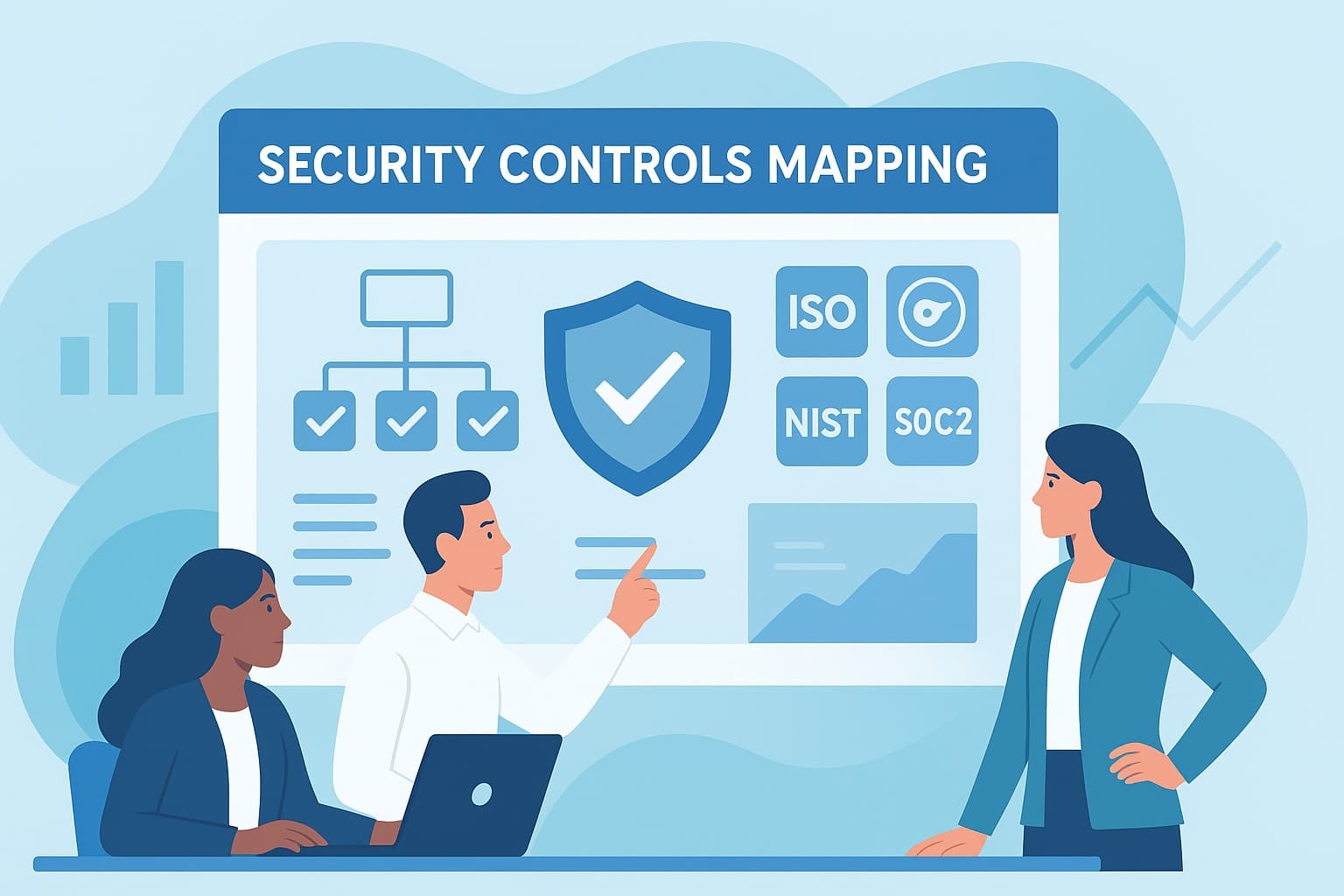
Nobody likes drowning in security paperwork. Yet tracking how your safeguards line up with NIST, ISO 27001, or PCI DSS rules matters, a lot. When you map out these controls properly, you’ll see where the pieces fit and where they don’t.
Think of it as x-raying your security setup. You spot the weak spots before they become problems, and you’re not stuck playing catch-up when audit time rolls around. Plus, you’ll quit wasting time on duplicate work.
Want the real scoop on mapping security controls reports? Keep going.

Mssp’s face a mountain of regulations that changes faster than most can handle. Each year brings fresh mandates, interpretations, and frameworks that blur into a confusing mess of requirements. Getting it wrong means more than just paperwork, companies shell out millions in fines while their reputation takes a nosedive.
We’ve watched countless security teams burn out trying to juggle SOC 2 alongside ISO 27001, PCI DSS, and other frameworks. The overlap between these standards creates a spider web of controls that’s near impossible to track without proper guidance.
Through years of consulting mssp’s, our team at MSSP Security learned that brute force approaches to compliance just don’t cut it. Instead, we developed methods to untangle these requirements systematically. By mapping controls strategically, security teams can quit playing catch-up and start getting ahead of audits. [1]
Credits: ACI learning
Think of control mapping as connecting dots between what mssp’s already do and what regulators demand they do. When done right, these reports line up existing security measures, from password rules to backup systems, against specific items in compliance checklists.
The best way we’ve found to explain mapping reports? They’re basically the decoder ring for compliance speak. Our clients use them to:
Through helping hundreds of mssp’s, we’ve learned something crucial: teams with solid mapping reports spend less time scrambling during audits and more time actually improving security. These aren’t just documents gathering dust; they’re living roadmaps that guide daily security decisions, making compliance reporting simpler and more effective.
A thorough mapping report includes several crucial elements:
Including these components ensures the report covers both compliance and operational aspects, providing a complete picture.
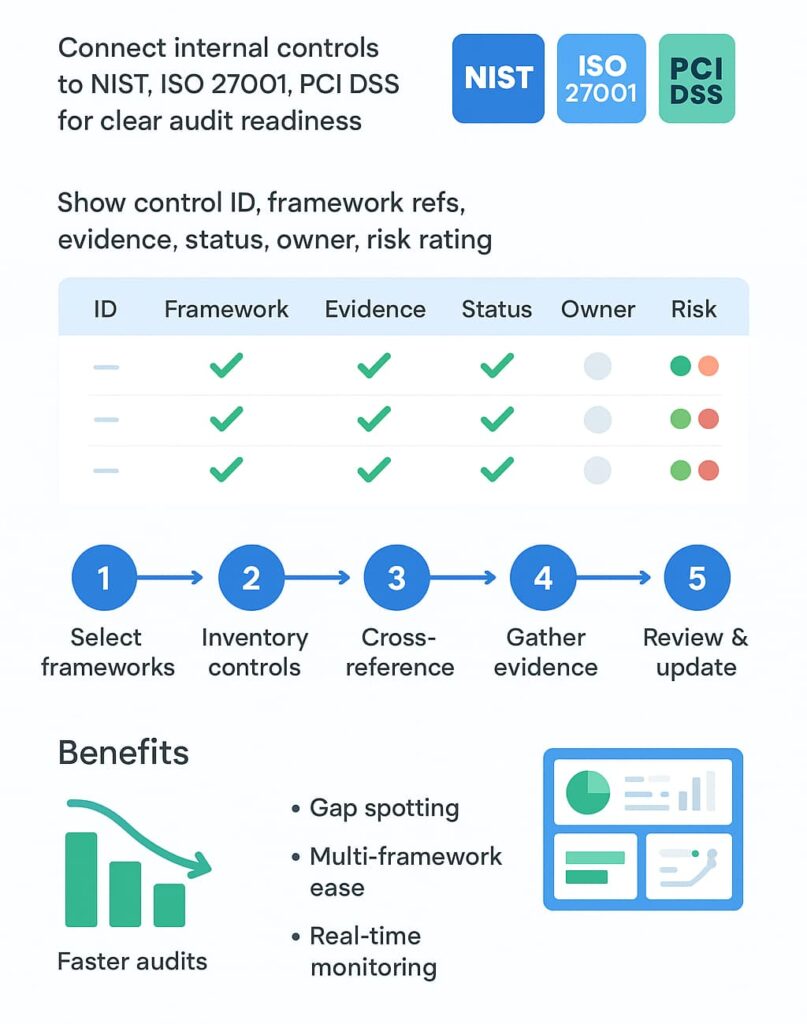
Mapping security controls might seem daunting, but breaking it down into clear steps makes it manageable:
Start by identifying the relevant compliance standards for your organization. Whether it’s HIPAA, PCI DSS, SOC 2, or a combination, knowing which frameworks apply is critical. We often help organizations prioritize based on industry, geography, and risk profile.
Catalog all existing security controls and processes. This inventory should capture technical controls (like firewalls), policies, procedures, and physical safeguards.
Match your internal controls to the specific requirements in the chosen frameworks. This step uncovers overlaps and gaps, often a revelation for many teams.
Collect artifacts proving your controls are operational. This can range from configuration files to training records or incident response documentation.
Generate reports detailing the mapping status, evidence, and any noted gaps or weaknesses. This documentation becomes the backbone for audits and risk management.
Security and regulatory landscapes evolve. Regularly update your mappings to reflect changes in controls, policies, or compliance standards. Continuous monitoring is key.
Drawing from our experience at MSSP Security, integrating this lifecycle into your compliance program reduces stress and boosts confidence during audits. [2]
Mapping security controls doesn’t just tick boxes, it transforms compliance and security management:
We’ve seen organizations significantly reduce audit preparation time after adopting a mapping strategy, freeing resources for other security initiatives, especially when using automated compliance reporting tools.

In the modern security landscape, manual mapping is no longer sufficient. Leveraging technology is essential:
At MSSP Security, we use these technologies to streamline control mapping for our clients, ensuring accuracy and efficiency without overwhelming teams, allowing for a smoother compliance reporting process.
Mapping security controls reports are not just a compliance checkbox. They are a strategic tool that brings order to complexity, enabling organizations to demonstrate control effectiveness, manage risk, and prepare for audits with confidence.
Our firsthand experience as an MSSP has shown that organizations prioritizing mapped controls don’t just survive audits, they thrive by turning compliance into a driver for stronger security and operational excellence.
If your organization is ready to take control of its compliance posture, start mapping your security controls today. It’s a practical step with lasting impact.
Security controls mapping connects specific safeguards to a security control framework, helping teams see how their policies meet regulatory or compliance control mapping requirements.
It improves traceability, identifies gaps, and ensures every control aligns with risk management goals. This process forms the foundation for accurate reporting and stronger overall compliance posture.
Compliance mapping tools automate the control mapping process by linking controls across multiple frameworks. They provide a control mapping dashboard to visualize alignment, track control ownership, and generate control testing reports.
This reduces manual errors, saves time, and supports consistent regulatory control mapping across ISO, SOC 2, and other frameworks.
A control gap analysis compares current security measures against required standards within a compliance matrix or control assessment matrix. It helps identify missing or weak controls, assigns control risk ratings, and supports control remediation tracking. Performing it regularly ensures your mapped controls library stays current and audit-ready.
Automated control mapping speeds up the creation of control status reports, tracks control exception handling, and supports continuous control monitoring. It reduces repetitive data entry through control metadata management and control reporting automation.
By improving accuracy and visibility, it helps compliance teams focus on resolving risks instead of managing spreadsheets.
Mapping security controls reports can feel like a big task, but with the right approach and tools, it becomes manageable and immensely beneficial. Whether you’re starting fresh or looking to enhance your current processes, remember that continuous review and automation are your allies.
Partner with MSSP Security to streamline operations, reduce tool sprawl, and boost your service quality. Our expert consulting helps you select, optimize, and integrate the right tools for better visibility, compliance, and long-term security success.

