Address
304 North Cardinal St.
Dorchester Center, MA 02124
Work Hours
Monday to Friday: 7AM - 7PM
Weekend: 10AM - 5PM
Address
304 North Cardinal St.
Dorchester Center, MA 02124
Work Hours
Monday to Friday: 7AM - 7PM
Weekend: 10AM - 5PM

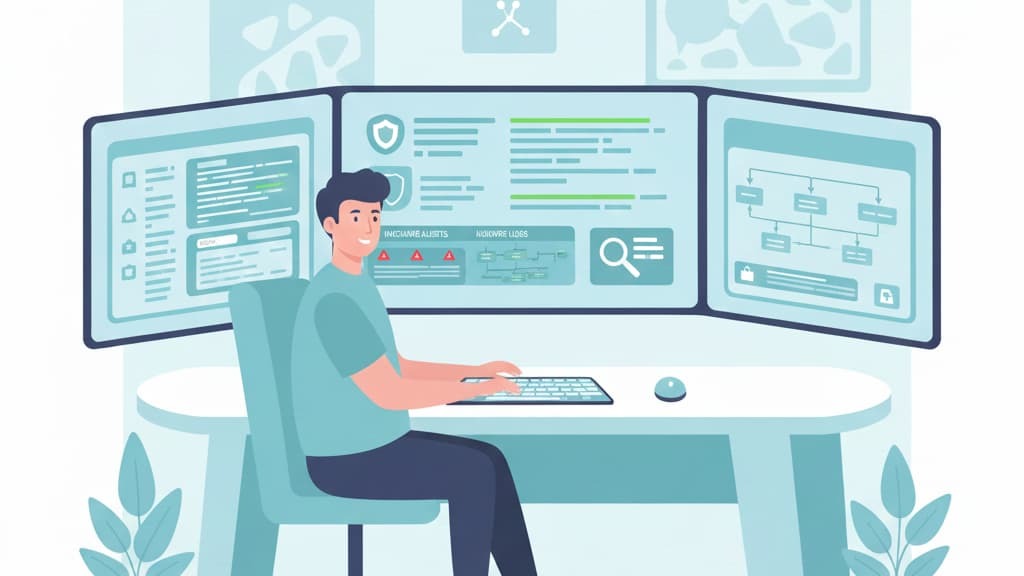
Digital Forensics Incident Response [DFIR] matters most when everything feels like it’s slipping. Malware hits, systems choke, and suddenly every alert feels urgent, but not every alert matters.
That first hour decides whether you contain the problem or spread it by accident. Teams that walk in without a plan usually jump between screens, logs, and tools, hoping the answer just appears. It rarely does. A structured malware analysis flow can cut recovery time by half because you stop guessing and start ruling things out in order.
If you want your next incident to feel controlled instead of chaotic, keep reading.
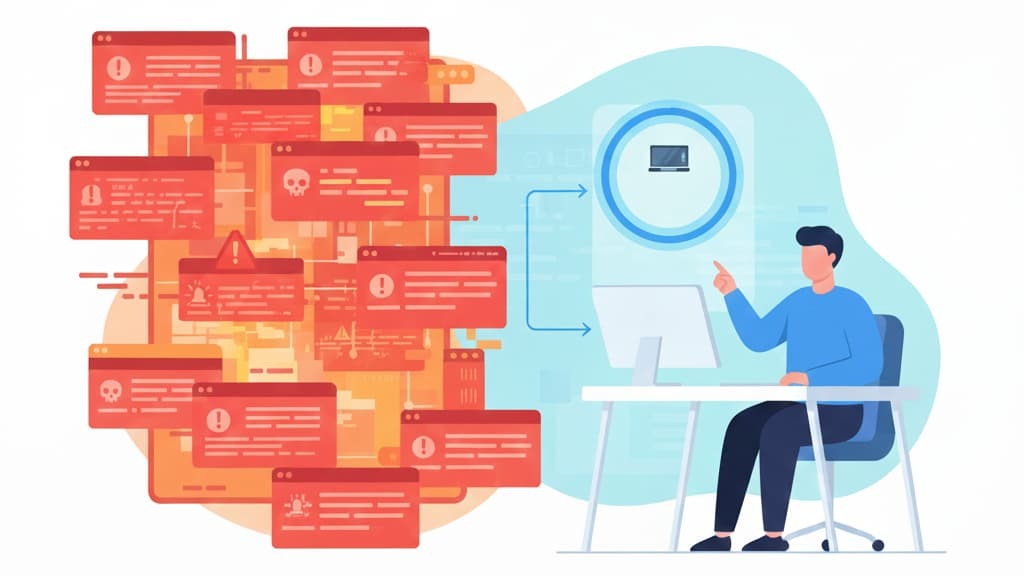
When everything starts breaking at once, DFIR is the only part of security that still has to keep its head. Malware locks files, users get shut out of their accounts, alerts pile up faster than anyone can read them. In that noise, someone always asks, “What do we look at first?” DFIR is meant to answer that question, not add to the noise.
We’ve walked into those rooms ourselves, usually called in by an MSSP that’s already deep into a bad day. Servers are blinking, leadership wants hourly updates, and log retention was set too low, so half the early clues are already gone.
When a clear DFIR playbook kicks in early, what to preserve, what to isolate, which tools to trust right now, the whole tone changes. People stop racing from console to console and start working the incident like a case.
From our side, this is where clean malware analysis workflows, disciplined incident response forensic analysis, and fast, defensible containment really have to line up. If an MSSP’s tools are noisy, blind in key areas, or hard to validate, their DFIR work gets slower and sloppier under pressure.
Our work is to help those providers choose and audit products so that, when the breach comes, their “emergency kit” actually works together and keeps damage narrow, not wide.
What most organizations and their MSSPs want is simple: find the attack fast, contain it even faster, and keep the story tight enough that no one is guessing later. That’s one reason more MSSPs lean on managed DFIR retainers and on third-party product audits beforehand.
We’ve seen well-chosen, well-understood tools, backed by that kind of DFIR support, cut response time in ransomware events by hours, sometimes days, and that’s the gap between a rough day and a lost week. [1]
Malware only stays mysterious until someone takes it apart. Once analysts start real malware analysis and reverse engineering, the fear gives way to facts. They open the file, watch how it behaves on a controlled system, and trace what it touches, breaks, or hides from view.
From the outside, people often call reverse engineering “reading the attacker’s playbook,” and that’s not far off. It exposes the encryption logic, the stealth tricks to dodge EDR, the persistence hooks, and any hidden payloads waiting for the right moment. In one incident we supported with an MSSP partner, the sample looked almost boring at first glance.
But deeper reversing work exposed a delayed trigger set for 48 hours later, aimed at re-encrypting systems and wiping key logs. Because the MSSP had the right tools and workflow in place, they killed that second stage before it ever fired.
For MSSPs, the real value shows up in what reverse engineering produces, and how that feeds their tools:
All of that rolls back into our core work with MSSPs: helping them choose, test, and audit products that won’t fall apart on the hard days. When reverse engineering is built into their incident workflows and tool selection, malware analysis incident response stops being guesswork and becomes a repeatable way to remove threats correctly, not just quickly.
Credits: SANS Digital Forensics and Incident Response
Malware analysis incident response is the moment when analysis turns into action. It’s where teams study the malware during the crisis, not after. One industry report notes that structured malware analysis can cut recovery time by up to 50%. We’ve seen that firsthand many times.
When an incident starts, analysts dig into how the malware spreads, what files it touches, whether it drops new payloads, and how it hides. They use sandboxing, threat intelligence, and EDR artifacts to map its behavior.
This information guides immediate action: isolating infected hosts, stopping malicious traffic, disabling compromised accounts, and removing persistence without triggering more damage.
We once handled a case where the malware looked harmless at first glance. But real-time analysis revealed a hidden routine scheduled to activate two days later. Stopping it prevented a second wave of infections. This blend of analysis and action is what often shifts an incident from a long disaster into a short, contained event.
Most people skip preparation. They assume it’s “too technical” or “not urgent.” Then a real incident hits, and everything becomes urgent.
Forensic readiness planning stops that scramble. It ensures logs stay long enough, evidence sources are known, and staff know their roles. A strong plan cuts investigation time and prevents costly mistakes. Research shows readiness supports both remediation and legal steps.
We’ve told clients one thing for years: “Future you will thank present you.” After their first breach response with a plan in place, leaders always say they didn’t realize how much chaos readiness removes.
Good readiness includes:
This planning makes post incident remediation reporting more accurate.
A managed DFIR retainer service is like having firefighters on speed dial. The moment something feels wrong, help is ready. Companies love this because it reduces panic and cuts down decision delays.
We’ve noticed that teams using retainers recover faster. They don’t waste hours figuring out whom to call or whether the issue is “serious enough.” They call early. We get in early. Damage stays small.
Retainers often include:
For small teams, it replaces the need to hire a full internal response team. For big teams, it adds extra muscle. This is where benefits MSSP DFIR support stand out the most: steady guidance, faster containment, and clear reporting.
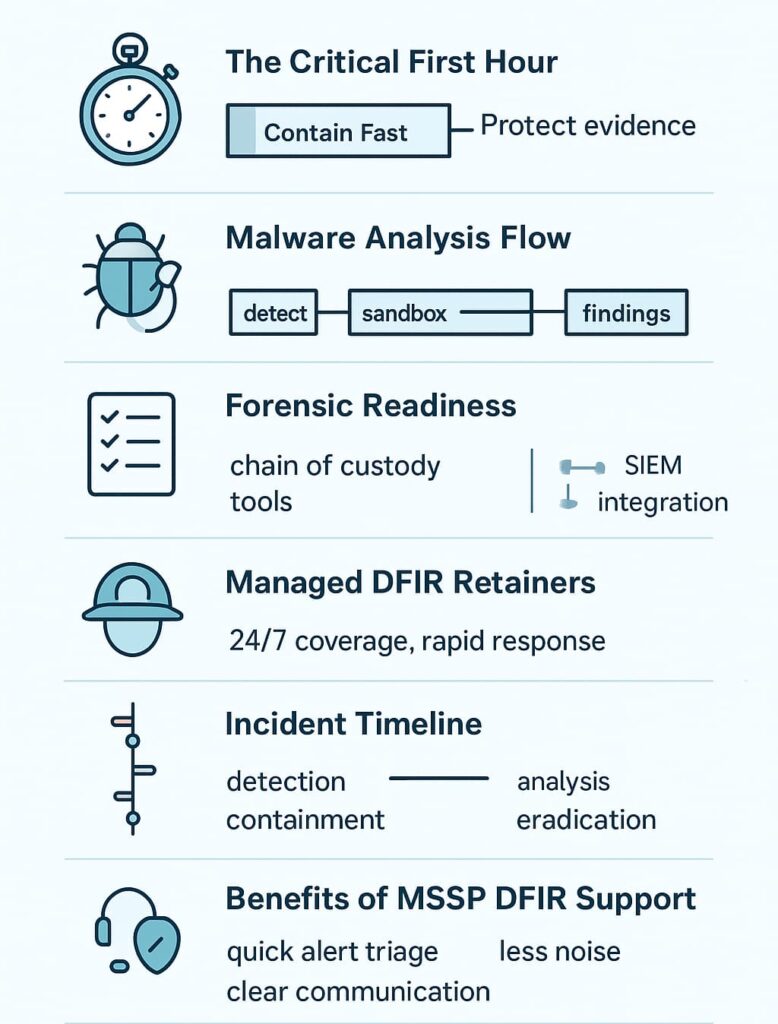
Some investigations are too complicated or too sensitive for internal teams. Outsourced digital forensics investigation fills that gap. Many police forces and private groups already outsource because forensic labs require advanced tools and strict procedures.
Outsourced specialists focus on:
We’ve been called into cases where internal teams were too close to the incident. Outsourcing also protects evidentiary integrity, especially when legal action is expected.
During an active incident, everyone wants answers: What happened? When did it start? Who caused it? Incident response forensic analysis builds the timeline.
This involves:
Analysts study every trace attackers leave. Even when attackers delete logs, fragments remain. In one case, a small browser artifact revealed the first point of entry. That tiny clue solved everything.
This work supports insurance claims, audits, and data breach investigation service documentation.
Companies don’t want hype. They want help that works. And this is why many choose MSSP-based DFIR support.
The benefits MSSP DFIR support include:
When we (MSSP Security) support a client, our goal is simple: take weight off their shoulders. Many tell us afterward, “You kept us from panicking.” That’s worth more than any tool or dashboard.
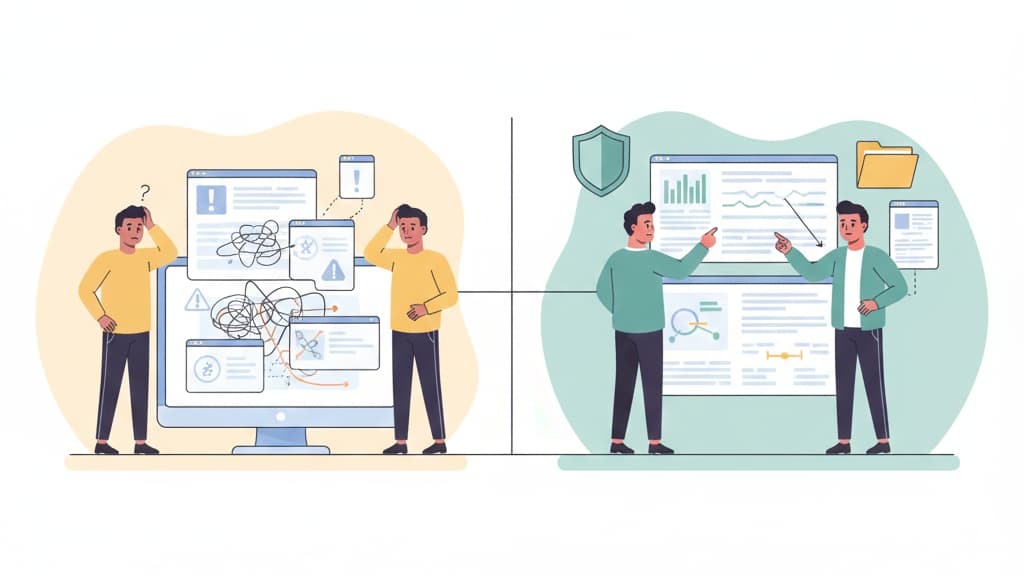
Speed is everything. Attackers move fast, and so must response teams. Rapid incident containment forensics blocks lateral movement and stops spreading damage.
Containment often includes:
AI-based tools help accelerate this work. Studies show they reduce containment time significantly, especially during ransomware cases. We’ve seen incidents where early containment saved companies from full shutdown.
Evidence is fragile. One wrong click can erase it. Evidence preservation handling forensics ensures nothing gets corrupted.
Key steps include:
We’ve seen organizations lose legal leverage because logs were overwritten. Proper handling protects them in court, in audits, and during post incident remediation reporting.
Local support matters. Choosing DFIR provider in Fullerton means checking credibility, certifications, and response time. Local providers understand California laws like CCPA and can show up onsite fast.
Teams should look for:
Physical presence helps leaders stay calm during critical hours.
A breach raises a single question: “How bad is it?” Data breach investigation service answers that by mapping compromised accounts, stolen paths, and exfiltration points.
These findings support mandatory reporting under GDPR or CCPA. We once handled a breach that looked small but turned out to be a month-long intrusion. Without deep investigation, the company would have underreported and faced penalties. [2]
Once the dust settles, teams still need clarity. Post incident remediation reporting collects lessons learned and gives steps for stronger defenses.
A solid report includes:
Teams that follow detailed remediation rarely face the same attack twice. We’ve seen this pattern again and again.
Many people start by checking alerts, but it helps to look at the bigger picture. Review how the incident response process works in your team, what rapid incident response steps you can take, and how incident containment usually plays out. This gives you a simple roadmap before you dive into logs, malware analysis, or digital evidence handling.
Good prep starts with forensic readiness. That means knowing where your data lives, setting clear chain of custody rules, and planning how digital evidence handling will work. Many teams also map out who leads a cyberattack investigation, how forensic evidence preservation is done, and what tools support network forensics and log analysis.
Outsourced digital forensics helps when your team lacks time, tools, or experience. It’s useful for complex cases like ransomware forensics or insider threat forensic analysis.
A partner can also guide data breach investigation steps, use forensic analysis techniques, and support post incident remediation when your own incident response team is overwhelmed.
A DFIR retainer is helpful if you only need support during emergencies. Managed DFIR services fit better when you want steady help with threat detection, threat investigation workflow, or SOC incident response. Think about your risk level, how you store digital evidence, and whether you need help with threat containment strategies throughout the year.
DFIR isn’t about fancy tools, it’s about staying in control during chaos. When malware hits, calm investigation, rapid containment, and clean evidence handling shape how well an organization recovers.
With readiness planning, real-time malware analysis incident response, and clear reporting, teams can respond faster and avoid repeat breaches. If you want expert, vendor-neutral guidance to strengthen your stack and cut tool sprawl, we’re here to help.

