

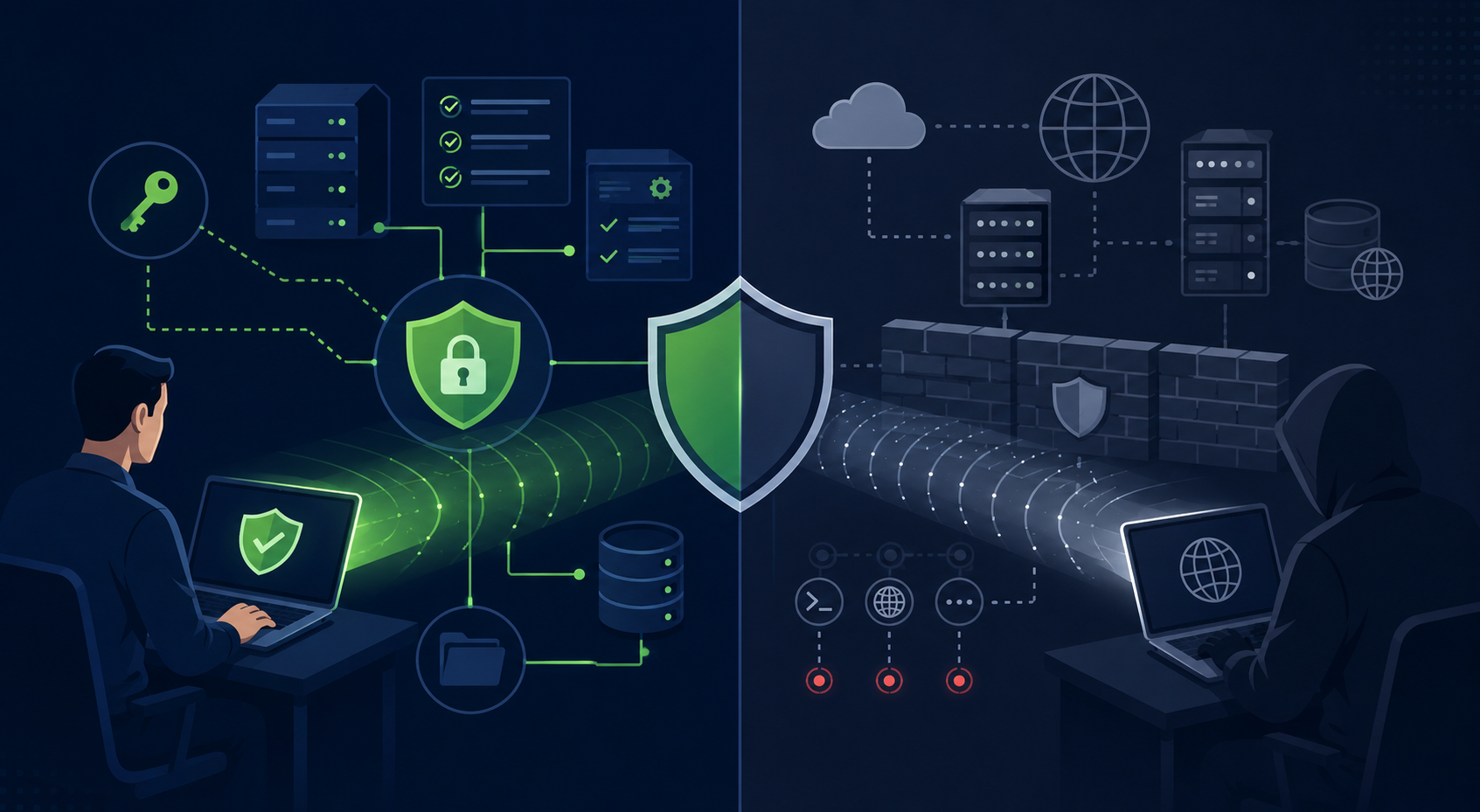
Credentialed vs uncredentialed scans help organizations assess vulnerabilities from different security perspectives. Credentialed scans provide deeper visibility into internal systems by analyzing configurations, patches, and security settings, while uncredentialed scans reveal external risks visible to attackers.
Using both approaches helps security teams identify gaps, validate findings, and prioritize remediation based on actual risk. At MSSP Security, we help organizations improve vulnerability management strategies and make informed security decisions.
How Do Credentialed vs Uncredentialed Scans Differ?
Credentialed and uncredentialed scans offer different views of an organization’s security posture. Understanding credentialed vs uncredentialed scans helps organizations choose the right vulnerability assessment strategy for their infrastructure, risk profile, and compliance requirements.
- Credentialed scans provide deeper system visibility by checking patches, configurations, and security settings through authorized access.
- Uncredentialed scans show external risks by identifying exposed ports, accessible services, and weaknesses visible to potential attackers.
- Using both scan methods together helps security teams improve accuracy, prioritize risks, and strengthen vulnerability management decisions.
What Are Credentialed vs Uncredentialed Scans in Vulnerability Management?
Credentialed and uncredentialed scans are two common vulnerability assessment methods that help security teams identify weaknesses from different levels of access.
A credentialed scan, also known as an authenticated vulnerability scan, uses approved credentials to review internal system details, including software versions, configurations, security settings, and missing patches.
Understanding the fundamentals of Vulnerability Scanner Technology Explained helps security teams recognize how scanning tools collect data, identify weaknesses, and provide visibility across different environments.
“Perform authenticated vulnerability scanning with agents running locally on each system or with remote scanners that are configured with elevated rights on the system being tested.” – Center for Internet Security (CIS)
This highlights why credentialed scans provide deeper visibility compared with uncredentialed assessments. By using authorized access, security teams can inspect internal system conditions and identify weaknesses that may not be visible from an external perspective.
An uncredentialed scan, or unauthenticated vulnerability scan, works without direct system access. Instead, it evaluates what can be discovered externally, such as open ports, exposed services, and potential attack paths that may be visible to an attacker.
The main differences between these approaches are:
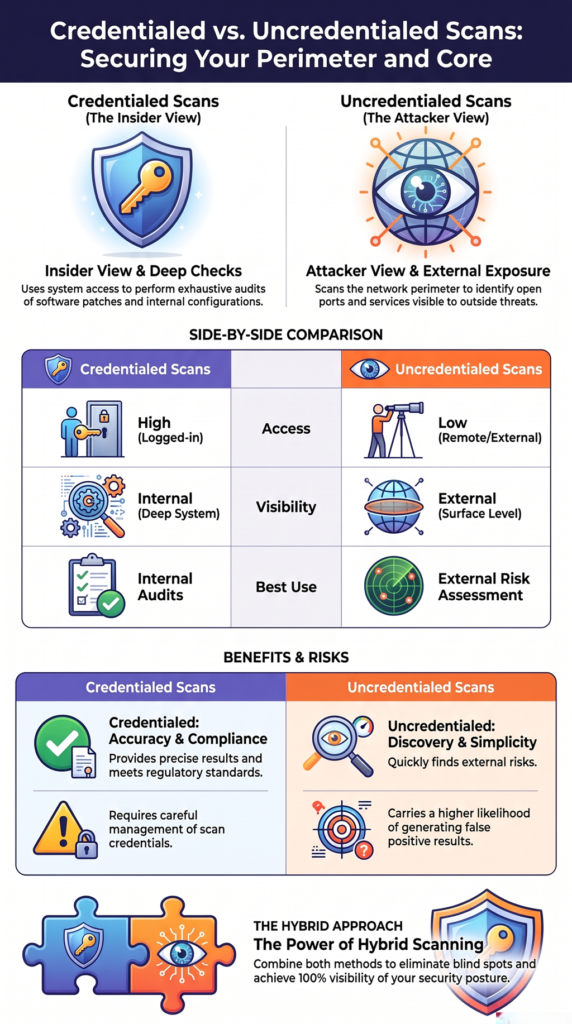
- Credentialed scans: Provide an insider view security scan by accessing authorized systems to uncover deeper vulnerabilities, patch gaps, and configuration issues.
- Uncredentialed scans: Provide an attacker’s view security scan by showing external exposures that could be identified without authentication.
During our security consulting engagements, we have seen that relying on only one scanning approach can leave visibility gaps.
We help MSSPs evaluate and audit security products by looking at how each solution handles both scanning methods, helping teams select tools that align with their customers’ risk management needs. Combining credentialed and uncredentialed scans creates a more complete view of security posture and vulnerability exposure.
How Credentialed vs Uncredentialed Scans Work Differently?
Credentialed and uncredentialed scans differ mainly in the level of access provided during a vulnerability assessment.
Credentialed scans use authorized credentials to inspect internal systems, allowing security teams to identify deeper issues such as missing patches, outdated software, weak configurations, and privilege problems.
Uncredentialed scans evaluate systems without authentication, focusing on external exposure such as open ports, exposed services, internet-facing vulnerabilities, and potential attack paths.
| Area | Credentialed Scans | Uncredentialed Scans |
| Access | Internal system access with credentials | External assessment without login access |
| Visibility | Detects internal vulnerabilities and configurations | Identifies attack surface exposure |
| Best Use | Patch checks, audits, and compliance reviews | External risk discovery and perimeter testing |
This comparison of credentialed vs uncredentialed scans demonstrates how each approach provides unique visibility into an organization’s security posture.
Understanding how vulnerability scanners work helps organizations select the right approach. From our experience helping MSSPs evaluate security solutions, combining both methods provides broader visibility and supports stronger vulnerability management decisions.
How Scan Accuracy and Detection Capabilities Differ?
The accuracy of vulnerability assessments depends on the visibility available during scanning. Credentialed and uncredentialed scans provide different levels of insight, with credentialed assessments offering deeper access and uncredentialed assessments focusing on external exposure. Comparing credentialed vs uncredentialed scans also helps security teams understand why scan accuracy depends on the level of system access available.
A credentialed vulnerability scan uses authorized access to verify:
- Missing patches and security fixes
- System configurations
- User permissions
- Security policies
- Compliance requirements
This scan coverage with credentials improves vulnerability identification and reduces uncertainty. In contrast, uncredentialed vulnerability scanning analyzes exposed services, open ports, and attack surfaces without login access. Its limited scan coverage without credentials can result in more false positives.
However, credentialed scans may still produce false negatives if permissions or access are incomplete. From our experience helping MSSPs evaluate security solutions, we recommend validating findings and prioritizing risks based on business impact rather than vulnerability counts alone.
What Are the Benefits and Risks of Credentialed Scans?
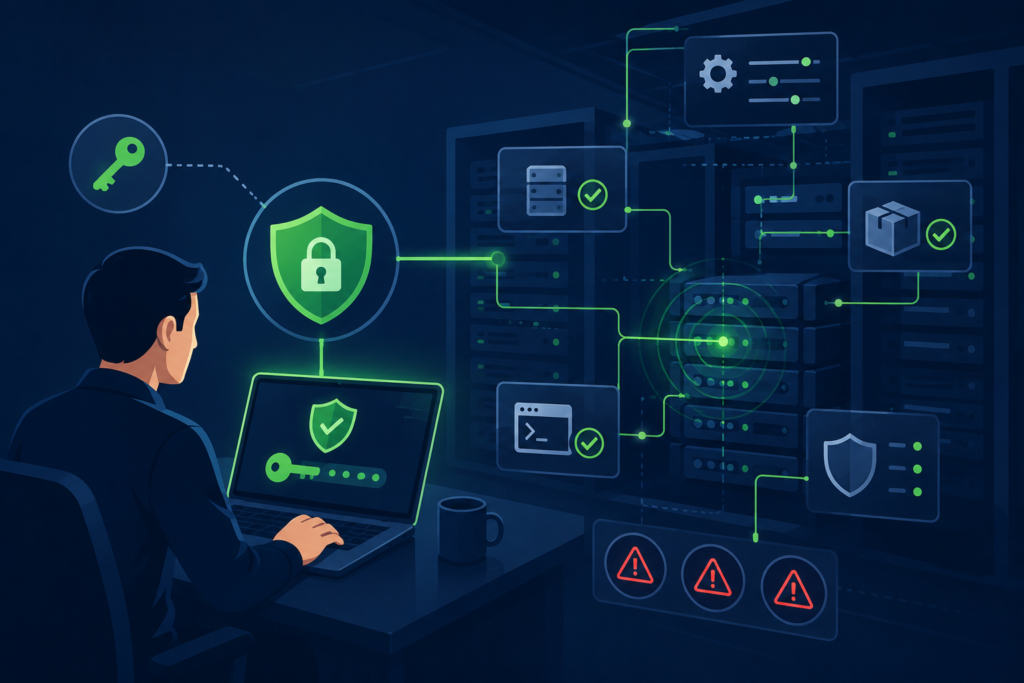
Credentialed vulnerability scans provide deeper visibility by using authorized access to inspect systems internally. This approach helps organizations identify weaknesses that external assessments may miss, including missing patches, outdated software, weak configurations, excessive privileges, and security policy issues.
Key advantages include:
- Improved credentialed scans accuracy through direct system verification
- Better patch detection credentialed scans and configuration checks
- Support for compliance scanning with credentials, regulatory vulnerability scanning, and security audits
However, credentialed scans also have limitations. Organizations must manage scan credentials securely, apply least privilege controls, and maintain proper access settings. Poor configuration can create security risks or lead to credentialed scans false negatives when systems cannot be fully assessed.
From our experience helping MSSPs evaluate security products, we have found that effective credentialed scanning requires balancing visibility, security, and operational impact to support stronger vulnerability management strategies.
What Are the Benefits and Risks of Uncredentialed Scans?
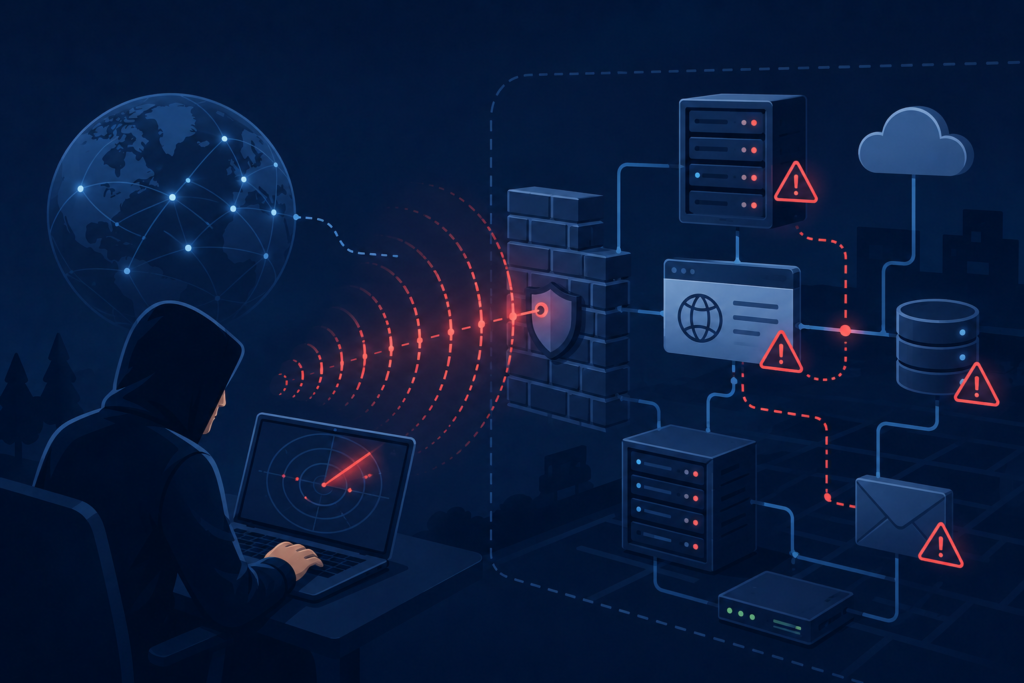
Uncredentialed vulnerability scans help organizations assess external exposure by examining systems without internal access credentials. This approach shows what attackers may discover from outside the environment, including exposed services, open ports, and internet-facing vulnerabilities.
The main benefits include:
- External attacker visibility: Identifies perimeter weaknesses and potential entry points.
- Simpler deployment: Works without privileged accounts or complex credential management.
- Reduced credential risks: Avoids storing sensitive scan credentials.
However, these scans provide limited internal visibility and may miss issues such as missing patches, local security settings, and configuration weaknesses. They may also generate uncredentialed scans false positives because findings rely on external indicators rather than direct verification.
From our experience helping MSSPs evaluate and audit security products, we recommend combining uncredentialed assessments with authenticated methods. This provides broader visibility, improves finding validation, and supports a stronger vulnerability management strategy.
When Should Organizations Use Credentialed vs Uncredentialed Scans?
Choosing between credentialed vs uncredentialed scans depends on the organization’s goals, asset types, and security risks. Understanding credentialed vs uncredentialed scans helps teams determine when internal visibility, external exposure, or a combination of both delivers the greatest value. In practice, no single scanning method provides complete visibility, making a hybrid vulnerability management approach the most effective choice for many organizations.
Credentialed scans are best suited for environments that require deeper internal visibility, such as:
- Internal network assessments
- Server and endpoint reviews
- Compliance monitoring
- Configuration audits
- Patch verification
We have seen organizations benefit from authenticated assessments when they need to confirm whether systems are properly secured, updated, and aligned with internal standards.
Uncredentialed scans are commonly used for:
- External perimeter assessments
- Internet-facing systems
- Attack surface monitoring
- Exposure discovery
These assessments show what attackers may identify without privileged access.
From our experience helping MSSPs evaluate and audit security products, a hybrid approach often provides better coverage. Combining both methods helps teams understand internal weaknesses, external exposure, attack paths, and remediation priorities while focusing on actual business risk.
How Should Organizations Manage Credentials for Vulnerability Scanning?
Credentialed vulnerability scanning provides deeper visibility into systems, but it also requires careful management of the accounts used during assessments. Since scan credentials may access sensitive information, organizations need proper controls to prevent misuse and reduce security risks.
From our experience helping MSSPs evaluate and audit security products, we have seen that credential management is not just a technical requirement. It is part of a broader security strategy that ensures scanning improves visibility without creating additional exposure.
Key practices for managing scan credentials include:
- Limiting account permissions: Apply least privilege principles and provide only the access required for accurate assessments.
- Securing stored credentials: Encrypt credentials, restrict access, and rotate them regularly.
- Using dedicated service accounts: Improve accountability, simplify permission management, and support audit tracking.
- Monitoring access activity: Review usage and remove unnecessary accounts.
A properly managed scanning account reduces risk while maintaining effective vulnerability assessments. We recommend treating scan credentials as sensitive security assets, with the same protection applied to other privileged access controls.
How Do Credentialed vs Uncredentialed Scans Affect Operations?
Vulnerability scanning involves more than selecting an assessment method. Organizations must also consider performance impact, scheduling, scan frequency, and how results are managed. A well-planned process balances three important factors:
- Visibility: Ensuring security teams can identify relevant risks.
- Accuracy: Producing reliable findings for remediation.
- Operational efficiency: Reducing disruption to business activities.
At MSSP Security, we help organizations evaluate these factors when reviewing vulnerability management solutions. The goal is not simply to increase scan volume but to create workflows that deliver useful security insights.
Credentialed scans may require more resources because they inspect internal configurations and system data. Organizations should consider:
- Critical production systems
- High-availability environments
- Maintenance windows
- Business requirements
Effective scheduling helps prevent unnecessary disruption. Best practices include adjusting scan intensity, prioritizing critical assets, and running assessments during approved periods.
Continuous credentialed scanning helps detect new vulnerabilities, configuration changes, and security drift. Meanwhile, periodic uncredentialed scans provide external visibility by identifying exposed services, new internet-facing assets, and attack surface changes. Combining both approaches supports a more responsive vulnerability management strategy.
How Do Credentialed vs Uncredentialed Scans Support Modern Security Testing?
Vulnerability scanning helps organizations identify weaknesses across systems, applications, and cloud environments as part of a broader security program. Integrating credentialed vs uncredentialed scans into a broader security testing strategy improves vulnerability visibility and supports more effective risk management. Credentialed and uncredentialed scans provide different visibility levels, but both strengthen vulnerability management when combined with other security practices.
Key differences include:
- Vulnerability scanning: Detects known vulnerabilities, outdated software, and configuration issues.
- Penetration testing: Validates exploitability by simulating real-world attack scenarios.
Credentialed scans provide deeper technical insight but do not replace penetration testing. They support SOC vulnerability scan workflows, DevSecOps pipeline scans, credentialed cloud workload scans, and continuous monitoring efforts.
For application security, organizations may also use web application vulnerability scanners to identify weaknesses in web-based systems. From our experience helping MSSPs evaluate security solutions, combining authenticated and unauthenticated assessments improves visibility into internal risks, external exposure, and overall security posture.
How to Build an Effective Vulnerability Scanning Strategy?
Credit: Aravind Ch
An effective vulnerability management program requires more than selecting a scan type. Organizations need a risk-based scanning approach that connects vulnerability discovery, validation, and remediation based on business impact.
When evaluating security solutions, teams should consider factors such as coverage, accuracy, integration capabilities, and choosing network vulnerability scanner options that align with their infrastructure needs.
“These can be used for several purposes, such as finding vulnerabilities in a system or network and verifying compliance with a policy or other requirements.” – National Institute of Standards and Technology (NIST)
This approach aligns with how organizations should use vulnerability scanning as part of a broader security strategy. Scans are not only performed to identify vulnerabilities but also to support compliance validation, risk analysis, and informed remediation decisions.
Key considerations include:
- Asset importance and criticality
- Vulnerability severity
- External exposure
- Exploit availability
- Existing security controls
At MSSP Security, we help MSSPs evaluate security solutions by focusing on how well they support practical vulnerability management strategies. The goal is to identify meaningful risks rather than simply count vulnerabilities.
Scan result validation with credentials helps confirm findings, reduce false alerts, and improve remediation decisions. Credentialed assessments provide additional context to verify affected systems and improve accuracy.
For large environments, reducing scan noise is essential. Teams should remove duplicate findings, validate risks, and prioritize critical assets. Combining credentialed and uncredentialed assessments helps organizations improve visibility and focus on vulnerabilities that create the greatest business impact.
FAQ
What is the difference between credentialed and uncredentialed scans?
Credentialed scans use authorized credentials to access systems and inspect internal details such as patches, configurations, software versions, and security settings. Uncredentialed scans work without login access and focus on external exposure, including open ports, exposed services, and potential attack paths visible to attackers.
Are credentialed scans more accurate than uncredentialed scans?
Credentialed scans generally provide more accurate findings because they can verify system conditions directly. They help identify missing patches, configuration weaknesses, and compliance issues with greater context. However, uncredentialed scans remain valuable for discovering external risks and understanding how systems appear from an attacker’s perspective.
When should organizations use credentialed vulnerability scans?
Organizations should use credentialed vulnerability scans when they need deeper visibility into internal environments, such as servers, endpoints, internal networks, and compliance assessments. They are useful for verifying patch status, reviewing configurations, and identifying security weaknesses that external scanning cannot detect.
Why should organizations combine credentialed and uncredentialed scans?
Combining both scanning methods provides a more complete view of security risks. Credentialed scans reveal internal weaknesses, while uncredentialed scans identify external exposure. Together, they help security teams improve vulnerability visibility, validate findings, prioritize remediation, and strengthen vulnerability management strategies.
How should organizations manage credentials used for vulnerability scanning?
Organizations should protect scan credentials by applying least privilege principles, using dedicated service accounts, securing stored credentials, and regularly reviewing access permissions. Proper credential management helps reduce security risks while allowing vulnerability scanners to collect the information needed for accurate assessments.
How Can Organizations Balance Credentialed and Uncredentialed Scans?
A balanced approach to credentialed vs uncredentialed scans gives organizations both internal visibility and external exposure, creating a more complete understanding of security risks. Credentialed scans identify internal issues such as missing patches and configuration weaknesses, while uncredentialed scans reveal exposed services and potential attack paths.
Combining both methods based on business needs, infrastructure complexity, and security goals helps security teams improve vulnerability detection, validate findings, prioritize remediation, and strengthen vulnerability management.
At MSSP Security, we help MSSPs evaluate security solutions through vendor-neutral consulting, product selection, auditing, and stack optimization.
References
- https://cas7.1.docs.cisecurity.org/en/latest/controls/control-3/control-3.2.html
- https://www.nist.gov/publications/technical-guide-information-security-testing-and-assessment