

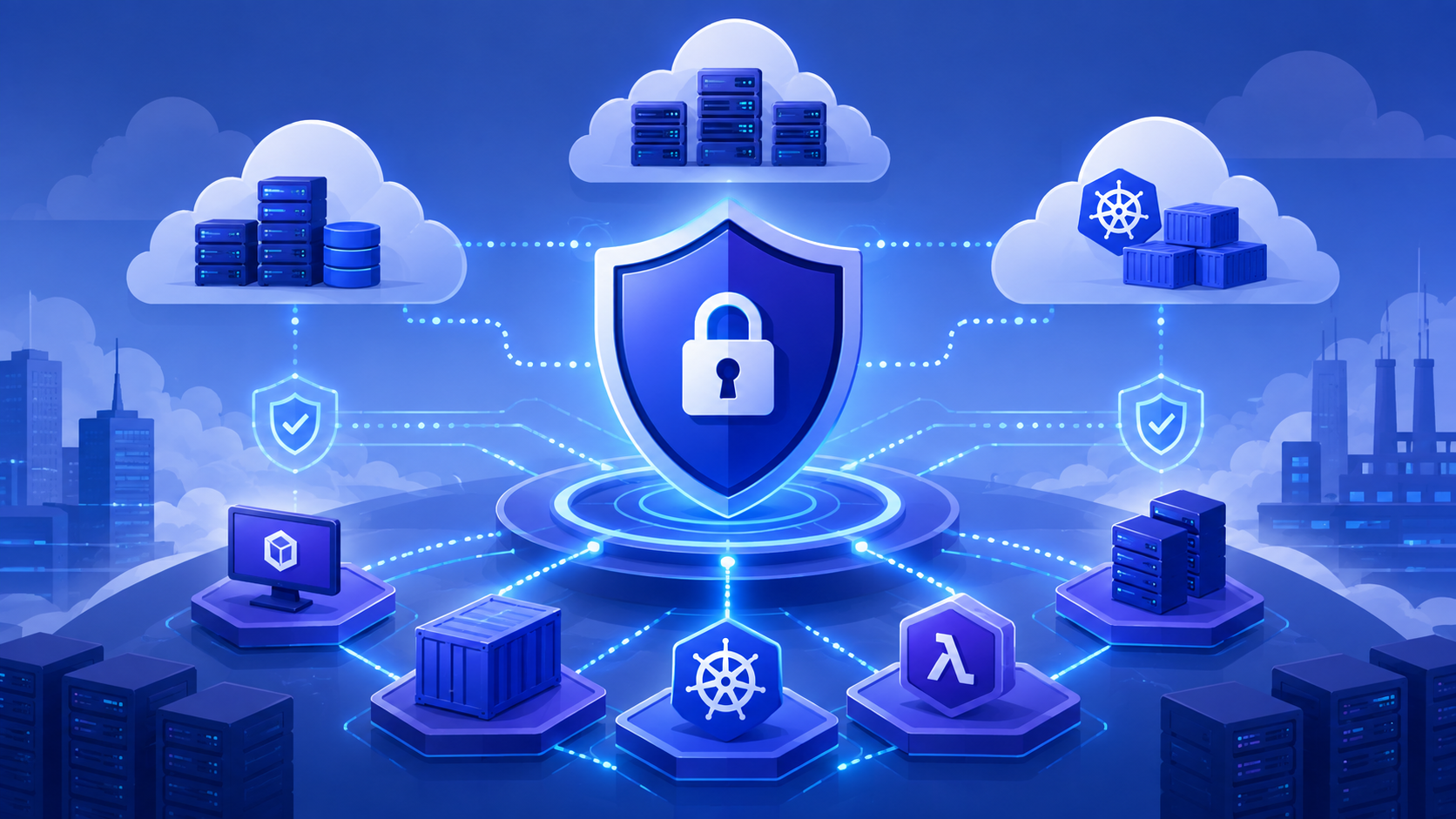
As cloud environments become more complex, organizations and MSSPs need stronger ways to protect dynamic workloads across containers, Kubernetes, virtual machines, and hybrid infrastructures.
CWPP Cloud Workload Protection Platforms help improve workload visibility, runtime protection, vulnerability management, and threat detection. Selecting the right solution requires careful evaluation of security capabilities, integration, and scalability.
Continue reading to explore CWPP capabilities, use cases, and comparisons with other cloud security approaches. For expert guidance, explore our MSSP Security Consulting Services.
CWPP at a Glance: Key Insights to Know
Before diving deeper into how CWPP Cloud Workload Protection Platforms work, here are the main points organizations and MSSPs should keep in mind:
- CWPP Cloud Workload Protection Platforms help secure modern cloud workloads by improving visibility, runtime protection, vulnerability management, and threat detection across containers, Kubernetes, virtual machines, and serverless environments.
- CWPP protects workloads throughout their lifecycle rather than focusing only on cloud configurations, making it valuable for organizations managing dynamic multi-cloud and hybrid cloud environments.
- Selecting the right CWPP solution requires more than comparing features. Organizations should evaluate security capabilities, integration with existing tools, scalability, and how well the platform supports operational requirements.
What Are CWPP Cloud Workload Protection Platforms?
CWPP Cloud Workload Protection Platforms are security solutions designed to protect cloud workloads from cyber threats across modern infrastructure environments. They help organizations secure different workload types, including applications, virtual machines, containers, Kubernetes environments, and serverless workloads.
The Cloud Security Alliance explains that:
“Cloud workload protection platforms secure the workloads that run on your cloud, emphasizing that CWPP focuses on protecting workload-level risks rather than only securing the underlying cloud infrastructure.” – Cloud Security Alliance (CSA)
This makes CWPP an important component for organizations that need stronger workload visibility, runtime protection, and consistent security controls across dynamic environments.
As cloud adoption grows, workloads are becoming more distributed across multi-cloud and hybrid environments. This creates new security challenges because organizations need better cloud workload visibility and stronger protection for resources that can change quickly.
From our experience helping MSSPs evaluate and audit security products, we have seen that effective CWPP solutions should provide:
- Better visibility into cloud workloads and assets
- Runtime protection against active threats
- Vulnerability management and risk prioritization
- Security controls that support cloud-native environments
By combining these capabilities, CWPP cloud workload protection platforms help organizations strengthen cloud workload security, improve their security posture, and maintain consistent protection across modern cloud infrastructures.
Why Do Organizations Need Cloud Workload Protection Platforms?
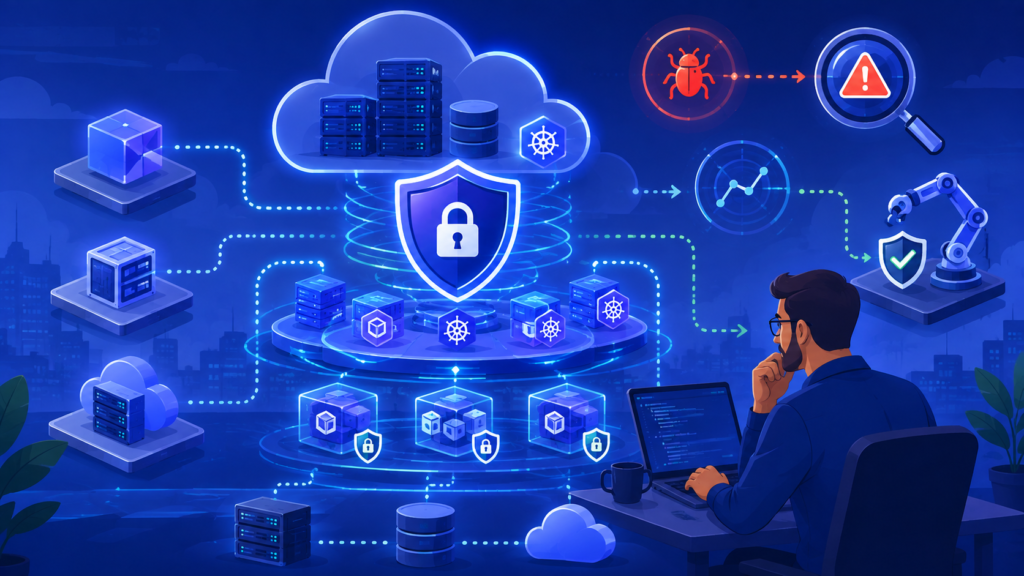
Organizations need CWPP Cloud Workload Protection Platforms because modern cloud environments are becoming more complex, distributed, and difficult to secure. Workloads now run across multi-cloud, hybrid cloud, containers, and cloud-native architectures that can change rapidly.
From our experience helping MSSPs evaluate and audit security products, we have seen that organizations often struggle with maintaining consistent cloud workload security as their infrastructure grows. Common challenges include:
- Managing complex cloud environments with different security requirements
- Protecting rapidly changing workloads and expanding attack surfaces
- Maintaining visibility and accountability across workload ownership
- Meeting compliance expectations for sensitive cloud resources
Unlike traditional infrastructure, cloud workloads can be created, modified, or removed quickly, requiring a more flexible security approach. CWPP helps organizations strengthen workload protection, improve security posture, and support scalable cloud operations without limiting cloud innovation.
How Do CWPP Cloud Workload Protection Platforms Work?
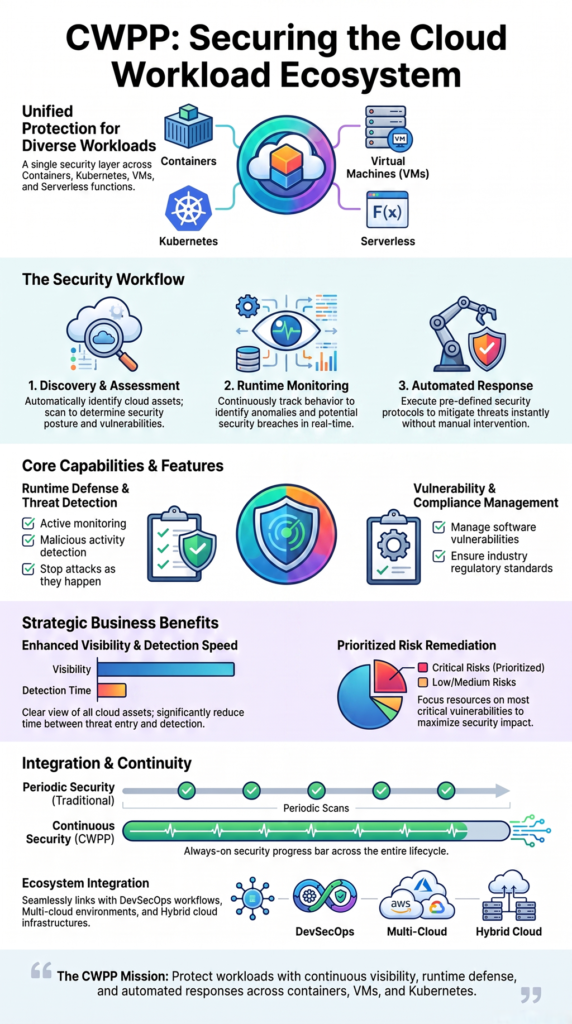
CWPP Cloud Workload Protection Platforms work by combining workload visibility, security assessment, runtime monitoring, and automated response into a unified cloud workload security workflow. These platforms help organizations identify risks, monitor workload activities, and protect modern cloud environments.
To better understand how CWPP Cloud Workload Protection Platforms operate, it helps to look at the key stages involved in protecting workloads.
Each stage plays an important role in improving visibility, identifying risks, detecting threats, and supporting faster security responses across modern cloud environments.
| CWPP Process Stage | How It Works | Security Benefits |
| Workload Discovery | Identifies cloud assets, including virtual machines, containers, Kubernetes workloads, and serverless applications across different environments. | Improves cloud workload visibility and helps security teams understand their overall attack surface. |
| Security Assessment | Evaluates workload configurations, vulnerabilities, and security gaps to identify potential risks. | Helps teams prioritize remediation efforts based on workload risk and security impact. |
| Runtime Monitoring | Continuously analyzes workload behavior, processes, and activities while applications are running. | Enables faster threat detection and helps protect workloads against active attacks. |
| Automated Response | Triggers security actions, alerts, and integrations with existing security operations tools. | Reduces manual response efforts and improves incident investigation and remediation speed. |
From our experience helping MSSPs evaluate and audit security products, we see that effective CWPP solutions should provide strong protection while fitting smoothly into existing cloud security strategies and operational workflows.
What Key Features Should You Look For in CWPP Cloud Workload Protection Platforms?
When evaluating CWPP Cloud Workload Protection Platforms, organizations should look beyond basic security features and focus on capabilities that support modern cloud workload security. A strong CWPP solution should help protect workloads, improve visibility, and support security operations across dynamic environments.
Key capabilities to consider include:
- Runtime workload protection to secure active workloads and detect risks during operation.
- Cloud workload threat detection using behavioral analysis and security analytics.
- Vulnerability management to identify risks and prioritize remediation efforts.
- Container and Kubernetes security for protecting cloud-native applications.
- Compliance monitoring to support workload security requirements.
- Security automation to improve response workflows and operational efficiency.
From our experience helping MSSPs evaluate and audit security products, we know that selecting the right CWPP platform requires more than comparing features. Organizations should also consider integration, scalability, and how well the solution fits existing security operations.
How Do CWPP Platforms Improve Cloud Workload Visibility and Monitoring?
Cloud workload visibility is essential because organizations cannot protect assets they cannot identify or understand. As workloads expand across multi-cloud, hybrid cloud, and cloud-native environments, security teams need better insight into assets, activities, and potential risks.
CWPP Cloud Workload Protection Platforms improve visibility by helping organizations discover workloads, identify security gaps, and monitor workload behavior continuously. Key capabilities include:
- Workload inventory and asset discovery to identify virtual machines, containers, Kubernetes workloads, serverless functions, and unknown assets.
- File integrity monitoring to detect unauthorized changes to critical files.
- Process and system call monitoring to analyze workload activities and identify suspicious behavior.
- Network connection monitoring to detect unusual communication patterns and possible lateral movement.
From our experience helping MSSPs evaluate and audit security products, we see that effective CWPP solutions should provide actionable visibility, not just asset discovery. This enables better threat hunting, security analytics, and proactive cloud workload defense.
How Does CWPP Protect Containers, Kubernetes, Servers, and Virtual Machines?
CWPP Cloud Workload Protection Platforms protect different workload types by applying security controls based on each environment’s unique risks. Since modern organizations use containers, Kubernetes, serverless applications, and virtual machines, workload protection requires a flexible approach.
The Center for Internet Security (CIS) emphasizes that:
“With innovation comes risk. Considering this, any cloud security professional understands it’s imperative to secure their container environments and utilize hardened images to reduce that risk.” Center for Internet Security (CIS)
This highlights why container security is a critical capability within CWPP, helping organizations reduce workload risks through stronger protection, vulnerability management, and secure cloud-native practices.
Key protection capabilities include:
- Container security: Supports container image scanning, vulnerability identification, and runtime protection to detect risks before and after deployment.
- Kubernetes security: Provides workload visibility, runtime monitoring, policy enforcement, and workload segmentation to protect complex cluster environments.
- Serverless security: Monitors function execution behavior, dependency vulnerabilities, and permission risks in serverless applications.
- VM protection: Provides host-level monitoring, vulnerability assessment, malware detection, and runtime defense for virtual machines.
From our experience helping MSSPs evaluate and audit security products, we know that effective CWPP solutions should protect workloads consistently across hybrid cloud and cloud-native environments while supporting scalable security operations.
How Do CWPP Platforms Manage Vulnerabilities and Workload Risks?
Managing vulnerabilities across cloud workloads requires more than simply identifying security issues. As environments become larger and more dynamic, security teams need to understand which risks have the greatest impact and where remediation efforts should be prioritized.
CWPP Cloud Workload Protection Platforms help organizations strengthen cloud workload vulnerability management by assessing workloads, identifying security gaps, and providing better context around potential risks.
These capabilities complement practices such as cloud infrastructure vulnerability scanning by helping security teams discover weaknesses, understand workload exposure, and prioritize remediation based on actual security impact.
Important capabilities include:
- Vulnerability assessment: Identifies software vulnerabilities, outdated components, misconfigurations, and weaknesses across workload environments.
- CVE correlation: Helps connect vulnerabilities with affected workloads to provide better risk visibility.
- Exploitability analysis: Evaluates whether vulnerabilities are likely to be targeted based on exposure and attack methods.
- Workload risk prioritization: Helps security teams focus remediation on the most critical issues.
- Secret scanning: Detects exposed credentials or sensitive information that could increase security risks.
How Do CWPP Platforms Support Cloud-Native and DevSecOps Security?
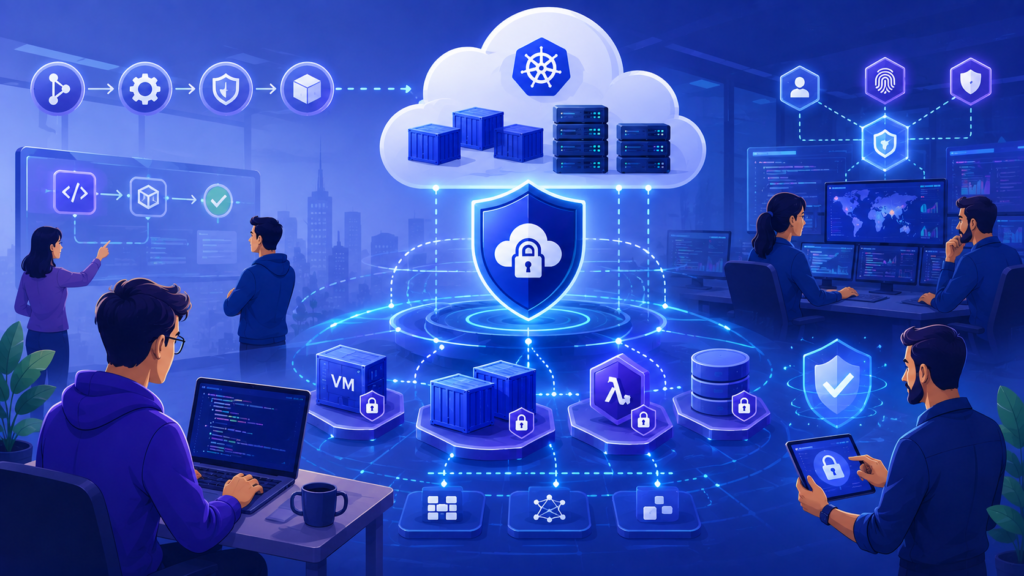
Cloud-native environments move quickly, with applications being updated, scaled, and deployed more frequently than traditional infrastructure. This speed creates new security challenges because protection needs to keep pace with changing workloads without slowing down development teams.
For MSSPs managing multiple customer environments, evaluating the right Cloud Native Security Tools MSSP solutions can help improve workload visibility, strengthen cloud-native protection, and support scalable security operations across different architectures.
CWPP Cloud Workload Protection Platforms support cloud-native and DevSecOps security by extending protection from development environments into runtime operations. They do not replace core DevSecOps tools such as SAST, DAST, SCA, or IaC scanning. Instead, CWPP works alongside these solutions to provide additional workload visibility and protection after applications are deployed.
In practice, CWPP can help organizations strengthen security across the application lifecycle through capabilities such as:
- DevSecOps support: Helps teams maintain security visibility by identifying workload risks and improving collaboration between security and development teams.
- CI/CD pipeline security support: Complements existing workflows by helping evaluate workload security requirements before applications move into production.
- Zero trust workload security: Supports the principle of limiting trust between workloads, users, and resources.
- Microsegmentation and workload segmentation: Helps reduce lateral movement by controlling communication between workloads and isolating critical applications.
From our experience helping MSSPs evaluate and audit security products, we have found that successful CWPP adoption depends on how well the platform integrates with existing security processes. The right solution should enhance cloud-native operations while giving security teams better control over workloads throughout their lifecycle.
What Cloud Workload Threats Can CWPP Detect and Prevent?
Cloud workloads are becoming a frequent target for attackers as organizations move more applications and services into cloud environments. These attacks are not always detected through traditional security methods, especially when threats involve changing workload behavior, unauthorized activities, or misuse of legitimate resources.
CWPP Cloud Workload Protection Platforms help security teams identify and respond to threats by analyzing workload activity, runtime conditions, and suspicious behavior patterns. Instead of focusing only on known attack signatures, these platforms provide deeper visibility into how workloads operate and where unusual activity may indicate a compromise.
Common threats that CWPP can help detect and prevent include:
- Malware activity: CWPP analyzes files, processes, and workload behavior to identify malicious software, unauthorized execution, and suspicious changes.
- Remote code execution (RCE): Runtime monitoring helps detect attempts to execute unauthorized commands within applications or workloads.
- Privilege escalation: CWPP helps identify unusual permission changes and abnormal access patterns that may indicate attackers attempting to gain higher privileges.
- Container escape attacks: In container environments, CWPP monitors workload isolation and helps detect attempts to access underlying systems.
- Crypto mining abuse: CWPP can identify unusual resource consumption, suspicious processes, and abnormal activity linked to unauthorized mining operations.
Through our experience helping MSSPs evaluate and audit security products, we have seen that the most valuable CWPP solutions are those that provide context around threats. Effective detection is not only about generating alerts but also helping security teams understand risks, investigate incidents, and improve cloud workload defense.
How Do CWPP Platforms Support Security Operations and Automation?
Credit: The Cyberman Show
Managing cloud workload security at scale can be challenging, especially for MSSPs that handle multiple customer environments with different requirements. CWPP cloud workload protection platforms help simplify security operations by providing centralized visibility, automation, and integration capabilities.
A centralized security console and unified management dashboard allow teams to:
- Monitor workload security status
- Investigate threats and vulnerabilities
- Manage security policies
- Track compliance conditions
From our experience helping MSSPs evaluate and audit security products, we find that operational efficiency often depends on features such as alert prioritization, policy enforcement, and automated workflows. CWPP platforms also integrate with SIEM and SOAR solutions to improve threat correlation, security analytics, investigation workflows, and incident response automation. These capabilities help MSSPs reduce manual effort, improve SOC efficiency, and deliver more consistent cloud workload defense across hybrid and multi-cloud environments.
How Do CWPP Platforms Support Compliance Monitoring and Data Protection?
CWPP Cloud Workload Protection Platforms help organizations maintain stronger cloud workload security controls that support compliance requirements. While CWPP is not a dedicated compliance management tool, it provides visibility into workload risks, configurations, and protection status.
Key capabilities include:
- Compliance monitoring: Helps track security conditions, policy alignment, and workload protection status.
- Vulnerability visibility: Identifies workload weaknesses that may affect security posture.
- Access control monitoring: Supports review of workload permissions and protection measures.
- Policy enforcement and encryption enforcement: Helps apply consistent security controls and reduce data exposure risks.
These capabilities can support organizations working with standards such as PCI DSS, HIPAA, GDPR, and ISO 27001. From our experience helping MSSPs evaluate and audit security products, we know effective CWPP solutions should provide actionable insights that strengthen cloud workload protection while supporting broader compliance and data protection strategies.
How Does CWPP Compare With CSPM and CNAPP?
CWPP, CSPM, and CNAPP address different areas of cloud security, and understanding their roles helps organizations choose the right protection strategy. From our experience helping MSSPs evaluate and audit security products, we often see confusion between these solutions because they are frequently used together.
CSPM focuses on cloud configuration security by identifying misconfigurations, compliance gaps, and infrastructure risks. Many organizations use cspm cloud security posture management tools to improve cloud visibility, detect configuration weaknesses, and maintain better security posture across cloud environments.
In contrast, CWPP Cloud Workload Protection Platforms focus on protecting workloads through runtime protection, threat detection, vulnerability management, and monitoring across:
- Virtual machines
- Containers
- Kubernetes workloads
- Serverless applications
CNAPP provides broader cloud security coverage by combining capabilities such as CSPM, CWPP, CIEM, and cloud-native security controls into a unified platform.
What Are the Best Practices for Implementing CWPP Cloud Workload Protection Platforms?
Implementing CWPP Cloud Workload Protection Platforms requires more than deploying a security tool. Organizations need an approach that aligns workload protection with business needs, security objectives, and existing infrastructure.
Key implementation practices include:
- Building workload visibility: Identify cloud assets, critical applications, and workload dependencies before applying protection controls.
- Choosing the right protection model: Evaluate agent-based and agentless workload protection based on security requirements, operational complexity, and infrastructure scale.
- Integrating with security strategies: Connect CWPP platforms with zero trust principles, vulnerability management, DevSecOps practices, threat hunting, and security automation.
From our experience helping MSSPs evaluate and audit security products, we have found that the right CWPP solution is not always the one with the most features. Successful implementation depends on selecting a platform that integrates well with existing workflows, supports scalability, and delivers practical value for long-term cloud workload security.
FAQ
What Are CWPP Cloud Workload Protection Platforms Used For?
CWPP Cloud Workload Protection Platforms are used to protect cloud workloads across environments such as virtual machines, containers, Kubernetes clusters, and serverless applications. They help security teams improve workload visibility, detect threats, manage vulnerabilities, and apply runtime protection throughout the workload lifecycle.
How Does CWPP Differ From CSPM?
CWPP and CSPM focus on different areas of cloud security. CSPM helps identify cloud configuration risks, compliance issues, and infrastructure misconfigurations, while CWPP focuses on protecting workloads through runtime monitoring, threat detection, vulnerability management, and workload-level security controls.
Can CWPP Protect Kubernetes and Container Environments?
Yes. CWPP Cloud Workload Protection Platforms can help secure Kubernetes and container environments by providing container image scanning, vulnerability detection, runtime monitoring, workload visibility, and security controls that reduce risks throughout the application lifecycle.
Do Organizations Still Need CWPP If They Already Use DevSecOps Tools?
Yes. CWPP complements DevSecOps tools such as SAST, DAST, SCA, and IaC scanning rather than replacing them. While DevSecOps tools help identify risks during development, CWPP provides additional protection after deployment by monitoring workload behavior and detecting runtime threats.
How Should Organizations Choose the Right CWPP Solution?
Organizations should evaluate CWPP solutions based on workload coverage, security capabilities, integration options, scalability, and operational requirements. For MSSPs managing multiple customer environments, selecting a platform that supports centralized visibility, automation, and flexible security operations is essential for delivering consistent cloud workload protection.
How Can Organizations Strengthen Cloud Security With CWPP Cloud Workload Protection Platforms?
CWPP Cloud Workload Protection Platforms help organizations secure modern cloud environments by improving workload visibility, runtime protection, threat detection, vulnerability management, and automated response.
As workloads become more distributed across containers, Kubernetes, virtual machines, and hybrid infrastructures, selecting the right CWPP solution requires careful evaluation of security needs, integration, and scalability.
From our experience helping MSSPs assess security products, we provide vendor-neutral consulting for product selection and auditing. Learn more through our MSSP Security Consulting Services to strengthen cloud workload security strategies.
References
- https://cloudsecurityalliance.org/blog/2022/10/31/seamlessly-secure-your-cloud-workloads
- https://www.cisecurity.org/insights/blog/how-to-layer-secure-docker-containers-with-hardened-images