

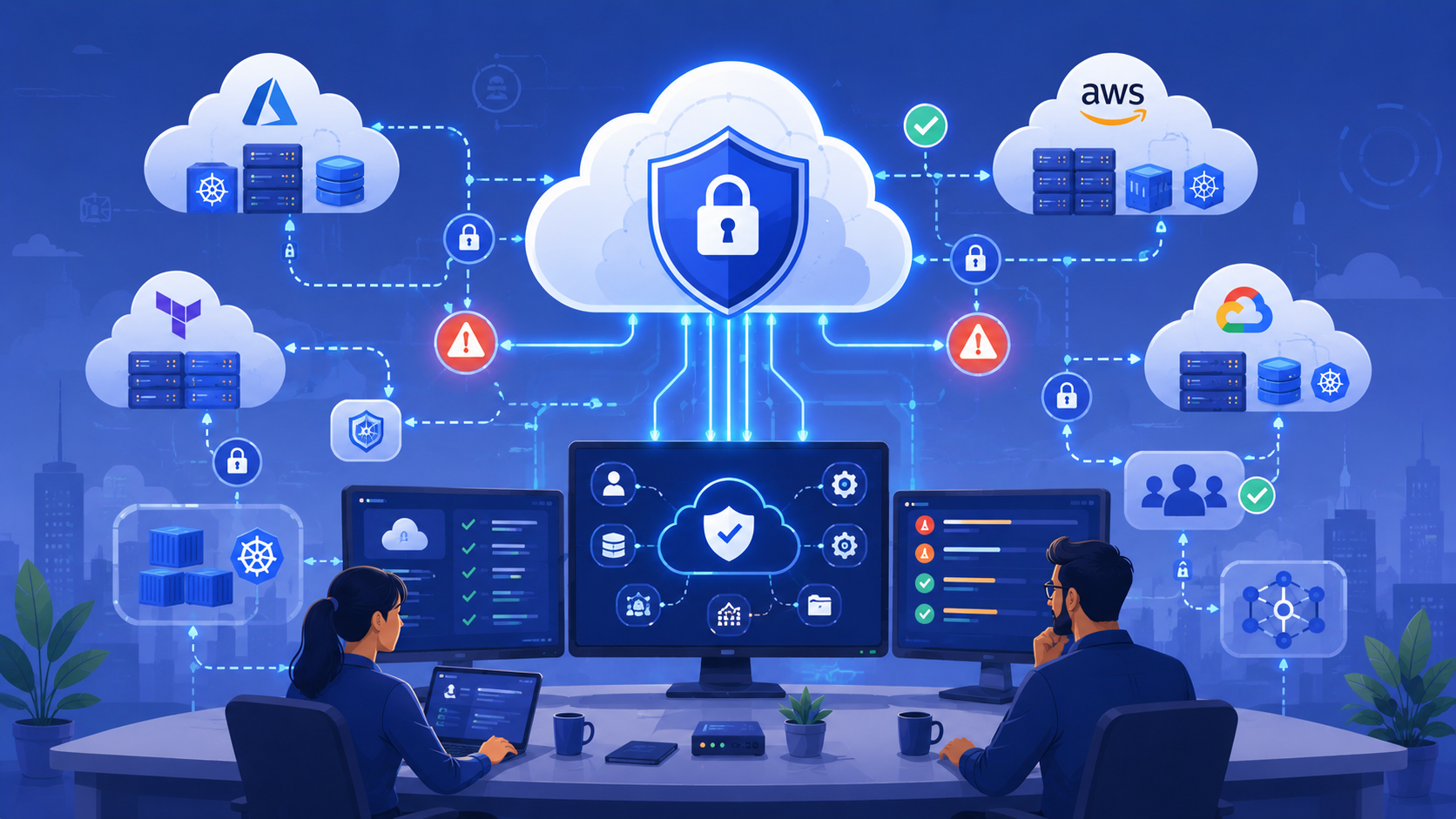
CSPM cloud security posture management tools help organizations continuously monitor cloud environments, detect configuration risks, and support stronger security and compliance. From our experience helping MSSPs evaluate and audit cloud security technologies, we’ve found that long-term success depends on combining the right platform with clear governance and practical security processes.
At MSSP Security, we provide vendor-neutral consulting to help MSSPs make informed technology decisions. Keep reading to learn how CSPM improves cloud visibility, compliance, and risk management.
Quick Recap Before You Dive In
If you’re short on time, these are the main points to remember before exploring the rest of this guide on CSPM cloud security posture management tools.
- CSPM cloud security posture management tools provide continuous visibility into cloud environments by identifying misconfigurations, monitoring security policies, and helping organizations address risks before they become security incidents.
- These platforms strengthen multi-cloud security, support continuous compliance monitoring, and streamline security operations through automation and consistent governance.
- Organizations achieve the greatest long-term value when CSPM is combined with well-defined security policies, ongoing posture assessments, and governance practices that improve cloud security resilience over time.
What Are CSPM Cloud Security Posture Management Tools?
CSPM cloud security posture management tools help organizations monitor cloud environments for configuration risks, policy violations, and compliance gaps. They compare cloud configurations against security policies, industry standards, and regulatory requirements to identify issues before they become larger security problems.
CSPM also provides continuous visibility into cloud assets and workloads while helping security teams improve their overall security posture across different cloud environments. As Microsoft explains:
“Cloud Security Posture Management (CSPM) is a core feature of Microsoft Defender for Cloud. CSPM provides continuous visibility into the security state of your cloud assets and workloads, offering actionable guidance to improve your security posture across Azure, AWS, and GCP.” – Microsoft Learn
Unlike traditional security reviews that happen only occasionally, CSPM provides continuous security posture assessment. It evaluates new workloads, configuration changes, and cloud resources in near real time, helping security teams keep pace with rapidly changing cloud environments.
Most cloud posture management software connects to cloud providers through APIs, making it easy to collect configuration data without disrupting workloads. Depending on business needs, some platforms also support agent-based deployments for deeper visibility.
From our experience helping MSSPs evaluate and audit cloud security technologies, we have learned that a platform’s assessment capabilities matter just as much as its feature list. Before recommending any solution, we look at how well it fits an organization’s cloud architecture, governance goals, and compliance requirements.
A typical cloud security posture assessment reviews areas such as:
- Identity and access management (IAM)
- Storage permissions
- Network security settings
- Encryption policies
- Public exposure risks
- Logging and monitoring configurations
- Security policy compliance
After the assessment, CSPM organizes findings into a structured view of the organization’s cloud environment. This allows security teams to review configuration risks, maintain governance, and make more informed decisions across public, private, and hybrid cloud environments.
How Do CSPM Cloud Security Posture Management Tools Work?
Credit: IBM Technology
CSPM cloud security posture management tools continuously evaluate cloud environments to identify configuration risks, policy violations, and compliance gaps as changes occur. Rather than relying on scheduled reviews, they provide continuous security posture assessment that helps organizations keep pace with dynamic cloud environments.
Most cloud posture management software connects to cloud platforms through native APIs to collect configuration metadata. The platform then compares this information against predefined security policies, regulatory requirements, and industry standards to identify deviations that require attention.
While CSPM focuses on securing cloud configurations, many organizations also implement cwpp cloud workload protection platforms to protect workloads, applications, and runtime environments as part of a broader cloud security strategy.
From our experience helping MSSPs evaluate and audit cloud security technologies, we’ve found that understanding a platform’s assessment workflow is just as important as comparing its capabilities. While implementation varies, the process generally includes:
- Connecting securely to cloud environments through APIs
- Collecting cloud configuration metadata
- Evaluating configurations against security policies
- Identifying configuration risks and compliance gaps
- Prioritizing findings based on severity and business impact
This structured workflow supports consistent cloud configuration monitoring and cloud security posture assessment across public, private, and hybrid cloud environments.
What Features Should You Look for in CSPM Cloud Security Posture Management Tools?
Choosing the right CSPM cloud security posture management tools starts with identifying the capabilities that best fit your cloud environment and security requirements. While platforms vary, the most effective solutions provide features that support continuous monitoring, governance, and risk assessment across cloud infrastructure.
Organizations evaluating broader cloud security strategies may also benefit from exploring Cloud Native Security Tools MSSP, particularly when building layered protection for cloud-native applications.
From our experience helping MSSPs evaluate and audit cloud security technologies, we’ve found that the strongest platforms are those that align with an organization’s architecture and operational workflows, not simply those with the longest list of features. The table below highlights the core capabilities organizations should prioritize when evaluating cloud posture management software.
| Feature | Why It Matters |
| Continuous Security Posture Assessment | Continuously evaluates cloud configurations as environments change. |
| Agentless or Agent-Based Deployment | Supports different operational and visibility requirements. |
| Cloud Security Posture Management API | Connects CSPM with existing security tools and operational workflows. |
| Cloud Security Posture Scoring | Helps prioritize security findings based on overall business risk. |
| Compliance Mapping | Aligns cloud configurations with regulatory requirements and security frameworks. |
| Multi-Cloud Posture Management | Provides centralized visibility across multiple cloud providers. |
| Cloud Security Posture Automation | Reduces manual effort by automating routine monitoring and low-risk security tasks. |
Together, these capabilities establish a strong foundation for effective cloud security posture management while helping organizations scale security operations as their cloud environments continue to evolve.
What Benefits Do CSPM Cloud Security Posture Management Tools Provide?
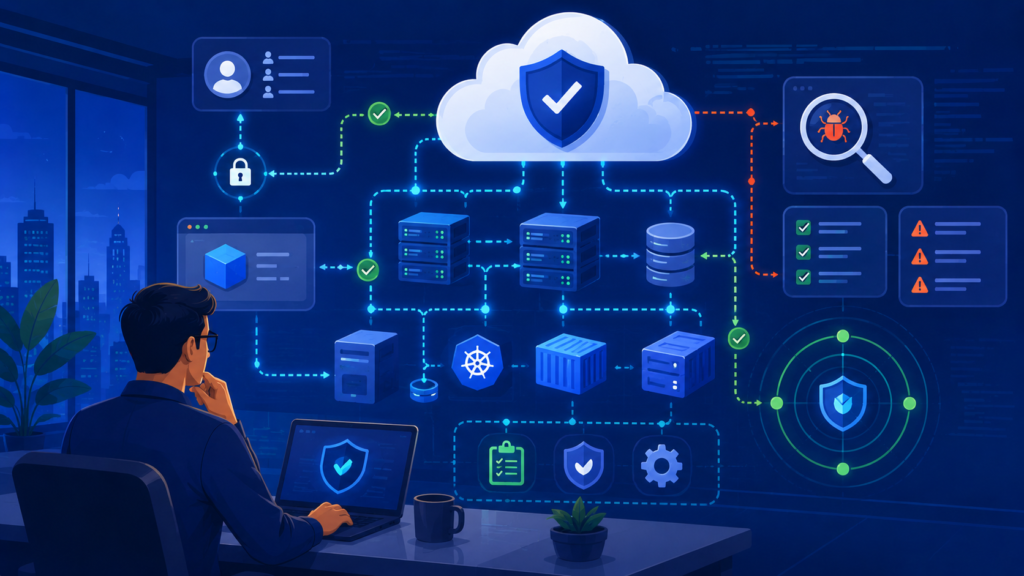
As cloud environments become more complex, organizations need a practical way to manage security without slowing innovation. CSPM cloud security posture management tools help security teams strengthen governance, reduce operational risks, and maintain greater confidence in their cloud environments as infrastructure continues to evolve.
From our experience helping MSSPs evaluate and audit cloud security technologies, we’ve found that the greatest value comes from measurable operational improvements rather than individual platform capabilities. When assessing new solutions, we focus on the business outcomes they can deliver over time.
Organizations commonly gain benefits such as:
- Reduced attack surface through earlier cloud misconfiguration detection
- Improved cloud security posture visibility across cloud environments
- Faster audits with continuous cloud compliance monitoring
- Stronger cloud security posture risk management by prioritizing critical issues
- Lower operational effort by reducing repetitive security tasks
- More consistent governance across multi-cloud environments
Together, these outcomes help organizations move from reactive security practices to a more proactive approach. Over time, CSPM cloud security posture management tools support stronger security operations while allowing teams to focus on strategic initiatives instead of routine configuration reviews.
How Do CSPM Tools Support Multi-Cloud and Hybrid Cloud Environments?
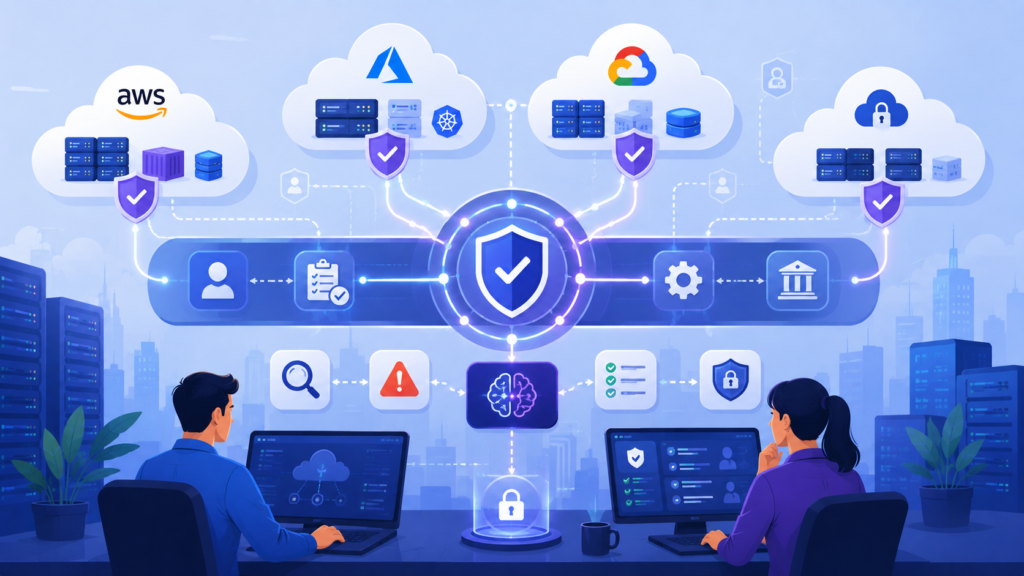
As cloud adoption grows, many organizations now run workloads across multiple public cloud providers while maintaining private infrastructure to meet operational or regulatory requirements. This mix of environments makes it more challenging to apply consistent security policies and governance across the entire cloud ecosystem.
CSPM tools for multi-cloud environments help address this complexity by providing a consistent approach to multi-cloud posture management. Rather than reviewing each cloud platform separately, organizations can assess cloud configurations, monitor compliance, and apply standardized security policies across diverse environments.
Different cloud providers also implement networking and security controls in different ways, making consistent protection more challenging. Alongside CSPM, many organizations evaluate virtual firewall cloud security options to strengthen network segmentation and protect traffic across multi-cloud and hybrid cloud environments.
From our experience helping MSSPs evaluate and audit cloud security technologies, we’ve learned that effective posture management depends on more than broad visibility. We evaluate whether a platform can support different cloud architectures while fitting into an organization’s governance model and day-to-day security operations.
When assessing cloud posture management platforms, we typically look for capabilities such as:
- Hybrid cloud posture monitoring across public and private cloud environments
- Consistent cloud configuration monitoring across multiple cloud providers
- Standardized security policies and compliance assessments
- Unified visibility into cloud assets, risks, and policy status
These capabilities help organizations maintain a consistent cloud security posture as their cloud environments expand, making it easier to manage security across increasingly complex infrastructures.
How Do CSPM Tools Help Organizations Meet Cloud Compliance Requirements?
As cloud environments grow, keeping up with changing regulations becomes more difficult. CSPM cloud security posture management tools help organizations strengthen cloud compliance monitoring by continuously checking cloud configurations against security frameworks and internal policies instead of relying on periodic reviews.
From our experience helping MSSPs select and audit cloud security technologies, we’ve seen that the most effective compliance programs are built into daily operations. When we evaluate a CSPM solution, we look beyond basic compliance checks to determine whether it can support long-term governance and evolving regulatory requirements.
A well-designed platform should provide:
- Compliance mapping for security frameworks and regulatory standards
- Support for CIS Benchmarks for CSPM
- SOC 2 compliance for cloud and ISO 27001 compliance monitoring
- Continuous collection of audit evidence
- Ongoing validation of cloud configurations and security policies
These capabilities help organizations stay audit-ready, reduce remediation efforts, and maintain compliance across public, private, and hybrid cloud environments without treating every assessment as a separate audit project.
How Is Cloud Security Posture Assessed and Risk Prioritized?
Every cloud security posture assessment generates findings, but not every issue carries the same level of risk. CSPM cloud security posture management tools help organizations evaluate cloud configurations against security policies and compliance requirements, making it easier to determine which findings should be addressed first.
A strong cloud security posture assessment requires understanding the overall security status of an organization’s cloud environment, including the resources, policies, and capabilities used to manage protection and respond to changes. NIST defines security posture as:
“The security status of an enterprise’s networks, information, and systems based on information security resources (e.g., people, hardware, software, policies) and capabilities in place to manage the defense of the enterprise and to react as the situation changes.” National Institute of Standards and Technology (NIST)
This definition reinforces why CSPM tools evaluate more than isolated misconfigurations by considering broader security controls, governance practices, and operational readiness.
From our experience helping MSSPs select and audit cloud security technologies, we’ve found that the most effective platforms don’t overwhelm security teams with alerts. Instead, we look for solutions that provide a practical way to prioritize remediation based on business impact and operational risk.
When assessing cloud security risks, organizations should consider:
- The likelihood that a misconfiguration could be exploited
- The business criticality of affected cloud assets
- Potential compliance or regulatory impact
- The severity of the security finding
- The remediation priority based on overall operational risk
By prioritizing the most significant risks first, organizations can strengthen cloud security posture risk management, use security resources more efficiently, and maintain a more resilient cloud environment as their infrastructure continues to grow.
What Are the Best Practices for Implementing CSPM Cloud Security Posture Management Tools?
Getting the most value from CSPM cloud security posture management tools takes more than deploying the platform. Organizations need a structured implementation approach that aligns with their cloud strategy, governance model, and day-to-day security operations.
From our experience helping MSSPs select and audit cloud security technologies, we’ve found that successful implementations start with a clear understanding of the current environment before introducing automation. We also evaluate whether a CSPM solution fits existing workflows, making adoption smoother as cloud operations grow.
A practical implementation roadmap includes:
- Establish cloud security posture visibility across cloud environments
- Define cloud security posture management policies and governance requirements
- Introduce cloud security posture automation for low-risk, repeatable tasks
- Continuously review configuration changes and policy compliance
- Refine governance through regular policy updates and cross-functional collaboration
Following these best practices helps organizations build a consistent cloud security posture management framework while improving security processes as their cloud infrastructure continues to evolve.
How Should Organizations Choose the Right CSPM Cloud Security Posture Management Solution?
Selecting the right CSPM cloud security posture management solution requires more than comparing feature lists. Organizations should look for a platform that aligns with their cloud architecture, governance model, and long-term security objectives while supporting future growth.
From our experience helping MSSPs select and audit cloud security technologies, we’ve learned that the strongest purchasing decisions come from evaluating how a platform fits into existing security operations. Rather than focusing on individual capabilities, we assess whether a solution can support day-to-day workflows and adapt as cloud environments become more complex.
When reviewing cloud posture management software, consider a checklist that includes:
- Agentless and agent-based deployment options
- Cloud security posture management API and integration capabilities
- Multi-cloud posture management and hybrid cloud support
- Scalability for growing cloud environments
- Pricing and total cost of ownership (TCO)
- Technical support and product documentation
- Vendor roadmap and long-term product development
Using this structured approach helps organizations choose a solution that supports sustainable cloud security posture management while reducing implementation risks and supporting future operational needs.
Why Are Periodic Security Assessments No Longer Enough for Cloud Environments?
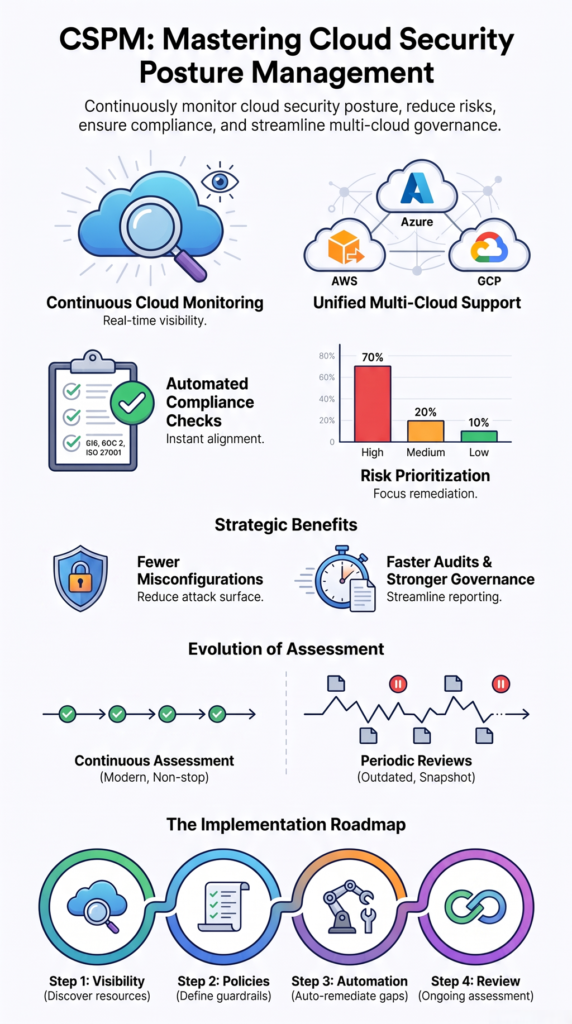
Cloud environments rarely remain static. New workloads, infrastructure updates, identity changes, and application deployments can happen throughout the day, making scheduled security reviews less effective at keeping pace with modern cloud operations. CSPM cloud security posture management tools help organizations move beyond periodic assessments by supporting continuous oversight as cloud environments evolve.
From our experience helping MSSPs select and audit cloud security technologies, we’ve seen that organizations achieve better long-term outcomes when security becomes part of everyday operations rather than an annual or quarterly exercise. We often evaluate whether a platform can support ongoing governance without adding unnecessary operational complexity.
A more resilient cloud security strategy should include:
- Continuous security posture assessment instead of periodic reviews
- Early detection of configuration drift as cloud resources change
- Ongoing validation of security policies throughout the cloud lifecycle
- Consistent governance across multi-cloud and hybrid cloud environments
- A proactive approach that strengthens long-term business resilience
Adopting this mindset helps organizations maintain a stronger cloud security posture while adapting confidently to continuous change across their cloud infrastructure.
FAQ
What is a CSPM cloud security posture management tool?
A CSPM cloud security posture management tool continuously monitors cloud environments to identify misconfigurations, policy violations, compliance gaps, and security risks. It helps organizations maintain consistent security across public, private, hybrid, and multi-cloud environments through automated assessments and continuous monitoring.
How do CSPM tools improve cloud security?
CSPM solutions improve cloud security by providing continuous cloud configuration monitoring, detecting misconfigurations, prioritizing risks, automating remediation workflows, and supporting compliance with industry standards such as CIS Benchmarks, SOC 2, and ISO 27001.
Are CSPM tools suitable for multi-cloud environments?
Yes. Most modern cloud posture management platforms support multi-cloud posture management, enabling organizations to monitor security across multiple cloud providers from a centralized dashboard. This approach improves visibility while maintaining consistent governance policies.
Can CSPM tools support compliance initiatives?
Absolutely. CSPM platforms simplify cloud compliance monitoring by continuously validating cloud configurations against regulatory frameworks and security standards. They also generate reports and audit evidence that help organizations prepare for compliance assessments more efficiently.
What should organizations consider when selecting a CSPM solution?
Organizations should evaluate deployment models, cloud coverage, automation capabilities, reporting features, API integrations, scalability, governance support, and long-term operational value. Choosing a solution that aligns with security processes and business objectives is often more beneficial than selecting one based solely on the number of features.
Why Should Organizations Invest in CSPM Cloud Security Posture Management Tools?
As cloud environments become more complex, relying on periodic security reviews is no longer enough to maintain consistent governance and reduce configuration risks. CSPM cloud security posture management tools help organizations strengthen cloud security posture management by supporting continuous oversight, policy enforcement, and informed risk management throughout the cloud lifecycle.
From our experience helping MSSPs select and audit cloud security technologies, we’ve found that long-term success depends on choosing solutions that align with operational goals, governance requirements, and future cloud strategies, not simply the platform with the most features. Organizations that take this approach are better prepared to adapt as cloud environments and compliance requirements evolve.
At MSSP Security, we provide vendor-neutral consulting to help MSSPs evaluate, audit, and optimize cloud security technologies. From vendor shortlisting and PoC support to stack optimization and decision guidance, we help organizations build security programs that align with their business objectives and operational maturity.
References
- https://learn.microsoft.com/en-ie/azure/defender-for-cloud/concept-cloud-security-posture-management
- https://csrc.nist.gov/glossary/term/security_posture