

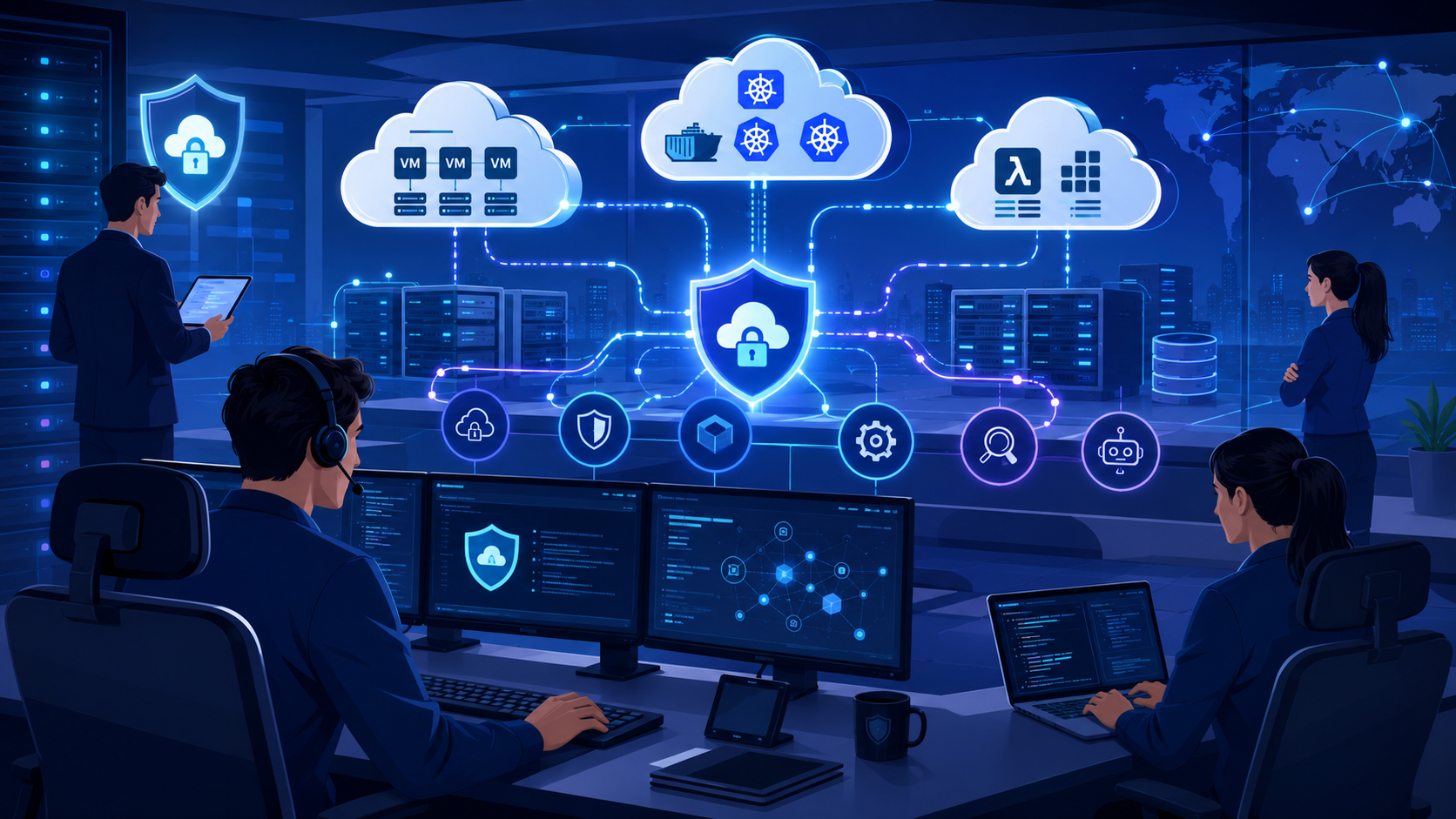
Cloud Native Security Tools MSSP help managed security providers secure increasingly complex hybrid and multi-cloud environments. As organizations adopt containers, serverless applications, and multiple cloud platforms, maintaining consistent security becomes more challenging.
At MSSP Security, we use cloud-native capabilities such as CSPM, CWPP, cloud-native SIEM, and automated monitoring to improve visibility, strengthen security operations, and support faster incident response.
Keep reading to see how these technologies work together to protect modern cloud environments.
What You Should Know Before Getting Started
Here are the key benefits of Cloud Native Security Tools MSSP before exploring the guide:
- Improve visibility across hybrid and multi-cloud environments.
- Strengthen cloud security with CSPM, CWPP, cloud-native SIEM, and automated monitoring.
- Help organizations reduce risk, improve compliance, and respond to threats more efficiently.
Why Do MSSPs Need Cloud Native Security Tools?
Cloud Native Security Tools MSSP help managed security providers protect cloud infrastructure, workloads, applications, identities, and data across hybrid and multi-cloud environments.
Unlike traditional security products designed for static infrastructure, cloud-native solutions support constantly changing environments through automation, APIs, and real-time telemetry.
A modern cloud-native security platform typically combines several capabilities, including:
- Cloud Security Posture Management (CSPM) to identify misconfigurations, compliance gaps, and security risks.
- Cloud Workload Protection Platforms (CWPP) to protect virtual machines, containers, Kubernetes workloads, and other cloud resources.
- Cloud-native SIEM and SOAR to centralize security monitoring, detect threats, and automate incident response.
- Security automation to reduce repetitive tasks and improve operational efficiency.
Continuous monitoring is a key part of effective cloud security.
NIST explains that continuous monitoring helps organizations gain:
“Visibility into organizational assets, awareness of threats and vulnerabilities, and visibility into the effectiveness of deployed security controls.” – NIST
This approach supports how cloud-native security tools help MSSPs maintain visibility, identify risks earlier, and ensure security controls continue working across evolving cloud environments.
From our experience supporting MSSPs, choosing the right security products is just as important as implementing them. We help providers evaluate and audit cloud security technologies to ensure they integrate effectively, reduce complexity, and support long-term security objectives.
When these capabilities work together within a unified strategy, MSSPs can improve visibility, reduce alert fatigue, strengthen compliance, and respond to cloud threats with greater speed and confidence.
What Are the Challenges Managing Multi-Cloud Security Across Different Providers?
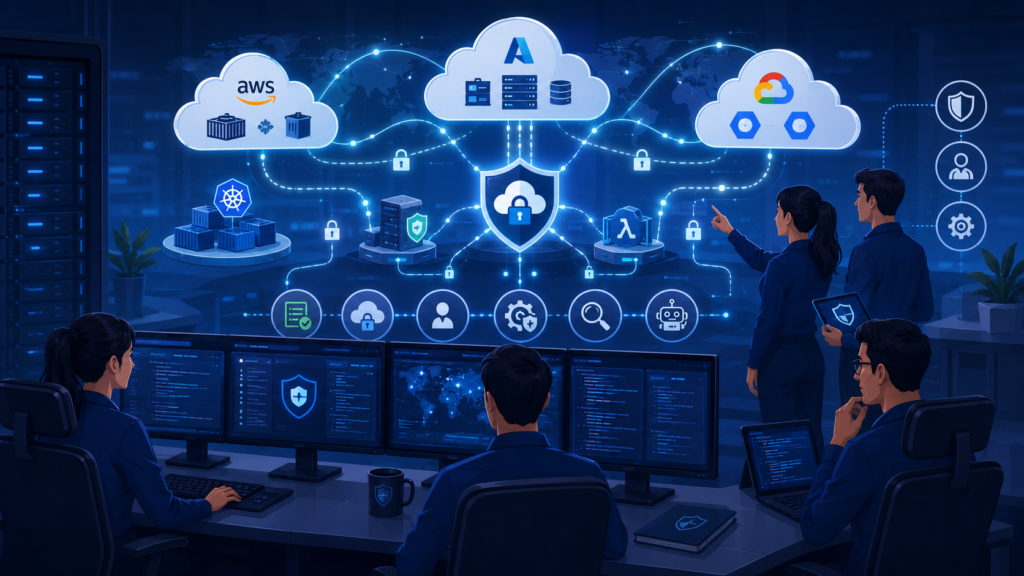
Using multiple cloud providers helps organizations improve flexibility, resilience, and workload performance. However, it also creates security challenges that make consistent protection harder to achieve. Understanding the challenges managing multi cloud security is important for organizations that need stronger control across distributed cloud environments.
Each provider has different security models, identity systems, and monitoring tools. Without proper governance, organizations may experience:
- Inconsistent security policies across platforms, making it harder to maintain standard controls.
- Identity and access management complexity when managing permissions, users, and authentication across multiple clouds.
- Visibility gaps caused by disconnected monitoring tools and separate security dashboards.
- Compliance difficulties due to different security frameworks and reporting methods.
- Higher operational overhead from managing multiple security solutions.
A unified cloud security strategy helps organizations improve visibility, simplify management, and maintain consistent protection. At MSSP Security, we help organizations build scalable security processes that support evolving multi-cloud environments.
What Are the Core Components of a Cloud Native Security Platform?
A cloud-native security platform combines several security capabilities into a connected ecosystem. Instead of managing separate products for different tasks, managed security providers use integrated tools to improve visibility, streamline security operations, and protect cloud environments more effectively.
The core components typically include:
| Component | Primary Purpose |
| Cloud Security Posture Management (CSPM) | Identify cloud misconfigurations, policy violations, and compliance risks. |
| Cloud Workload Protection Platforms (CWPP) | Protect virtual machines, containers, Kubernetes clusters, and other cloud workloads. |
| Cloud-native SIEM and SOAR | Centralize monitoring, detect threats, and automate incident response. |
| Identity and Access Management (IAM) | Manage identities, enforce least-privilege access, and monitor authentication activity. |
| Security Automation | Automate repetitive workflows to improve efficiency and reduce response times. |
Although each capability addresses a different area of cloud security, they are most effective when they work together. Sharing telemetry across these technologies gives security teams better context for investigations and helps reduce the number of isolated alerts they must review.
From our experience working with MSSPs, selecting the right products is only part of the process. We help providers evaluate and audit cloud security technologies to confirm they integrate well with existing environments and support long-term operational goals.
A well-planned combination of CSPM, CWPP, cloud-native SIEM, IAM, and automation creates a stronger foundation for scalable cloud security without adding unnecessary operational complexity.
The following sections explain how each component contributes to a modern cloud-native security strategy and where it delivers the most value for managed security providers.
How Do CSPM Cloud Security Posture Management Tools Strengthen Cloud Security?
CSPM cloud security posture management tools help organizations detect cloud misconfigurations, compliance gaps, and security risks before they become larger problems. As cloud environments expand across multiple platforms, continuous posture assessment gives managed security providers better visibility than periodic security reviews and manual checks.
Key CSPM capabilities include:
- Continuous configuration assessment and misconfiguration detection.
- Compliance monitoring and policy enforcement.
- Asset discovery and internet-facing exposure analysis.
- Risk prioritization, security posture scoring, and attack path mapping.
These capabilities help security teams focus on the risks that matter most instead of reviewing isolated alerts. In our experience supporting MSSPs, selecting the right CSPM solution requires more than comparing feature lists. We help providers evaluate and audit cloud security products to ensure they integrate with existing workflows, deliver meaningful visibility, and support long-term operational goals.
CSPM focuses on reducing risk before workloads are exposed by identifying configuration weaknesses and policy violations early. Once applications and workloads move into production, however, organizations also need security that follows them during daily operations. That is where Cloud Workload Protection Platforms (CWPP) extend protection by monitoring workloads throughout their runtime, creating a more complete cloud security strategy.
How Do CWPP Cloud Workload Protection Platforms Protect Running Workloads?
While CSPM helps prevent configuration-related risks before deployment, CWPP cloud workload protection platforms focus on protecting workloads after they are running. This includes virtual machines, containers, Kubernetes clusters, serverless functions, cloud databases, and application runtimes.
Unlike traditional endpoint security, CWPP continuously monitors runtime activity as cloud workloads are created, updated, or scaled. This allows managed security providers to detect suspicious behavior without slowing application development or cloud operations.
Modern CWPP solutions commonly protect:
- Virtual machines
- Containerized applications
- Kubernetes clusters
- Serverless functions
- Cloud databases
- Application runtimes
Rather than relying only on signature-based detection, many platforms combine runtime monitoring, behavioral analytics, vulnerability assessments, and threat intelligence to identify suspicious activity.
For example, if a container suddenly attempts unauthorized privilege escalation or communicates with an unfamiliar external service, security teams can investigate before the activity develops into a larger incident.
What Are the Serverless Security Monitoring Challenges Every MSSP Should Address?
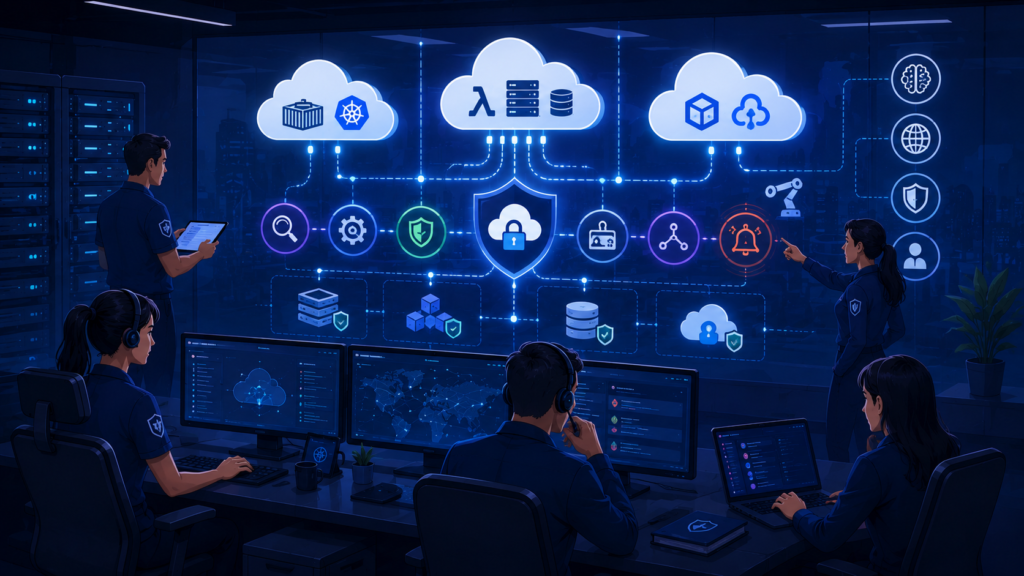
Serverless computing allows organizations to develop applications faster without managing traditional infrastructure. However, the flexibility of serverless environments also creates new security challenges.
Understanding serverless security monitoring challenges helps MSSPs evaluate whether security solutions can provide enough visibility and protection for these highly dynamic workloads.
In our experience helping MSSPs assess and audit security products, serverless environments often require a different approach compared to traditional workloads. Common challenges include:
- Limited runtime visibility because serverless functions may exist for only a short period, making continuous monitoring more difficult.
- Identity-centric security risks as permissions and access controls become the primary security boundary.
- Event-driven workload complexity where teams must understand application behavior to separate normal activity from potential threats.
- Logging and telemetry gaps that can make incident investigation and threat analysis more challenging.
- Continuous monitoring needs to detect unusual execution patterns and support faster response.
We help MSSPs review cloud security technologies to ensure they align with modern workload requirements. The right monitoring approach improves visibility, strengthens security operations, and helps providers support customers adopting serverless architectures.
How Do Cloud-Native SIEM and SOAR Capabilities Improve Threat Detection?
Cloud environments produce security data from many sources, including infrastructure, workloads, applications, identities, and cloud services.
Without a centralized way to analyze this information, security teams can spend valuable time investigating isolated alerts instead of understanding the full scope of an attack.
Cloud native SIEM SOAR capabilities bring these data sources together, making it easier to identify suspicious activity and investigate incidents with greater confidence.
Cloud Security Alliance highlights:
“Continuous monitoring is a foundational guiding principle within Zero Trust and resilience frameworks.” – Cloud Security Alliance (CSA)
This supports the role of cloud-native SIEM and SOAR solutions in helping MSSPs maintain ongoing visibility, correlate security events, and respond to threats across complex cloud environments.
Key SIEM capabilities include:
- Centralized log management across cloud environments.
- Event correlation from multiple security sources.
- Behavioral analytics to uncover suspicious activity.
- Threat intelligence enrichment for investigation context.
- Risk-based incident prioritization.
Correlating events from different systems gives analysts a clearer picture than reviewing alerts individually. We’ve found that MSSPs achieve better results when their SIEM platform fits naturally into existing security operations instead of adding another disconnected tool.
Our team works with providers to evaluate and audit SIEM solutions, helping them select technologies that deliver meaningful visibility, support long-term growth, and simplify investigations across multiple customer environments.
How Does Automating Cloud Security Monitoring Improve MSSP Operations?
Credit: Cloud Security Podcast
Once threats have been identified, automating cloud security monitoring helps security teams respond more consistently without increasing day-to-day operational effort.
Instead of manually handling every routine task, MSSPs can automate repeatable processes while analysts focus on investigation, validation, and decision-making where human expertise matters most.
Common automation capabilities include:
- API-driven integration between security tools.
- Automated response playbooks.
- Alert enrichment with contextual data.
- Ticket creation and notification workflows.
- Initial containment and remediation actions.
In our experience, the most successful automation strategies support analysts rather than replace them. We regularly help MSSPs evaluate and audit automation capabilities to confirm they integrate with existing workflows and align with operational objectives.
When implemented thoughtfully, automation reduces repetitive work, improves response consistency, and allows security teams to scale cloud operations while maintaining the level of oversight customers expect.
How Do AWS, Azure, and Google Cloud Security Platforms Support MSSPs?
Managed security providers often operate across multiple cloud platforms, each offering different security capabilities. While leveraging AWS Security Hub MSSP, Azure Sentinel managed security service, and Google Security Command Center integration all strengthen cloud security, each platform addresses different operational priorities. From our experience working with MSSPs, selecting the right solution depends on customer requirements, existing security operations, and long-term business goals rather than feature lists alone.
| Platform | Primary Strength | Best Use |
| AWS Security Hub | Centralized security findings | Consolidating findings across AWS accounts and improving compliance visibility |
| Azure Sentinel | Cloud-native SIEM and analytics | Correlating security events and supporting faster threat investigations |
| Google Security Command Center | Cloud asset visibility | Managing cloud assets, identifying misconfigurations, and prioritizing risk across multi-cloud environments |
Each platform contributes to cloud security in a different way:
- Leveraging AWS Security Hub MSSP: Consolidates security findings across AWS accounts into a centralized view, making it easier to prioritize risks, support compliance, and investigate incidents. We often help MSSPs evaluate Security Hub integrations to ensure they align with customer environments and reporting requirements.
- Azure Sentinel managed security service: Brings together data from cloud infrastructure, identities, applications, and endpoints to improve threat investigation through cloud-native SIEM capabilities. Our team regularly assesses SIEM solutions to confirm they integrate smoothly with existing workflows and support scalable security operations.
- Google Security Command Center integration: Improves visibility across cloud assets, security findings, and configuration risks through automated asset discovery and risk prioritization. We’ve found that the right integration depends on governance needs, multi-cloud strategy, and how well it complements an MSSP’s overall security architecture.
What Benefits Do Cloud Native Security Tools Deliver for MSSPs and Their Clients?
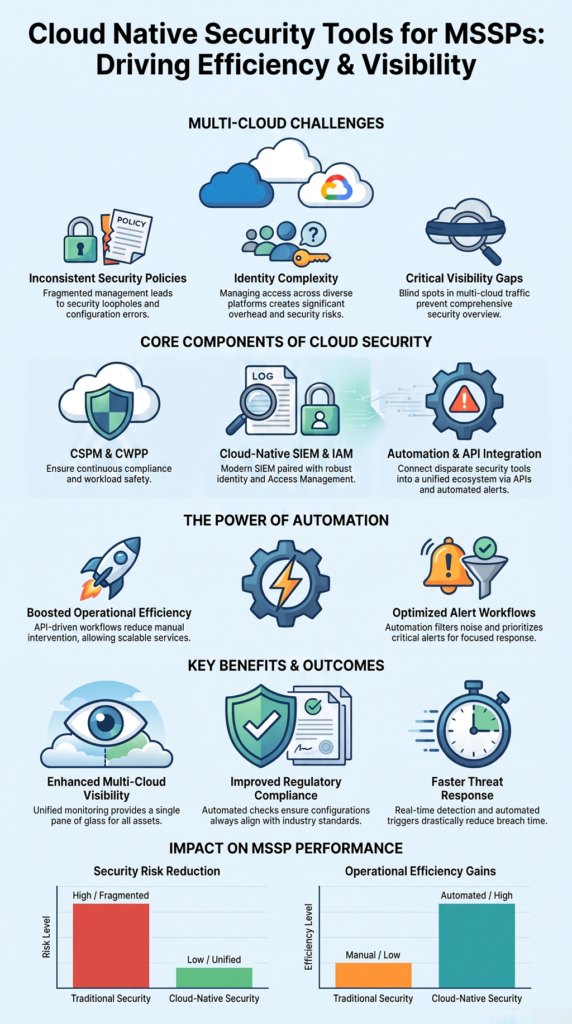
The benefits cloud native security tools provide go beyond improving security visibility. They help MSSPs move away from fragmented security operations by bringing monitoring, automation, and security workflows into a more connected approach.
Instead of managing multiple disconnected products, providers can create more consistent processes that improve how they protect and support customer environments.
Based on our experience working with MSSPs, selecting the right security technologies can create several practical benefits:
- Improved SOC efficiency by helping analysts reduce manual tasks, manage alerts more effectively, and spend more time investigating meaningful security events.
- Lower operational costs by reducing tool complexity, streamlining workflows, and limiting the effort required to maintain separate security platforms.
- Faster customer onboarding through repeatable deployment processes that allow MSSPs to introduce security capabilities more consistently across new environments.
- Simplified governance with better reporting, centralized policy management, and clearer visibility for compliance activities.
- Scalable security operations that enable MSSPs to support growing customer demands without adding unnecessary operational complexity.
When we help MSSPs evaluate and audit new security products, our focus is not only on technical capabilities but also on how well each solution fits existing workflows and business goals. The right combination of cloud-native technologies allows providers to improve service delivery while creating more sustainable security operations for their clients.
FAQ
What are Cloud Native Security Tools for MSSPs?
Cloud Native Security Tools are security solutions specifically designed to protect cloud infrastructure, workloads, applications, identities, and data. They help managed security service providers deliver continuous monitoring, threat detection, compliance management, and incident response across cloud environments.
How does CSPM improve cloud security?
Cloud Security Posture Management (CSPM) continuously identifies cloud misconfigurations, compliance issues, and security policy violations. This helps organizations reduce risk by addressing vulnerabilities before attackers can exploit them.
What is the difference between CSPM and CWPP?
CSPM focuses on securing cloud configurations and governance, while Cloud Workload Protection Platforms (CWPP) protect workloads such as virtual machines, containers, Kubernetes clusters, and serverless applications during runtime.
Why is multi-cloud security difficult to manage?
Multi-cloud environments often involve different identity models, security controls, monitoring systems, and compliance requirements. Without centralized visibility and standardized governance, organizations may experience configuration inconsistencies and operational complexity.
Why should organizations automate cloud security monitoring?
Automated cloud security monitoring continuously detects threats, evaluates security posture, prioritizes alerts, and initiates response workflows. Automation improves operational efficiency, reduces alert fatigue, and enables security teams to respond to incidents more quickly while maintaining consistent protection.
How Can MSSP Security Consulting Help Build Better Cloud Security Strategies?
Cloud environments continue to evolve with multi-cloud platforms, containers, and serverless technologies, creating new security challenges for MSSPs. Selecting the right Cloud Native Security Tools MSSP requires more than comparing features; providers need proper product evaluation, auditing, and guidance to ensure solutions fit their operational needs.
At MSSP Security, we help MSSPs assess security products, reduce tool sprawl, improve integration, and make informed technology decisions. Our vendor-neutral consulting approach helps providers build stronger cloud security services that support scalability, efficiency, and long-term business growth.
References
- https://www.nist.gov/publications/information-security-continuous-monitoring-iscm-federal-information-systems-and
- https://cloudsecurityalliance.org/artifacts/zero-trust-guidance-for-achieving-operational-resilience
Related Articles
- https://msspsecurity.com/leveraging-aws-security-hub-mssp
- https://msspsecurity.com/azure-sentinel-managed-security-service
- https://msspsecurity.com/google-security-command-center-integration
- https://msspsecurity.com/benefits-cloud-native-security-tools
- https://msspsecurity.com/challenges-managing-multi-cloud-security
- https://msspsecurity.com/cspm-cloud-security-posture-management-tools
- https://msspsecurity.com/cwpp-cloud-workload-protection-platforms
- https://msspsecurity.com/cloud native-siem-soar-capabilities
- https://msspsecurity.com/serverless-security-monitoring-challenges
- https://msspsecurity.com/automating-cloud-security-monitoring