

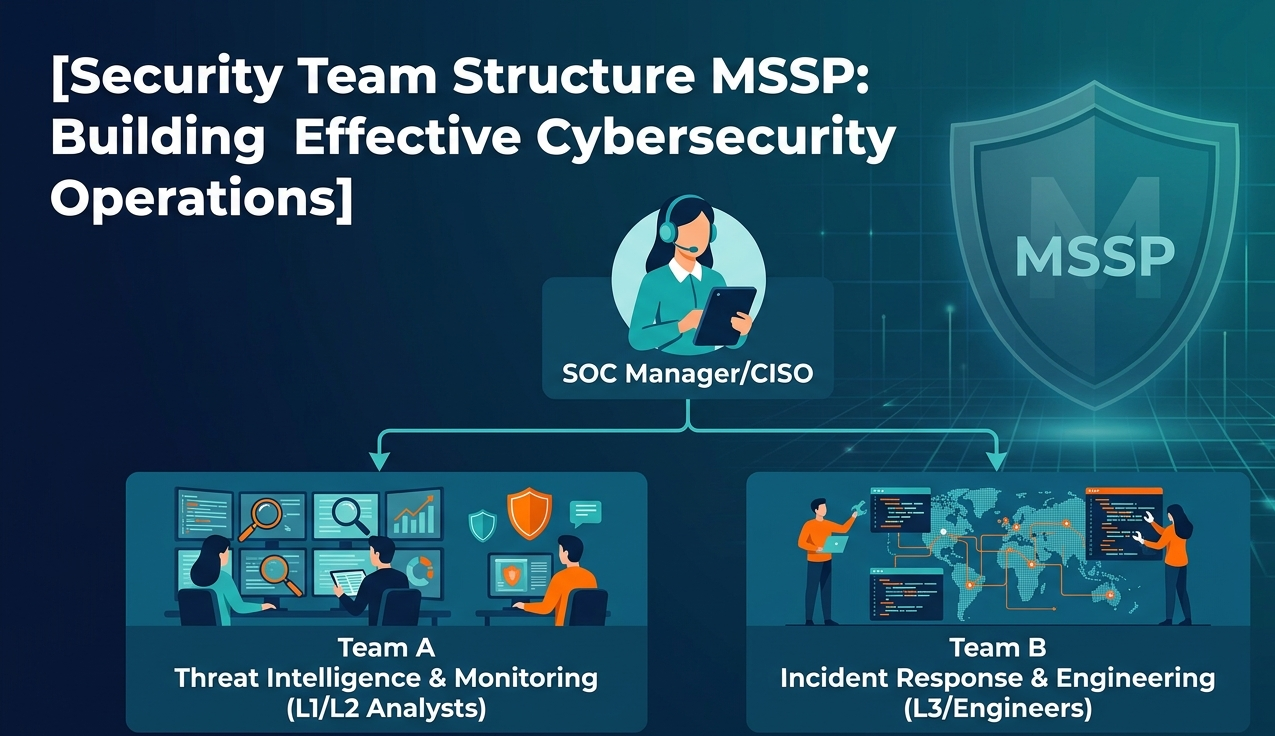
Managed Security Service Providers rely on organized cybersecurity teams to monitor threats, investigate incidents, and support client environments efficiently. A strong security team structure MSSP model helps improve visibility, streamline operations, and maintain consistent service quality across multiple customers.
Each role inside the structure supports different areas of security operations, from alert monitoring to threat hunting and engineering. Well-designed MSSP teams improve scalability, reduce operational gaps, and strengthen long-term cybersecurity performance. Keep reading.
Why Team Structure Matters in MSSPs
Cybersecurity operations involve constant monitoring, fast decision-making, and collaboration across multiple technical areas.
- Clear team structures improve operational efficiency.
- Specialized roles strengthen cybersecurity coverage.
- Collaboration improves incident response and service quality.
What Is a Security Team Structure MSSP Model?
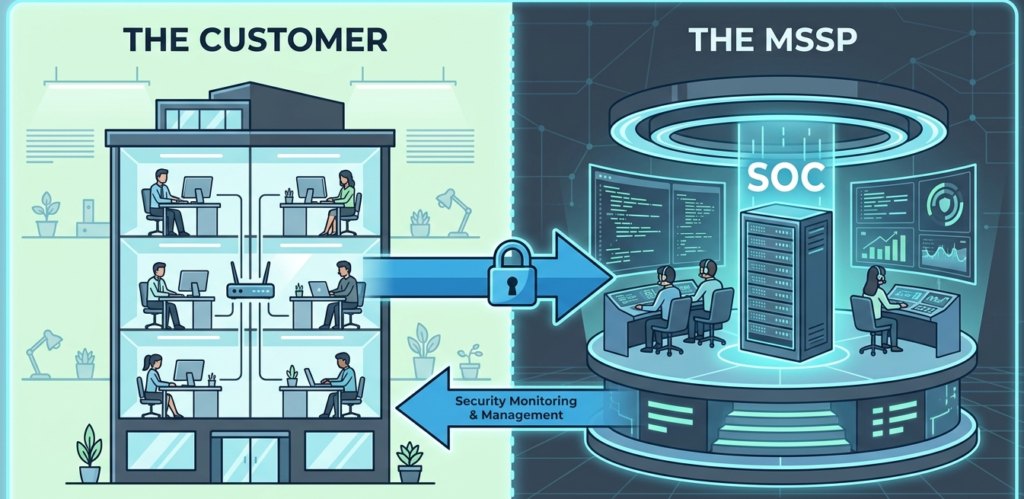
A security team structure MSSP model organizes cybersecurity professionals into specialized operational roles that support client security services.
“Organizations that establish clear communication protocols and incident response frameworks respond to cyber incidents more quickly and effectively; predefined escalation paths and role-specific responsibilities are critical to reducing confusion during crises.” – ResearchGate
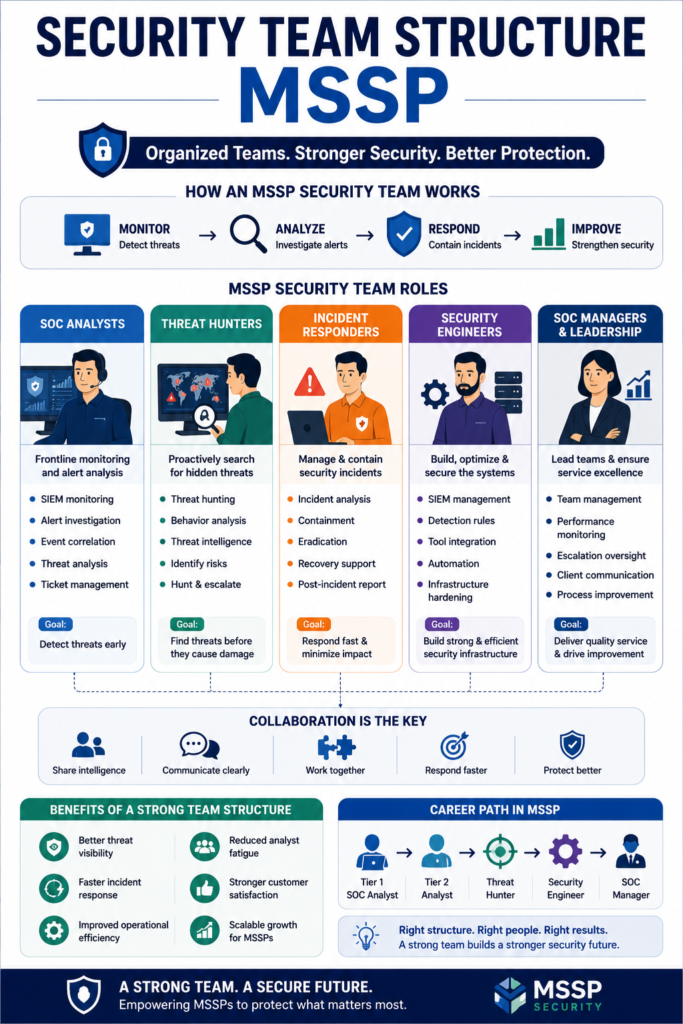
The structure often includes:
- SOC Analysts
- Threat Hunters
- Incident Responders
- Security Engineers
- SOC Managers
Each role focuses on different responsibilities while working together to improve overall security operations and customer protection.
SOC Analysts: Frontline Monitoring Teams
SOC analysts are usually the first line of defense inside MSSP environments. They monitor alerts, review suspicious activity, and escalate incidents when necessary. SOC analysts help maintain continuous visibility across customer environments, applying specific security analyst roles and expertise to support faster incident detection.
“Findings reveal that 73.1% of SOC professionals experience emotional tiredness at least ‘Sometimes,’ highlighting that while automation is key to well-being, providing clear career growth and development opportunities is essential for retention.” – MJoSHT
Core responsibilities include:
- SIEM monitoring
- Alert investigation
- Event correlation
- Basic threat analysis
- Ticket management
SOC analysts help maintain continuous visibility across customer environments and support faster incident detection.
Threat Hunters and Incident Responders
Credits: BitLyft
Threat hunters and incident responders focus on advanced cybersecurity investigations and active threat management.
| Role | Main Focus |
| Threat Hunter | Proactively searches for hidden threats |
| Incident Responder | Manages and contains security incidents |
| SOC Analyst | Monitors alerts and escalates threats |
| Security Engineer | Maintains security infrastructure |
Threat hunters identify suspicious behavior before attacks escalate, while incident responders coordinate containment and recovery activities.
Security Engineers and Detection Teams
Security engineers support the technical foundation of MSSP environments, often collaborating with expert security analysts in Fullerton to improve detection, automation, and operational stability.
Common responsibilities include:
- SIEM management
- Detection rule creation
- Security tool integration
- Automation workflows
- Infrastructure hardening
Detection engineers may also optimize alert logic to reduce false positives and improve investigation accuracy.
SOC Managers and Leadership Roles
SOC managers oversee operations, team coordination, and service quality across MSSP environments.
Leadership responsibilities often include:
- Managing analyst workflows
- Monitoring operational performance
- Supporting escalation processes
- Improving client communication
- Coordinating incident response efforts
Strong leadership helps MSSPs maintain operational consistency and improve customer trust.
Collaboration Across MSSP Teams
A strong security team structure MSSP environment depends heavily on collaboration between departments and operational roles.
Effective collaboration helps teams:
- Respond faster to incidents
- Improve investigation accuracy
- Share threat intelligence
- Reduce operational delays
- Strengthen customer support
Clear communication and standardized workflows improve efficiency across the entire security operations center.
Benefits of a Structured MSSP Security Team
Well-organized security teams help MSSPs scale operations while maintaining service quality across multiple customer environments.
Benefits include:
- Better threat visibility
- Faster incident response
- Improved operational efficiency
- Reduced analyst fatigue
- Stronger customer satisfaction
Structured teams also improve accountability and help organizations manage cybersecurity growth more effectively.
Career Growth Within MSSP Teams
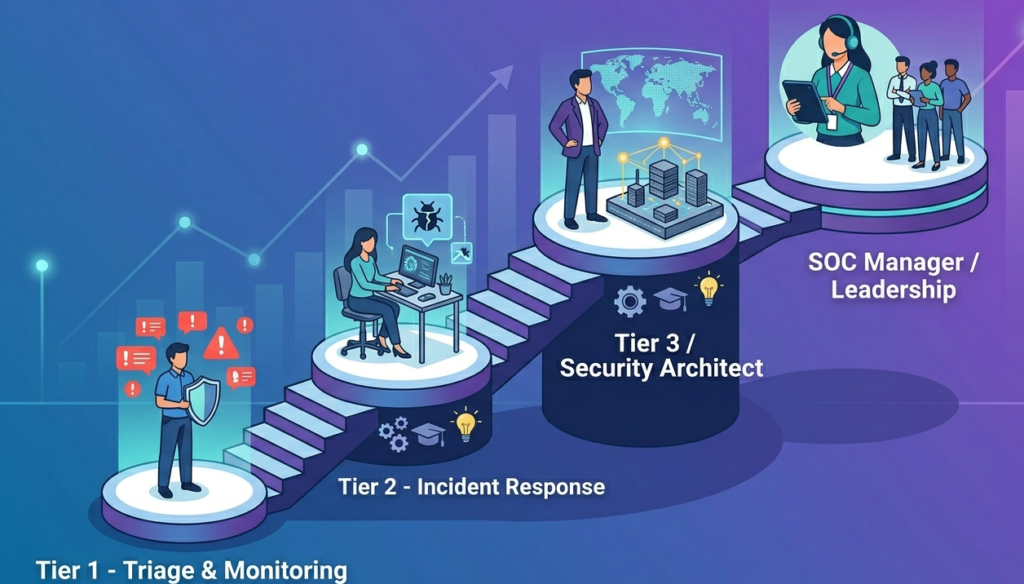
MSSP environments often provide strong career development opportunities across different cybersecurity roles. Common career progression includes Tier 1 to Tier 2 Analyst, Threat Hunter, and eventually leadership.
Hands-on experience across multiple security functions, often supplemented by mssp analyst training and certification, helps professionals build long-term cybersecurity expertise.
Common career progression includes:
- Tier 1 SOC Analyst
- Tier 2 Analyst
- Threat Hunter
- Security Engineer
- SOC Manager
Hands-on experience across multiple security functions helps professionals build long-term cybersecurity expertise.
FAQ
What is a security team structure MSSP model?
It is an organized operational structure that defines cybersecurity roles and responsibilities inside managed security service providers.
Why are specialized security roles important?
Specialized roles improve operational focus, strengthen threat detection, and support faster incident response across cybersecurity teams.
What does a SOC analyst do in an MSSP?
SOC analysts monitor alerts, investigate suspicious activity, manage tickets, and escalate incidents during security operations.
How do MSSP teams improve cybersecurity operations?
Structured teams improve visibility, coordination, response speed, and service consistency across multiple client environments.
Building Stronger MSSP Operations Through Team Structure
A well-designed security team structure MSSP model helps organizations improve cybersecurity visibility, streamline operations, and deliver stronger protection for clients. Clear role specialization and collaboration strengthen detection, response, and long-term operational efficiency.
At MSSP Security, we help MSSPs optimize security operations, improve tool integration, strengthen visibility, and build scalable cybersecurity strategies backed by more than 15 years of real-world operational experience.
References
- https://www.researchgate.net/publication/395205916_Coordinating_Cross-Functional_Teams_for_Cybersecurity_Resilience
- https://mjosht.usim.edu.my/index.php/mjosht/article/view/508