

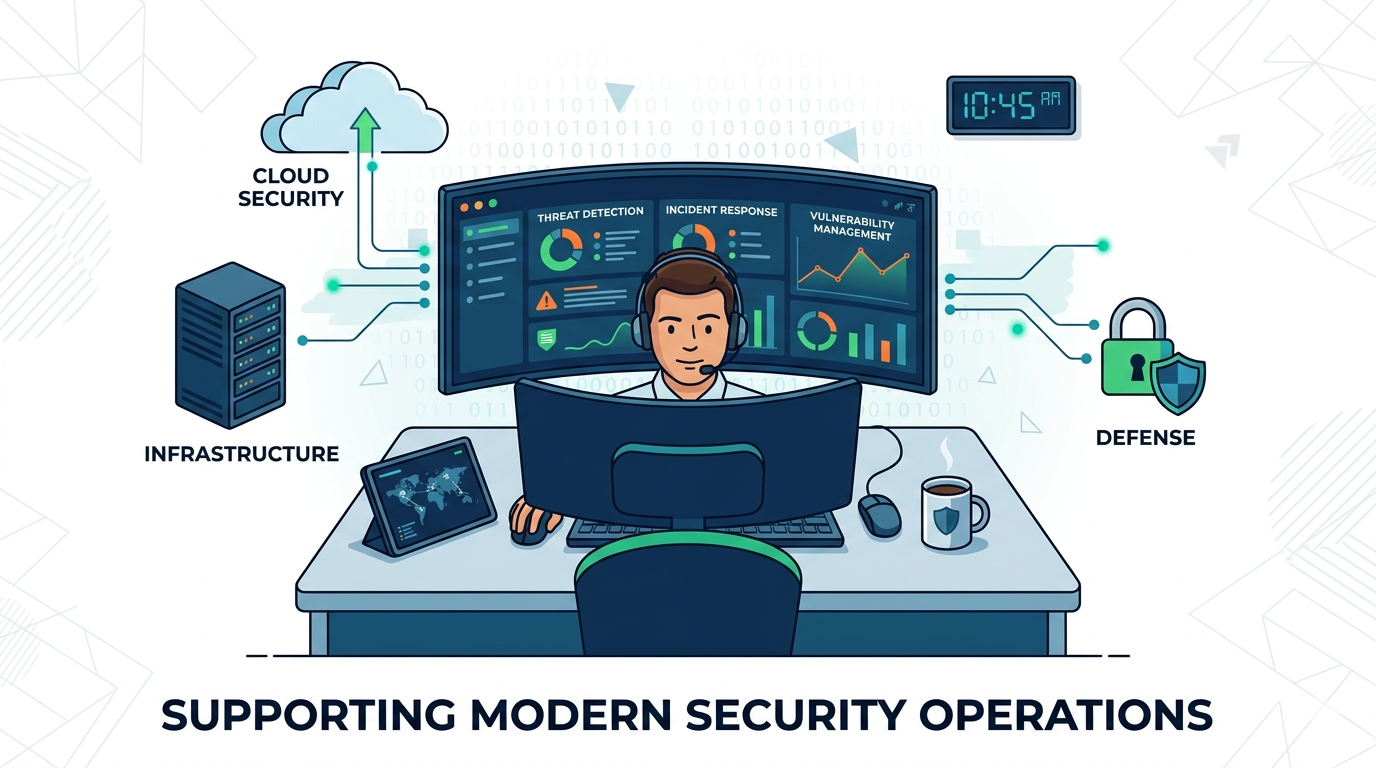
Security Operations Centers rely on strong technical teams to maintain visibility, improve detection, and protect business infrastructure from cyber threats. Security engineer SOC responsibilities focus on building, managing, and improving the technologies that support security operations.
These professionals help maintain detection systems, optimize workflows, and strengthen incident response capabilities across complex environments. Their work supports both SOC analysts and threat hunters by ensuring security tools operate efficiently and provide accurate data for investigations. Keep reading.
The Backbone Behind SOC Operations
Security engineers play a critical role in keeping SOC environments stable, scalable, and effective. They focus on infrastructure, automation, and tool optimization that improve daily security operations.
- Security engineers maintain and improve SOC technologies.
- Automation and system integration reduce operational delays.
- Security engineers strengthen detection and response capabilities.
What Does a Security Engineer in a SOC Do?
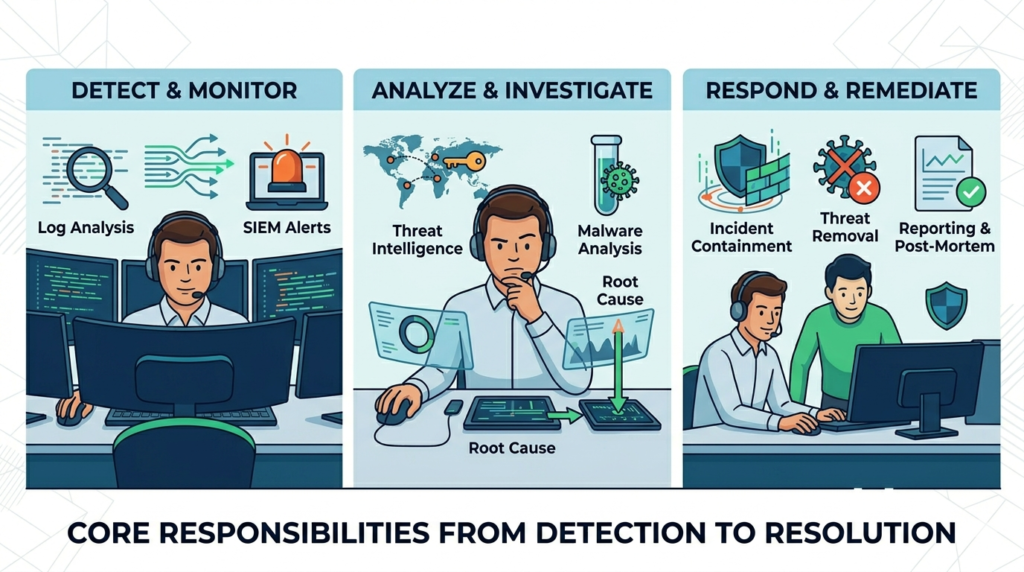
A SOC security engineer manages and supports the technical infrastructure used for cybersecurity monitoring and incident response. Their responsibilities involve configuring systems, improving visibility, and ensuring security platforms function properly.
“The shift toward proactive defense requires SOC engineers to move beyond simple alert management to developing ‘resilient-by-design’ infrastructures that utilize automated feedback loops for continuous security improvement.” – IeeExplore
Key areas of responsibility include:
- Security infrastructure management
- SIEM optimization
- Endpoint security deployment
- Log collection and integration
- Detection rule improvement
Security engineers often work behind the scenes to help SOC teams investigate threats faster and maintain operational stability.
Core Security Engineer SOC Responsibilities
Security engineers support multiple areas inside security operations centers to improve threat detection and response efficiency.
| Responsibility | Purpose |
| SIEM Management | Improve monitoring and event visibility |
| Security Tool Integration | Connect systems for centralized operations |
| Detection Engineering | Build and refine alert rules |
| Automation Support | Reduce repetitive manual tasks |
| Infrastructure Hardening | Strengthen system security posture |
Daily responsibilities may include:
- Maintaining security platforms
- Managing log pipelines
- Troubleshooting integrations
- Updating detection logic
- Supporting incident investigations
Security Tools SOC Engineers Commonly Manage
Credits: The Social Dork | Cyber Security
SOC security engineers work with various cybersecurity technologies to improve operational performance and visibility.
Common tools include:
- SIEM platforms
- EDR solutions
- SOAR systems
- Firewall technologies
- Cloud security tools
These systems help organizations detect threats, automate workflows, and manage large-scale security monitoring environments more effectively.
Detection Engineering and Automation
One major part of security engineer SOC responsibilities involves improving detection capabilities. Engineers build detection rules and automate repetitive workflows to support faster investigations.
“Integrating ML into SOC operations has emerged as a transformative solution… offering advanced capabilities in real-time threat detection, analysis, and automated mitigation that allow SOC teams to focus on high-priority incidents.” – ResearchGate
Automation helps teams:
- Reduce alert fatigue
- Improve response speed
- Streamline incident handling
- Increase operational consistency
- Minimize manual workload
Detection engineering also helps reduce false positives while improving visibility into suspicious activity across networks and endpoints.
Collaboration Inside the SOC
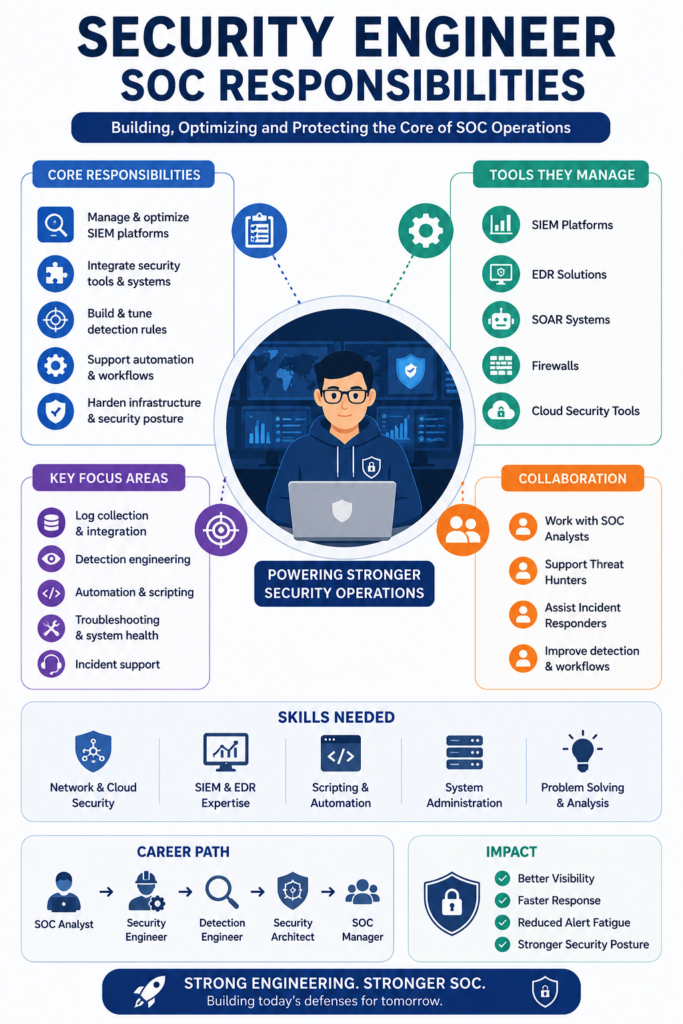
SOC security engineers regularly collaborate with those in security analyst roles, incident responders, and threat hunters.
Collaboration areas include:
- Incident escalation support
- Threat detection improvements
- Security platform troubleshooting
- Workflow optimization
- Infrastructure upgrades
Strong communication helps ensure security systems align with operational and business requirements.
Skills Required for SOC Security Engineers
Security engineers need a combination of technical knowledge, skills needed for security analysts, and operational problem-solving abilities.
Important skills include:
- Network security understanding
- Cloud security knowledge
- SIEM and EDR experience
- Scripting and automation
- System administration
Soft skills also matter, especially for managing incidents and coordinating across technical teams during security events.
Career Path for Security Engineers in SOC Environments
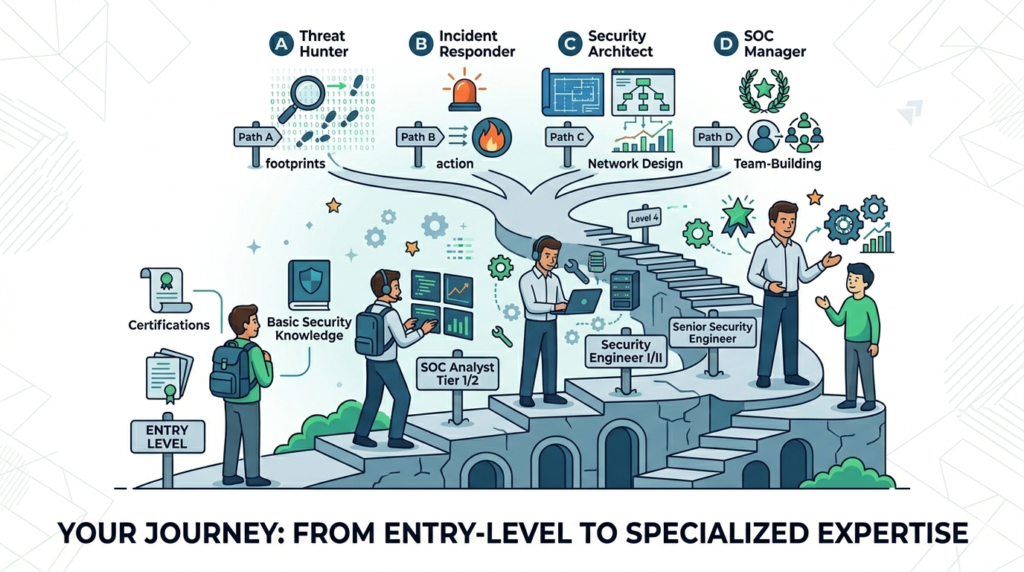
Many SOC security engineers begin with IT, networking, or experience in a threat hunter role before moving into engineering-focused cybersecurity roles.
Common career progression includes:
- SOC Analyst
- Security Engineer
- Detection Engineer
- Security Architect
- SOC Manager
As cybersecurity environments grow more complex, demand for skilled security engineers continues increasing across MSSPs and enterprise organizations.
FAQ
What are security engineer SOC responsibilities?
SOC security engineers manage security infrastructure, improve monitoring systems, support automation, and strengthen threat detection workflows.
Do SOC security engineers respond to incidents?
They often support investigations and help maintain systems during incidents, although incident responders usually lead active response efforts.
What tools do SOC security engineers use?
Common tools include SIEM platforms, EDR solutions, SOAR systems, cloud security technologies, and firewall management tools.
Is automation important for SOC security engineers?
Yes. Automation helps reduce repetitive tasks, improve response speed, and support more efficient security operations.
Strengthening SOC Performance Through Security Engineering
Security engineer SOC responsibilities are essential for building stable, scalable, and effective cybersecurity operations. These professionals improve visibility, optimize detection systems, and support faster incident response through strong technical infrastructure and automation.
At MSSP Security, we help MSSPs improve operational efficiency, optimize security stacks, strengthen integrations, and enhance cybersecurity visibility with expert consulting backed by more than 15 years of real-world security operations experience.
References
- https://ieeexplore.ieee.org/document/10123456/
- https://www.researchgate.net/publication/389313195_SOC_Automation_with_Machine_Learning_Real-Time_Cyber_Threat_Detection_and_Mitigation