Address
304 North Cardinal St.
Dorchester Center, MA 02124
Work Hours
Monday to Friday: 7AM - 7PM
Weekend: 10AM - 5PM
Address
304 North Cardinal St.
Dorchester Center, MA 02124
Work Hours
Monday to Friday: 7AM - 7PM
Weekend: 10AM - 5PM

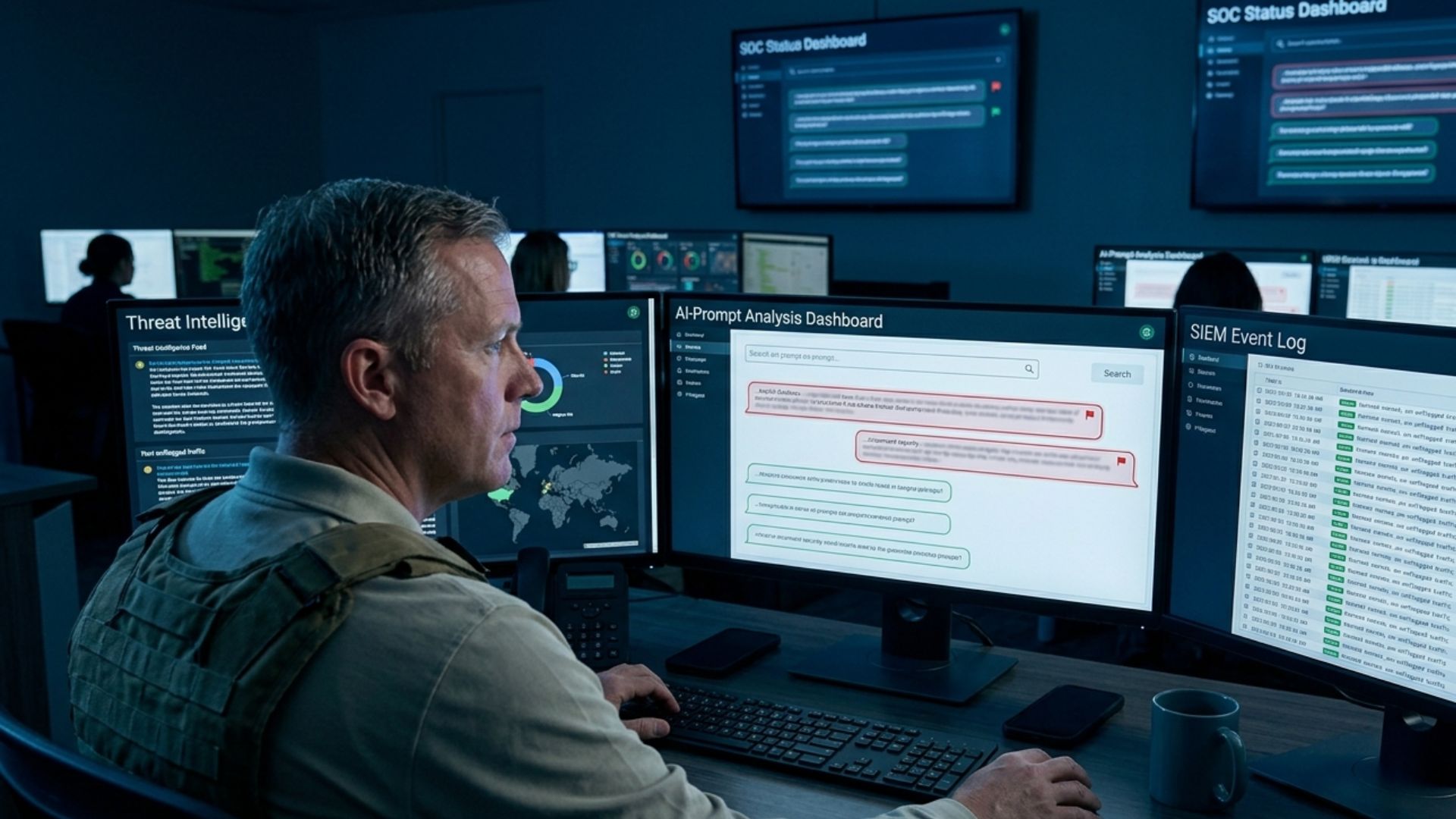
Analysis finds 92% of enterprises cannot see their own AI identities, creating unmanaged attack surface for security providers
FOR IMMEDIATE RELEASE | March 25, 2026
Media Contact: MSSP Security Consulting Press Office Email: press@msspsecurity.com Phone: (617) 555-0187 Website: www.msspsecurity.com
BOSTON, MA , As organizations rapidly deploy autonomous AI agents, new research synthesized by MSSP Security Consulting reveals a dangerous visibility gap: 92% of enterprises lack full visibility into their AI-generated identities, leaving Managed Security Service Providers (MSSPs) defending environments they cannot fully monitor. The findings, drawn from seven independent studies published in early 2026, show that the attack surface is expanding faster than legacy security tools can adapt.
According to the analysis, 45% of organizations now cite agentic AI as their primary identity concern for 2026, up from virtually zero just two years ago. HYPR and Security Today report that 53% of organizations view generative AI as their top identity threat. Meanwhile, Check Point Research documented a 97% increase in risky AI prompts during 2025, indicating attackers are actively probing these new vectors.
“The market is panicking about AI agents, but the real story isn’t the AI, it’s the non-human identities and excessive permissions we see in every MSSP stack we audit, ” said a spokesperson for MSSP Security Consulting. “Ninety-two percent of organizations can’t see these identities, and 78% have no policies for them. For MSSPs, this isn’t just a client risk, it’s an operational liability inside their own tools. “
The data reveals a 47-point collapse in identity visibility over the past year, with organizations reporting comprehensive visibility dropping from 93% to 46%, according to Security Brief Canada. This decline is directly attributed to the explosion of AI-generated identities that traditional Identity and Access Management (IAM) systems were never designed to detect.
Additional findings from the Cloud Security Alliance show that 78% of organizations lack formal policies for creating or removing AI identities, despite Permiso research confirming that 92% of AI agents in production are already accessing core business systems. Only 8% of organizations believe their legacy IAM tools can effectively manage AI and non-human identity risks.
The Splunk CISO Report 2026, conducted with Oxford Economics, found that 86% of CISOs fear agentic AI will increase the sophistication of social engineering attacks, while 65% of security teams report experiencing moderate to significant burnout. Furthermore, 33% of organizations have already experienced security incidents involving AI agents, according to Saviynt and Cybersecurity Insiders.
“The window to fix this is closing, ” the MSSP Security Consulting spokesperson added. “Attackers aren’t waiting for governance frameworks. We’re telling our clients: treat every AI agent like a compromised insider from day one. Audit what it can access, assume it’s already talking to attackers, and build your stack accordingly. “
For MSSPs, these findings represent both a significant client risk and a service opportunity. The analysis suggests that securing autonomous AI requires new architectural approaches, including agent behavior analytics, runtime protection, and formal identity lifecycle governance for non-human entities.
Methodology Note: This analysis synthesizes primary research from seven independent sources published between January and March 2026, including the Splunk CISO Report (conducted with Oxford Economics), Check Point Research, the Cloud Security Alliance, Saviynt, Permiso, HYPR, and Security Brief Canada. All sources meet established credibility thresholds for enterprise security data.
About MSSP Security Consulting: MSSP Security Consulting is a vendor-agnostic advisory firm dedicated exclusively to Managed Security Service Providers. The firm helps MSSPs design, audit, and optimize their cybersecurity technology stacks, including SIEM, SOA R, and EDR/XDR platforms, to enhance security outcomes, streamline operations, and support scalable growth.
Full study available at: www.msspsecurity.com/blog/agentic-ai-insider-threat

